


Crisis leadership is rarely tested in controlled environments.
Sometimes it arrives quietly.
Sometimes it arrives violently.
And sometimes, it arrives with a phone call at six in the morning.
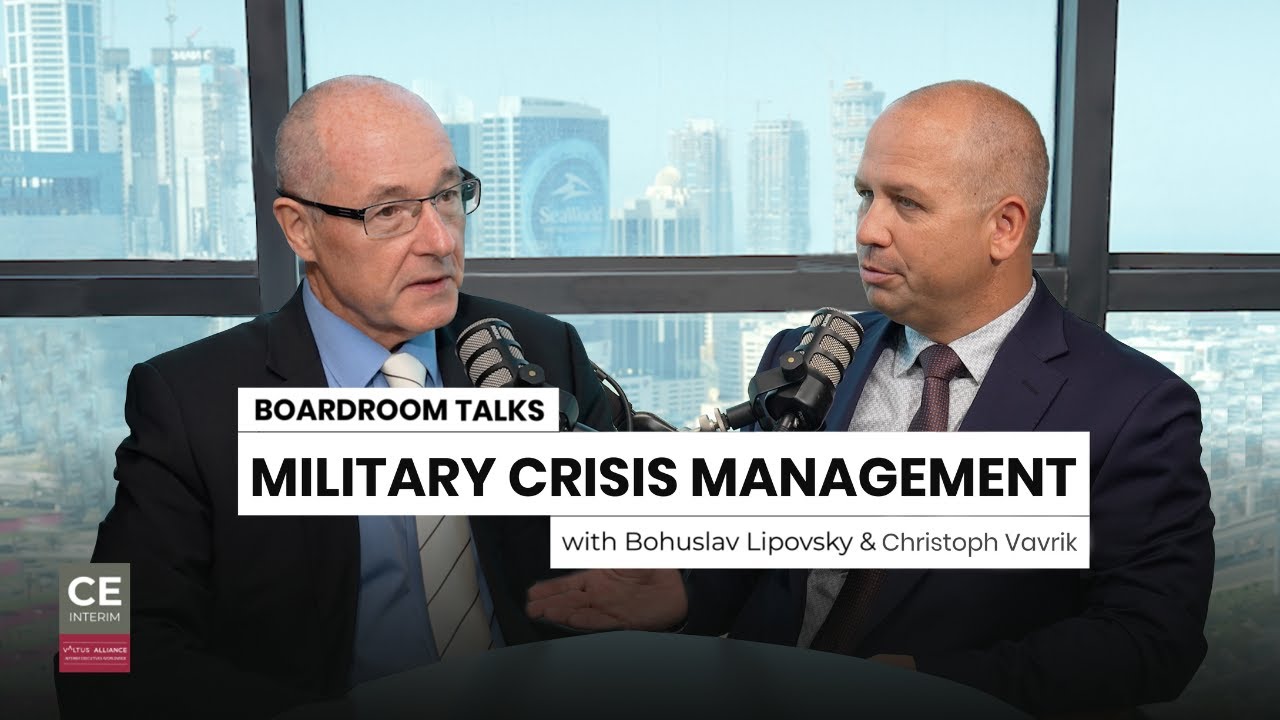
In this episode of Boardroom Talks, Bohuslav Lipovsky speaks with Christoph Vavrik, former Managing Director of Carlsberg Myanmar, diplomat, corporate executive, and crisis leader, about navigating one of the most extreme leadership situations imaginable, a military coup.
This is not a hypothetical discussion.
It is a first-hand account of leadership when institutions collapse, systems fail, and lives are at stake.
Check the complete podcast below
When Crisis Leadership Becomes Real Overnight
Christoph remembers the moment clearly.
At six o’clock in the morning, the Danish ambassador called with one sentence that changed everything.
“There has been a coup in Myanmar.”
The assumption, shared by diplomats and business leaders alike just hours earlier, was that a coup would not happen. The military already held power, economic influence, and political control. From a rational business perspective, a takeover made no sense.
That assumption turned out to be dangerously wrong.
One of the first lessons in crisis leadership, Christoph explains, is never to project your own logic onto actors who do not play by the same rules.
In Myanmar, the coup was not about economics or stability. It was about power. Power for the sake of power. Everything else became irrelevant.
Why Crisis Leadership Cannot Be Fully Planned
Many boards ask the same question after events like this.
Could this have been prevented?
Could the company have prepared better?
Christoph’s answer is clear.
You cannot prepare for every crisis.
You cannot script a response for earthquakes, coups, tsunamis, pandemics, or political collapse.
What you can prepare is leadership capability.
Crisis leadership is less about detailed contingency plans and more about the people in place when the unexpected hits. When systems break down, leadership character becomes the last line of defense.
Crisis Leadership Separates the Wheat from the Chaff
One of the most striking moments Christoph shares is how quickly leadership behavior diverged once the crisis hit.
Some leaders, competent and respected under normal conditions, simply could not cope. Some broke down emotionally.
Some chose to leave the country.
Others, sometimes unexpectedly, proved remarkably resilient.
Crisis leadership reveals character under pressure. It exposes who can operate with fear, ambiguity, and responsibility for others’ lives, and who cannot.
This is not a judgment, Christoph emphasizes. Not everyone is built for extreme conditions. But organizations must recognize this reality before a crisis, not during it.
Leadership Priorities Change Instantly in a Crisis
One of the biggest mistakes leaders make is trying to continue business as usual.
Christoph describes how quickly everything else had to be abandoned.
- Strategy plans stopped
- Financial forecasts became irrelevant
- Product launches were frozen
- Reporting cycles disappeared
Crisis leadership requires a brutal reset.
The only priorities that mattered were:
- The safety of employees and their families
- The protection of critical assets
Everything else became secondary.
Many leaders underestimate how long it takes to make this mental shift. Even in extreme events, some executives needed 24 to 48 hours to fully accept that the old rules no longer applied.
Operating a Business When Systems Collapse
After the coup, Myanmar’s banking system shut down almost overnight.
No transfers.
No ATMs.
No international payments.
The country reverted to a cash-only economy.
As a brewer, Carlsberg Myanmar was forced to redesign its entire operating model in weeks. Cash had to be collected across a country stretching thousands of kilometers, secured, transported, stored, and redistributed to employees and suppliers.
Christoph describes buying massive safes, redesigning office floors to support their weight, and creating a nationwide cash logistics network almost from scratch.
This is crisis leadership at operational ground level. Not strategy decks, but execution under extreme constraints.
Communication When Communication Fails
Crisis leadership depends on communication, yet crises often destroy communication infrastructure first.
Internet access was cut.
Messaging apps stopped working.
Mobile networks failed.
Christoph and his team had to build redundancy fast. Satellite phones, fixed lines, alternative messaging tools, and human couriers on motorbikes became lifelines.
One critical insight stands out.
Redundant communication systems are one of the few crisis measures that can be prepared in advance.
Leaders who rely on a single channel will fail when it disappears.
Crisis Leadership Is Not Always Democratic
A powerful section of the conversation explores cultural differences in crisis leadership.
In many Asian contexts, teams expect decisive, top-down leadership during emergencies. Debate is limited. Clarity and authority matter most.
In Europe, crisis leadership often involves more discussion and consensus-building, even under pressure.
Neither approach is universally right or wrong. Effective crisis leadership adapts to cultural expectations while maintaining speed and clarity.
Christoph stresses one key point.
Trying to impose authoritarian leadership styles in cultures that resist them will backfire.
Why Interim Leaders Matter in Crisis Leadership
At several moments, Christoph highlights situations where internal teams lacked specific crisis capabilities.
Security.
Evacuation planning.
Cash transport.
These were not competencies available inside a beer company.
In those cases, experienced interim leaders were brought in quickly to provide expertise, frameworks, and execution support. Crisis leadership is not about pride or control. It is about getting the right capability in place at the right moment.
The Characteristics of a True Crisis Leader
When asked what defines a strong crisis leader, Christoph is unequivocal.
Functional experience matters, but it is not decisive.
Crisis leadership depends on:
- Proven resilience under pressure
- The ability to operate with incomplete information
- The capacity to earn trust immediately
- The courage to make unpopular decisions
- Emotional control under extreme stress
Sector knowledge can be learned.
Character cannot.
Trust, Ego, and Leadership Under Fire
Trust is the currency of crisis leadership.
An interim or crisis CEO must earn trust from two sides simultaneously, the team on the ground and the stakeholders above them, whether corporate headquarters or private equity owners.
Ego, often criticized, plays a nuanced role. Strong crisis leaders usually have strong egos. The danger is not ego itself, but ego that blocks listening, learning, and collaboration.
The best crisis leaders balance confidence with humility.
The Black Swan Reality of Crisis Leadership
Christoph closes with a warning many boards prefer not to hear.
There is no safety in size.
Big companies fail.
Strong brands collapse.
Crisis leadership is not about if, but when.
Organizations buy insurance for fires and accidents. They should invest the same seriousness into leadership preparedness, scenario exercises, and access to experienced interim leaders before crisis strikes.
Because when it does, there will be no time to learn.