Plant Security During Operational Turnarounds
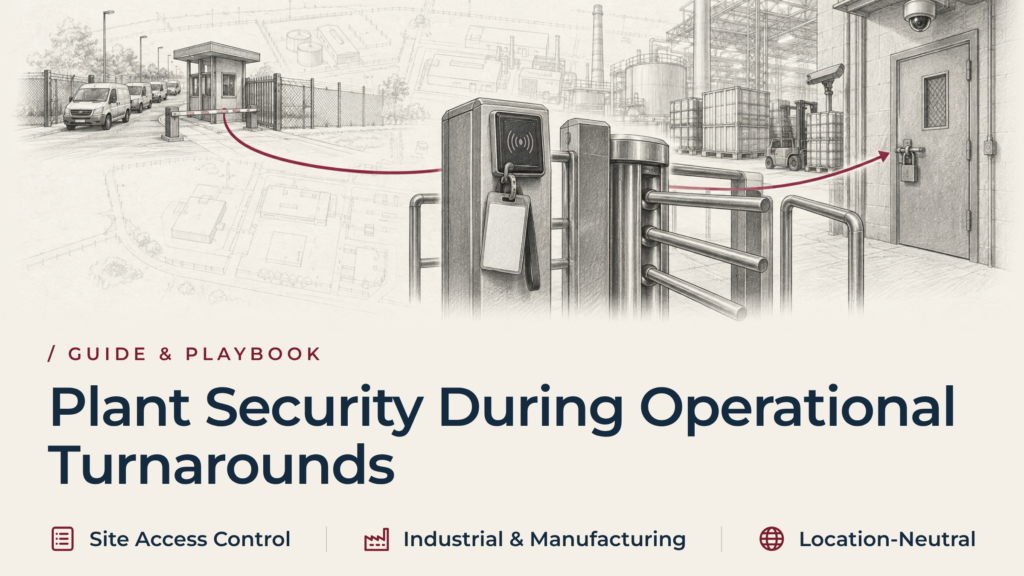
Learn how plant leaders can strengthen security during operational turnarounds by controlling contractor access, restricted areas, credentials and site risks.
When Polish Plant Closure Affects Czech Restructuring Timeline: Why Parallel Decisions Become Impossible

A German industrial group with manufacturing operations in Poland and the Czech Republic encounters a board decision within six weeks. The Polish plant is loss-making and consuming cash. The Czech site is underperforming but operationally recoverable. Available capital for restructuring totals approximately EUR 35 million across both countries. Here is the critical issue: deciding to close the Polish operation immediately triggers a restructuring choice in Czechia that cannot be delayed, resequenced, or independently managed. When one country faces closure and the other requires restructuring, the multi-country closure restructuring CEE cascade creates executive deadlock. This forces an unprepared board into a choice nobody planned to make. Understanding why parallel decisions become impossible is essential for any DACH industrial leader managing CEE operations. The first 30 days: how multi-country closure restructuring CEE cascade begins Once the board approves Polish plant closure, notification requirements across both countries activate simultaneously. Most importantly, both timelines overlap. Neither can be deferred without legal risk. This concurrent trigger sets in motion the cascade that characterizes multi-country closure restructuring CEE situations. Notification timelines collide simultaneously The Polish Labour Code requires employers to notify the District Employment Office within 20 days of the collective redundancy decision. Simultaneously, trade union consultation must occur within the same 20-day window. In addition, the Czech Labour Code imposes a 30-day minimum notice period to the Labour Office and to employee representatives before any termination notices take effect. The result is clear: both notifications must happen. Both timelines run in parallel. Executive capacity splits across two decisions Closure requires distinct actions: redundancy terms, severance calculations, asset inventory, production wind-down sequencing, creditor notification, and customer continuity planning. Restructuring requires different actions: function elimination, productivity investment decisions, working capital forecasts, and performance targets. Consequently, in the overlapping 20 to 30-day window, the Polish closure consumes the operational team’s full attention. Meanwhile, the Czech restructuring decision gets forced onto an already-saturated agenda. This is precisely why multi-country closure restructuring CEE scenarios create capacity problems at the leadership level. Weeks 4 – 8: cash flow pressure arrives before restructuring capital is deployed Once the notification phase concludes, financial reality accelerates rapidly. Severance obligations transform into concrete liabilities. Creditors and suppliers recognize the closure signal. Additionally, manufacturing payment cycles tighten at precisely the moment when cash is most constrained. Payment cycle pressures and cash flow tightening Standard manufacturing payment terms typically run Net 60 to Net 90 days in industrial B2B relationships. When suppliers detect closure signals, they reduce credit exposure. Many demand advance payment or accelerate invoice collection schedules. As a result, accounts payable shorten while accounts receivable collection slows. The CFO must address creditor pressure immediately and preserve access to working capital lines of credit. Meanwhile, Czech restructuring investment still awaits approval. Capital allocation shortfall: EUR 35 million insufficient for both countries This capital arithmetic was not on the board agenda six weeks earlier. By week 8, the CFO has already committed capital to Polish closure. Now the CFO must inform the board that Czech restructuring cannot be funded as originally planned. This situation typifies multi-country closure restructuring CEE conflicts. Weeks 8 – 16: the second country’s restructuring window closes irreversibly By this stage, the Polish closure becomes public. Employees work through notice periods. Customer orders get transferred or cancelled. Asset sales enter negotiation phase. Critically, in Czechia, the workforce message becomes unmistakable: headquarters is contracting the portfolio. Czechia could be next. Retention risk hardens and technical capability erodes The Czech Plant Manager fields weekly calls from skilled technical staff who have received job offers elsewhere. Simultaneously, the CFO has not released Czech capital commitment. The COO has not published a recovery plan. Consequently, uncertainty extends from days into weeks. By week 12, the plant loses two senior technicians and three junior engineers. Production quality deteriorates. Customer complaints increase substantially. Delay converts turnaround potential into operational deterioration Solutions that cost EUR 12 million to implement in week 2 now cost EUR 18 million in week 10. Each week of restructuring delay erodes performance systematically. Morale declines because commitment has not been made. Customers reduce order volume because delivery performance is degrading. Supplier payment terms worsen because payment history is deteriorating. By week 14, the Czech site shifts from restructuring candidate to closure candidate. The board faces a different choice than anticipated: restructure at high cost with uncertain outcomes, or close to preserve capital. This deterioration is not inevitable. It results directly from the multi-country closure restructuring CEE cascade. The sequencing choice: sequential or parallel execution in multi-country closure restructuring The board faces a binary choice. Neither option is attractive. Both carry material cost and risk. Essentially, the choice is between acceptable outcomes and worse outcomes. Option 1: Sequential execution (close Poland first, then Czech) Option 2: Parallel execution (manage both simultaneously) Who decides sequencing, and when does authority break down Formally, the Board or Supervisory Board decides sequencing for multi-country closure restructuring CEE decisions. In practice, the CFO, COO, and Board must align. When alignment fails, authority breaks down into operational reality versus strategic preference. Board preference versus operational reality Board position: Parallel execution is preferred. Parallel execution reduces total timeline and preserves Czech restructuring optionality. COO assessment: Parallel execution is operationally unmanageable. Two major portfolio actions cannot be executed with excellence simultaneously. Quality deficit in one or both initiatives is certain. CFO concern: Capital adequacy is insufficient. CFO advocates sequential execution: complete Polish closure first, preserve capital buffer, then Czech restructuring only if capital is available and creditor pressure is relieved. Cross-border authority gaps when decisions cannot align The Polish Country Manager advocates rapid closure sequencing. Conversely, the Czech Country Manager advocates clear restructuring commitment with visible capital backing. Both positions are correct operationally. Both cannot be simultaneously satisfied. EU Directive 98/59/EC and Directive 2019/2121 on cross-border restructuring establish legal frameworks but do not resolve execution sequencing. The CFO controls capital release. When the CFO withholds Czech restructuring capital pending Polish creditor resolution, the Board’s parallel execution decision becomes sequential execution in practice. Authority disintegrates.
Serbian Ramp-Up Stalling: Three Board Decisions That Should Have Happened Earlier
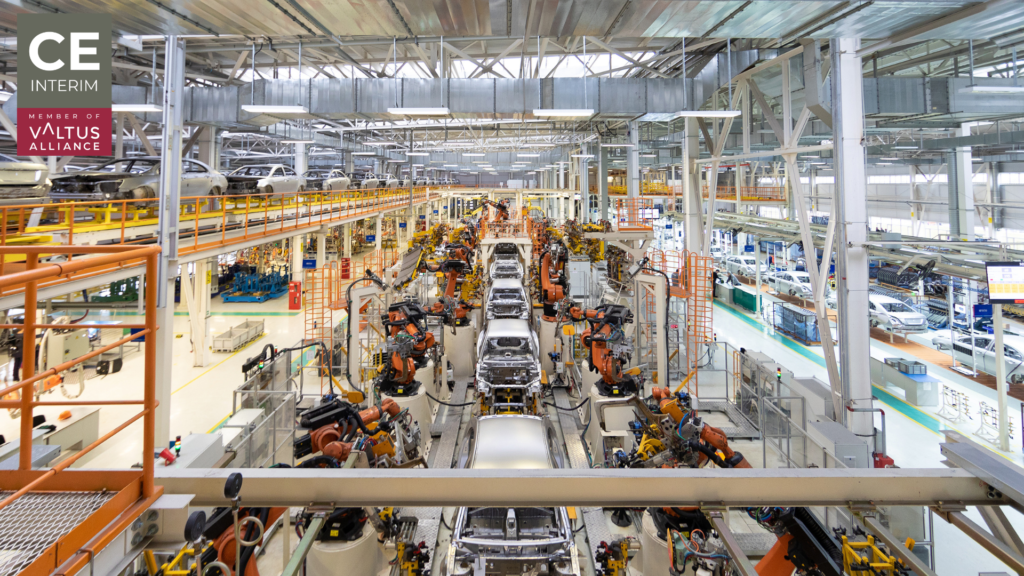
A German conglomerate operates plants in Poland and Serbia under one COO. Poland is shipping to plan. Serbia is ramping new capacity. The Group Board receives monthly KPIs: aggregate output is tracking, capital spend is within budget, and the portfolio appears sound. What the board does not see is that Tier 2 ramp-up board visibility manufacturing metrics at the Serbian operation are deteriorating in ways aggregate reporting masks. Labour scarcity is compressing timelines. Customer delivery milestones are sliding. By the time the formal escalation reaches the board, the cost of delay has crystallised. The Core Problem This is not incompetence. It is a story about how Tier 2 operational oversight fails when portfolio governance depends on aggregate metrics and board attention concentrates on sites that deliver to plan. Market Context Serbia’s automotive industry generated €4 billion in exports in 2025, representing 12.3 per cent of total exports. According to the UNDP labour market study, labour demand in Serbia will increase from 125,000 in 2024 to 144,000 in 2026, with manufacturing leading. The impact manifested acutely in 2025: 1. 12,640 workers in Serbia’s automotive sector were placed on paid leave at 60 per cent compensation longer than legally allowed. 2. This resulted in dismissal of more than 6,000 employees. 3. The effect cascaded into ramp-up delays DACH headquarters never detected until customer delivery penalties arrived. Decision 1: How Many Sites Can A COO Oversee Without Losing Visibility? The Structural Accountability Gap A COO overseeing multiple sites typically manages through quarterly reviews and exception reporting. This works when sites are mature and performing to plan. It fractures when a COO manages both a delivering site (Poland) and a ramp-up site (Serbia) simultaneously. The delivering site demands optimisation attention. The ramp-up site demands escalation and problem-solving. One person cannot give both sufficient scrutiny. What Actually Happened Month 8 of the ramp-up: Serbian operation missed labour recruitment targets. The Plant Manager flagged it to the COO. The COO understood the risk but did not escalate to the board because aggregate portfolio numbers still looked acceptable, driven by Poland’s solid delivery. The decision not to escalate was rational under the assumption that a Tier 2 variance could be resolved locally. That assumption was wrong. Why Board Attention Disappears The Serbian automotive sector saw revenues rise from €7.2 billion in 2023 to €8.3 billion in 2024, but forecasters warned in January 2026 that 2025 could be significantly weaker due to falling EU demand according to CorD Magazine. That external pressure was already known. What was unknown was that labour scarcity would compress the window for recovery. Decision 2: At What Variance Threshold Triggers Board Review? The Aggregate Metrics Trap Most boards receive portfolio-level KPIs, not site-by-site detail. The Missing Decision Rule Few boards have explicitly defined the variance threshold at which a secondary market ramp-up requires board-level intervention. In practice, what constitutes an anomaly is subjective. Decision 3: Who Escalates Before The Customer Does? The Skill Displacement Problem The Stellantis EV conversion at Kragujevac illustrates the problem. The conversion compressed demand for traditional machinists by 12 per cent year-over-year while increasing demand for battery technicians by 34 per cent. A Plant Manager facing this transition cannot solve it locally. Specialised skills do not exist in sufficient supply. This requires board-level capital reallocation. Options available to the board: 1. Upskill (expensive and slow). 2. Outsource non-core assembly (margin hit). 3. Extend the ramp timeline (delays cash return). 4. The Plant Manager cannot make this decision. The COO may not escalate it without board authority. When Customer Escalation Becomes Liability OEM customers operate on fixed delivery schedules. A slip of two to four weeks is normal variance. A slip of eight to twelve weeks triggers formal escalation and penalty review. The escalation sequence in the Serbian case: 1. Month 8: Plant Manager should have escalated to the COO when labour targets were missed. 2. Month 10: COO should have escalated to the board, framed as customer delivery risk. 3. Month 12: Customer saw the miss through delayed shipments. 4. Month 13: Customer placed formal claim. That is how Tier 2 operational oversight failures become customer escalation risk and cash liability. Why Aggregate KPIs Miss Operational Reality A board typically tracks portfolio output, capital spend, margin, and cash flow. This variance may fall within tolerance if market headwinds were already factored. What the aggregate does not show is the composition: Poland over-delivering to compensate for Serbia’s structural problem. Poland cannot sustain that for 18 months. When Poland returns to normal run-rate in Month 16, the portfolio collapses. The Intervention Question When Board Escalation Finally Comes In Month 13, the customer formalises a delivery penalty claim. The board faces three options. 1. Invest capital and temporary executive resources to rescue the operation. This requires €15 to €20 million and assumes the labour market and customer patience both hold. 2. Extend the ramp by six months. This delays cash return but reduces monthly wage pressure. 3. Sell or close the operation and consolidate Serbian supply into Poland or Romania. The board faces a restructuring decision it should have made at Month 10, when variance was internal. The board’s options have narrowed. At Month 13, when the customer has already escalated, any injected leader has less leverage and must work within tighter constraints. Structural Prevention Governance Architecture Without Single-Point Failure The structural problem is not that one COO oversees multiple sites. It is that accountability for ramp-up variance is distributed across multiple roles without clear escalation ownership. A more robust structure assigns explicit accountability in this sequence: 1. Plant Manager owns site-level performance and is required to escalate to the COO if any leading indicator breaches a defined threshold. 2. COO owns multi-site portfolio performance and must escalate to the Board if a threshold is breached. 3. Board owns portfolio-level variance review and must decide on capital reallocation or scope adjustment within a defined timeframe. Separating Ramp-Up Oversight From Aggregate Reporting Most boards receive portfolio-level KPIs quarterly. This is appropriate for
When headquarters must intervene: a board checklist for Czech manufacturing operations

In brief When a Czech manufacturing subsidiary keeps missing operational targets, the board’s natural response is to ask for more reporting. It usually means a revised turnaround plan, a weekly cash tracker, another review call. That instinct is understandable. It rarely closes the gap, because more detail from the same reporting line does not change what is happening on the shopfloor. Direct executive intervention becomes the right decision once specific, observable conditions are present, not once patience runs out. This sets out what those conditions are and which executive authority each pattern actually requires. It also covers how quickly that authority can be in place. The operational trigger: why increased reporting fails to resolve plant target misses The pattern arrives at a German board in a familiar form. A plant in Plzeň, Mladá Boleslav or Liberec has been reporting broadly acceptable output for several quarters. Yield keeps drifting and margin keeps contracting. Each quarter brings a revised turnaround plan from local management that has not closed the gap. Asking for more reporting is a reasonable first response. A board can pull several levers without stepping into the plant itself. A weekly cash tracker, a fresh recovery plan, another review call: all cost little to request. Under pressure, that instinct is sound. The difficulty is that reporting drawn from the same operation, at the same level of authority, rarely produces different facts. It produces the same picture in more detail. Timing matters more than it appears to at this stage. Operational turnaround research by McKinsey & Company on decisive executive intervention points to why timing matters. Turnaround situations respond to rapid, decisive executive action within the first thirty days. Every additional month spent reviewing plans while shopfloor scrap continues to rise uses up cash and customer confidence. It also narrows the range of options still open to the board. Cross-border management challenges: oversight limits between German HQ and Czech sites Four conditions make this specific corridor harder to manage than the geography suggests, and each has a reasonable origin. Compliant reporting can still hide operational drift. Czech plant teams typically maintain strong administrative discipline. The monthly pack reaching Stuttgart or Munich is usually complete and correctly formatted. That formal compliance is real, and it is not the same thing as operational visibility. Machines running below rated speed, unlogged micro-stoppages and rework cycles rarely appear in a top-level OEE or scrap figure. Nothing in the reporting template asks for them directly. Proximity does not substitute for shift-level knowledge. A facility in Ústí nad Labem or Plzeň sits only a few hours from Bavaria or Saxony. German executives reasonably read that distance as manageable oversight. A half-day site visit produces a clean tour and a useful conversation with the plant manager. It does not surface what changes between shifts, which is usually where the real variance sits. Legal and information barriers: Czech managing director liability and local knowledge risks Czech corporate law places personal liability on the local managing director. The jednatel carries statutory fiduciary responsibility for the entity, separate from the German parent’s own governance. Headquarters sometimes sets aggressive production targets without releasing the working capital or capital expenditure those targets assume. When that happens, the jednatel’s own legal exposure gives them a direct reason to protect their position. They have less reason to volunteer the full picture upward. That is a predictable response to how authority and liability are split across the border. It is not a sign of bad faith. Long-tenured local teams hold knowledge headquarters cannot easily audit. Supplier pricing history, maintenance records and shift scheduling logic often live in personal relationships built over years. Rarely does that knowledge sit in a shared system. When headquarters requests data, what comes back is a summary filtered through that same local knowledge. No other version of it currently exists to send. Board diagnostic checklist: key warning signs of operational breakdown in foreign subsidiaries These conditions are observable from headquarters, without commissioning a further review: Where two or more of these are present at once, passive governance has reached its limit. Multiple governance research studies on subsidiary oversight and operational systems point to the same conclusion. The decision in front of the board is which executive authority to put on site. It is not whether to request one more report. Executive intervention framework: matching operational patterns to interim leadership roles Intervention does not mean sending a corporate team from Germany for a further review. It means matching the pattern already visible in the conditions above to the specific executive authority it requires. That authority then needs to be on site quickly enough to still change the outcome. Pattern on the ground Executive role required Authority carried Typical duration Shopfloor execution has broken down: scrap above 5%, on-time delivery below 85%, downtime unmanaged Interim Plant Manager Direct authority over shift scheduling, shopfloor discipline, maintenance and quality gates 3 to 6 months Procurement, engineering and production are working against each other Interim COO Cross-departmental authority to realign supply chain, production flow and local engineering 6 to 9 months Cash burn has become a structural risk: negative EBITDA, creditor pressure Interim CRO Statutory managing director (jednatel) authority to restructure the balance sheet, renegotiate terms and resize the footprint 6 to 12 months Board trust in local leadership has been lost and compliance has broken down systemically Interim CEO or Managing Director Full enterprise leadership, direct interface with the group board, works councils, key customers and banks 6 to 12 months Implementation sequencing: deploying statutory authority for rapid plant turnaround Matching the pattern to the role is only the first decision. The second is sequencing. A Plant Manager mandate that later needs CRO-level authority to renegotiate supplier terms costs weeks in escalation and remobilisation. That is why the diagnostic above should be run honestly rather than optimistically. Run it honestly at the point the board decides what to commission. McKinsey & Company research on transformation in distributed operations makes a related point. Interventions that work
When a Slovak Plant Becomes the Least-Watched Site in a DACH-Owned Portfolio

A concrete scenario. A plant with 2,800 employees producing €90 million in annual revenue sits quietly inside a Tier 2 governance Slovakia manufacturing structure. The site reports through a regional cluster manager to headquarters in Stuttgart or Vienna. Quarterly board meetings review the cluster aggregate: headcount, output, cost, quality. The Slovak plant’s profit and loss statement is stable. On-time delivery runs at 96%. EBITDA hits forecast. The plant manager submits his monthly report on schedule. Nobody at the Board level has visited in eighteen months. Then, in month 13 of this stability, a customer escalation arrives. A quality issue has been accumulating for 90 days. An engineer left unexpectedly and was never replaced. A machine that should have been serviced is operating out of specification. The Board’s first question is not why the plant failed. It is why this problem was not seen coming. The answer lies in how Tier 2 governance Slovakia manufacturing actually works across DACH-headquartered industrial portfolios. It is not negligence. It is architecture. The governance model that protects flagship sites, where plant size justifies active board oversight, does not extend effectively to medium-sized secondary operations. The result is a blind spot: a plant performing adequately on quarterly metrics becomes invisible to the decision-makers who control capital, headcount, and escalation authority. The Governance Model Was Built for Flagship Sites, Not Medium Operations When DACH headquarters CEE plant oversight systems were designed, they reflected the realities of the 1990s and early 2000s: centralised manufacturing in major Tier 1 markets. A German automotive supplier headquartered in Stuttgart owned plants in Poland with 5,000 workers, in Czechia with 4,200 workers, and secondary sites elsewhere. The Board established a governance framework around the large sites. A dedicated Tier 1 plant manager reported directly to the regional director. Capital investment decisions were controlled at the plant level. Monthly operational reviews included the plant’s sales team, engineering lead, and plant director. Governance was active and granular. That architecture worked for 5,000-person facilities producing 40 percent of group output. What has changed. As portfolios expanded through acquisition and greenfield investment, the model was stretched. Companies acquired secondary facilities with 2,500 to 3,500 employees. They built regional clustering to simplify reporting. Instead, they created invisibility. The governance framework that worked for five large plants does not scale to twenty plants across seven countries without fundamental redesign. Middle-sized operations producing €80 million to €150 million in annual revenue now exist in a governance gap. Why Medium Plants Disappear: The Governance Threshold Effect The inflection point arrives when a plant becomes too small to warrant individual board attention yet too large to be managed at arm’s length. 1000-person plant: managed as a cost centre | 5000-person plant: requires active board oversight | 3000-person plant: falls in the gap This is where Tier 2 governance Slovakia manufacturing begins to fail. At a 3,000-person facility, the Board does not justify monthly operating reviews. They impose quarterly reporting. The regional cluster manager, who oversees three plants (Hungary with 4,800 workers, Czechia with 3,200, and Slovakia with 2,800), focuses most of his engagement on the largest operation. What happens to the secondary site: The problem is not that the oversight is intentionally light. It is that the governance architecture never defined what adequate oversight means for a medium-sized plant. The default is to apply the model designed for flagship sites, then scale back intensity based on plant size. The result is a plant flying on autopilot. Competitive Pressure Inside Portfolios Pulls Resources Away From Tier 2 Operations Multi-country portfolio management creates internal competition for capital, headcount, and management attention. When headquarter budgets tighten, the largest plants receive protection first. The scale of concentration is real. According to Zväz automobilowego priemyslu Slovenskej republiky, Slovakia produced 1.07 million vehicles in 2025. Volkswagen Bratislava generated 336,905 units; Stellantis Trnava produced 330,000 units; Kia Žilina delivered 296,550 units; Jaguar Land Rover Nitra contributed 107,000 units. The Volkswagen Bratislava facility employs 14,800 workers and produces the VW e-up, Škoda Citigo iV, and Seat Mii Electric. That facility receives governance intensity proportional to its scale and strategic importance. The Stellantis Trnava plant, with 3,300 employees and €3,786 million revenue, receives cluster-level attention. The secondary site absorbs cost-cutting pressure while the flagship carries growth investment. This creates a cascade: The Regional Cluster Trap: How Grouping Three Plants Obscures Individual Risk DACH and French headquarter operate CEE sites through regional governance clusters. A single cluster manager owns profit responsibility for three countries and three plants of different scales. The cluster reports to the board on aggregate performance: workforce utilisation, output, cost per unit, quality metrics. Individually, all three metrics are sound. Collectively, they mask deterioration at the smallest facility. This regional supervision breakdown is structural, not accidental. It emerges from the way cluster reporting is designed. How the trap works: If the Hungarian plant’s performance drifts and threatens cluster profit, the cluster manager focuses there. He cannot afford to lose Hungary. If the Czech plant’s cost structure needs reshaping, capital and attention flow there. The Slovak plant, showing stable performance in all quarterly metrics, becomes the source of free capacity. When the Board asks for €2 million in cost reductions, the Slovak plant absorbs it because the region manager knows it is the only facility he can cut without triggering immediate risk. The plant shrinks. Headcount declines. The plant becomes more efficient on paper. But it has no slack. It is running at the edge. When Tier 2 Stops Mattering: The Moment a Plant Becomes Steady State in Corporate Memory Corporate memory is selective. The Board remembers the plants that have created problems, the sites requiring intervention, the operations that demanded investment. The Slovak plant has not. It has delivered forecast, shipped on time, and stayed within cost budget for seven quarters. It has become classified as steady state in corporate memory. Steady state is code for does not require our attention. The moment a plant earns this classification: When problems emerge, this slower cycle becomes a liability.
Nearshoring in Central Eastern Europe Has a Leadership Gap
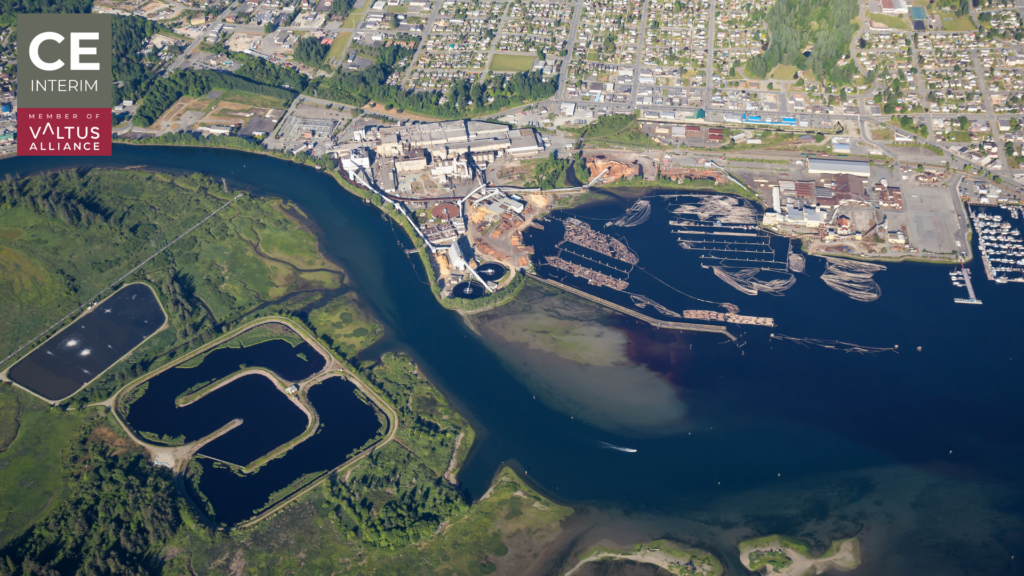
Poland entered 2026 with factories, lines and investment commitments advancing faster than the labour base around them. Polish Investment and Trade Agency (PAIH) reported 64 supported projects in 2025. Declared investment exceeded €4 billion, with more than 6,600 planned jobs. Of those, 42 production projects represented more than €3.6 billion and about 2,900 planned jobs. For boards pursuing nearshoring Central Eastern Europe, that capital-to-employment pattern matters. It shifts the question toward who can make increasingly automated capacity productive on schedule. Statistics Poland / Główny Urząd Statystyczny (GUS) estimated that industrial sold production rose 3.1% in 2025 and labour productivity rose 3.5%. Average employment fell 0.5%, while nominal gross monthly wages increased 8.0%. The European Commission reported that 62.4% of Polish industrial businesses saw labour shortages as a production constraint in Q4 2025. Across the EU, the figure was 17.5%. That is the starting condition for CEE manufacturing 2026: capital intensity is rising while labour and management depth remain tight. Nearshoring Central Eastern Europe becomes an operating problem after site selection The location case ends before the execution risk begins CE Interim has already set out the regional location case in Nearshoring Advantage: CEE as Europe’s Factory Hub. This article starts after the board selects the geography, approves capital and assigns the business case. At that point, nearshoring Central Eastern Europe becomes a dated sequence of commissioning, qualification and ramp-up obligations. The board no longer owns a location thesis alone. It owns an execution calendar. Poland industrial capacity is expanding into a tighter cost base Narodowy Bank Polski (NBP) recorded PLN 56.5 billion of inward direct-investment transactions in Poland in 2024. That was 55.1%, or PLN 69.2 billion, below 2023. NBP also identified rising labour costs and energy prices among factors affecting investment plans. The 2025 PAIH project rebound therefore sits inside a pressured market. Poland industrial capacity must absorb those operating conditions, not just new machines. Construction can hide the nearshoring leadership gap Physical completion does not prove operating readiness Civil works, equipment deliveries and installation milestones are easy to report. Operating readiness is harder to see. A line can reach physical completion while maintenance standards, escalation routines, shift leadership and supplier recovery remain incomplete. The Lower Silesia and Opole industrial corridor illustrates the broader problem. New Poland industrial capacity competes for experienced production, engineering and maintenance leaders who may already carry existing output. Before commissioning, five systems need clear ownership The nearshoring leadership gap becomes expensive when ownership stays fragmented across functions. Before the plant enters commissioning, management needs clear control over a short set of operating systems: Eurostat adds another constraint. Between 1 January 2005 and 1 January 2025, Poland and Romania each lost roughly 2 million residents. Romania’s population fell by about 11%. For a Plant Manager or Plant Director, that changes staffing assumptions. It affects shifts, maintenance depth and supervisor replacement during ramp-up. Automation can reduce direct labour in some processes. It also raises the cost of weak technical decisions around more capital-intensive assets. Commissioning turns separate workstreams into one production system The nearshoring leadership gap becomes measurable during integration Commissioning forces machinery, utilities, ERP and MES interfaces, quality gates, maintenance routines, suppliers and workforce capability to work together. The plant now exposes weak decision rights through missed milestones, unstable cycle times and unresolved defects. The COO, Operations Director or Ramp-up Director must decide which deviations the plant can contain locally. Other deviations threaten qualification or launch timing and need faster escalation. If nobody owns those trade-offs, each function can look busy while the plant remains unstable. CEE manufacturing 2026 places more weight on local decision quality This pressure extends beyond Poland. BMW Group opened its Debrecen, Hungary plant on 29 September 2025. Series production of the Neue Klasse BMW iX3 began in late October 2025. The site integrates high-voltage battery production with highly digitalised manufacturing processes. Across CEE manufacturing 2026, the same operating test applies to highly integrated assets. The relevant industrial footprints include Mercedes-Benz Vans in Jawor, Poland and Nokian Tyres in Oradea, Romania. The management requirement rises with integration. A local engineering issue can affect production, quality and logistics at the same time. More automation does not remove the need for judgement; it concentrates that judgement in fewer roles. That is why the nearshoring leadership gap often becomes visible before a formal vacancy appears. SOP converts unresolved problems into cost, inventory and customer risk Romania manufacturing FDI shows why installed assets are not the same as operating economics The National Bank of Romania (BNR) reported an inward FDI position of €125.035 billion at the end of 2024. Industry accounted for 37.1%, and manufacturing represented 76.1% of the industrial FDI position. Net FDI flows in 2024 were €5.603 billion, down 17.0% from 2023. Romania manufacturing FDI is substantial, but installed capacity still has to perform. The plant must convert technical capability into volume, quality and cash on the dates assumed in the investment case. Working capital sees instability before the board deck does According to the European Commission, Romanian industrial output declined 0.9% in 2025. The same report put real labour-productivity growth per hour at about 4.5% annually in 2015 to 2019. It slowed to around 2% in 2020 to 2025. High energy prices and rapid labour-cost increases weakened manufacturing competitiveness. That is the operating context for Romania manufacturing FDI in places such as Oradea and Bucharest-Ilfov. Once SOP begins, instability moves quickly into the financial statements. Scrap consumes material, premium freight protects customer schedules, overtime fills productivity gaps and inventory rises to buffer uncertainty. Contribution margin arrives later while fixed costs are already running. Nearshoring Central Eastern Europe therefore becomes a cash-control issue when production misses the assumptions in the investment case. The first six months of production test management bandwidth CEE manufacturing 2026 requires a management system, not a project team Early production exposes whether the site has made the transition from project governance to operating discipline. Recurring defects must move from containment to permanent correction. Maintenance has to move from
Defence Supply Chain Bottlenecks Start Below Tier One

Defence supply chain bottlenecks now sit below primes, where capacity, qualification, localisation and working capital restrict output.
CBAM Compliance for Manufacturers Is Now a Cash Flow Problem

CBAM compliance manufacturers face a 2026 cost exposure that reaches pricing, provisions and liquidity before certificate purchases begin.
Ransomware Attack Manufacturing: Six Weeks to Insolvency

A ransomware attack manufacturing crisis can stop production, drain cash, and force a board to restructure, sell, or close within weeks.
Europe Manufacturing Outlook 2026: Restocking, Not Demand

European manufacturing outlook 2026 suggests factories are seeing industrial restocking before genuine demand recovery. Learn what that means for capacity planning.
 EN
EN  DE
DE  FR
FR  IT
IT  PL
PL  RO
RO  CS
CS  SK
SK  HU
HU  ES
ES  RU
RU  AR
AR  SL
SL