Post-Merger Integration in Hungary Needs Operators, Not Slides

Post-merger integration in Hungary is accelerating, but execution gaps remain. Why operators, not consultants, determine PMI success in manufacturing and industrial deals.
Interim Management in Hungary: When CEOs Need It Most in 2026

Interim management in Hungary in 2026. When CEOs deploy interim leaders during growth, crisis, or execution gaps across manufacturing, PMI, and expansion.
Hungary Automotive Expansion Needs Ramp-Up Leaders, Not Plans
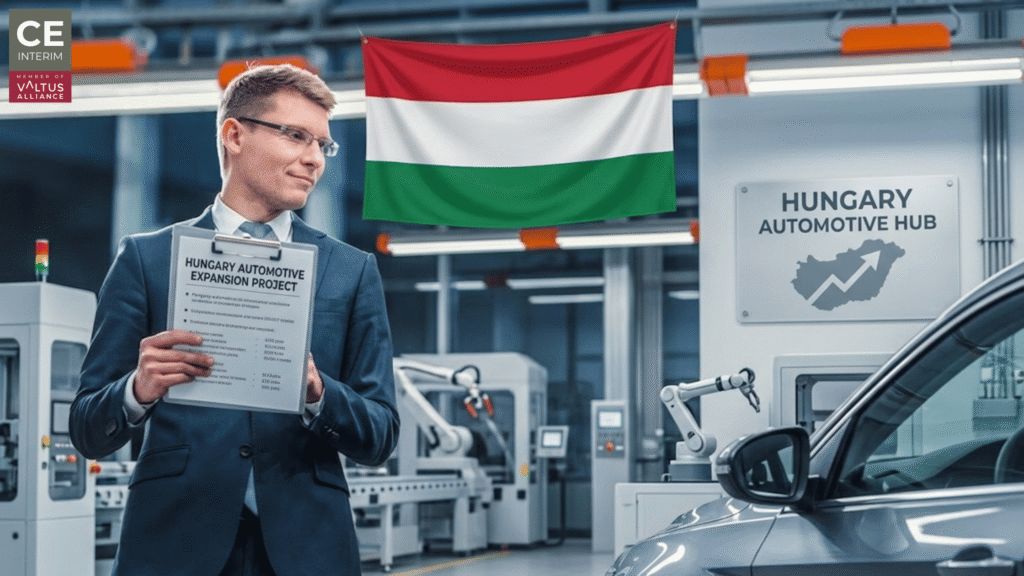
Hungary automotive expansion is accelerating, but plant ramp-ups face leadership gaps. Why execution, not strategy, will decide outcomes for OEMs and suppliers.
Chinese Investment in Hungary: What Changes After the Election

Chinese investment in Hungary after the 2026 election. What changes for EV, battery and industrial projects, and where execution risks could impact outcomes.
Hungary After the 2026 Election: What Investors Should Price In

Hungary elections 2026 explained for investors. What changes in EU funding, FDI flows, and industrial growth, and where execution risks could impact returns.
Cross-Border Interim Management: How It Works and Who Needs It

Cross-border interim management explained: what it is, how it works, who needs it, and why European companies with US operations are the core audience.
Why Automotive Supply Chains Are Most Exposed to Hormuz

Automotive faces five simultaneous Gulf supply disruptions: aluminium, petrochemicals, rubber, semiconductors, and logistics. No other sector is exposed across every material category at once.
After Hormuz: How to Build a Supply Chain That Cannot Be Held Hostage

Hormuz exposed which supply chains can be held hostage and which cannot. The difference was built years earlier. Here is how to build yours now.
How the Hormuz Crisis Is Quietly Destroying Working Capital

The Hormuz crisis is not just raising costs. It is widening five cash conversion cycle gaps at once. By the time it shows in your quarterly review, weeks of response time are gone.
What PE Portfolio Companies Must Do as the Hormuz Crisis Grows

The Hormuz crisis is compressing PE portfolio EBITDA across energy, inputs, freight and working capital simultaneously. Here is the operational playbook for operating partners.
 EN
EN  DE
DE  FR
FR  IT
IT  PL
PL  RO
RO  CS
CS  SK
SK  HU
HU  ES
ES  RU
RU  AR
AR  SL
SL