Not enough time to read the full article? Listen to the summary in 2 minutes.
The border that moved without moving
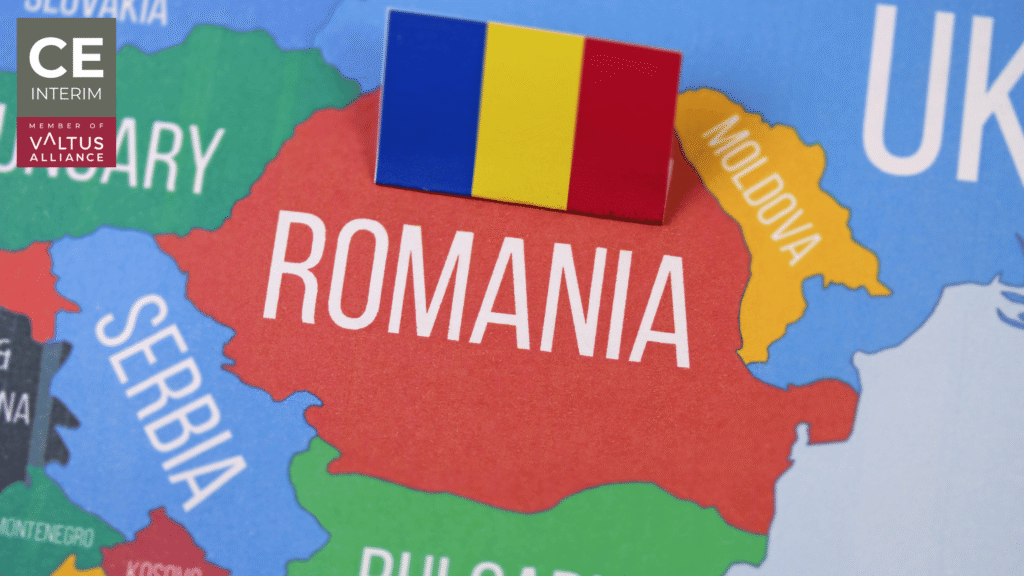
On March 31, 2024, Romania (and Bulgaria) officially joined the Schengen Area for air and sea transport.
For most headlines, it was a footnote.
But for manufacturers, logistics directors, and relocation teams across Europe, something major shifted – even if the trucks at land borders still queue a little while longer.
What changed wasn’t just political.
What changed was the mental map of supply chain risk.
Western European firms now see Romania not just as low-cost or nearshore — but as fully integrated. And that makes all the difference.
What Schengen really changes for industry
Let’s unpack what this means in practice, not theory.
1. Faster movement of goods via sea and air
Romania’s ports and airports – especially Constanța and Bucharest Otopeni – now enjoy Schengen treatment:
✅ No customs stops for intra-Schengen air freight
✅ Smoother coordination across EU-wide logistics hubs
✅ Simplified document flows and digital integration
Even if land borders still have checks, air and sea legs are now frictionless.
That matters more than it seems – especially for high-value parts, emergency shipments, and regional distribution setups.
2. Upgraded reputation for compliance and stability
Schengen isn’t just a logistics win. It’s a signal.
It tells the world that Romania:
- Meets EU security and rule-of-law standards
- Can be trusted for long-term investment
- Is moving in the same direction as Western Europe
This matters to boardrooms. To procurement. To insurance underwriters. To partners choosing between a plant in Serbia vs Romania, or Turkey vs Romania.
3. Smoother movement for your people
CEOs, project teams, technical experts – all benefit from Schengen.
No border checks = faster response time.
No visa hassles = simpler deployment.
No coordination delays = better execution.
When a plant ramp-up hits a snag, the ability to fly in experts overnight matters more than cost savings ever did.
Schengen + Romania = Supply chain rethink
Add this to the bigger picture:
- Romania is building Europe’s fastest highways and rail corridors
- New industrial parks are rising around Schengen-linked ports
- The country has top-5 internet speeds and growing AI infrastructure
- And still offers EU-compliant low-cost manufacturing
Suddenly, it’s no longer a low-cost backup.
It’s a primary supply chain base.
Firms that once looked to Poland, Hungary, or even India and China are now asking:
“Can we simplify everything in Romania instead?”
For plant managers and COOs: less friction = more control
Let’s get practical.
If you’re running a factory network in Western Europe, you know the pain:
- Lead time volatility
- Expensive buffer inventory
- Delays in customs
- Lack of site-level responsiveness
What Schengen unlocks is agility. You gain:
- Tighter control over upstream and downstream logistics
- Easier integration with EU-wide warehousing and ERP flows
- Faster reactivity to market shifts
It’s not just a border. It’s a reset button on what’s possible operationally.
Where interim leadership comes in
At CE Interim, we’ve seen this shift firsthand.
In the past 12 months alone, we’ve helped:
a) Stand up new greenfield sites in Romania using EU supply frameworks
b) Deploy interim COOs to redirect inbound logistics to Constanța port
c) Restructure cross-border transport models with interim industrial project leads
Interim leadership is key in moments like these – not just for setup, but for:
- Renegotiating supplier contracts
- Overhauling transport routes
- Aligning EU compliance in customs and labeling
- Embedding EU transport tech stacks (like eFTI and electronic CMR)
When logistics becomes strategy, execution matters most.
And that’s where interim operators win.
Final thought: The logistics map has changed. Have you?
Romania’s entry into Schengen may seem small – but it’s a structural unlock.
It reduces friction, boosts confidence, and aligns a high-potential country with EU logistics norms.
If you’re expanding, relocating, or redesigning your supply chain, the question isn’t “Why Romania?”
It’s: Why not now?










 EN
EN  DE
DE  FR
FR  IT
IT  PL
PL  RO
RO  CS
CS  SK
SK  HU
HU  ES
ES  RU
RU  AR
AR  SL
SL