
Serbian Ramp-Up Stalling: Three Board Decisions That Should Have Happened Earlier
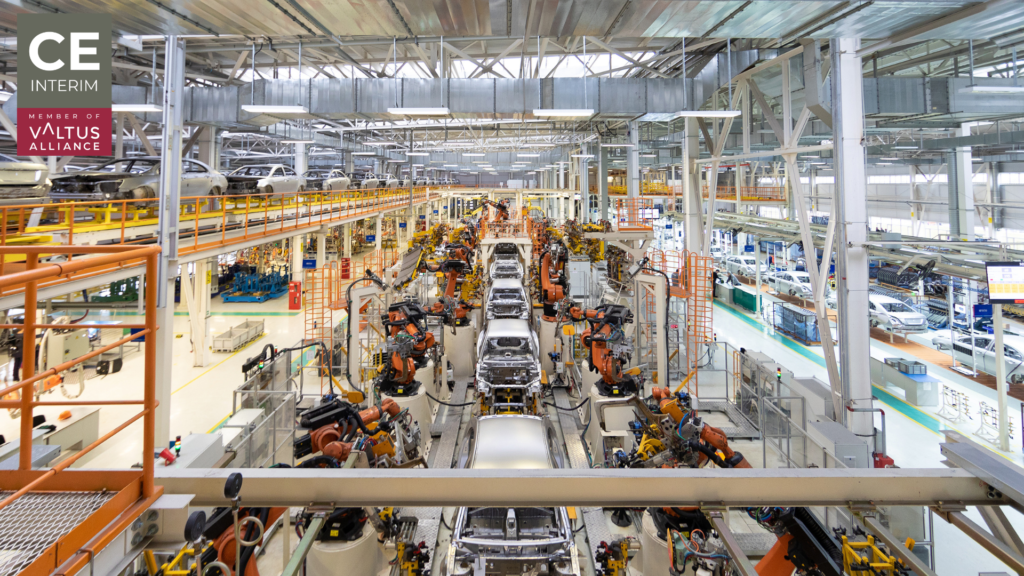
A German conglomerate operates plants in Poland and Serbia under one COO. Poland is shipping to plan. Serbia is ramping new capacity. The Group Board receives monthly KPIs: aggregate output is tracking, capital spend is within budget, and the portfolio appears sound. What the board does not see is that Tier 2 ramp-up board visibility manufacturing metrics at the Serbian operation are deteriorating in ways aggregate reporting masks. Labour scarcity is compressing timelines. Customer delivery milestones are sliding. By the time the formal escalation reaches the board, the cost of delay has crystallised. The Core Problem This is not incompetence. It is a story about how Tier 2 operational oversight fails when portfolio governance depends on aggregate metrics and board attention concentrates on sites that deliver to plan. Market Context Serbia’s automotive industry generated €4 billion in exports in 2025, representing 12.3 per cent of total exports. According to the UNDP labour market study, labour demand in Serbia will increase from 125,000 in 2024 to 144,000 in 2026, with manufacturing leading. The impact manifested acutely in 2025: 1. 12,640 workers in Serbia’s automotive sector were placed on paid leave at 60 per cent compensation longer than legally allowed. 2. This resulted in dismissal of more than 6,000 employees. 3. The effect cascaded into ramp-up delays DACH headquarters never detected until customer delivery penalties arrived. Decision 1: How Many Sites Can A COO Oversee Without Losing Visibility? The Structural Accountability Gap A COO overseeing multiple sites typically manages through quarterly reviews and exception reporting. This works when sites are mature and performing to plan. It fractures when a COO manages both a delivering site (Poland) and a ramp-up site (Serbia) simultaneously. The delivering site demands optimisation attention. The ramp-up site demands escalation and problem-solving. One person cannot give both sufficient scrutiny. What Actually Happened Month 8 of the ramp-up: Serbian operation missed labour recruitment targets. The Plant Manager flagged it to the COO. The COO understood the risk but did not escalate to the board because aggregate portfolio numbers still looked acceptable, driven by Poland’s solid delivery. The decision not to escalate was rational under the assumption that a Tier 2 variance could be resolved locally. That assumption was wrong. Why Board Attention Disappears The Serbian automotive sector saw revenues rise from €7.2 billion in 2023 to €8.3 billion in 2024, but forecasters warned in January 2026 that 2025 could be significantly weaker due to falling EU demand according to CorD Magazine. That external pressure was already known. What was unknown was that labour scarcity would compress the window for recovery. Decision 2: At What Variance Threshold Triggers Board Review? The Aggregate Metrics Trap Most boards receive portfolio-level KPIs, not site-by-site detail. The Missing Decision Rule Few boards have explicitly defined the variance threshold at which a secondary market ramp-up requires board-level intervention. In practice, what constitutes an anomaly is subjective. Decision 3: Who Escalates Before The Customer Does? The Skill Displacement Problem The Stellantis EV conversion at Kragujevac illustrates the problem. The conversion compressed demand for traditional machinists by 12 per cent year-over-year while increasing demand for battery technicians by 34 per cent. A Plant Manager facing this transition cannot solve it locally. Specialised skills do not exist in sufficient supply. This requires board-level capital reallocation. Options available to the board: 1. Upskill (expensive and slow). 2. Outsource non-core assembly (margin hit). 3. Extend the ramp timeline (delays cash return). 4. The Plant Manager cannot make this decision. The COO may not escalate it without board authority. When Customer Escalation Becomes Liability OEM customers operate on fixed delivery schedules. A slip of two to four weeks is normal variance. A slip of eight to twelve weeks triggers formal escalation and penalty review. The escalation sequence in the Serbian case: 1. Month 8: Plant Manager should have escalated to the COO when labour targets were missed. 2. Month 10: COO should have escalated to the board, framed as customer delivery risk. 3. Month 12: Customer saw the miss through delayed shipments. 4. Month 13: Customer placed formal claim. That is how Tier 2 operational oversight failures become customer escalation risk and cash liability. Why Aggregate KPIs Miss Operational Reality A board typically tracks portfolio output, capital spend, margin, and cash flow. This variance may fall within tolerance if market headwinds were already factored. What the aggregate does not show is the composition: Poland over-delivering to compensate for Serbia’s structural problem. Poland cannot sustain that for 18 months. When Poland returns to normal run-rate in Month 16, the portfolio collapses. The Intervention Question When Board Escalation Finally Comes In Month 13, the customer formalises a delivery penalty claim. The board faces three options. 1. Invest capital and temporary executive resources to rescue the operation. This requires €15 to €20 million and assumes the labour market and customer patience both hold. 2. Extend the ramp by six months. This delays cash return but reduces monthly wage pressure. 3. Sell or close the operation and consolidate Serbian supply into Poland or Romania. The board faces a restructuring decision it should have made at Month 10, when variance was internal. The board’s options have narrowed. At Month 13, when the customer has already escalated, any injected leader has less leverage and must work within tighter constraints. Structural Prevention Governance Architecture Without Single-Point Failure The structural problem is not that one COO oversees multiple sites. It is that accountability for ramp-up variance is distributed across multiple roles without clear escalation ownership. A more robust structure assigns explicit accountability in this sequence: 1. Plant Manager owns site-level performance and is required to escalate to the COO if any leading indicator breaches a defined threshold. 2. COO owns multi-site portfolio performance and must escalate to the Board if a threshold is breached. 3. Board owns portfolio-level variance review and must decide on capital reallocation or scope adjustment within a defined timeframe. Separating Ramp-Up Oversight From Aggregate Reporting Most boards receive portfolio-level KPIs quarterly. This is appropriate for
Corridor VIII & Bulgaria: The Eastern Gateway for Industry

Discover why Corridor VIII is turning Bulgaria into Southeast Europe’s logistics powerhouse and what it means for manufacturers and investors.
What’s Driving Rheinmetall and Tech Giants to Bulgaria?

Rheinmetall, Liebherr, and tech giants are expanding in Bulgaria. Discover the real drivers behind Europe’s fastest-rising industrial hub.
$500B Stargate Initiative: Challenges for Europe’s Industry

Explore how the $500B Stargate Initiative reshapes global AI, its challenges for Europe’s industry, & strategies to stay competitive.
Why Eastern Europe Is the Future of Manufacturing Plant Relocation

Discover why Eastern Europe is the ideal choice for manufacturing plant relocation with cost efficiency, skilled labor, and market proximity.
Strategies for Downsizing Manufacturing Plants in Western Europe

Effective strategies for downsizing manufacturing plants in Western Europe, including relocation, cost-saving tactics, and expert interim management support.
IG Metall Strikes: Impact on the European Automotive Industry

Explore the impact of IG Metall strikes on Europe’s automotive sector and discover strategies for stability through CEE and Balkans relocation.
Why Europe’s Automotive Future Lies in CEE and Balkans
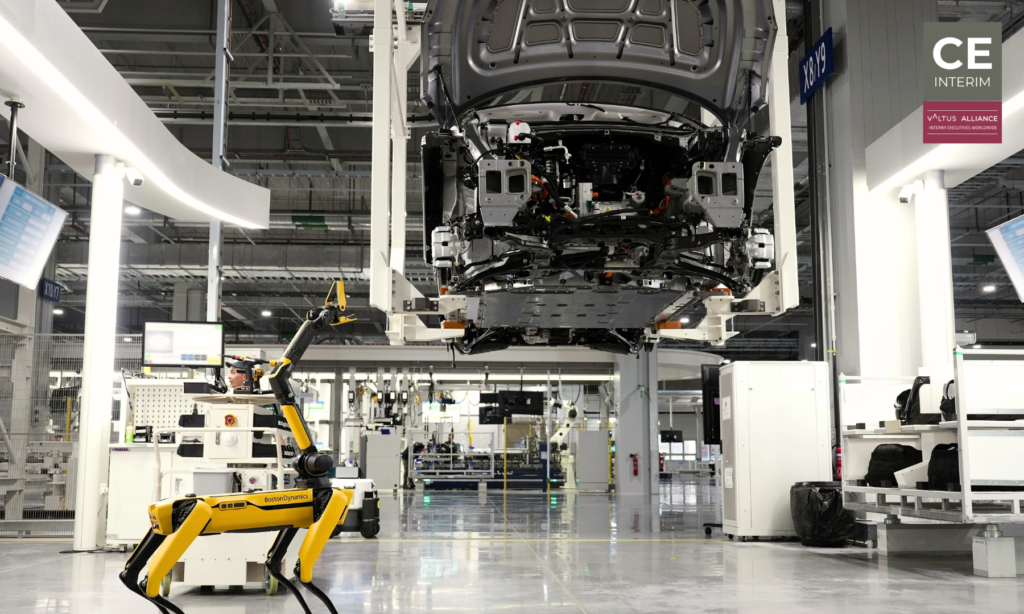
Discover why the CEE & Balkans are key to Europe’s automotive future, offering cost advantages & sustainability in the EV sector.
Navigating Uncertainty: Expanding into Central and Eastern Europe with the China plus One Manufacturing Footprint for Cost-Effective Production

Not enough time to read the full article? Listen to the summary in 2 minutes. China, the global manufacturing hub for years, isn’t that glorious anymore. The region is struggling with new-age challenges which make it less predictable and cost-efficient. If your business is solely relying on China for production, the complex web spun by rising costs, geopolitical uncertainties, and market volatility will bring it doomsday. Companies are concerned with minimizing risks and cutting costs. The China Plus One strategy is surging in popularity. It diversifies production between the Asian hub and other regions. More companies are looking to Central and Eastern Europe (CEE) or the Balkans as the ideal location for their “Plus One” strategy. With its proximity to European markets, skilled workforce, and lower operating costs, the CEE region is emerging as a key player in global manufacturing. Understanding China’s Decline as the Primary Manufacturing Hub China built its manufacturing fort on three key pillars– scalability, cost efficiency, and infrastructure. It provides large-scale production capabilities at fair costs that only a few other countries can match. It has a vast industrial base with the ability to produce high volumes quickly, efficiently, and at scale. The relatively lower labor costs compared to the West is another advantage despite the global hike in wages by 70% in the last decade (McKinsey). Moreover, it has world-class infrastructure with ports, railways, and factories, all designed to support traditional large-scale production and efficient global logistics. These factors make China the go-to option for high-volume manufacturing. However, the dominating fort is beginning to show cracks. Logistics costs are rising (by 20% in recent years according to the World Bank), the U.S.-China trade wars are creating political instability, and events like the COVID-19 pandemic and the Suez Canal accident have exposed vulnerabilities in the global supply chains. Why is it the Perfect Time to Opt For the China Plus One Strategy? The aforementioned factors are worsened due to the volatile global economy where regulatory changes or trade sanctions can severely break down production and distribution networks. Businesses are pressured to think beyond China and explore diversification options. The China Plus One Strategy emerges as the perfect material to fix the cracks. It allows companies to maintain operations in China while simultaneously establishing production sites in other regions like the CEE or Balkans. These alternative destinations provide a combination of cost savings, market proximity, and political stability. It’s the best approach during the current times of global economic turmoil. The Emergence of CEE/Balkans as the Ideal Destination For China Plus One Plan Central and Eastern Europe presents an attractive option for businesses looking to establish a secondary manufacturing footprint. This region has significant opportunities to save costs with an abundance of skilled labor available at comparatively lower wages than the West, closer proximity to key markets, simplifying supply chains, and excellent regulatory standards. Big names like Bosch, Mercedes-Benz, and Samsung have already expanded production to these regions. More businesses are willing to follow the same diversification path due to a number of advantages. Geographical Proximity and Shorter Lead Times Shipping goods from China to Europe typically takes 30-45 days via sea freight. In contrast, transporting goods from a CEE country can take 1-3 days via road or rail, allowing companies to implement more effective just-in-time supply chains. When shipping times are reduced, it saves money, makes deliveries faster, and you can respond to the market demands quickly. Lower Labor Costs Without Sacrificing Skills While labor costs in China remain competitive, countries like Hungary, Romania and Bulgaria offer labor rates that are 40-60% lower than in Western Europe. These countries also have a highly skilled workforce, specifically for automotive, electronics, and machinery. This makes them an appealing destination for businesses needing skilled labor at nominal wages. Investment in Infrastructure and Technological Advancements CEE countries have significantly upgraded their infrastructure, making them more attractive to global manufacturers. The Czech Republic, for example, ranks in the top 30 globally for logistics performance, according to the World Bank. Countries in the region are investing heavily in smart factories, automation, and Industry 4.0 capabilities, giving businesses access to cutting-edge manufacturing technology without the high price tag associated with Western Europe. Regulatory Alignment with EU for Compliance Management CEE and Balkan countries align with European Union (EU) regulations. This makes sure that companies comply with strict environmental, labor, and safety standards, reducing the risk of costly legal battles or non-compliance penalties that might arise from operating in regions with less stringent standards. The EU’s unified market also provides easier access to cross-border trade, simplifying operations for businesses serving multiple European countries. Political Stability Promising Long-Term Growth Political stability helps build the foundation of a successful manufacturing business. CEE and Balkan countries, being a part of the EU, offer a favorable, stable, and political business environment. Companies can plan their investments with confidence. However, this can’t be said for many Asian and African countries. How Does China Plus CEE/Balkans Manufacturing Make Production Cost Effective? A combination of lower labor costs, shorter shipping distances, and enhanced infrastructure makes manufacturing in the CEE more cost-effective than maintaining operations solely in China. This move also lets businesses benefit from reduced tariffs and tax incentives, and fewer supply chain delays and lower transportation costs. With freight costs rising by over 300% in recent years (according to Bloomberg), reducing dependency on long-distance shipping from Asia to Europe can result in significant cost savings. Businesses can remain agile by having the ability to switch between production locations based on costs, demand, and political developments. This flexibility is crucial to maintaining cost efficiency in the long run and staying competitive. How to Execute the China Plus One Strategy in the Right Way? Implementing a successful China Plus One (CEE/Balkans) strategy requires a deep understanding and planning of both China and CEE’s unique advantages. Keep total logistics cost, local incentives, workforce capabilities, supply chain flexibility, and other important factors in focus while strategizing. When your plan is ready, you can
Beyond Borders: Leveraging the China Plus One Strategy to Cut Costs and Stay Profitable in the EU

Not enough time to read the full article? Listen to the summary in 2 minutes. China has been the world’s go-to manufacturing hub due to extensive benefits. However, the recent global events have exposed the vulnerabilities of relying on the country as your manufacturing base. You must have a backup plan in case things go downhill. Logistics costs are rising, trade wars are happening, political instability is persistent, and consumers are growing skeptical. This has driven businesses to diversify production networks– leading to the rise of the “China Plus One Strategy.” It’s a smart approach that allows companies to retain their Chinese manufacturing facility while combining its benefits with production at strategic locations like Central and Eastern Europe (CEE) or the Balkans. This significantly minimizes risks and improves resilience while maintaining profitability and competitiveness. Let’s dive deep into this tactical approach to figure out if it’s the right strategy for you. The Benefits & Limitations of China as a Manufacturing Hub To begin with, you must understand the benefits and challenges of having a manufacturing hub only in China: Key Benefits: Massive production capacity: China still offers incredible scalability. If your company aims at high-volume production, then it’s a highly beneficial location. Low labor costs: While China’s labor costs have risen significantly—by up to 70% in the last decade, according to McKinsey—they remain competitive for many industries. Infrastructure and supply chain efficiency: China’s well-developed infrastructure supports its robust supply chains, making it difficult for other regions to replicate its logistics efficiency. Challenges: Rising logistics costs: Shipping costs from China to Europe have surged by over 300% in recent years as reported by Bloomberg. The reasons are rising fuel prices, global supply chain bottlenecks, and container shortages. This has put a severe strain on profitability. Embargos and trade wars: The ongoing U.S.-China trade war and other geopolitical tensions have caused businesses to reassess their overreliance on China, leading to increased tariffs, disrupted supply chains, and uncertainty. Political instability: With policies like embargos and trade restrictions frequently shifting, companies depending solely on Chinese manufacturing face significant risks in maintaining stable supply chains. Why Has China Plus One Strategy Become the Need of the Hour? Diversifying beyond China isn’t just an option anymore, it’s a necessity due to dreadful risks. The China Plus One strategy prevents you from relying too much on a single production location and offers protection against global uncertainties. Here are the 3 key reasons why it’s the right approach: Mitigating risks: Companies employing the China Plus One Strategy reduce their exposure to trade wars, tariffs, and other economic and geopolitical risks. Just-in-time logistics: Manufacturing closer to Europe enables companies to adhere to just-in-time principles more effectively. Goods shipped from China take 30 to 45 days for shipping while intra-European shipments arrive in just 1 to 3 days. Note this difference. Freight costs: Rising fuel prices and transportation bottlenecks are making long-haul shipping from China prohibitively expensive. So, get production near your home and cut costs on freight. Why Choose Central and Eastern Europe (CEE) or the Balkans for the Plus One Strategy? Central and Eastern Europe and the Balkans have become emerging destinations for companies to move their production base or invest in a new manufacturing facility. Countries like Romania, Hungary, Poland, and others have tactical benefits like market proximity, plenty of skilled talent, cost-saving opportunities, great regulatory alignment, and more. Geographical Proximity and Reduced Shipping Costs CEE countries are proximal to key European markets and The shorter distance also makes delivery times faster, lead times shorter, and market response times quicker. Companies can slash the shipping costs by half compared to transporting things from China. Lower Labor Costs Compared to Western Europe According to the OECD, labor costs in CEE and Balkan countries are 40 to 60% lower than in Western Europe despite having an equally skilled workforce. This helps companies save money without fighting the logistical and geopolitical challenges of Asian countries. Infrastructure and Logistics Network Countries like Poland and the Czech Republic have made significant investments in infrastructure over the last decade. This makes them a brilliant destination for manufacturing operations. The World Bank had ranked Poland among the top 25 nations globally for logistics performance. Political Stability Many CEE and Balkan nations are members of the European Union. This ensures regulatory alignment with EU standards, which reduces legal and compliance risks. Political stability in these countries contrasts with the more unpredictable environments found in certain other low-cost manufacturing destinations like Southeast Asia. Comparing CEE/Balkans with Other Low-Cost Manufacturing Destinations Now let’s compare strategic locations like CEE and the Balkans with traditional manufacturing hubs like Asia (Vietnam, Bangladesh, etc.), Latin America, and Africa. Asian countries are inexpensive labor but there are crucial skill issues and shipping times are too high. Meanwhile, Latin America may be an ideal solution for the U.S.-based companies but it still presents logistical challenges and regulatory issues for European firms. Finally, Africa is an emerging market for companies but the underdeveloped infrastructure, political instability, and lack of skilled labor shoo away manufacturing companies. Key Advantages of the China Plus CEE/Balkans Strategy for European Businesses With the China Plus CEE/Balkans manufacturing strategy, companies can unlock access to an extensive list of benefits: Reduced Dependency on China: When you diversify out of China, it spreads the concentrated risks and your business won’t be halted due to issues in one region. Cost-Efficient Logistics: When you manufacture in the CEE or Balkans, the transportation costs are 30-40% lower than those in China. This also boosts profits while reducing delivery times. Resilience and Flexibility: By diversifying production between China and Europe, companies can easily shift operations based on market demand or geopolitical developments, offering greater operational flexibility. Regulatory Alignment with EU Standards: Manufacturing in CEE ensures full compliance with EU environmental, labor, and safety regulations, reducing the risk of fines, legal disputes, and compliance violations. How to Implement an Effective China Plus One Plan? Implementing an effective China Plus One plan isn’t a cakewalk. You must
 EN
EN  DE
DE  FR
FR  IT
IT  PL
PL  RO
RO  CS
CS  SK
SK  HU
HU  ES
ES  RU
RU  AR
AR  SL
SL