Plant Security During Operational Turnarounds
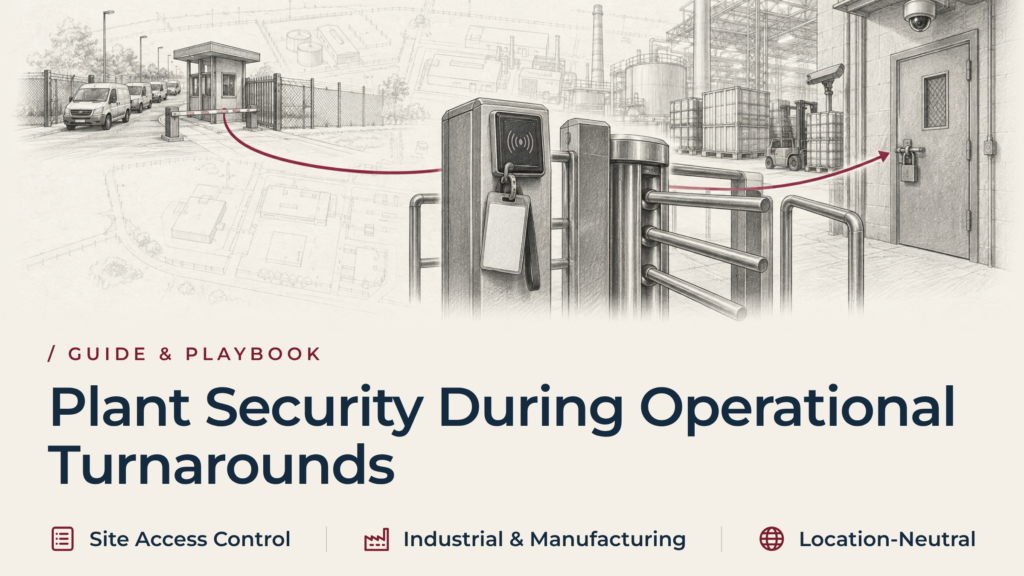
Learn how plant leaders can strengthen security during operational turnarounds by controlling contractor access, restricted areas, credentials and site risks.
Why a French headquarters loses control of an acquired Romanian subsidiary

In brief A French headquarters Romanian subsidiary integration usually stalls for one reason. The deal model assumes decision rights and reporting habits will align on their own. They rarely do. Paris keeps reporting synergy capture on the steering deck. The plant keeps running on legacy contracts and local systems. An Interim Integration Director placed on site changes this. Reporting directly to the French executive committee, the director builds one verified fact base. The mandate then converts deal logic into real operational change, not an open-ended cultural adjustment. The Trigger: Uncaptured Deal Synergies and Factory Floor Disconnects Cross-border acquisitions of Romanian industrial assets by French groups usually begin with a clear commercial case. France remains one of Romania’s largest sources of foreign direct investment. French groups have built industrial relationships across automotive, aerospace and energy for decades. Board papers highlight linguistic proximity and cost competitiveness as natural enablers of fast integration. Six to twelve months after closing, the pattern looks different. The French group’s steering committee reviews a monthly deck. It shows duplicate purchasing contracts still running at the Romanian plant. It shows ERP workflows the plant has not adopted. Reported progress and operational reality have started to diverge. Executive committees in Paris or Lyon often hesitate to intervene directly at this stage. They reasonably assume a well-run acquisition target will adopt group standards on its own schedule. The plant, meanwhile, keeps running under its established practices. No one has yet told local leadership, with clear executive authority, to do otherwise. The moment usually turns financial. The procurement synergies built into the deal case have not materialised. Financial reporting reconciliations run overdue. At that point, headquarters recognises a hard truth. Ownership of the entity is not the same as control over how it operates. Why Cross-Border Post-Merger Integration Stalls Between Paris and Romania French industrial groups and Romanian manufacturing subsidiaries often share a reasonable but incomplete assumption. They expect linguistic and historical proximity to smooth the transition faster than in a market with no shared reference points. That assumption is not wrong. It is incomplete. The friction that follows a Franco-Romanian acquisition has little to do with culture. It comes from two operating systems for decision rights that nobody reconciled at closing. French corporate groups typically govern through layered committee structures, such as the Comité de Direction and the Comex. They run dual reporting lines: a legal-entity chain and a functional chain covering procurement, quality and HR. Once headquarters approves a policy centrally, it expects that policy to apply uniformly, with limited local discretion to adapt it. Understanding the Governance Structure and Operating Logic of a Romanian Plant Many Romanian manufacturing businesses operate under a different, equally coherent logic. Many began as state-owned plants, or as privately built mid-market suppliers. A General Manager typically holds direct, personal accountability for the plant’s output, workforce and supplier relationships. That authority builds up over years, not months. Local purchasing managers rely on long-standing supplier relationships that have kept production running reliably. Shifting volume to a group-negotiated contract looks like a real operational risk from that vantage point. It is not simply a change to resist. Romanian statutory law adds a further layer. A headquarters memo cannot override it on its own. Restructuring, employee transfers and works council consultation carry legal obligations. Those obligations sit with the local entity’s own management, whoever holds it, not with the parent’s instructions alone. Neither model is wrong. Both operating models exist to manage risk in their own environment. The acquisition changes that environment. It does not automatically change either side’s operating habits. As documented in research cited by Harvard Business Review, 70% to 90% of mergers fail to capture planned synergies. Cultural and governance misalignment represents the single largest driver of value destruction in cross-border deals. Warning Signs That Your Foreign Subsidiary Integration Has Stalled Executives and Group Integration Leaders do not need to wait for margin deterioration. A stalled integration shows itself earlier, through a set of specific, recurring signals. Local management confirms adoption of group initiatives in review calls. Day-to-day execution on the factory floor, meanwhile, still runs on the systems already in place. This is not concealment. It reflects a genuine gap between what headquarters approved and what the plant has actually implemented. The subsidiary keeps its statutory books in local software. It reconciles them into the group reporting package through manual spreadsheets, adding time and error risk to every cycle. Purchasing continues through established local suppliers, at prices above the group’s negotiated contracts. Switching often carries a short-term delivery risk nobody has assessed centrally. Bilingual engineers, quality leads and production supervisors sit at the centre of the integration workload. They begin to leave, citing the administrative burden of parallel reporting rather than disagreement with the acquisition itself. French functional heads in IT, HR and procurement, meanwhile, reduce direct contact with the subsidiary. They cite slower response times, without a clear escalation route to resolve why. According to insights on post-merger integration from McKinsey & Company, synergy capture requires direct, on-the-ground operational alignment within the first 100 days post-closing. Once parallel structures solidify, dismantling them becomes significantly more expensive and politically contested. Sustained for more than one cycle, any two of these signals justify a Board-level decision, not another quarter of monitoring. Core Requirements for an Effective On-Site Integration Mandate A head-office audit does not resolve this friction. Neither does a series of short factory visits. A visiting functional manager can spot the same duplicate contracts and unreconciled spreadsheets the monthly deck already shows. What actually changes the plant is continuous, on-site executive authority. That means a defined mandate, and a direct reporting line to the French executive committee. An Interim Integration Director with genuine Franco-Romanian industrial experience gives the acquisition that authority immediately. The organisation does not have to wait for a permanent Managing Director search to conclude. This is an integration mandate, not a plant turnaround or a stand-alone governance review. Neither side lacks competence. What is missing is one accountable executive
Interim managing director for a foreign subsidiary: protecting customer delivery in a Hungarian plant

In brief An interim managing director foreign subsidiary mandate exists for one moment. The managing director of a Hungarian manufacturing plant resigns without warning. The board has no one on site. A permanent replacement typically takes four to six months to recruit, negotiate and release from a competing employer. An interim managing director foreign subsidiary appointment closes that gap. The interim executive takes statutory signatory authority under Hungarian company law. The interim executive holds customer delivery commitments on site and stabilises the local management team. The permanent successor then inherits an intact business, not a recovery project. Managing a sudden managing director resignation and the six-month leadership gap A managing director rarely resigns from a Central European plant at a convenient moment. A competitor sometimes makes a stronger offer. A dispute with headquarters sometimes becomes unworkable. A compliance issue sometimes forces an abrupt exit. Whatever the cause, the board faces an immediate gap across legal, operational and commercial authority. An interim managing director foreign subsidiary appointment is usually the fastest way to close it. The instinctive response is understandable. The plant has experienced department heads and capable shift supervisors. It has modern, largely automated equipment. Headquarters assumes the plant can hold its own for a few months. A search firm, meanwhile, works through a proper process. Hungary’s industrial labour market rarely allows that assumption to hold. Hungarian labor market dynamics accelerating executive vacancy risks Experienced plant leadership is scarce in corridors such as Győr, Debrecen, Tatabánya and Székesfehérvár. Every rival employer and headhunter in the region already knows the names that matter. A managing director’s departure reads locally as a signal, not a rumour. Within weeks, operations managers, toolroom specialists and quality heads start taking calls from competitors. Capital requests sit unsigned. Supplier disputes go unresolved. By around the eighth week without a named executive on site, that drift usually reaches customers. Delayed shipments follow, and difficult calls from procurement follow with them. Why an interim managing director foreign subsidiary mandate is essential for operational continuity Two separate pressures compound each other once a Hungarian plant loses its managing director. One is statutory. One is a labour-market pressure. Statutory representation and legal authority under Hungarian corporate law Under the Hungarian Civil Code (Act V of 2013), the managing director (ügyvezető) holds the company’s registered executive-officer role. That role sits with the Court of Registration (Cégbíróság). Major commercial contracts, tax filings, customs declarations and local bank payments all need the signature of a registered executive officer. A managing director can tender resignation at any time. Where the company’s operation requires it, though, the resignation takes effect only once the company appoints a new executive. Otherwise it takes effect on the sixtieth day after notice. Until the Court of Registration formally registers a qualified executive, or grants full commercial power of attorney (cégvezető), the subsidiary struggles to execute routine contracts. It also struggles to engage local trade unions and deal with authorities. Managing the six-month executive search timeline during leadership transitions A conventional executive search in Hungary is not a quick process. The delay is structural, not a sign that the search firm is underperforming. Mapping bilingual industrial leaders across Hungary, Austria and Slovakia takes time. Running a proper competency and board-approval process typically takes eight to twelve weeks on its own. Negotiating compensation, governance expectations and a formal offer adds two to four weeks. Senior Hungarian industrial executives then usually serve three- to six-month notice periods. Enforceable non-compete agreements often reinforce those notice periods. That adds a further twelve to twenty-four weeks before the successor can start. Add those figures together. The honest range for an interim managing director foreign subsidiary gap is four to six months, sometimes longer. No one at the plant holds full authority for that entire span. That cost rarely appears as one number on a board pack. It accumulates instead, in the departures, delayed shipments and stalled decisions described below. Most of it has already happened by the time it shows up in the numbers. Warning signs of an unmanaged executive vacancy in manufacturing plants A plant without executive leadership rarely fails all at once. Not every signal deserves the same weight. Interdepartmental friction: the primary operational signal for interim leadership The most diagnostic sign is also the earliest: friction between departments that no one has the authority to resolve. Production, maintenance and quality meetings turn into disputes rather than decisions. An experienced executive treats that friction as the moment to act. It is not a pattern to keep watching. Downstream risks of prolonged managing director vacancies in local subsidiaries Everything that follows this first signal is largely confirmation, not new information. Quality engineers, continuous-improvement leads and shift supervisors start handing in notice. They cite uncertainty about the plant’s future leadership. On-time, in-full delivery performance drifts from a typical 98% toward the low 90s or below. Unmanaged bottlenecks and rising expedited-freight costs drive that drift. Supplier invoices needing a managing director’s sign-off pile up unpaid. Local trade union and works council (üzemi tanács) representatives eventually raise grievances directly with regional headquarters, rather than resolving them locally. By the time that last signal appears, the plant has already lacked functioning local authority for some time. Continuity through a leadership change depends on one thing. Someone needs to be visibly and immediately accountable on site, not reassuring the board from a distance. Acting on the first signal usually costs less than waiting for the later ones to confirm it. Core requirements of an interim managing director foreign subsidiary mandate An emergency interim managing director is not a caretaker holding the seat warm. The mandate carries full accountability for the plant’s performance, customer relationships and statutory obligations from day one. It follows a sequence that puts the most time-sensitive decisions first. Before the executive arrives, a CE Interim Partner agrees the reporting cadence directly with the board. The Partner also agrees the escalation threshold, and reviews progress every two weeks throughout the mandate. That cadence means oversight never
What UAE investment means for German industrial operations

A German industrial business that has accepted Gulf capital notices the change in its month end close. UAE investment in German industry has moved from announcement into execution. The Federal Government press office confirmed the announcement on 10 September 2026. Both leaders welcomed a UAE investment package of EUR 40 billion in Germany. The figure tells a board nothing about the delivery agenda it has inherited. Three forms of UAE investment in German industry, three delivery agendas The sum is a declaration of intent, not an itemised commitment. The joint declaration reported by WAM records 29 business to business agreements worth more than EUR 9.356 billion, which sit alongside the package rather than inside it. Minister Sultan Ahmed Al Jaber called the sum additional to roughly EUR 34 billion already invested, Handelsblatt reported on 10 September 2026. What matters operationally is the form UAE investment in German industry takes. An acquisition makes controlling integration the first constraint Covestro is the clearest case, and it predates the September package. XRG, the international arm of ADNOC, completed its takeover of Covestro AG on 10 December 2025, with a EUR 1.17 billion capital increase at closing. Emirates Global Aluminium shows a different pattern, expanding a German recycling asset it already owns. In both cases the owner sets the reporting standard, and the German finance function runs two closes. Control also brings a regulatory sequence. A non EU acquirer falls under screening by the Außenwirtschaftsgesetz and Außenwirtschaftsverordnung, administered by the Bundesministerium für Wirtschaft und Energie. Regulation (EU) 2019/452 runs alongside. Merger control sits with the Bundeskartellamt or, under the EU Merger Regulation, the European Commission. The EU Foreign Subsidies Regulation, Regulation (EU) 2022/2560, can attach commitments shaping how the owner runs the asset. Boards read these as closing conditions. They set the operating terms for two years. A minority position moves the question from control to information Minority capital adds a reporting obligation to a company that never carried one. Partners Group announced on 14 July 2025 that a consortium had agreed to acquire Techem of Eschborn, with Mubadala Investment Company joining as a minority investor. Parity co-determination under the Mitbestimmungsgesetz of 1976 applies above 2,000 employees, the Drittelbeteiligungsgesetz between 500 and 1,999. A minority shareholder gains visibility into a supervisory board it cannot reshape, and the load falls on controlling rather than the plant. Project funding makes milestone reporting the operating discipline Project capital is the most demanding of the three, because it carries dates. RWE announced on 6 February 2026 a memorandum with Masdar. Masdar would explore investing by 2030 in existing RWE owned battery storage assets of up to 1 GW in Germany, with a further 1 GW by 2035. That establishes intent, not completion. The pattern holds where the investor is not the counterparty. GlobalFoundries, the US headquartered group in which Mubadala Investment Company holds a large stake, announced on 28 October 2025 a EUR 1.1 billion expansion of its Dresden site, taking it beyond one million wafers a year by the end of 2028, with expected support from the federal government and the Free State of Saxony under the European Chips Act. That is corporate capital, not part of the September package. Public co-funding adds audit and milestone evidence, so the reporting calendar becomes a production constraint, not a finance task. The headquarters to site interface decides German industrial operations after foreign investment Decision rights before reporting formats Distance changes the mechanics, not only the atmosphere. A shareholder committee in the Gulf works a different week, so a Thursday capital question waits for the next one. An investment council used to monthly operating detail meets a controlling function built for a supervisory board that meets quarterly. Neither expectation is unreasonable, and the two pull against each other. That is the trade-off a board is actually managing. Meeting the owner’s information needs quickly tends to slow local decisions, and protecting decision speed leaves the owner uncertain for longer. The board decides how much decision latency it accepts, and for how long. Sequence matters here. Decision rights come first, because formats agreed before authority produce fast figures nobody on site can act on. The capital authorisation path comes second, because a stalled project is the first cost a customer notices. Controlling harmonisation comes last. In German industrial operations after foreign investment that order is often reversed. Past the second quarter it shows in delivery before it shows in the accounts, a pattern CE Interim sets out in its work on post merger integration. Works council timelines set the clock Under section 106 of the Betriebsverfassungsgesetz, a company above 100 employees must inform its economic committee, the Wirtschaftsausschuss, of material commercial change. Any change qualifying as a Betriebsänderung triggers the reconciliation of interests and social plan process under sections 111 to 113. The works council calendar sets the achievable pace of change, not the investment committee paper. An execution readiness check for the first 180 days A board can measure most of this before the first owner close. Three questions establish where a site stands, and each carries a threshold. The decision now in front of the board UAE investment in German industry is not by itself an operational risk. The risk sits in the gap between new governance load and existing management capacity, while the plant holds its delivery commitments. The EUR 10 billion indicated for the Free State of Bavaria has no named recipient, so boards should plan against structures rather than headlines. The choice is narrower than the announcement suggests. A board can carry the new load with its existing team, rebuild finance and operations leadership to hold it permanently, or accept that the site cannot meet the commitments made on its behalf and reopen the question of scope, ownership or closure. Where the gap is specific and time limited, an interim chief financial officer or chief operating officer can hold it, under a written mandate. It sets out who holds the reporting line to the new owner,
Four in ten surveyed investors would no longer choose Slovakia
Only 4 per cent of surveyed companies rate the Slovak economic situation as good, and
four in ten investors would no longer choose the country. For an owner with a plant there, that is a trigger to retest the case, not a
verdict on the plant.
European automotive supply chain escalations: when customer quality audits demand immediate leadership replacement in Poland
In brief A European OEM has escalated repeated quality failures at a Polish Tier 1 plant to Controlled Shipping Level 2. A VDA 6.3 audit has failed. At that point, automotive quality recovery depends on leadership, not another root-cause review. Five conditions mark that shift: the same defect returning after a closed 8D, containment that will not lift, customer escalation to the group CEO, a VDA 6.3 downgrade, and a defensive response from plant management. Once two or more appear together, automotive quality recovery becomes the COO’s task. An interim executive with turnaround authority goes on site. From Technical Failure to Leadership Crisis: The Trigger for OEM Escalation Corporate COOs rarely replace a subsidiary plant director after one failed audit. The path to automotive quality recovery through a leadership change usually follows the same sequence. It starts with isolated parts-per-million spikes or minor dimensional variances in the customer portal. The Polish plant director assures group headquarters that the team understands the cause. Raw material variation or tooling wear usually gets the blame. Headquarters accepts this. It is a reasonable response. The plant is running at volume and the explanations are plausible. Intervening from a distance also risks undermining a director who may still be right. Automotive quality recovery depends on catching the pattern before it hardens. That patience has a cost that only becomes visible later. Group leadership keeps relying on monthly dashboards and remote quality reviews. It assumes the plant can close its own 8D reports. Behind the containment promises, the shop floor is not holding basic process tolerances. Defective parts start reaching OEM assembly lines in Germany, France or the Czech Republic. This is the blind spot automotive quality recovery has to close first. The turning point is procedural, not emotional. The customer invokes Controlled Shipping Level 2 (CS2) and places third-party inspectors on site at the supplier’s expense. A subsequent VDA 6.3 process audit then returns a failing score. At that point the OEM’s quality director issues an ultimatum: replace on-site leadership, or lose the business. The technical question and the leadership question have now separated. The shop floor can still answer only one of them. From this point, automotive quality recovery runs through leadership, not through another engineering review. Managing Cross-Border Automotive Quality: Structural and Operational Challenges Navigating VDA 6.3 Process Audit Compliance and Supplier Ratings German, French and other European OEMs enforce supplier conformance through the VDA 6.3 Process Audit Standard. It scores defined project and production elements against strict downgrading rules. Scoring below 80 per cent automatically downgrades a supplier to a C rating. So does failing a starred question on process risk. Automotive quality recovery has to work inside that standard, not around it. A C rating triggers New Business On Hold. It blocks the plant from future platform awards and invites further unannounced audits. Sustained non-conformance escalates further, to Controlled Shipping Level 2 (CS2) containment, which requires an accredited external agency to inspect every outgoing part. Once triggered, none of this leaves room to negotiate, and a phone call to the customer’s account manager reverses none of it. This rigidity is exactly why automotive quality recovery leaves no room for after-the-fact negotiation. Bridging the Visibility Gap Between Headquarters and Manufacturing Plants In many cross-border manufacturing groups, headquarters receives a thinner account of severity. The customer is living a fuller one on the assembly line. This is rarely deliberate concealment. Plant leadership under production pressure has a genuine reason to treat each new OEM notice as another routine complaint. It files the 8D report that closes the ticket, not the one that fixes the underlying process gap. This is why automotive quality recovery cannot rely on the plant’s own account alone. Headquarters itself is tracking the daily output number. Meeting it can quietly outrank holding every quality gate, especially before a customer escalation makes the tension obvious. Language and cultural distance add to this. A German or French supplier-quality manager visiting the Polish site can hear a machine-capability explanation as resistance to accountability. That can be true even when the plant is describing a genuine constraint. Neither side is acting in bad faith. Both sides are working from different information and different incentives. The gap widens for as long as nobody outside the plant has direct visibility of it. This is also why customer patience is shorter than it used to be. BCG’s 2026 Global Automotive Supplier Study points to sustained automotive manufacturing margin pressure across the OEM base. That pressure is pushing vehicle manufacturers to enforce stricter cost and quality pass-through terms on their supplier tiers. An OEM managing its own margins has less room to absorb repeated non-conformance. It also has less patience for a plant that treats an OEM customer escalation as a communications problem. The problem is operating, not communications. Automotive quality recovery now depends on speed as much as substance. Key Indicators for COOs: When Automotive Quality Recovery Requires Leadership Change The same defect returns after a verified 8D closure. The plant submits a formal corrective action. The customer accepts it. The identical defect then reappears in serial production within thirty to sixty days. This is the clearest signal available. The containment and corrective-action discipline on site cannot yet hold a fix, whatever the root-cause analysis says on paper. CS2 containment does not lift within roughly eight weeks. Third-party inspection costs accumulate quickly, often into hundreds of thousands of euros a month. A plant that cannot exit CS2 within that window has lost control of its own quality system. It has not simply encountered a difficult defect. The customer’s quality or procurement leadership contacts the group CEO directly. An OEM that bypasses the account relationship to reach the group CEO or COO is signalling something specific. The existing structure has exhausted its patience, and the customer now expects a personnel consequence, not another status update. A VDA 6.3 audit returns a C rating. The audit provides external, structured confirmation that the operational failure is systemic. Findings at
When a European Group Closes a US Automotive Plant: The Board Decisions That Cannot Be Delegated

A European Group Board approves a US automotive plant closure and authorizes local execution. Soon, headquarters receives decisions that can alter the exit. An OEM asks for continued supply, a supplier seeks a settlement, or an environmental obligation survives production. The Board must decide which matters remain reserved and which belong with the US closure executive. The legal timetable starts before many of those decisions reach headquarters. The U.S. Department of Labor says the federal Worker Adjustment and Retraining Notification Act (WARN Act) generally applies to employers with 100 or more employees. It generally requires at least 60 calendar days of advance written notice for qualifying plant closings or mass layoffs. Under 20 CFR Part 639, a covered plant closing generally involves at least 50 employment losses at one site. The Board must define what a US automotive plant closure means before authority moves locally Closure scope needs a defined end condition Stopping production covers only one part of the exit. The Board should define the end condition before execution starts. That definition can cover employee separation, tooling transfer, equipment sale, property exit, environmental work, benefit actions, and legal entity treatment. An automotive plant shutdown USA program can finish production while other obligations continue. Workforce sequencing can move the legal timetable The DOL WARN Advisor says a WARN plant closing can arise when at least 50 employees lose employment at a site, facility, or operating unit during 30 days. The threshold excludes part-time employees. For a mass layoff involving 50 to 499 employees, the affected group generally must equal at least 33% of the active site workforce. At 500 or more employees, the 33% threshold does not apply. Those thresholds make workforce sequencing a governance issue. Board governance plant closure rules should identify who can approve changes to the workforce plan. Reserved matters should exist before local execution starts A decision-rights map should separate scope changes from ordinary execution. The Board can retain customer extensions, total closure funding, major liability assumptions, property decisions, and changes to the final end state. The US closure executive can control daily execution inside those limits. Final OEM commitments stay with the Board when they change exit economics Customer requests can extend the approved perimeter An OEM request to extend production can change labor, inventory, maintenance, logistics, and supplier needs. New service-parts commitments can create the same effect. Delayed tooling transfer or extra premium freight can also move cash and timing. In an OEM customer and Tier-1 automotive supplier relationship, local management should not create a new obligation that changes the approved exit. Four commercial decisions should cross the escalation line Formal closure dates create hard coordination points Virginia Works records that Continental Automotive Systems filed a WARN notice on 1 July 2024 for its Culpeper closure. The notice listed an impact date of 4 October 2024 and 150 affected employees. This example does not suggest a governance failure at Continental. It shows that a US manufacturing plant closure creates formal dates that must match the commercial exit plan. European automotive groups such as Continental and ZF Group, including ZF Active Safety, operate within connected customer and plant schedules. The Board needs visibility when a customer request alters that schedule. The Board owns the cash-to-close envelope, while local management controls approved spending Funding authority should follow the approved closure case The Board should approve the total cash envelope and its core assumptions. Local management then needs authority over normal closure spending inside that envelope. This can include supplier settlements, required staff, site services, inventory disposal, and approved decommissioning. A European company closing US plant operations loses time when routine payments repeatedly return to Europe. Escalation should start when the economics move Benefit obligations can run on a separate clock The Pension Benefit Guaranty Corporation (PBGC) sets a separate timetable for a standard termination of a covered single-employer defined-benefit plan. The Notice of Intent to Terminate generally goes out at least 60 days before the proposed termination date. The same notice generally cannot go out more than 90 days before that date. PBGC rules, ERISA Section 4041, and 29 CFR Part 4041 then require additional notices and filings. The last production day cannot serve as a universal financial completion date. The cash-to-close case should reflect the separate benefit timetable. Employee, environmental and contractual exposure must be quantified before authority moves locally Federal WARN does not cover the full notification analysis The Employment and Training Administration within the U.S. Department of Labor says some states impose their own plant-closing requirements. Those rules can add obligations beyond federal WARN. The facility location therefore matters before management approves announcements, phased exits, or workforce changes. Representation issues require a separate legal check. Local counsel should test actions against the National Labor Relations Act (NLRA) and National Labor Relations Board (NLRB) jurisdiction. Environmental obligations can survive manufacturing The U.S. Environmental Protection Agency (EPA) sets financial assurance rules under the Resource Conservation and Recovery Act (RCRA) for applicable hazardous-waste treatment, storage, and disposal facilities. Regulated facilities must demonstrate financial resources for proper closure. Closure-cost estimates can include safe shutdown and contamination work. Post-closure duties can include monitoring, maintenance, and record keeping. Those rules do not apply in the same way to every automotive factory. The group must establish the environmental status of the specific site. The Board should not assume that production cessation or a property sale ends the exposure. The Barnesville record shows why diligence belongs before the final shift The Georgia Environmental Protection Division site summary identifies the General Tire-Aldora Plant at 160 Aldora Street in Barnesville as Hazardous Site Inventory No. 10057. The record notes regulated-substance releases and required corrective action. This example applies to that site only. It does not imply that other automotive closures carry comparable contamination. For board governance plant closure purposes, residual obligations can affect property decisions, closure funding, and the final end condition. The Board needs those facts before an asset exit. A closure case study separates site activity from group control A
When DACH Headquarters Must Manage Turnarounds in Poland, Czech Republic and Romania Simultaneously
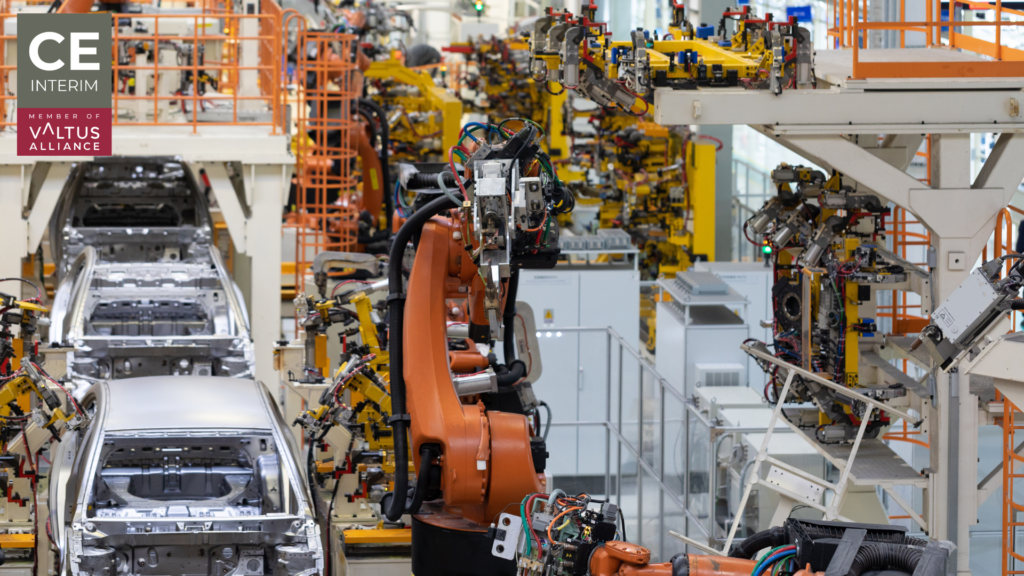
A German automotive supplier holds controlling stakes across Poland, Romania, and Czech Republic. Polish output is strong but wage pressure is rising. Romanian manufacturing contracted 5 percent since 2021. Czech capacity is stable but labour is tightening. A multi-country portfolio turnaround CEE is under discussion at board level. What the board does not yet grasp is that three individually sound recovery plans, executed simultaneously, will collide at the governance level and destroy value even if each site improves operationally. The CEO’s Dilemma: Consolidated Narrative Versus Operational Reality A Chief Executive Officer running a multi-country portfolio faces a fundamental problem. The CEO holds ultimate accountability for consolidated financial performance, return on invested capital, and strategic coherence. These metrics demand a single narrative: the portfolio is underperforming for X reasons, recovery requires Y interventions, and consolidated EBITDA will improve by 15 percent. Operating reality tells three separate stories According to XYZ analysis from July 2026, Polish industrial production in June 2026 was nearly 16 percent higher than in 2021, the strongest performance in the region. The Polish operation manages demand successfully while absorbing wage inflation. The recovery story in Poland is about margin protection, not operational rescue. Romania presents a different operating problem. According to Institutul Național de Statistică, Romanian industrial output has contracted by approximately 5 percent since 2021. Manufacturing specifically declined 6.0 percent year-on-year in January 2026. This is the visible consequence of structural demand loss. The automotive industry accounts for approximately 10 percent of GDP and nearly 50 percent of total exports. Romania’s turnaround requires capital deployment and a multi-year recovery timeline with uncertain cash generation in the near term. The Czech Republic operation produces stable financial results. Yet behind those results, tight labour availability is creating deferred maintenance and hidden capacity constraints. A consolidated recovery narrative that treats all three sites as components of a single turnaround plan obscures these incompatible realities. The COO’s Bandwidth Problem: One Executive Cannot Hold Three-Country Authority The operational plan for a multi-country portfolio turnaround CEE typically assigns responsibility to a single Chief Operating Officer, who is expected to hold line authority over all three countries, ensure reporting consistency, and drive decision velocity. This is a design flaw that appears rational in an organisation chart but fails in execution. Labour shortage creates country-specific constraints In Poland, according to the Voivodeship Labour Office in Kraków’s Occupational Barometer 2026, shortage occupations include electricians, electromechanics, electrical fitters, welders, and CNC machine operators. A COO responsible for Poland must spend disproportionate time on labour retention, wage negotiation, and tactical headcount decisions. The same executive cannot simultaneously hold the same quality of attention on Romania, where the problem is demand stabilisation and cash preservation, or on the Czech Republic, where the problem is capacity planning under labour tightness. Decision velocity collapses across three countries Multi-plant restructuring creates competing demands: The CFO’s Capital Deployment Choice: When Investment Becomes a Hierarchy A CFO managing capital allocation across a multi-country portfolio turnaround CEE must answer: which country gets investment capital, which gets restructuring capital, which gets managed for cash? If Poland requires €15 million to protect margin, Romania requires €25 million to stabilise operations, and Czech Republic requires €10 million to address deferred maintenance, the total requirement is €50 million. Most mature industrial groups do not have €50 million available when capital competes with dividends, strategic investments, and debt service. The CFO faces a hierarchy of incompatible choices Each choice has different outcomes for consolidated EBITDA and portfolio resilience. Yet no choice is presented as such to the board. Instead, the CFO constructs a narrative of “efficiency” or “phased investment” that conceals an operating hierarchy where one country is being prioritised over others. The PE Partner’s Thesis Challenge: Portfolio Targets Collide with Recovery If the portfolio is backed by private equity, a PE partner has a simple mandate: improve consolidated portfolio EBITDA by a target percentage within 18 to 36 months. This is the core investment thesis. When a multi-country portfolio turnaround CEE is proposed, the PE partner is agreeing to improve EBITDA across three countries through operational intervention. The reality is far more complex. All three countries face the same structural headwind According to the European Trade Union Confederation data from March 2024, the EU lost approximately 1 million manufacturing jobs between 2019 and 2023. Poland recorded 278,000 job losses, Romania recorded 144,000, and Germany recorded 129,000. These losses reflect structural changes in industrial capacity and labour economics, not temporary market weakness. Resolving Competing Authority: Regional Executive Accountability Becomes Necessary The governance failure across these competing roles is not solved by adding process or improving reporting templates. It is solved by establishing clear, singular executive authority for the portfolio as a whole, separate from daily management of individual country operations. What a regional executive authority must hold This is not a coordinating role. It is an executive authority role. A coordinator transmits decisions; an executive authority makes them. How this authority should be governed determines whether the role succeeds or becomes a bottleneck that slows portfolio recovery. This role cannot be permanent When manufacturing employment is contracting across the region and individual sites are pulling in different directions, the regional executive cannot be a permanent addition to the cost base. The role exists to establish facts, sequence decisions, and force alignment. Once that work is done, the role typically migrates away or consolidates with permanent country leadership. The Board’s Decision: Three Distinct Operational Paths The board must now choose what a multi-country portfolio turnaround CEE actually means. This is not a binary decision. It is a sequence of choices across different timeframes. DACH market context: portfolios are being refocused According to ARC Group’s February 2026 analysis, DACH industrial M&A activity has pivoted toward carve-outs, minority stakes, and restructurings. German industrial deal volume reached 551 transactions in 2025. Total deal value moderated to EUR 16.5 billion, a 40 percent decline from the previous year. This shift reflects deliberate portfolio choices: selling non-core assets and concentrating capital on businesses where recovery
Cross-Cultural Mandate Management: How an Executive Builds Authority on Both Sides

Cross-cultural mandate management fails when an executive becomes either headquarters’ messenger or the local plant’s advocate. Learn how verified facts, clear escalation rules, decision rights, and independent mandate governance build authority on both sides.
Local or International Interim Executive: Which Does the Transformation Require?

Choosing between a local and international interim executive is not a nationality decision. Learn how Boards should evaluate independence, statutory standing, shopfloor credibility, governance alignment, and turnaround authority before making the appointment.
 EN
EN  DE
DE  FR
FR  IT
IT  PL
PL  RO
RO  CS
CS  SK
SK  HU
HU  ES
ES  RU
RU  AR
AR  SL
SL