

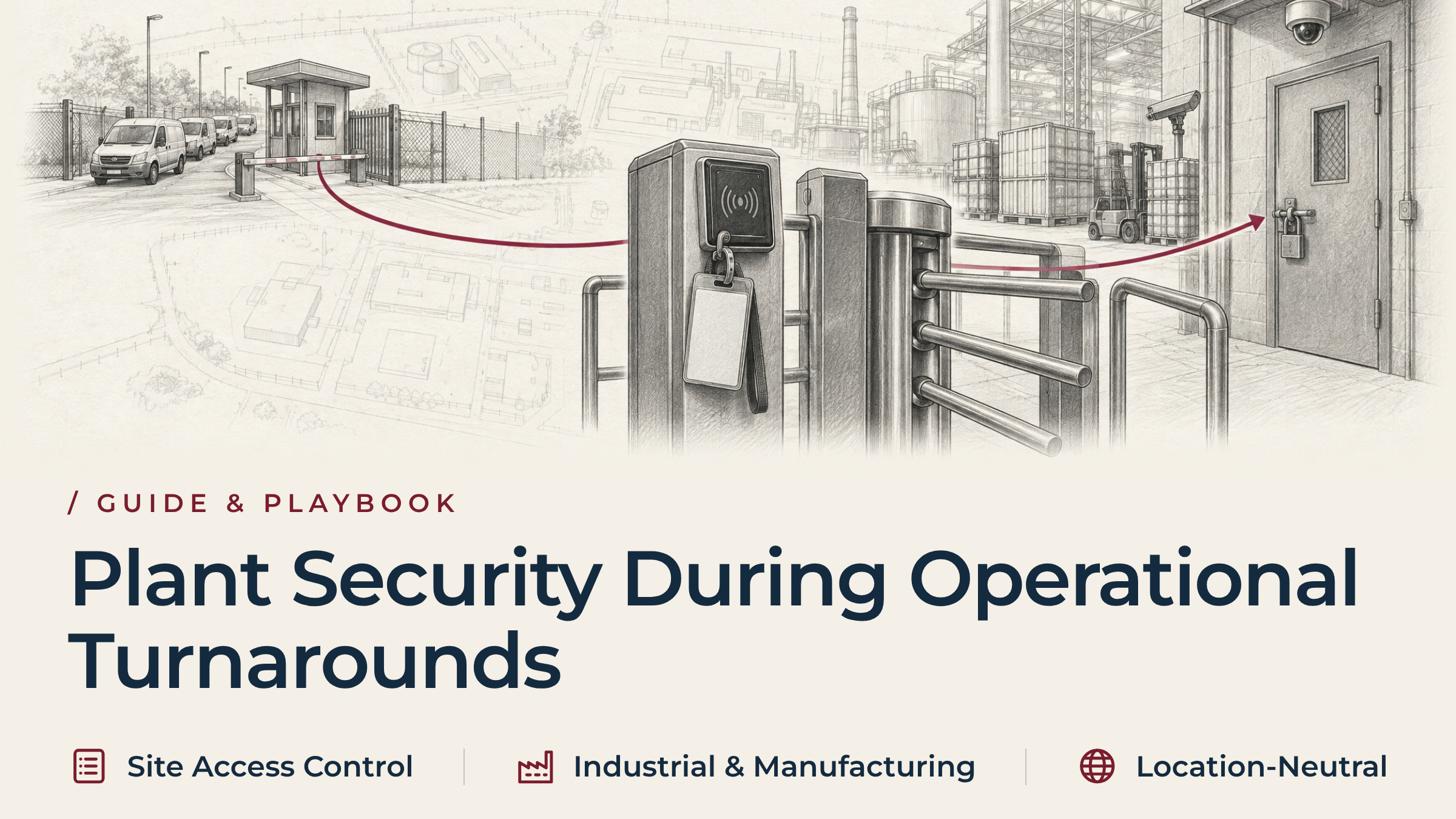
يمكن أن تؤدي عمليات إعادة الهيكلة التشغيلية إلى تغيير شكل الموقع الصناعي بين عشية وضحاها تقريبًا. فقد تمتلئ مناطق الإنتاج — التي عادةً ما يكون عدد العاملين فيها ثابتًا ويمكن التنبؤ به — فجأةً بالمقاولين وفرق الصيانة وموردي المعدات والمفتشين والعمال المؤقتين. وتزداد حركة المرور عند البوابات، وتزداد الأنشطة في المستودعات، وقد تتطلب المناطق التي عادةً ما تكون محظورة ترتيبات دخول مؤقتة.
تحدث هذه التغييرات في بيئات تتسم بالفعل بمخاطر كبيرة على السلامة. وقد سجل مكتب إحصاءات العمل الأمريكي ما يقارب 332,600 إصابة ومرض مهني في قطاع التصنيع خلال عام 2024, ، حيث بلغ المعدل الإجمالي للحوادث المسجلة 2.7 حالة لكل 100 عامل بدوام كامل. وشهد قطاع التصنيع وحده حوالي 306,500 إصابة مهنية غير مميتة في تلك السنة.
ويضيف التغيير الجذري متغيرًا آخر: حيث تتوقف أنماط الدخول عن كونها روتينية. فقد يحتاج العمال إلى الدخول إلى مناطق غير مألوفة، وقد يبقى المقاولون في الموقع خارج ساعات العمل العادية، وقد تشغل المعدات أو المواد مؤقتًا مساحات تخضع عادةً لإجراءات أمنية مختلفة.
وبالتالي، ينبغي أن يركز الأمن المادي خلال هذه الفترة، بالنسبة لقادة المنشآت، على مبدأ بسيط: ألا يُسمح لأي شخص بالدخول إلا إلى المناطق اللازمة لأداء عمله، وفقط طالما كان هذا الدخول ضروريًا.
وهذا هو أيضًا المكان الذي غالبًا ما تدخل فيه الإدارة المؤقتة على الساحة. في عملية إعادة الهيكلة التشغيلية الجارية، فإن مدير المصنع بالنيابة، أو مدير العمليات، أو المسؤول التنفيذي عن إعادة الهيكلة قد تُمنح سلطة مباشرة على الموقع لفترة محدودة. وعندئذ يصبح الأمن المادي جزءًا من ولاية تحقيق الاستقرار الأوسع نطاقًا: توضيح من يحق له دخول المناطق الحيوية، وما هي الاستثناءات المشروعة، ومن يتحمل المسؤولية عند التعليق المؤقت لإجراءات التشغيل العادية.
عمليات إعادة الهيكلة تغير المعايير الأمنية المعتادة
تتبع معظم المنشآت الصناعية أنماطًا يمكن التنبؤ بها في ما يتعلق بالدخول خلال عملياتها اليومية.
يستخدم الموظفون المداخل المعتادة. وتعمل فرق الصيانة ضمن المناطق المحددة. ويتبع موظفو المستودعات الجداول الزمنية المعتادة، وتقتصر المجموعات المصرح لها بالدخول إلى مناطق الإنتاج المحظورة على أفراد معروفين.
عمليات إعادة الهيكلة تقلب هذا النمط رأساً على عقب.
قد يحتاج مقاول الصيانة — الذي لا يوجد لديه عادةً سبب يدعوه لدخول المصنع — إلى دخول مؤقت إلى عدة مناطق إنتاج. وقد يحتاج فني متخصص إلى الدخول في منتصف الليل. وقد يقوم البائعون بتسليم المعدات عبر بوابات لا تشهد عادةً حركة مرور كثيفة.
ينبغي على قادة المنشآت التعامل مع هذه التغييرات المؤقتة باعتبارها مرحلة أمنية منفصلة، بدلاً من الاكتفاء بتمديد الصلاحيات العادية.
قبل بدء العمل، ينبغي على فرق الأمن والعمليات والصيانة والسلامة والصحة والبيئة تحديد المناطق التي ستشهد نشاطًا متزايدًا، والمساحات التي يجب أن تظل خاضعة لرقابة مشددة.
بالنسبة للقائد المؤقت الذي يصل إلى مصنع يعاني من مشاكل أو يعاني من ضعف الأداء، فإن هذا الاستعراض الأساسي يمثل إحدى المهام الإدارية المبكرة. والهدف من ذلك ليس تولي مهام الأمن، بل التأكد من أن أقسام الأمن، والصحة والسلامة والبيئة، والصيانة، والموارد البشرية، والعمليات تعمل وفقًا لنفس نموذج التشغيل المؤقت، وهيكل الصلاحيات، ومسار تصعيد المشكلات.
امنح الموظفين والمتعاقدين حق الوصول الذي يحتاجون إليه فقط
لا ينبغي أن تتيح شارة دخول المنشأة الوصول تلقائيًّا إلى كل مبنى أو قسم.
يمكن أن تساعد الأذونات القائمة على الأدوار في الفصل بين الدخول العام إلى المصنع والوصول إلى المناطق عالية المخاطر، مثل غرف الكهرباء والمختبرات وغرف التحكم ومخازن المواد الكيميائية وغرف الخوادم أو خطوط الإنتاج المتخصصة.
يتطلب المقاولون إدارة أكثر صرامة.
يجب أن تعكس صلاحيات دخولهم طبيعة المشروع المحدد، ومنطقة العمل، ووردية العمل، ومدة العقد. فلا ينبغي أن يتمكن المقاول المكلف بإصلاح المعدات في المبنى «أ» من الدخول تلقائيًّا إلى مستودع أو خط إنتاج يقع في الجانب المقابل من الموقع.
كما يمكن أن تقلل بيانات الاعتماد المؤقتة من خطر بقاء الأذونات القديمة سارية المفعول بعد انتهاء فترة الصيانة.
ينبغي على مسؤولي المنشأة وضع إجراء لتعطيل بيانات الاعتماد تلقائيًا أو على الفور عند انتهاء مدة العقد، أو مغادرة العامل للمشروع، أو تغير المسؤوليات.
ويكتسب هذا الأمر أهمية خاصة عندما يقود عملية إعادة الهيكلة مسؤول تنفيذي مؤقت من خارج المؤسسة. فقد لا تستمر مدة التكليف سوى بضعة أشهر، لكن القائد لا يزال بحاجة إلى مصفوفة وصول موثوقة، ومسؤولين معينين عن العمليات، وإجراءات واضحة لإنهاء الخدمة، حتى لا تستمر الأذونات المؤقتة لفترة أطول من المدة التي استدعت منحها.
ربط الوصول بالتدريب والتفويض
كما ينبغي أن يعكس الوصول المادي مدى أهلية العامل لدخول بيئة معينة.
قد يكون لدى الموظف بطاقة هوية صالحة صادرة عن الشركة، لكنه لا يزال يفتقر إلى التدريب المطلوب للعمل في الأماكن الضيقة، أو المناطق الكهربائية، أو المناطق الكيميائية، أو غرف المعدات المتخصصة.
فعلى سبيل المثال، تنص قواعد إدارة السلامة والصحة المهنية (OSHA) المتعلقة بالأماكن الضيقة التي تتطلب الحصول على تصريح على ضرورة حصول الموظفين المعنيين على التدريب المناسب قبل أداء المهام الخاضعة للتنظيم، كما تلزم أرباب العمل بالإقرار بإتمام هذا التدريب.
أثناء فترة الصيانة الشاملة، يجب على قيادات المصنع مقارنة أذونات الدخول مع برنامج التوجيه الأولي للمقاولين، والتدريب على السلامة، والشهادات، والمسؤوليات الوظيفية.
وحيثما تسمح الأنظمة بذلك، يمكن تصميم إجراءات العمل الخاصة بالوصول بحيث تؤدي انتهاء صلاحية المؤهلات إلى إجراء مراجعة للأذونات المادية، بدلاً من الاعتماد كليًّا على عمليات الفحص اليدوية.
استخدم نظام التحكم في الدخول للتحقق مما يحدث في المناطق المحظورة
تعد سجلات الوصول الإلكترونية مفيدة، لكن سجل بيانات الاعتماد لا يكشف دائمًا عن الصورة الكاملة.
قد تُظهر البطاقة أن أحد العاملين فتح الباب في الساعة 1:15 صباحًا. لكنها لا تُظهر ما إذا كان شخص آخر قد دخل من بعده دون إبراز وثيقة هوية، أو ما إذا كان الموظف المصرح له هو الذي استخدم البطاقة فعليًّا.
حديث حلول أمنية للتحكم في الوصول يمكنها تقديم مزيد من المعلومات حول هذه الأحداث. على سبيل المثال، تربط «كورام» نظام التحكم في الدخول بالفيديو، بحيث يمكن مراجعة الأحداث المتعلقة بالأبواب — مثل الدخول، ورفض الدخول، وفتح الأبواب بالقوة، أو إبقاء الأبواب مفتوحة — جنبًا إلى جنب مع اللقطات المقابلة. كما يمكن لمنصتها العمل مع أجهزة القراءة والأقفال ووحدات التحكم وكاميرات IP المتوافقة الموجودة حاليًا، وهو ما قد يكون مفيدًا للمرافق التي تسعى إلى تحديث أنظمة الأمن دون استبدال كل المكونات المثبتة.
بالنسبة لقادة المصانع، تكمن الفائدة العملية في تسريع عملية التحقق عندما يحدث أمر غير عادي خلال فترة تشغيل معقدة أصلاً.
لا تغفلوا عن المستودعات وأماكن التخزين المؤقتة
غالبًا ما تؤدي عمليات التجديد إلى إدخال مواد وأدوات وقطع غيار ومعدات مستأجرة ومستلزمات المقاولين إلى الموقع.
وهذا يجعل المستودعات ومناطق التخزين المؤقت مناطق أمنية أكثر أهمية مما قد تكون عليه خلال العمليات العادية.
يمكن أن تنتقل المكونات عالية القيمة بين أرصفة الاستلام ومناطق التجميع ومواقع الصيانة وأقسام الإنتاج عدة مرات خلال فترة المشروع.
يجب أن يكون قادة المصانع على علم بالموظفين والمتعاقدين المسموح لهم بدخول هذه المناطق، وما إذا كان التخزين المؤقت في الهواء الطلق يتطلب إجراءات رقابة إضافية.
كما ينبغي مراجعة نطاق تغطية الكاميرات قبل بدء عملية التحويل. فقد تحجب الحاويات أو المنشآت المؤقتة أو المعدات المتوقفة أو أكوام المواد الجديدة رؤية الكاميرات التي توفر عادةً رؤية واضحة.
يمكن أن تساعد المراجعة السريعة للتغطية قبل إعادة التشغيل في تحديد هذه النقاط العمياء الجديدة قبل أن تتحول إلى مشكلات تستدعي إجراء تحقيقات.
أخذ التغييرات المؤقتة التي تطرأ على الموقع في الاعتبار
من أسهل الأخطاء التي ترتكب أثناء عملية إعادة الهيكلة هو الافتراض بأن البيئة المادية تظل على حالها.
قد تؤدي الأسوار المؤقتة إلى تغيير مسار حركة المشاة. وقد يتحول بوابة تُغلق عادةً إلى مدخل للمعدات. وقد تشهد أبواب الحريق أو مناطق التحميل استخدامًا غير معتاد. وقد يعمل المقاولون خلال ساعات يكون فيها المصنع هادئًا عادةً.
ينبغي أن تتغير سياسات الوصول وفقًا لهذه الظروف.
يجب أن تتضمن الأذونات المؤقتة تواريخ بدء وانتهاء واضحة. أما الأبواب التي تتطلب جداول زمنية مختلفة، فيجب أن تعود إلى إعداداتها العادية بعد انتهاء العمل.
كما ينبغي إخطار فرق الأمن عندما يكون الوصول غير المعتاد مشروعًا. وإلا، فإن الأنشطة المؤقتة المتعلقة بالمشروع قد تولد عددًا كبيرًا جدًّا من التنبيهات غير الضرورية، مما يجعل من الصعب ملاحظة الأحداث المشبوهة حقًّا.
استخدام السجلات ومقاطع الفيديو لتحسين التحقيقات في الحوادث
تؤدي عمليات إعادة الهيكلة إلى ظهور جداول زمنية معقدة.
في حالة اختفاء أحد المعدات أو الدخول إلى منطقة محظورة بشكل غير متوقع، قد يتعين على مسؤولي المصنع تحديد هوية الأشخاص الذين كانوا حاضرين، وموعد دخولهم، وما حدث بالضبط.
يمكن أن تشكل سجلات الدخول الجزء الأول من هذا التسلسل الزمني. أما مقاطع الفيديو، فيمكنها توفير السياق المرئي.
تكتسب السجلات المركزية أهمية خاصة عندما يكون هناك عدد من المقاولين والإدارات وفرق الأمن المعنية.
بدلاً من الاعتماد على السجلات المكتوبة بخط اليد أو على الذكريات الشخصية، يمكن للمحققين مقارنة أنشطة استخدام بيانات الاعتماد مع مقاطع الفيديو ذات الصلة وجداول المشاريع.
كما أن هذا يوفر معلومات مفيدة للمراجعة التي تلي عملية إعادة الهيكلة.
قد تكشف بعض الأنماط — مثل تكرار حالات رفض الدخول، أو إبقاء الأبواب مفتوحة، أو وجود حركة مرور غير معتادة بعد ساعات العمل، أو ازدحام المداخل — عن التحسينات المطلوبة قبل الإغلاق التالي.
وضع خطة واضحة للوصول إلى منطقة الانعطاف
لا يحتاج مسؤولو المصانع إلى إعادة تصميم برنامج الأمن بأكمله لكل مشروع، ولكن ينبغي أن تكون المراجعة الموجزة لحقوق الوصول جزءًا من التخطيط لعمليات الصيانة الدورية.
ومن بين الأسئلة الرئيسية ما يلي:
- ما هي المناطق التي ستخضع لمتطلبات دخول مختلفة؟
- من هم الموظفون والمتعاقدون الذين يحتاجون إلى تصاريح مؤقتة؟
- متى ينبغي أن تنتهي صلاحية تلك الأذونات تلقائيًا؟
- هل تأثرت زوايا تصوير الكاميرات بسبب وجود معدات أو هياكل مؤقتة؟
- من الذي يتولى مراجعة حوادث الوصول غير العادية خلال فترة الصيانة؟
ينبغي التخطيط للأمن جنبًا إلى جنب مع الصيانة والسلامة، بدلاً من إضافته بعد وصول المقاولين بالفعل.
في الحالات التي يتولى فيها مدير مصنع مؤقت أو مسؤول تنفيذي عن عملية التجديد زمام الأمور، ينبغي أن تكون خطة الوصول جزءًا من الإطار الأوسع لإدارة عملية التجديد، بدلاً من أن تظل وثيقة أمنية قائمة بذاتها.
يجب أن تكون المسؤولية، والاستثناءات، ومسارات التصعيد، وتواريخ الانتهاء مرئية ضمن نفس الإيقاع التشغيلي المستخدم لإدارة أولويات الإنتاج، والصيانة، والسلامة، وتوزيع الموظفين، والاستعادة.
الخاتمة
تؤدي عمليات إعادة التنظيم التشغيلي إلى خلق بيئة مؤقتة لا تنطبق فيها الافتراضات المعتادة بشأن الأفراد والجداول الزمنية وحركة التنقل.
يمكن لقادة المصانع الحد من هذا الغموض من خلال التحكم في أذونات المقاولين، وحماية مناطق الإنتاج والمستودعات المحظورة، وربط حق الوصول بالتدريب، وتحديد تواريخ انتهاء صلاحية واضحة لبيانات الاعتماد المؤقتة.
الهدف ليس جعل عمليات التحويل أكثر صعوبة، بل ضمان ألا تؤدي الحركة السريعة للأشخاص والمعدات إلى حدوث ثغرات أمنية غير ضرورية.
عندما يتم التخطيط للوصول المادي بنفس الدقة التي تُتبع في مجالات الصيانة والسلامة والإنتاج، تصبح المصانع قادرة على إنجاز أعمال الصيانة الشاملة المعقدة مع الحفاظ على رقابة أكثر وضوحًا على من يمكنه الذهاب إلى أي مكان ومتى.
بالنسبة للقادة المؤقتين، فإن هذا الانضباط يشكل جزءًا من الهدف نفسه الذي يهدف إليه التحول الإداري: استعادة السيطرة بسرعة، وتوضيح المساءلة، وترك نموذج تشغيلي يمكن لفريق المصنع الدائم الحفاظ عليه بعد انتهاء فترة التكليف.
الأسئلة الشائعة
تؤدي عمليات إعادة الهيكلة إلى ظهور أنماط وصول غير معتادة، وزيادة عدد المقاولين، وتمديد ساعات العمل، والتخزين المؤقت، وتغييرات في التخطيطات المعتادة للموقع. وقد تجعل هذه الظروف من الصعب التمييز بين الأنشطة غير المصرح بها وأعمال المشروع المشروعة.
يجب ألا يُسمح للمقاولين بالدخول إلا إلى المواقع وفي الفترات الزمنية اللازمة لأداء عملهم. ويجب أن تكون تصاريح الدخول مؤقتة وأن تُسحب عند انتهاء المشروع أو انتهاء صلاحية الإذن.
نعم، لا سيما في البيئات الخطرة أو التي تخضع لقيود. وينبغي أخذ الدور الوظيفي، والتدريب المطلوب، والشهادات، والاحتياجات التشغيلية في الاعتبار عند تحديد صلاحيات الوصول.
تُظهر سجلات الدخول أنشطة بيانات الاعتماد، بينما يمكن للفيديو أن يُظهر ما حدث فعليًّا حول الباب. ويمكن أن يؤدي الجمع بين الاثنين إلى تسريع التحقيقات والمساعدة في التحقق من الأحداث غير العادية.
ينبغي إزالة بيانات الاعتماد المؤقتة والجداول الزمنية، وإعادة العمل بسياسات الدخول المعتادة، ومراجعة حالات الدخول غير المعتادة. ويمكن بعد ذلك تطبيق الدروس المستفادة من هذا المشروع على عمليات الصيانة الدورية المستقبلية.
يمكن لمدير المصنع المؤقت أن يوفر السلطة التنفيذية المؤقتة اللازمة لتنسيق العمليات، وشؤون الصحة والسلامة والبيئة، والصيانة، والموارد البشرية، والمقاولين، والأمن، وفقًا لنموذج وصول واحد. ولا يحل القائد المؤقت محل المسؤولين المتخصصين في مجال الأمن؛ بل يتمثل دوره في ضمان دمج الضوابط المؤقتة في خطة إعادة التشغيل، وتصعيد الاستثناءات بسرعة، واستعادة الأذونات العادية أثناء عملية تسليم المهام.
 EN
EN  DE
DE  FR
FR  IT
IT  PL
PL  RO
RO  CS
CS  SK
SK  HU
HU  ES
ES  RU
RU  AR
AR  SL
SL