
Not enough time to read the full article? Listen to the summary in 2 minutes.
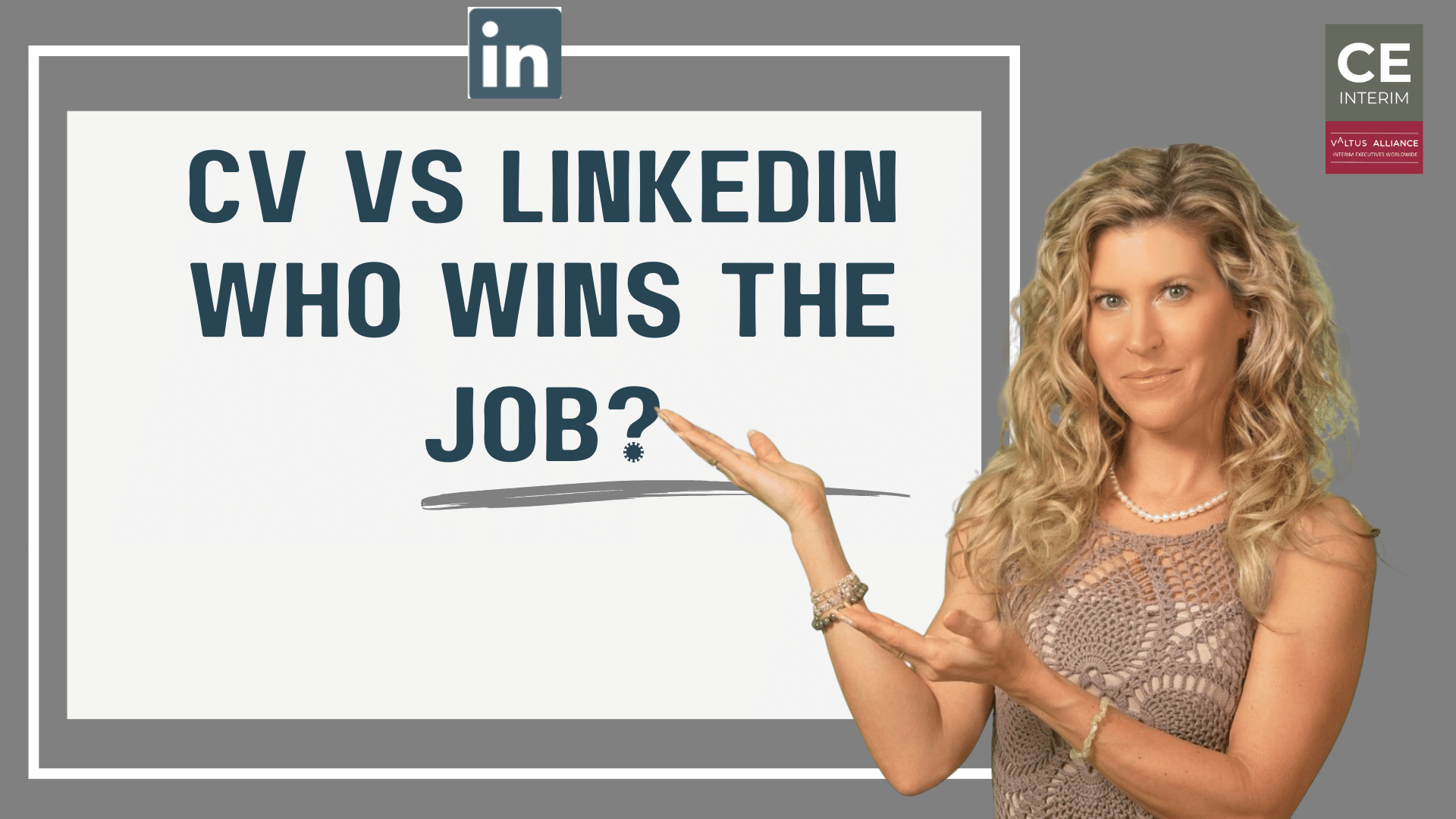
A great CV can open doors—but is it still your strongest tool when recruiters are scrolling LinkedIn instead of their inbox?
If you’re an Interim Manager trying to land the next project, knowing how decision-makers search for talent is half the game. Most won’t even download your CV unless your LinkedIn profile convinces them first.
So which one really matters more? This article unpacks how recruiters use both, what each one is meant to do, and how to make sure they work together—so you’re not overlooked before the conversation even starts.
Why LinkedIn Has Become a Recruiter’s First Stop
According to recent studies, 93% of recruiters use LinkedIn to find and vet candidates. It’s not just a trend—it’s now standard practice.
Why?
- Uniform layout: LinkedIn presents every profile in a similar format, making it easier for recruiters to scan and compare.
- Shareability: Profiles are easy to share internally without juggling multiple attachments.
- Search filters: Recruiters can search by job title, location, language, and skills instantly.
- Algorithmic suggestions: LinkedIn recommends similar profiles, streamlining the sourcing process.
In short, if your LinkedIn profile is vague or incomplete, you risk being skipped before your CV ever gets opened.
What Your LinkedIn Profile Must Deliver
Think of LinkedIn as your public storefront—it’s the first impression many recruiters and interim providers will have of you.
Key Areas to Optimize:
1. Headline
Avoid vague statements like “Helping companies grow sustainably.” Be specific.
Better: “Interim COO | Turnaround & Restructuring Expert | Automotive & Industrial Sectors”
2. About Section
Use this space to highlight your Unique Selling Points (USPs). Make it readable, clear, and client-focused.
3. Experience Section
Don’t just list responsibilities. Describe the outcomes:
“Reduced downtime by 22% in 4 months by restructuring supply chain operations across 3 countries.”
4. Keywords Matter
Recruiters search using specific terms. Make sure yours include:
- Interim Manager
- Plant relocation
- Operational excellence
- Post-merger integration
- Lean manufacturing
What About the CV?
Despite LinkedIn’s dominance, a well-written CV still plays a critical role—especially when you reach the shortlist.
When the CV Still Counts:
- Client interviews: Your CV will be reviewed before any final decision.
- Private equity projects: Clients want detailed deliverables and metrics.
- Project-specific applications: Tailoring your CV gives you an edge.
CV Writing Tips for Interim Professionals:
- Lead with a short summary of your USPs.
- Highlight metrics and impact (cost savings, time reductions, growth acceleration).
- Tailor the CV for every application—don’t send the same version to everyone.
Want an example of a great impact-focused CV section? Try this:
“Led the transfer of manufacturing operations from Germany to Romania, achieving 18% cost reduction and 30% faster delivery timelines within 6 months.”
Think Like a Recruiter: What They Look For First
Before your CV reaches the decision-maker, it must pass through the hands of gatekeepers:
- Talent managers
- Junior recruiters
- Assistants
These roles don’t always have deep technical knowledge—so make your message clear, concise, and jargon-free.
Avoid this:
“Responsible for overseeing various aspects of industrial projects, ensuring smooth transitions and alignment with business objectives while coordinating with relevant stakeholders to facilitate efficient operations.”
Replace with:
“Delivered operational stability during factory turnaround, reduced lead times by 25%.”
Do You Still Need Both?
Yes. Think of it this way:
- LinkedIn gets you noticed.
- CV gets you hired.
Each tool serves a unique purpose in the hiring process. A weak LinkedIn profile might block you from being considered. A weak CV might cost you the role once you’re in the running.
Final Tips for Interim Managers
- Treat LinkedIn like a sales pitch. Your profile should speak directly to the client’s problems.
- Keep your CV tailored. Highlight achievements relevant to each project.
- Ask yourself: Would I hire someone with this profile?
And remember: as an interim leader, you’re a one-person B2B company. Market yourself accordingly.
 EN
EN  DE
DE  FR
FR  IT
IT  PL
PL  RO
RO  CS
CS  SK
SK  HU
HU  ES
ES  RU
RU  AR
AR  SL
SL