
Vous n'avez pas le temps de lire l'article en entier ? Écoutez le résumé en 2 minutes.
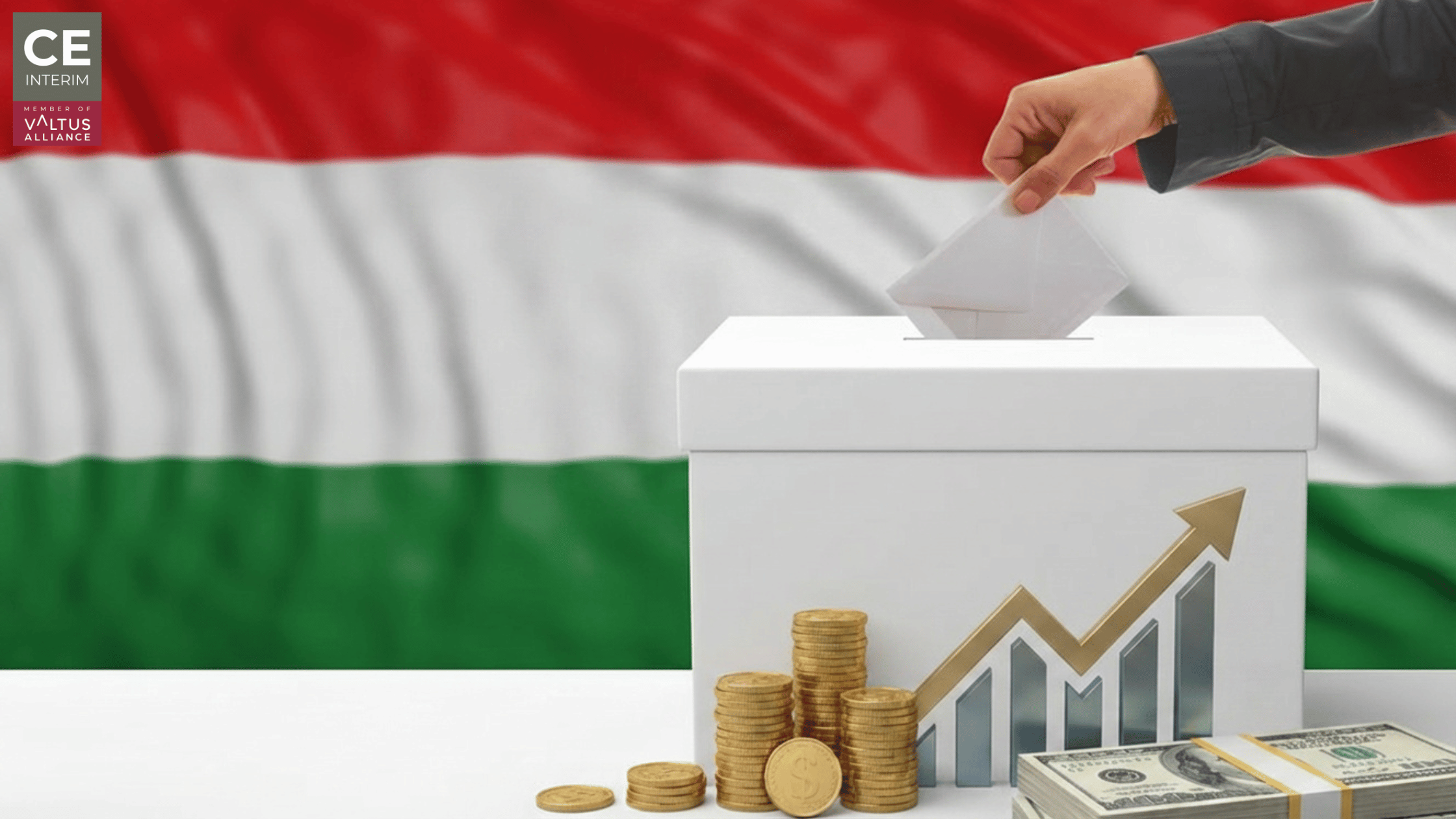
L'essentiel de ce qu'il faut savoir sur les élections hongroises d'avril 2026 a déjà été écrit. La transition politique, l'envolée du forint, le déblocage des fonds de l'UE, le récit de la convergence vers l'euro.
Ce qui n'est pas clair, c'est ce que les investisseurs avertis doivent faire de tout cela.
Il ne s'agit pas d'un exposé politique. Il s'agit d'une vision hiérarchisée de ce qui est important pour les décisions d'allocation de capital en Hongrie au cours des douze à vingt-quatre prochains mois et de ce que le marché continue d'interpréter de manière erronée.
Ce que le marché a déjà évalué
Avant de discuter de ce que les investisseurs doivent intégrer dans le prix, il convient de préciser ce qui est déjà inclus dans le prix.
Le mouvement du forint s'est produit en quelques heures. Les obligations d'État hongroises se sont redressées. La bourse de Budapest a atteint un niveau record. Goldman Sachs a parlé d'une opération de convergence vers l'euro dans les 48 heures qui ont suivi le résultat.
Les éléments suivants se reflètent déjà dans les prix des actifs :
- Les grandes lignes du déblocage des fonds de l'UE
- Attentes concernant l'abrogation de l'impôt sur les bénéfices exceptionnels dans les secteurs de la banque, du commerce de détail et des télécommunications
- L'adoption de l'euro comme trajectoire à moyen terme
- Amélioration générale de l'État de droit et de l'environnement de gouvernance
Si votre thèse hongroise repose entièrement sur ces quatre facteurs, vous êtes déjà en retard. Le marché a bougé. L'alpha est ailleurs.
Les cinq choses encore mal évaluées
1. L'échéance du 31 août n'est pas une cible facile
La Hongrie doit formellement demander et débourser environ 17 milliards d'euros de fonds de cohésion et de relance de l'UE avant le 31 août 2026. Il ne s'agit pas d'une ligne directrice, mais d'une date butoir inscrite dans les règles de déboursement de l'UE. Si ce délai n'est pas respecté, les fonds ne sont pas reconduits. Ils sont définitivement perdus.
Le nouveau gouvernement prendra ses fonctions au début du mois de mai. Il lui reste donc moins de quatre mois pour mettre en œuvre dix étapes de gouvernance en suspens, reconstruire les cadres institutionnels et déposer des demandes de paiement formelles pour des dizaines de programmes simultanés.
Les marchés considèrent que le déblocage est inévitable. Le risque lié au calendrier est largement sous-évalué.
Quel est le prix à payer ? Le risque d'exécution de l'échéance d'août est réel. Les projets et les portefeuilles qui dépendent du cofinancement de l'UE devraient avoir des plans d'urgence qui ne supposent pas un décaissement total en 2026.
2. La question de l'IDE chinois est plus nuancée qu'il n'y paraît
Hongrie absorbée 44% de tous les IDE chinois dans l'UE en 2023. Sous la présidence d'Orbán, ce choix stratégique délibéré a été rendu possible par une relation politique spécifique avec Pékin.
Le gouvernement magyar a donné le signal d'un recalibrage pragmatique plutôt que d'une rupture. Les investissements chinois déjà en place (CATL, BYD, EVE Energy) ne vont pas disparaître. Mais le pipeline sans friction qui a permis d'obtenir de nouveaux engagements chinois sous Orbán ne se poursuivra pas automatiquement.
Plus important encore, la Hongrie a perdu son droit de veto au Conseil de l'UE, supprimant ainsi une couche de protection qui protégeait auparavant les investisseurs chinois de la surveillance de Bruxelles.
Le règlement sur les subventions étrangères, l'élargissement de l'examen des IDE dans l'UE et l'application des droits compensateurs s'appliqueront davantage aux activités chinoises basées en Hongrie, maintenant que Budapest est de retour dans le courant dominant.
Quel est le prix à payer ? Les investissements manufacturiers chinois existants sont stables. Les nouveaux engagements chinois en matière d'IDE se heurteront à davantage de difficultés. Toute thèse d'investissement fondée sur la poursuite des entrées de capitaux chinois aux taux de 2023 doit être revue.
3. La refonte de la gouvernance se fait en temps réel
La Pologne a reconstruit ses institutions avant l'arrivée de la capitale. La Hongrie fait les deux en même temps.
Rejoindre le Parquet européen, restaurer l'indépendance de la justice, réformer les marchés publics et reconstruire l'Autorité d'intégrité ne sont pas des formalités administratives. Elles nécessitent un nouveau leadership, de nouveaux processus et de nouveaux cadres de conformité dans toutes les institutions publiques et dans de nombreuses institutions privées.
Pour les entreprises opérant en Hongrie, cela signifie que l'environnement de conformité changera plus rapidement que la plupart des fonctions juridiques et de conformité internes ne peuvent le suivre. Les entreprises qui ont été construites pendant seize ans sous un régime réglementaire spécifique seront confrontées à une période d'incertitude réelle à mesure que les règles d'engagement changeront.
Quel est le prix à payer ? Les coûts de remise en conformité sont réels et à court terme. Les portefeuilles détenus par le capital-investisseur et exposés à la Hongrie devraient vérifier leur position en matière de gouvernance dès maintenant plutôt qu'après la mise en place des nouveaux cadres.
4. Les quatre rampes d'accès aux usines ne font pas de pause pour les transitions politiques
BMW Debrecen produit aujourd'hui des iX3. CATL fait monter en puissance sa gigafactory. BYD passe des essais à la production de masse à Szeged. Mercedes achève la construction de sa deuxième usine à Kecskemét.
Ces projets se déroulent selon des dates SOP dictées par les équipementiers et liées aux calendriers de lancement des véhicules au niveau mondial. Ils n'ont pas démarré à cause des élections et ne s'arrêteront pas à cause de la transition.
Ce que l'élection change, c'est l'écosystème industriel plus large qui les entoure. Les fonds de l'UE pour le développement des fournisseurs, les investissements dans les infrastructures des régions entourant ces usines, les programmes de développement de la main-d'œuvre. Tous ces éléments étaient bloqués ou retardés. Ils sont maintenant en marche.
Quel est le prix à payer ? L'investissement direct dans ces quatre usines est bloqué. L'effet multiplicateur sur l'écosystème des fournisseurs environnants et sur l'infrastructure régionale vient d'être débloqué. C'est là que se situe la prochaine vague d'opportunités d'investissement.
5. La pénurie de talents seniors est le risque le moins modélisé
C'est la variable que presque aucune analyse d'investissement n'inclut et celle qui, historiquement, a déterminé si les déblocages du marché des PECO produisaient les rendements promis.
| Facteur | Fixation des prix par les marchés | Réalité |
|---|---|---|
| Disponibilité des fonds de l'UE | Oui | La capacité de déploiement est une contrainte |
| Potentiel de montée en puissance de l'usine | Oui | La disponibilité des dirigeants est une contrainte |
| Réouverture du pipeline des fusions et acquisitions | Oui | Le talent d'intégration est la contrainte |
| Reconstruction de la conformité | Partiellement | Les hauts responsables de la conformité sont rares |
| Amélioration de la gouvernance | Oui | La capacité d'exécution des institutions n'a pas été testée |
Lorsque les capitaux circulent plus vite que la capacité d'exécution, les rendements se compriment. C'est ce qui s'est produit sur de nombreux marchés d'Europe centrale et orientale au cours des précédents cycles de déblocage.
La Hongrie doit maintenant absorber quatre rampes simultanées d'équipementiers, déployer 17 milliards d'euros dans des projets de l'UE, exécuter une décennie d'activités de fusion et d'acquisition différées et reconstruire la gouvernance dans un délai de douze à vingt-quatre mois. Les cycles d'embauche permanente dans les PECO durent de six à douze mois. Aucun des calendriers ci-dessus n'en tient compte.
Quel est le prix à payer ? Le déficit d'exécution est réel et il affectera les rendements. Les investisseurs et les opérateurs qui résoudront ce problème à un stade précoce grâce à une direction intérimaire expérimentée obtiendront de meilleurs résultats que ceux qui supposent que leurs équipes existantes sont en mesure d'absorber la complexité supplémentaire.
La matrice des risques et des opportunités
| Thème | Opportunité | Risque | Chronologie |
|---|---|---|---|
| Les fonds de l'UE débloquent | Infrastructures, transition verte, développement régional | Risque d'exécution à l'échéance du mois d'août | 0 à 6 mois |
| Abrogation de l'impôt sur les bénéfices exceptionnels | Banque, commerce de détail, télécommunications | Pression sur l'assainissement budgétaire | 0 à 12 mois |
| Multiplicateur de l'écosystème OEM | Investissements des fournisseurs de niveau 1 et 2 | Contraintes en matière de talents et de capacités | 6 à 18 mois |
| Pipeline de fusions et d'acquisitions | Flux d'opérations différées dans tous les secteurs | Lacunes dans l'exécution de l'intégration | 6 à 24 mois |
| Recalibrage de l'IDE chinois | Investissements existants stables | Nouveau frottement de l'oléoduc | 12 à 36 mois |
| Adoption de l'euro | Convergence commerciale à long terme | Exigences en matière de discipline budgétaire | 36 à 60 mois |
Ce que la leçon sur la Pologne enseigne réellement
Les investisseurs qui ont surperformé en Pologne après 2004 ne sont pas ceux qui ont identifié l'opportunité le plus rapidement. La plupart des investisseurs avertis l'ont identifiée en même temps.
Ils ont obtenu de meilleurs résultats parce qu'ils ont résolu la couche d'exécution en premier.
Ils ont mis en place le leadership opérationnel adéquat avant que la fenêtre n'atteigne son point culminant. En outre, elles n'ont pas attendu que les personnes recrutées à titre permanent travaillent pendant des périodes de préavis de six mois, alors que les dates des procédures opérationnelles normalisées et les délais d'intégration étaient déjà en cours d'exécution.
“Dans tous les cas de déblocage du marché des PECO que nous avons observés, l'écart d'exécution s'ouvre discrètement et se referme à grands frais. Les investisseurs qui l'ont vu venir l'ont intégré dans leurs plans d'exploitation avant qu'il ne devienne une crise.”
La Hongrie en 2026 est la version la plus comprimée de cette dynamique que la région ait produite. Les usines sont déjà construites. Les capitaux sont déjà engagés. La réinitialisation de la gouvernance a déjà eu lieu.
Ce qui détermine si les rendements correspondent à la thèse est entièrement une question d'exécution aujourd'hui.
Fixer un prix adéquat
Une thèse d'investissement véritablement complète pour la Hongrie en 2026 comprend cinq éléments que la plupart des analyses actuelles ne prennent pas en compte.
Premièrement, un plan d'urgence à échéance d'août pour toute exposition cofinancée par l'UE.
Deuxièmement, une analyse de sensibilité de l'IDE chinois qui ne suppose pas que les flux de 2023 se maintiennent.
Troisièmement, un audit de conformité pour chaque entreprise du portefeuille opérant sous le régime réglementaire précédent.
Quatrièmement, une évaluation honnête de l'existence d'un leadership opérationnel permettant d'exécuter le plan de création de valeur à la vitesse requise par la fenêtre de marché.
Cinquièmement, une stratégie de ressourcement qui ne repose pas exclusivement sur des délais d'embauche permanente que la fenêtre d'opportunité ne permet pas de respecter.
Au CE Intérimaire, Les quatrième et cinquième composantes sont celles où nous passons le plus de temps avec les investisseurs qui entrent sur les marchés de l'Europe centrale et orientale ou qui s'y développent. Les comités d'investissement décident de la question du capital, mais l'exécution est déterminée sur le terrain.
En Hongrie, à l'heure actuelle, ce terrain bouge plus vite que la plupart des plans d'exploitation n'ont été conçus pour cela.
Les investisseurs qui en feront l'acquisition à temps considéreront 2026 comme leur meilleur millésime dans la région.
Ceux qui ne le font pas se demanderont pourquoi la thèse était juste alors que les rendements ne l'étaient pas.
 EN
EN  DE
DE  FR
FR  IT
IT  PL
PL  RO
RO  CS
CS  SK
SK  HU
HU  ES
ES  RU
RU  AR
AR  SL
SL