Post-Merger Integration & Carve-Out
The deal has closed. Now someone has to make it work.
When an acquired business must become part of your group, or a business must stand on its own after leaving one, often in another country, CE Interim Management Group puts an experienced interim executive in charge of Day One, the integration or separation, and the handover to permanent management.
Une méthode qui a fait ses preuves, adapté au mandat cadre prêt à prendre ses fonctions dans les 72 heures suivant la finalisation du cahier des charges.
Résultats intermédiaires récents de CE
60 jours
to restored financial visibility in a carve-out
Interim CFO, Western European group in Poland and Romania
Independent figures for the lenders and a plan for the turnaround
Avec qui travaillons-nous ?
Partenaires en capital-investissement
A platform deal, bolt-on ou carve-out must deliver on the investment plan.
PDG et directeurs des opérations du groupe
An acquired business abroad must start working as part of the group.
directeurs financiers
Reporting, synergies or the services still bought from the seller cannot be tracked reliably.
Corporate development
The deal team is moving on, and nobody owns what happens after closing.
Responsables RH
Roles, people and employee consultation must be settled fairly, country by country.
Est-ce que c'est votre cas ?
A signed deal does not create a working business
The plan is written where the buyer sits.
It has to work where the business operates.
En bref
What is post-merger integration and carve-out interim management?
The deal team decides what the deal is worth.An interim executive makes sure the business delivers it.
Après la fusion integration and carve-out interim management puts an experienced interim executive in charge when a transaction has to become a working business: an acquired company joining a group (post-acquisition integration), or a business leaving one to stand on its own (a carve-out). Often the buyer or seller sits in one country and the business in another. The executive owns Day One, the decisions between the two organisations, reporting, the synergy or separation plan and the services still bought from the seller, and hands over to permanent management once the business runs as planned.

Bohuslav Lipovsky
PDG, CE Interim Management Group
Integration and separation solve opposite problems. Companies bring in interim leadership for one of two reasons:
Première raison
When an acquired business must be integrated
Bring two organisations together without losing what made either of them valuable: the customers, the people and the operation the deal was meant to improve.
Deuxième raison
When a business must stand on its own
Separate a business from its group without breaking it on the way out: the systems, people, contracts and services it still borrows from the seller.
The typical signs that a deal is drifting:
Nobody owns the whole integration.
Every workstream has a leader, but nobody decides when their plans conflict.
Day One is coming faster than the business is ready.
Payroll, signing authority, systems or customer contracts still depend on open decisions.
The synergies exist on paper only.
Savings are forecast, but they have no owner, no starting figure and no date.
The separated business still runs on the seller.
It is legally independent, but its IT, finance or payroll still come from the former parent, and the time agreed for those services is running out.
Que se passe-t-il pendant que vous attendez ?
Decisions stall
Key people leave
Customers notice
Savings slip
The seller’s services run over
Every month after closing without an owner makes the deal’s value harder to recover.
When does an integration or carve-out need an interim manager?
Posez-vous ces six questions :
- Has the deal closed, or will it soon, without one person in charge of making it work?
- Are synergy targets set, but without named owners and a starting figure?
- Is local management resisting group reporting or new rules on who decides?
- Is the business you bought or are separating in a different country from your head office?
- Does the separated business still depend on the seller’s systems, people or services?
- Is the deal team moving on just as the integration starts?
Three or more “yes” answers usually mean the integration or separation needs its own executive.
And if Day One or the end of the seller’s services is less than three months away with no owner, do not wait for three: talk to a Partner now.
Vous vous reconnaissez dans cette situation ? Découvrez de quel type d'aide elle a besoin.
Ce que nous avons appris
The plan is signed at headquarters. The value is won or lost abroad.
The question is not whether every workstream has a plan.It is who decides when those plans conflict.
Research points to the same gap. Executives whose acquisitions had failed named integration as a main cause 83% of the time (Bain). In PwC’s 2026 integration survey, successful acquirers were nearly twice as likely as those with limited success to give every value initiative an owner, a timeline and funding before integration began: 59% against 28%. In a transfrontalier deal, that gap sits between the head office and the business abroad.
Survey figures belong to the studies named. They describe deals at large companies in general, not CE Interim’s assignments.
Qui décide
Both organisations agree before Day One which decisions belong to whom, not after the first conflict.
The business keeps running
Customers, deliveries and cash are protected first, with their own measures, while the integration runs.
Value that can be proven
Every saving has an owner, a starting figure and a date, and counts only when it shows in the results.
A synergy target is not value until someone owns the delivery.
Mandat
Put one executive in charge of making the deal work
An integration cannot be run by a tracker.
Avant que quiconque ne se lance, nous convenons avec vous de ce que décide la direction, de ce qui relève de votre responsabilité et de ce qui incombe à CE Interim.
What the interim executive leads
- Day One: payroll, signing authority, systems and customers working from the first day
- The integration or separation team, and the decisions between workstreams
- Communication with employees, customers and suppliers, and keeping the people the business depends on
- Reporting in the new owner’s format and calendar
- The synergy or stand-alone plan, with a named owner for every part
- The services still bought from the seller, and the date each one ends
- A clean handover to permanent management
Ce qui reste gravé dans ta mémoire
- The deal itself and its legal steps, with your advisers
- The future organisation and the permanent leadership appointments
- Decisions outside the agreed scope
Les activités de CE Interim
- Defines the scope and authority with you, including any statutory appointment
- Introduces one or two executives matched to the deal and the country
- Faites le point sur vos progrès avec un partenaire
- Plans the handover from the start
We start with the problem, not the job title
When the integration or separation as a whole needs one owner.
When reporting, synergies orstand-alonefinance are the gap.
When the acquired or separated business needs a leader at the top.
When plants, networks or supply chains must be combined.
When roles, people and employee consultation are at the centre.
How it runs
From signing to an integrated or independent business
Every deal runs on a clock: closing, Day One and the end of the seller’s services.
An integration usually takes nine to eighteen months. A carve-out runs until the business no longer needs the seller’s services. The priorities stay the same throughout: Day One safe, decisions made, the business protected, value counted honestly.
This is a typical pattern, not a promise. Until the deal closes, and any approval from the competition authorities has been given, the buyer may not run the business it is buying: until then, the executive plans and prepares with your deal team and lawyers.
Before closing
Prepare Day One
Who decides what, signing authority, reporting and the Day One essentials are agreed and tested, within the limits the law allows.
Day One
Make Day One work
Cash, payroll, customers and decisions work from the first day, and everyone knows who decides what.
First 100 days
Deliver the plan
Synergy or separation work starts, every part with a named owner and weekly figures, while the business keeps running.
Last months
Hand over
The business runs as part of the group or, after a carve-out, without the seller’s services. Open decisions are written down, and permanent management takes over.
Expérience professionnelle
Integrations and carve-outs CE Interim has led
Two published examples, both under private equity ownership: a carve-out and an integration after an acquisition.
Chaque résultat correspond à une affectation spécifique et ne constitue pas une garantie pour tous les clients.
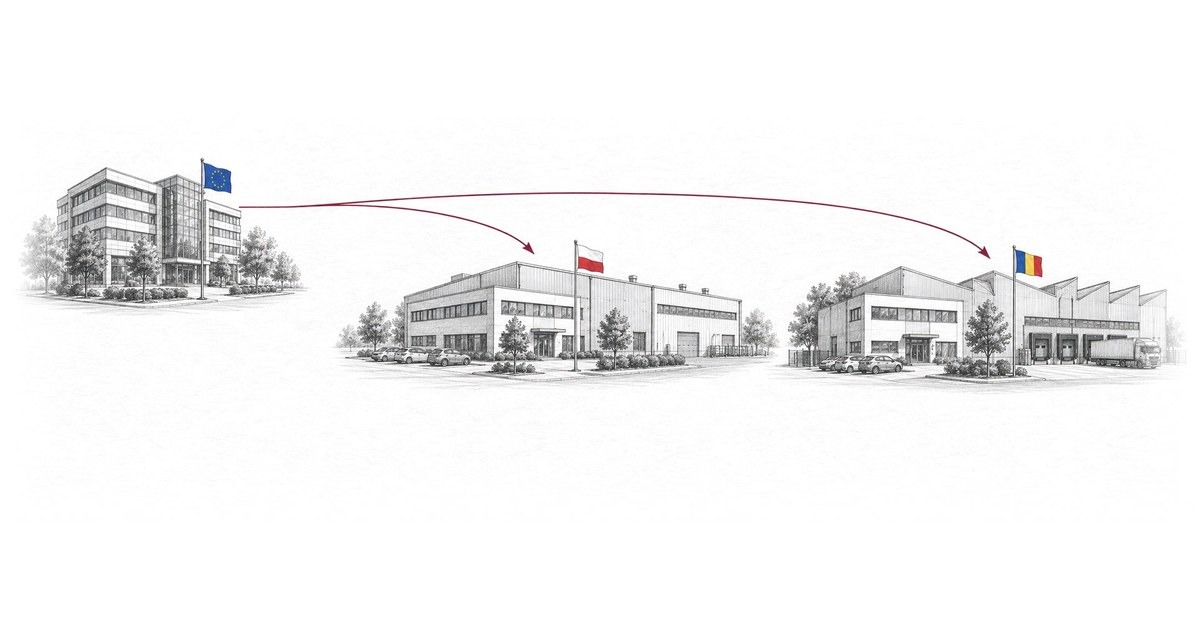
Western Europe to Poland and Romania
Poland and Romania: clear figures during a carve-out
60 jours
to restored financial visibility
Situation : A private equity-owned industrial manufacturer was being carved out of a larger group, with headquarters in Western Europe, operations in Poland and Romania and ongoing losses.
Ce que nous avons fait : An Interim CFO checked and challenged the forecasts, built plans for each option and supported the talks with the lenders with independent figures.
Résultat : Financial visibility restored within 60 days, savings identified and ranked for action, and the lenders’ confidence supported by an independent financial review.
Poland: a newly acquired site brought into group control
60 jours
to reliable monthly closings
Situation : After a major acquisition, the Polish production site of a private equity-owned industrial group had no senior finance leader, synergies were missing, and the site’s targets did not match headquarters’.
Ce que nous avons fait : An Interim CFO restored monthly reporting, set a weekly rhythm with headquarters, brought the site into group standards and supported a legal restructuring of the company.
Résultat : Reporting discipline restored within 60 days, synergies reported to the owners every two weeks, the restructuring carried out without disruption, and fewer escalations to headquarters.
More CE Interim integration mandates
Vous êtes confronté à une situation similaire ? Parlez-en à un partenaire qui a déjà été confronté à ce genre de situation.
Gouvernance
One owner between the deal team, headquarters and the business
The new owner needs figures it can trust.The business needs decisions it can act on.
Au-delà des cultures
Un cadre, à l'aise dans les deux cultures
The interim executive works with your headquarters in its language and business culture, and leads the local team in theirs. In a transfrontalier deal, that is often what decides whether local management cooperates or quietly resists.
Labour law, employee consultation and the rules on who may sign for the company differ by country. Employee information and consultation follow the law of each country, and any statutory appointment is agreed with you and your lawyers before the start.
One owner. One rhythm of reporting. One plan both sides recognise.
Our published integration and carve-out assignments include a Western European group’s operations in Poland and Romania, and a private equity group’s newly acquired site in Poland.
After closing, decisions often stall between the deal team, group functions and local management, and each assumes another is in charge. The interim executive becomes the single owner of the integration or separation, takes au quotidien decisions within limits agreed with you, and reports in the format the owner uses.
Owners and headquarters
Get one set of figures, in the format they already use
Associé par intérim chez CE
Fait le point avec vous sur vos progrès ; vous accompagne, sans jamais prendre le dessus
Interim executive
Owns the integration on site, in your language and the site’s
You keep the deal, the future organisation and the big decisions. The executive makes the plan work.
À quoi ressemble la réussite ?
What successful integration or separation must show
Success is not a green status report.It is a business that works as one, or on its own.
While the plan runs
Look for results that hold, week after week:
- Day One held with no disruption to customers or payroll
- One clear way of deciding across both organisations
- Reporting delivered on the new owner’s calendar
- Savings counted only when they show in the results
- Key people and customers staying with the business
At handover
La mission prend fin lorsque :
- The business runs as part of the group, or without the seller’s services
- Open decisions, risks and dependencies are written down
- Permanent management is in place and briefed
- The owners can see what was delivered against the deal case
Want to know what Day One should look like for your deal?
Pourquoi CE Intérim
Why CE Interim for an integration or carve-out?
An executive who has done it before, inside the business, with a Partner beside you.
CE Interim Management Group propose transfrontalier un accompagnement de haut niveau pour les transformations stratégiques de l'entreprise. En tant que membre de l'Alliance Valtus, nous collaborons avec des cabinets partenaires à l'échelle internationale.
10+
années de présence sur le marché
50+
pays d'intervention
95%
mandats transfrontaliers
1
norme d'excellence unifiée
Qui nous recrutons
Une responsabilité équivalente compte davantage qu'un titre prestigieux.
- Has led an integration or separation of similar size
- Knows the deal language: Day One, synergies, transition services
- Works in your head office’s language and business culture, and leads the local team in theirs
- Can hold authority next to the buyer’s own managers without becoming a rival
- Brings more seniority and judgement than the role would normally need
- Plans the handover to permanent management from the first week
Which option fits your deal?
A consultancy
Designs the plan, the integration office and the synergy model, and supports the work from outside.
What we provide
An interim executive
Takes the role inside the business, with the authority to decide, and hands over when it runs.
Your own managers
Work well when they have the relevant experience, the authority to decide and the time alongside their existing roles.
Many deals use more than one: advisers to design the plan, and an interim executive to own its delivery inside the business.
If the business itself is at risk, see Crise et restructuration. If a single senior leader is missing, see Poste clé à pourvoir.
Secteurs concernés
Comment ça marche ?
Que se passe-t-il lorsque vous nous contactez ?
You do not need a finished integration plan to call us. Tell us what has been signed, what must work on Day One and where the business sits. A Partner will help you judge whether interim leadership is the right answer.
Contactez un partenaire
A confidential conversation about the deal and what is at risk. No commitment.
Trouvez le cadre qui vous convient
Nous vous présentons un ou deux cadres soigneusement sélectionnés, et non une longue liste de CV. Vous les recevez en entretien et vous prenez votre décision.
Ils prennent les choses en main
The executive takes ownership of the integration or separation, with a CE Interim Partner involved until the handover.
Je suis prêt quand tu l'es. Le premier entretien est confidentiel.
Questions
Questions deal teams and owners ask
Dans quel délai un cadre intérimaire peut-il prendre ses fonctions ?
We introduce a proven, mandate-matched executive ready to start within 72 hours of the completed mandate brief. The mandate brief is complete once we have agreed with you what the role must achieve and the authority it needs. Travel and any legal appointment are planned from there.
Can the executive start before the deal closes?
Yes, to plan and prepare. Until the deal closes, and any approval from the competition authorities has been given, the buyer may not run the business it is buying, so before closing the executive prepares Day One with your deal team and lawyers. Day-to-day control starts once it is allowed. Before the deal is announced, the work stays confidential: executives sign a confidentiality agreement before they learn who the client is, and see only what your deal team allows.
What is the difference between an integration director and an integration office?
The office coordinates the workstreams and tracks progress. The director owns the result and decides when workstreams conflict. Many deals need both: the interim executive can run the office or work alongside it.
Who should own the synergies?
One executive is accountable for the overall result. Each saving has a named owner in the business, a starting figure, a cost and a date, the finance team validates the figures, and a saving counts only when it shows in the results.
How is a carve-out different from an integration?
An integration brings two businesses together; a carve-out takes one apart. The hard part of a carve-out is everything the business still borrows from the seller: systems, people, contracts and services. These usually continue for an agreed time under a transition services agreement, and each needs an end date and an owner.
Who removes the costs the seller is left with?
When a business leaves, part of the seller's overhead stays behind: shared services, systems and staff that served it. McKinsey has found that parent companies often take up to three years to recover from these stranded costs. They need their own owner on the seller's side, with a plan to remove them. An interim executive can take that role, or the matching one on the buyer's side.
How do you handle employee consultation and labour law in the other country?
Employee information and consultation follow the law of each country, and the timing is planned with your lawyers and HR. The interim executive leads the local conversations in the local language, but does not promise outcomes that depend on employee representatives or the authorities.
How long does it last, what does it cost, and how does it end?
An integration usually takes nine to eighteen months. A carve-out lasts until the business no longer needs the seller's services. Interim executives work on a flat daily rate, agreed before the start, so you pay for the executive in the role rather than for a team of advisers. The executive is engaged through CE Interim, not employed by you. It ends with a handover to permanent management, planned from the start, with decisions, risks and open work written down.
The deal has a closing date. Its delivery needs an owner.
If a deal is about to close, or has closed and is not yet working, a confidential conversation with a CE Interim Partner will show what must work on Day One and who should own it.

Bohuslav Lipovsky
PDG, CE Interim Management Group
Réserver un 20 minutes Appelez pour parler directement à Bohuslav.
Prêt à en discuter ? Le premier entretien est confidentiel et sans engagement.
 EN
 DE
 FR
 IT
 PL
 RO
 CS
 SK
 HU
 ES
 RU
 AR
 SL