

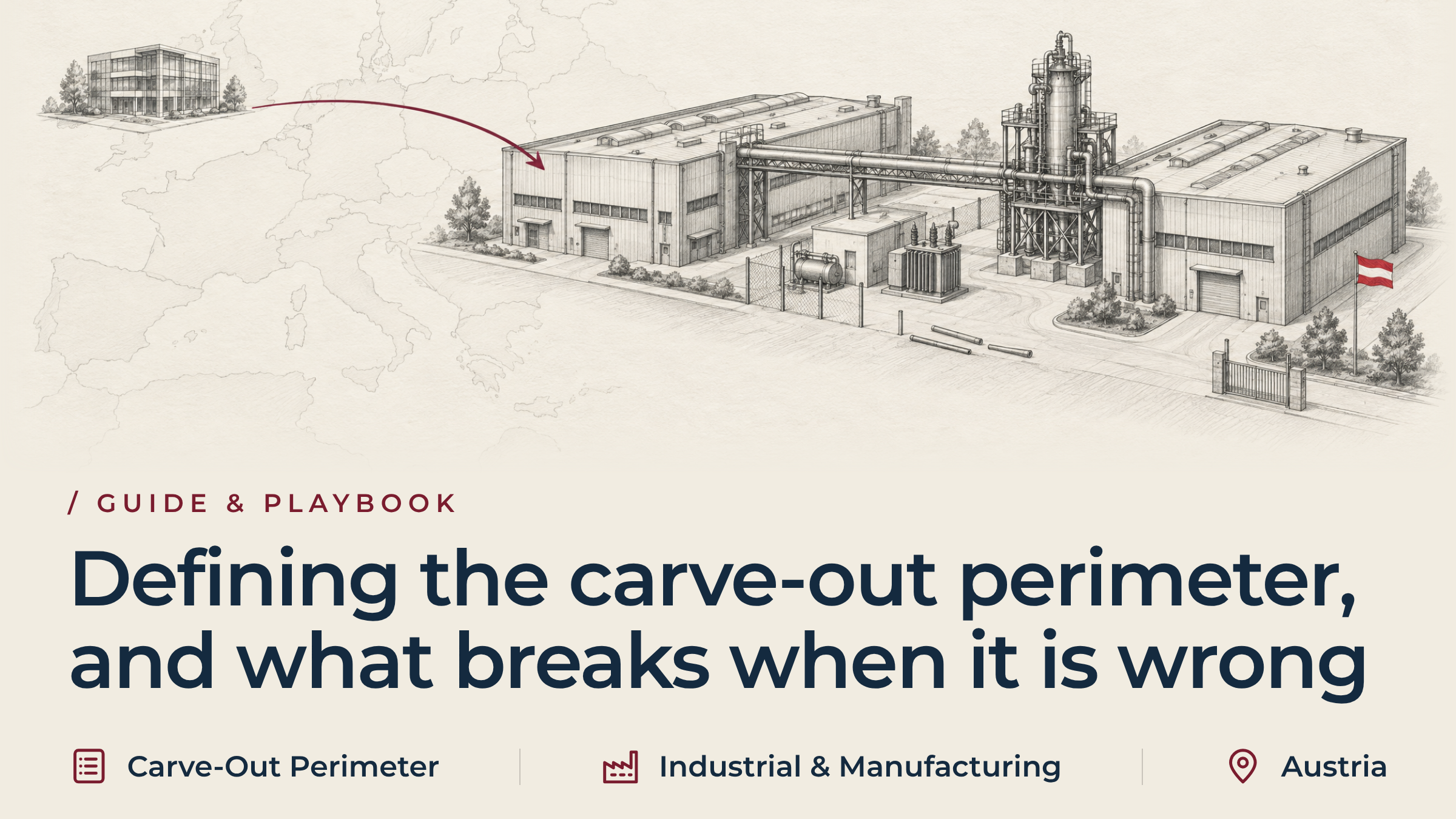
Определение границ выделения бизнеса и последствия неправильного определения этих границ
Вкратце
Определение границ выделения бизнеса устанавливает, какие активы, системы, разрешения и сотрудники переходят вместе с продаваемым подразделением, а какие остаются в компании. В предварительном соглашении границы выделения выглядят чётко. На производстве же так бывает редко. Производственные цеха, испытательные стенды, инженерные сети и экологические разрешения зачастую обслуживают оба подразделения одновременно. Команды, занимающиеся сделкой, часто определяют границы выделения на основе реестров юридических лиц, а не на основе физической проверки каждого отдельного оборудования. В результате при завершении сделки быстро выявляются пробелы. Производство останавливается, отгрузки приостанавливаются, а в течение нескольких недель появляются незапланированные расходы.
Коммерческие факторы, влияющие на принятие решения, и определение объема сделки на предварительном этапе
Команды, занимающиеся сделками, обычно определяют границы выделения активов на коммерческой основе задолго до того, как кто-либо проверит их на практике. Юристы и специалисты по корпоративному развитию фиксируют в договоре купли-продажи юридические лица, основные активы и балансовые показатели. Затем команда, занимающаяся сделкой, подписывает договор, будучи уверенной, что вопрос о границах выделения активов решен.
Соглашение редко отражает фактическую ситуацию, лежащую в его основе. Какой компрессор обслуживает какое здание. Какой испытательный стенд на самом деле используют обе компании совместно. Какое экологическое разрешение охватывает три производственные линии вместо одной. Этот разрыв между юридически очерченными границами и реальной ситуацией на производстве остается незаметным после подписания соглашения. Он становится очевидным только тогда, когда новая компания пытается работать самостоятельно.
Определения границ юридического и операционного выделения
При «чистом» выделении целевой бизнес-подразделение представляет собой отдельное юридическое лицо. Оно располагает собственными помещениями, специализированным оборудованием, обособленными системами и независимыми контрактами. Среди европейских промышленных компаний среднего размера такие четкие границы встречаются редко.
Большинство выделенных подразделений на протяжении десятилетий входили в состав более крупной группы. Руководство группы оптимизировало использование капитала, распределяя его между подразделениями. Одно оборудование обслуживало две линейки продукции. Одна лаборатория проводила испытания деталей для нескольких подразделений. Одно экологическое разрешение охватывало весь промышленный комплекс. Технический персонал перемещался по производственным цехам в зависимости от меняющихся потребностей производства.
Команды по корпоративному развитию зачастую определяют границы выделения бизнеса, опираясь исключительно на финансовую отчетность и реестры юридических лиц. Они унаследовали эту общую историю, не осознавая этого. Юридическое лицо не является операционной границей, и эти две структуры редко совпадают на одной промышленной площадке.
По завершении сделки покупатель зачастую обнаруживает, что оборудование, которое он считал своей собственностью, по-прежнему принадлежит продавцу. Оборудование, которое по-прежнему необходимо продавцу для продолжения производства, часто физически остается на территории проданного завода. Ни одна из сторон не может полноценно функционировать, не полагаясь на другую. Это прямые издержки, связанные с неверным определением границ выделения активов. Уже в первые недели после перехода права собственности возникают перебои в производстве, растут расходы на переходные услуги, а поставки клиентам становятся нестабильными.
Трансграничные проблемы при выделении отдельных участков
Совместные промышленные комплексы широко распространены в Германии, Австрии, Польше и Чехии. На одном объекте под одной крышей может производиться как продаваемая, так и остающаяся в собственности продукция. Трансграничная структура собственности еще больше усложняет ситуацию. Собственная команда покупателя редко находится на месте, чтобы увидеть то, что упускается в документах.
Зависимости, связанные с инженерными сетями, коммунальными услугами и инфраструктурой
Системы сжатого воздуха, подачи газа, высоковольтных трансформаторов и очистки сточных вод обычно функционируют как единая система, а не как две отдельные. Сразу же после завершения работ возникают споры. Кто за что платит, кто обеспечивает техническое обслуживание и кто контролирует аварийное отключение — все эти вопросы становятся актуальными буквально в одночасье.
Общие машины, оборудование и испытательные стенды
Печи для термообработки, линии нанесения покрытий и камеры для экологических испытаний зачастую стоят миллионы евро и обслуживают более одной производственной линии. Если передать это имущество полностью покупателю, то на оставшейся у продавца части предприятия произойдет снижение производственных мощностей. Если же оставить его у продавца, то новой компании придется брать на себя расходы на обслуживание и терпеть задержки.
Объединенные ИТ-системы и интеллектуальная собственность двойного назначения
Отделенные подразделения, как правило, работают с общим корпоративным программным обеспечением, хранилищами данных о продукции и библиотеками конструкций. Отделение чертежей отделенного подразделения от коммерческих тайн, сохраненных материнской компанией, требует реальной технической работы, а не просто административной подписи. Если перекрыть доступ слишком рано, инженерная работа остановится уже в первый день.
Перевод совместно используемого технического персонала и сотрудников службы безопасности
Службы технического обслуживания, менеджеры по безопасности, специалисты по охране окружающей среды и технические специалисты зачастую работают одновременно в нескольких зданиях. Нормы законодательства, регулирующие передачу прав и обязанностей, такие как TUPE или статья 613а Гражданского кодекса Германии, определяют, кто переходит на новое предприятие вместе с компанией. Принятие такого решения может затянуться на месяцы или привести к тому, что на новом предприятии не останется ни одного сертифицированного технического специалиста.
Совместные экологические разрешения и соблюдение нормативных требований
Производственные площадки, как правило, работают на основании одного экологического разрешения, выданного головной компании. Выделение отдельного цеха из территории, на которую распространяется действие этого разрешения, может потребовать получения нового самостоятельного разрешения. Эта процедура обычно занимает от девяти до восемнадцати месяцев.
Выявление признаков некорректно определённого периметра выделения бизнеса
Дефекты периметра проявляются быстро, как правило, в течение первых сорока пяти дней после завершения работ, и их признаки носят характерный характер.
- Соглашение об оказании переходных услуг расширяется без предварительного уведомления, поскольку в графике оказываются полностью отсутствующими такие пункты, как утилизация химических веществ, калибровка оборудования или таможенное оформление.
- Служба безопасности объекта не пропускает грузовики новой компании или оспаривает действительность пропусков сотрудников на общем въезде.
- Руководители спорят из-за общего штампа или калибровочного станка, в то время как заказы клиентов остаются лежать на производстве.
- В ходе физической инвентаризации одновременно выявляется то же сырье, которое указано как в заявке покупателя, так и в заявке продавца.
- Службы эксплуатации зданий сообщают совету директоров, что установка счетчиков, прокладка трубопроводов сжатого воздуха и возведение ограждений обойдутся дороже, чем предполагалось в модели, разработанной до заключения сделки.
Каждый из этих признаков уходит корнями к одной и той же первопричине. Кто-то определил границы выделенного подразделения на бумаге, а не на практике.
Основные требования к программе восстановления периметра
Для устранения проблем с неработающей системой выделения подразделений необходимо, чтобы руководство компании находилось на месте и действовало в соответствии с четкой последовательностью действий, а не вело бесконечную юридическую переписку.
Составление перечня операционных зависимостей
Руководящая группа проводит аудит каждого объекта, комната за комнатой и оборудование за оборудованием. Группа классифицирует каждый актив как относящийся исключительно к продаваемому подразделению, исключительно к сохраняемому подразделению или к обоим подразделениям. Сначала она выявляет и количественно оценивает все взаимозависимости — от системы сжатого воздуха вплоть до отдельного специалиста по калибровке.
Временные протоколы в отношении совместно используемых активов и объектов
Если актив невозможно физически разделить с первого дня, руководство согласовывает письменный протокол. В протоколе устанавливаются графики эксплуатации, распределяется ответственность за техническое обслуживание, фиксируется формула расчета затрат и четко определяется ответственность за обеспечение безопасности. Этот единственный шаг позволяет предотвратить ежедневные споры на время дальнейшего разделения актива.
Оптимизация объема соглашений о предоставлении услуг переходного периода (TSA)
Руководитель совместно с продавцом перерабатывает график переходного периода. Пересмотренный график учитывает то, что было упущено в первоначальном варианте, и устанавливает чёткие крайние сроки. Цель — достичь самостоятельности, а не постоянной зависимости от материнской компании.
Стратегии физического и цифрового разграничения
Команда организует независимый учет потребления коммунальных ресурсов и создает физическое разделение систем безопасности там, где это необходимо на объекте. Кроме того, она завершает перенос технических данных в автономное хранилище. Только после этого новая компания перестает зависеть от продавца в вопросах ведения собственной деятельности.
Более подробную информацию по данному вопросу см. в нашем анализе, посвящённом полномочиям по подписанию договоров отдельными юридическими лицами и новации договоров при выделении бизнеса.
Эмпирические данные о сбоях в определении границ выделения бизнеса
Результаты независимых исследований сходятся в том, в каких именно аспектах выделение подразделений на самом деле заканчивается неудачей. Эта закономерность свидетельствует в пользу того, чтобы рассматривать работу по периметру как приоритет с самого первого дня, а не как задачу по устранению недочетов на поздней стадии.
- Глобальное выведение инвестиций Исследование, опубликованная в рамках Форума Гарвардской юридической школы по корпоративному управлению, непосредственно посвящена вопросу о границах выделения активов. В ней указано, что смешанные производственные объекты являются самой распространенной проблемой, связанной с определением границ сделки при корпоративном разделении. Исследователи пришли к выводу, что отсутствие решения по вопросу распоряжения совместно используемыми активами снижает стоимость оценки и затягивает переговоры после закрытия сделки.
- Компания «McKinsey & Company» исследование Исследование, посвященное выделению активов со стороны покупателя, показывает, что неверное определение границ периметра приводит к возникновению «застрявших» затрат и недоиспользованию капитальных активов. Наследование избыточного количества общего оборудования создает длительную нагрузку на операционную рентабельность, если руководство не примет меры по оптимизации базы активов на раннем этапе.
- «Бостонская консалтинговая группа» анализ приходит к выводу, что неопределённость в отношении границ непосредственно приводит к увеличению разовых затрат на разделение и некомпенсируемых накладных расходов. Разделение совместно используемых производственных площадок зачастую обходится вдвое дороже первоначальной сметы сделки, если до подписания договора никто не выявил операционные зависимости.
- Юридическая анализ В материалах фирмы Bryan Cave Leighton Paisner особое внимание уделяется распределению активов в рамках выделения бизнеса и переходным механизмам. Фирма указывает на оба этих аспекта как на основные источники обязательств после завершения сделки. Она рекомендует урегулировать вопросы, связанные с совместной интеллектуальной собственностью, лицензированием программного обеспечения и получением разрешений регулирующих органов, посредством разработки окончательных операционных графиков в рамках границ выделенного бизнеса. Общих договорных гарантий для этого недостаточно.
Пример из практики: урегулирование конфликтов на территории университетского городка в Линце (Австрия)
В приведенном ниже примере из практики показано, как руководство компании на местах устранило нарушение границ выделенной структуры. Разделение касалось сложного европейского промышленного комплекса.
Полномочия и сфера действия по сделке
Австрийский конгломерат в сфере тяжелого машиностроения продал свое подразделение по производству промышленных насосных систем высокого давления. Покупателем выступила европейская частная инвестиционная компания, а цена сделки составила 44 млн евро. Годовая выручка подразделения составляла 48 млн евро. В нем работали 260 инженеров и производственных техников. В результате сделки из исторического промышленного комплекса продавца площадью 18 гектаров, расположенного недалеко от Линца в Верхней Австрии, было выделено одно действующее производственное предприятие.
В ходе комплексной проверки бизнес оценивался преимущественно на основе финансовой отчётности и отчётов юридического лица. Команда, занимавшаяся сделкой, исходила из того, что указанное производственное здание является отдельно стоящим.
Операционные сложности после завершения работ
В течение трёх недель оказалось, что границы выделенного подразделения были гораздо менее чёткими, чем предполагалось по документам. Проданное подразделение по производству насосов физически и операционно зависело от сохраненного продавцом бизнеса по производству судовых турбин.
Стоимостью в несколько миллионов евро установка для гидростатических испытаний под давлением, принадлежащая подразделению по производству насосов, находилась в цехе сборки турбин, оставшемся в распоряжении продавца. Начальник завода продавца ограничил доступ посторонних лиц и потребовал выплачивать не предусмотренную бюджетом ежемесячную плату за доступ в размере 65 000 евро, при этом отдавая приоритет компонентам турбин. В результате на производственном цехе застряли насосы на сумму 1,4 млн евро, предназначенные для отгрузки заказчикам.
Продавец заявил, что 320 нестандартных литейных форм и приспособлений для механической обработки, хранящихся в общем инструментальном складе, являются собственностью группы. Без них подразделение по производству насосов не могло бы изготавливать запасные рабочие колеса. Это создавало угрозу наложения штрафов за задержку по контрактам с европейскими муниципальными водохозяйственными органами.
Весь кампус функционировал на основании одного разрешения на очистку воды и сброс сточных вод, принадлежащего продавцу. Продавец установил тридцатидневный срок для внесения взноса в размере 380 000 евро на модернизацию системы очистки сточных вод. В случае невыполнения этого условия сливной клапан новой компании будет перекрыт. В самом соглашении о переходных услугах также были пропущены несколько пунктов. В списке отсутствовали сжатый воздух, охрана территории, совместное техническое обслуживание вилочных погрузчиков и доступ к архиву технической документации. Каждый из этих пунктов представлял собой неотложную операционную потребность, которая была необходима новой компании с самого первого дня.
Временное руководство оперативными мерами
Операционный партнер частной инвестиционной компании осознал, что неопределённость в отношении сферы ответственности приводит к потере стоимости, и обратился к компании CE Interim. В Линц прибыл проверенный специалист, идеально подходящий под требования задания и готовый приступить к работе в течение 72 часов после получения полного описания задания. Этот специалист занимал должность временного операционного директора и обладал тридцатилетним опытом руководящей работы в сфере промышленного производства в Австрии.
В течение десяти дней руководитель провел ревизию всех активов, оборудования и инженерных сетей на всей территории объекта, сопоставив реестр активов из договора купли-продажи с историческими заказами на закупку. В результате этой работы было установлено однозначное право собственности на 280 из 320 спорных литейных форм.
Затем руководитель провел прямые переговоры с советом директоров конгломерата по поводу двустороннего протокола об использовании совместного испытательного стенда. Соглашение обеспечило выделенный доступ во вторую смену, прозрачное ценообразование с учетом стоимости одного испытания и совместную ответственность за техническое обслуживание. В результате были немедленно разблокированы поставки на сумму 1,4 млн евро.
Вместо того чтобы продолжать оплачивать произвольные сборы, руководство заказало установку отдельных компрессоров сжатого воздуха и специальных высоковольтных субличителей, а также договорилось о заключении обязательного к исполнению дополнительного соглашения о совместном использовании сточных вод в соответствии с австрийским природоохранным законодательством. Это соглашение обеспечило бесперебойный сброс сточных вод на время рассмотрения заявки на получение отдельного разрешения. Наконец, руководитель переработал график оказания переходных услуг, включив в него пропущенные пункты, касающиеся логистики объекта и технического обслуживания здания. Затем установленные твёрдые тридцатидневные сроки определили порядок отказа от всех второстепенных зависимостей.
Результаты выделения бизнеса и итоги разделения
В течение 120 дней границы выделенного подразделения были полностью определены. Подразделение по производству насосов получило собственные охраняемые границы, проверенное производственное оборудование, отдельные счетчики коммунальных ресурсов и гарантированный доступ для проведения испытаний. Благодаря этим мерам удалось исключить из отчетности спорные капитальные затраты в размере 1,2 млн евро. Также удалось избежать ежемесячных перерасходов на переходные услуги в размере 350 000 евро. Своевременность поставок заказчикам на протяжении всего периода сохранялась на уровне сто процентов. Постоянный главный операционный директор вступил в должность на пятом месяце. К тому моменту завод уже функционировал как независимое, операционно жизнеспособное самостоятельное предприятие, границы выделения которого были полностью определены.
Определение периметра выделенной структуры: часто задаваемые вопросы
Правовой и операционный периметр: в чём разница?
Юридический периметр определяет субъекты, доли и зарегистрированные активы, указанные в договоре купли-продажи. Операционный периметр охватывает всё, что фактически необходимо предприятию для самостоятельного производства и поставки продукции. Этот перечень включает в себя всё: от оборудования и инженерных сетей до технической документации, совместно используемого персонала, программного обеспечения и разрешений. Определение периметра выделения, охватывающее только юридическую сторону, не будет учитывать всё это.
Почему команды, занимающиеся сделками, неправильно оценивают границы выделения активов?
Чаще всего это происходит потому, что в ходе комплексной проверки (due diligence) основное внимание уделяется финансовой отчетности и корпоративным реестрам, а не непосредственному осмотру производственных мощностей. Подразделения, которые на протяжении многих лет совместно использовали оборудование, помещения и персонал, на бумаге выглядят как отдельные единицы. Никто не проверяет это предположение на практике, пока завершение сделки не вынуждает задать этот вопрос.
Что происходит, если операционные активы исключаются из сферы применения?
Покупатель не имеет юридического права на использование актива, который не был включен в перечень выделенных активов. Остаются три варианта. Покупатель может договориться о заключении соглашения о совместном использовании в чрезвычайных обстоятельствах или приобрести замену. Третий вариант предусматривает включение данного актива в соглашение о переходных услугах, как правило, с надбавкой.
Как осуществляется управление совместными экологическими разрешениями в рамках механизма «carve-out»?
Путем заключения соглашения о совместном разрешении с продавцом или подачи нового заявления в региональный орган власти. Получение нового экологического разрешения может занять от шести до восемнадцати месяцев. Договор купли-продажи должен предусматривать временное разрешение на эксплуатацию и обязательства о сотрудничестве для преодоления этого периода.
Когда следует привлечь временного операционного директора для устранения проблем в системе периметральной защиты?
Когда споры о физическом доступе, заблокированное общее оборудование или отсутствие необходимых услуг уже ставят под угрозу производство, поставки заказчикам или безопасность предприятия. В такой ситуации бизнесу нужен представитель с полномочиями непосредственно на месте, а не дальнейшая переписка между юристами.
Связанные знания и дальнейшие действия
Вопрос к совету директоров звучит прямо. Сможет ли исполнительное руководство определить границы выделения бизнеса на месте? Или споры о границах будут и дальше поглощать денежные средства и затягивать процесс обретения самостоятельности?
Приобретенная компания порой уже располагает собственными инженерными сетями, оборудованием, разрешениями и системами, что позволяет внутренней команде устранить оставшиеся пробелы. Однако в трех конкретных ситуациях требуется вмешательство руководства извне:
- В составе сохраненного бизнеса находятся дорогостоящее оборудование или испытательные мощности.
- Права на коммунальные услуги и разрешения остаются у продавца на основании единого согласования.
- В соглашении о предоставлении услуг на переходный период не указаны услуги, которые на самом деле необходимы новой компании.
В этот момент определение границ выделения бизнеса перестает быть простой формальностью. Это становится проблемой для руководства, и каждая неделя, пока вопрос остается нерешенным, приводит к дополнительным затратам, ухудшает отношения с клиентами и вызывает беспокойство среди сотрудников.
Рекомендуемые материалы:
CE Interim обеспечивает трансграничное руководство на уровне высшего звена в ходе сложных процессов реорганизации промышленных предприятий. В случае возникновения споров, смешения активов или пробелов, затрагивающих границы выделенной структуры, CE Interim реагирует незамедлительно. Проверенный руководитель, подходящий под требования задания и готовый приступить к работе в течение 72 часов после завершения брифинга по заданию, принимает его на месте. Задача заключается в установлении фактов и восстановлении оперативного контроля в пределах зоны выделения бизнеса. По вопросам, связанным с текущей зоной выделения бизнеса, обращайтесь к Временный партнер CE в тайне.
 EN
EN  DE
DE  FR
FR  IT
IT  PL
PL  RO
RO  CS
CS  SK
SK  HU
HU  ES
ES  RU
RU  AR
AR  SL
SL