

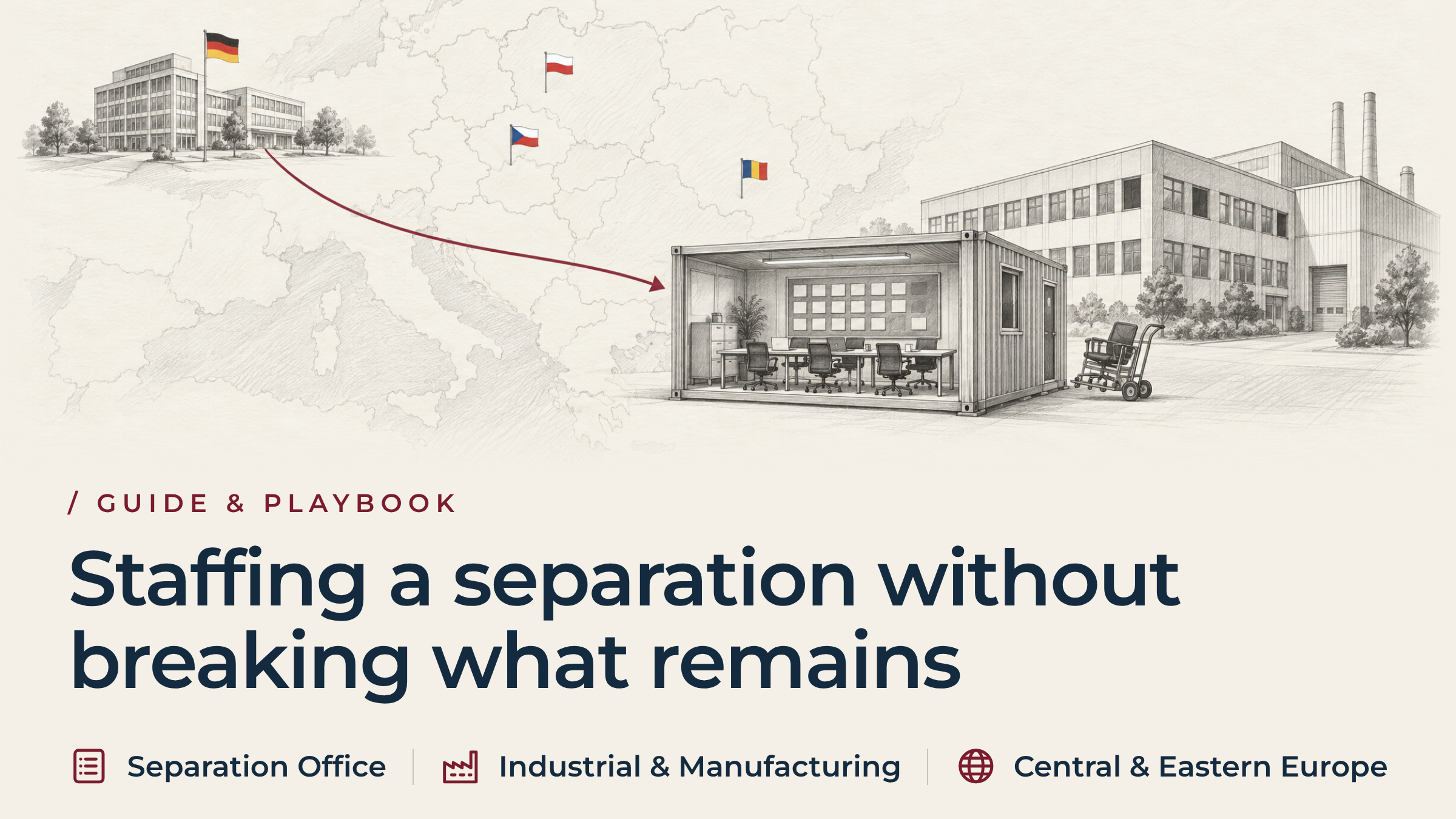
Обеспечить уход одного сотрудника, не нарушив работу остальных
Вкратце
Для продажи активов нужны люди, которые понимают, как устроен бизнес. То же самое касается и того бизнеса, который они оставляют после себя. Управление процессом отделения устраняет эту напряжённость. Оно назначает одного ответственного, подчиняется финансовому директору группы и поочерёдно решает вопрос о каждой должности: назначить на неё внутреннего эксперта, заполнить вакансию или привлечь специалиста со стороны. Группы, которые пропускают этот этап, обычно обнаруживают это по сбоям в циклах отчётности в том бизнесе, который они сохраняют.
После утверждения необходимо укомплектовать программу персоналом
Весной европейская промышленная группа утверждает решение о продаже активов. К лету стороны согласовывают границы структуры. Теперь необходимо назначить людей, которые будут руководить процессом отделения. Финансовому направлению нужен контролер, знающий, как на самом деле выделяет свои затраты выделяемое подразделение. В рабочей группе по кадрам нужен специалист, отвечающий за взаимодействие с производственным советом. Каждый из этих специалистов уже имеет полную занятость в рамках компании.
Такое случается довольно часто. Deloitte согласно результатам анализа данных S&P Capital IQ по состоянию на 8 декабря 2025 года, в 2025 году в мире будет зарегистрировано 908 сделок по продаже активов на сумму свыше 100 млн долларов США. То же самое Deloitte В исследовании указаны пробелы в обеспечении готовности к разделению, нормативном планировании и согласованности действий руководства. Среди причин снижения стоимости после завершения сделки в нем перечислены «застрявшие» затраты и сложность соглашений об оказании услуг в переходный период. Концерны продолжают проводить разделения. Ресурсы для их проведения они черпают из подразделений, которым по-прежнему приходится вести коммерческую деятельность.
Масштаб делает арифметику наглядной. Сименс Энерджи В августе 2026 года компания приступила к юридическому и операционному выделению своего подразделения «Трансформация промышленности». Это подразделение стало самостоятельной компанией под названием Omterra. В 2025 финансовом году её выручка составила 5,7 млрд евро, причём примерно половина этой суммы пришлась на доходы от оказания услуг, а количество установленных систем превысило 85 000 единиц. Процесс выделения продолжается, а не завершается, что является нормальным состоянием на протяжении большей части срока реализации программы.
Почему укомплектовать персоналом многострановой периметр сложнее
Проект, охватывающий несколько стран, не может осуществляться исключительно на основе функциональных рабочих потоков. Каждое юридическое лицо имеет свои собственные процедуры по передаче активов, регистрации, найму персонала и налогообложению. Поэтому для разделения, затрагивающего заводы в Польше, Чехии, Венгрии, Словакии, Румынии или Сербии, требуется отдельный рабочий поток для каждой юрисдикции. При этом по-прежнему необходимы функциональные рабочие потоки для финансов, ИТ, кадровой службы, юридического отдела, операционной деятельности и налогообложения. Групповые подразделения, которые должны обеспечивать руководство этими направлениями, расположены в Германии, Франции, Швейцарии или Австрии. А те, кто знает, от чего зависит работа конкретного завода на местном уровне, — нет.
Закон увеличивает нагрузку. Это Директива ЕС № 2001/23/ЕС о передаче предприятий при смене владельца предприятия или его части договор с сотрудником автоматически переходит на тех же условиях. Никто не оспаривает этот принцип. Консультации, оформление документации и взаимодействие с производственным советом по-прежнему осуществляются отдельно для каждого юридического лица. Эту работу выполняют те же специалисты по кадрам и юристы, на которых полагается сохраняющаяся часть бизнеса.
Ситуацию усугубляет длительность. EY и Goldman Sachs Было проанализировано около 160 глобальных сделок, заключенных в период с 2012 по 2022 год. Рыночная капитализация каждого выделенного предприятия превышала 1 млрд долларов США. Более 60 процентов сделок заняли более девяти месяцев от момента объявления до завершения. Командировка, согласованная на короткий срок, превращается в бессрочное отсутствие.
Как понять, что у оставшегося бизнеса заканчиваются средства
Первые признаки редко отражаются в отчётах самой программы. Программа, как правило, достигает поставленных целей. Эти признаки проявляются в тех сферах бизнеса, которые остались позади:
-
Закрытие месяца сдвигается на несколько дней, и объяснение этому меняется с каждым циклом.
-
Решения, которые раньше принимал руководитель функционального подразделения, теперь передаются финансовому директору группы.
-
Вакансии в сфере финансов и ИТ остаются незаполненными, поскольку руководитель отдела подбора персонала затягивает принятие решения.
-
Два или три человека выполняют свои собственные обязанности и половину обязанностей кого-то другого.
-
Увольнения начинаются с уровня, непосредственно ниже уровня командированных руководителей.
Каждый из этих факторов сам по себе выглядит обычным явлением. Однако в совокупности они свидетельствуют о том, что программа привела к сокращению производственных мощностей, а не к их увеличению. Таким образом, группа одновременно осуществляет отказ от активов и незапланированное сокращение собственных производственных мощностей.
Что необходимо для создания надежного управления по вопросам развода
Первое требование — наличие одного конкретного ответственного лица. Управляющий офис по вопросам разделения подчиняется руководящему комитету, а конечным ответственным лицом является финансовый директор группы. Такая структура функционирует иначе, чем комитет, который собирается раз в две недели и распределяет задачи. Проверить это просто: спросите одного человека, почему задерживается работа по направлению, относящемуся к той или иной юрисдикции. Он должен ответить, не обращаясь сначала к представителям трёх подразделений.
Второе требование заключается в принятии четкого кадрового решения по каждой должности до начала реализации программы. В отношении каждого руководителя рабочего направления у группы есть три варианта. Она может откомандировать внутреннего эксперта и заменить его на освободившуюся должность. Она может откомандировать его и согласиться на определённое сокращение функциональных возможностей в данной сфере на установленный период. Или же она может оставить его на должности и привлечь специалистов для реализации программы извне.
Управление выделенным подразделением: кто руководит, а кто несет операционную ответственность
Система управления «карве-аут» работает, когда эти две должности занимают два разных человека. Руководитель процесса выделения подразделения управляет программой и отчитывается перед руководящим комитетом. Функциональные руководители, остающиеся на своих должностях, сохраняют операционную ответственность за RemainCo. Группа оценивает их именно по этому показателю, а не по этапам реализации программы. Когда одна и та же личность занимает обе должности, обычно приоритет отдается программе. У программы есть срок завершения, а у бизнеса — нет.
Примеры регулируемого отчуждения активов демонстрируют, как выглядит формальное разделение этих функций. Эти Европейская комиссия В типовых текстах обязательств по отчуждению дается определение «управляющего отдельно удерживаемым бизнесом». Это лицо осуществляет повседневное управление отчуждаемым бизнесом под надзором контрольного доверительного управляющего. В этих текстах также предусмотрено, что стороны, принимающие на себя обязательства, не должны нанимать управляющего отдельно удерживаемым бизнесом в течение двух лет после передачи.
Что касается сроков, WilmerHale В документе отмечается, что Комиссия обычно предусматривает первоначальный срок продажи активов продолжительностью около шести месяцев, который контролируется сторонами, плюс дополнительные три месяца на период продажи активов под контролем доверенного лица. Эти положения применяются только в тех случаях, когда регулирующий орган предписывает продажу активов в качестве меры по исправлению ситуации в соответствии с Регламентом ЕС о слияниях. Они не содержат шаблона для коммерческой продажи. Однако в них четко указывается один момент. Если кому-то необходимо убедить регулирующий орган в том, что бизнес продолжает функционировать надлежащим образом в ходе процесса разделения, решением этой задачи станет назначение специального лица, которое не будет заниматься ничем другим.
Структура программы продажи активов, необходимая для отделения бизнеса со стороны продавца
Продавцы зачастую оказываются в более слабой позиции, чем они ожидают. EY Ежегодно проводит опрос руководителей высшего звена в рамках своего «Глобального исследования по продаже активов». Согласно данным исследования, 79 % компаний отмечают, что их последняя сделка по продаже активов не оправдала ожиданий в отношении цены. Кроме того, 78 % респондентов признают, что удерживают активы слишком долго. Обе цифры относятся к респондентам со всего мира и взяты из собственного исследования EY.
Эффективная структура программы продажи активов со стороны продавца решает три задачи. Во-первых, она определяет владельца и руководителей рабочих групп до того, как группа выберет покупателя. Во-вторых, она фиксирует для каждого командированного сотрудника, что происходит с его текущей должностью и на какой срок. И, в-третьих, она укомплектовывает рабочие группы по юрисдикциям специалистами, обладающими знаниями о местных операционных процессах. В отчётах группы не будет описано, на чём фактически опирается завод в Словакии или Румынии.
Часто задаваемые вопросы
Что такое управление по вопросам развода?
Управление процессом выделения активов — это программная структура, которую продавцом используется для реализации сделки по продаже активов. Оно охватывает период от утверждения проекта до его завершения и окончания оказания услуг по сопровождению переходного периода. Оно функционирует по принципу программного офиса. Один ответственный руководитель, функциональные рабочие группы по финансам, ИТ, кадрам, юридическим вопросам, операционной деятельности и налогам, а также отдельная рабочая группа для каждой юрисдикции, если сфера деятельности охватывает несколько стран. Управление подчиняется руководящему комитету, а конечным ответственным лицом является финансовый директор группы.
Кто должен возглавить процесс отделения подразделения, занимающегося продажами?
Руководитель по продаже активов, подчиняющийся финансовому директору группы. Данная должность требует полномочий по определению приоритетов программы на межфункциональном уровне, а не просто по их координации. Если в группе существует постоянная структура по корпоративному развитию, руководитель должен быть выбран из её числа. Необходимый потенциал уже имеется, и никто не покидает операционную должность. Если такой подразделения нет, группа выбирает между освобождением от должности одного из руководителей операционной деятельности и привлечением специалиста со стороны.
Как группа укомплектовывает штат отдела по управлению увольнениями?
Позиция за позицией, принимая решение по каждой из них. Финансовый отдел, ИТ-отдел и отдел кадров обычно рассматриваются в первую очередь и занимают больше всего времени. По каждому случаю откомандирования группа выбирает один из трёх вариантов: заполняет освободившуюся должность; соглашается на заведомое сокращение штата в данном подразделении на определённый период; либо оставляет сотрудника на должности и привлекает внешних специалистов для выполнения соответствующих задач.
Как долго длится программа раздельного содержания?
Дольше, чем сама сделка. Компании EY и Goldman Sachs проанализировали около 160 глобальных сделок, заключенных в период с 2012 по 2022 год. Рыночная капитализация каждого выделенного бизнеса превышала 1 млрд долларов США. Более 60 процентов сделок заняли более девяти месяцев от момента объявления до завершения. Затем программа продолжается в течение срока действия соглашения о предоставлении услуг по сопровождению переходного периода. Планируйте задействованные ресурсы с учетом окончания оказания переходных услуг, а не завершения сделки.
Что происходит с сохраняемым бизнесом в период проведения разделения?
Компания выполняет те же коммерческие обязательства, несмотря на сокращение числа руководящих сотрудников. В этом помогают три меры защиты. Определите официального заместителя для каждого сотрудника, направленного в командировку. Четко укажите, что операционная ответственность остается за теми, кто её несет. И предоставьте подразделению, продолжающему работу, возможность поднимать вопросы о нехватке ресурсов перед руководящим комитетом, а не молча справляться с ними самостоятельно.
Связанные знания и дальнейшие шаги
Есть ещё две связанные между собой ситуации: устранить пробел в руководстве в недавно выделенной компании, а также о том, как завод поддерживает производительность за счет вывод инвестиций из нескольких стран. В обоих случаях речь идет о товаре, который продает эта группа. В данной статье рассказывается о самой группе, занимающейся его продажей.
Перед финансовым директором группы стоит выбор из двух вариантов. Либо укомплектовать штат за счет внутренних ресурсов и смириться с ощутимым сокращением объема сохраняемого бизнеса на весь период реализации программы. Либо привлечь внешние ресурсы для тех рабочих потоков, которые с наибольшей вероятностью затянутся, — как правило, это системы и управление персоналом. Крупные группы, имеющие постоянный отдел корпоративного развития, уже обладают такими возможностями и должны ими воспользоваться. Этот вопрос становится актуальным для тех, кто впервые проводит выделение, или для групп, у которых наиболее слабые рабочие потоки как правило превышают установленные сроки.
Если речь идет о привлечении внешних специалистов, это, как правило, означает привлечение небольшого числа опытных руководителей, занимающих конкретные должности в рамках программы на определенный срок, а не целую команду, обеспечивающую поддержку. Компания CE Interim, входящая в состав Valtus Alliance, сотрудничает с группами компаний в Германии, Франции, Швейцарии и Австрии, осуществляющими процессы выделения подразделений в странах Центральной и Восточной Европы. Партнер CE Interim может помочь определить, на какие должности действительно нужен специалист со стороны, а на какие — нет.
 EN
EN  DE
DE  FR
FR  IT
IT  PL
PL  RO
RO  CS
CS  SK
SK  HU
HU  ES
ES  RU
RU  AR
AR  SL
SL