
Not enough time to read the full article? Listen to the summary in 2 minutes.
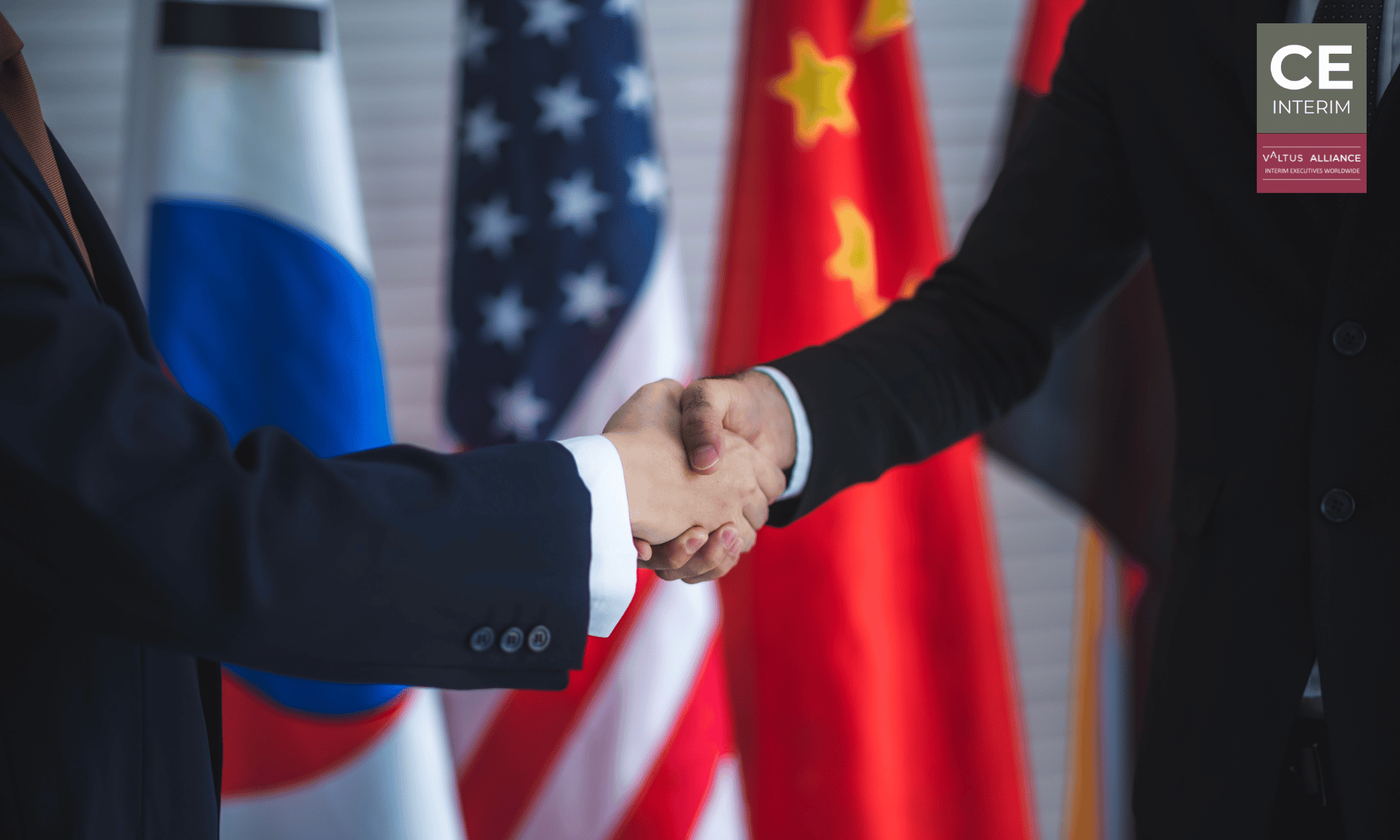
2025 hasn’t been kind to global trade. In just a few short months, businesses found themselves at the mercy of sweeping tariff changes, retaliatory policies, and geopolitical moves that felt more like economic warfare than routine regulation.
From Washington to Brussels to Beijing, tariff walls are going up—and supply chains are caught in the crossfire.
If you’re a manufacturer, pharma leader, FMCG executive, or sitting on a PE-backed board, this isn’t some distant policy issue. It’s happening right now, in your margins, your sourcing models, and your risk maps. Welcome to Tariff Turmoil—the defining supply chain challenge of 2025.
Flashpoints Redefining Trade
A Full-Blown U.S.–China Trade War
It started with a sweeping U.S. import tariff—10% across the board—and quickly escalated to 125% duties on Chinese-origin goods. Beijing’s retaliation was swift.
For companies relying on Chinese inputs, the message is clear: diversify or bleed. Some have already pivoted to India, Mexico, or Southeast Asia. Others are stuck, scrambling to react.
Europe’s Carbon Clampdown and EV Clash
Meanwhile, Europe is taking a dual approach: slapping Chinese EVs with 35–45% tariffs while rolling out the Carbon Border Adjustment Mechanism (CBAM)—a carbon tax in all but name.
Importers must now track and report the emissions behind their products. If you’re not thinking carbon cost, you’re already behind.
New Corridors, New Risks
With the U.S. and EU tightening trade, others are reshuffling the deck. The EU is deepening talks with Gulf nations, while Asia leans into regional partnerships like RCEP. Supply lines are reconfiguring—and companies who spot the openings first will gain more than just tariff relief.
When Tariffs Hit the Bottom Line
Tariffs aren’t just paperwork—they hit hard:
- Landed costs are jumping 20–50% in core product categories.
- Apparel and electronics firms report cost spikes of up to 100%.
- Rerouting to avoid tariffs? Expect customs delays, warehousing strain, and logistical headaches.
Even worse, many firms are locked into outdated supplier contracts that don’t account for tariff shocks. Others are discovering—too late—that their tier-2 and tier-3 suppliers are now liabilities.
How Boards Are Responding
In 2025, this is no longer just a sourcing issue. It’s a strategic risk that boards are taking seriously. Here’s how leadership is stepping up:
- Building budget cushions for customs volatility
- Running scenario models for potential tariff hits
- Revising contracts with built-in tariff-sharing clauses
- Accelerating supplier mapping beyond tier 1
Companies that once reviewed trade policy quarterly now hold weekly war-room sessions.
Bulletproofing Strategies That Actually Work
Forget one-size-fits-all checklists. Here’s what leading companies are actually doing:
1. Supplier Spread
Stop betting on one country. Firms are building China+N models and moving sourcing to tariff-neutral or ally-friendly zones.
2. Nearshoring with Purpose
From U.S. brands shifting to Mexico to EU firms investing in Eastern Europe, proximity is the new advantage. It’s not always cheaper—but it’s more predictable.
3. Trade Zones and Routing Hacks
Smart use of Free Trade Zones (FTZs) and transshipment hubs is back in vogue. But it comes with compliance complexity, so only works if you get the rules right.
4. Product Design Meets Tariff Strategy
Some companies are redesigning SKUs to avoid tariffed components. Others are semi-assembling in low-duty countries. It’s a new era of tactical manufacturing.
5. Compliance Becomes Competitive
Good compliance is now a profit lever. Trade audits, HS code optimization, and real-time tracking tools aren’t optional—they’re game changers.
The ESG Twist: It’s Not Just About Money
Sustainability and tariffs are converging fast. Europe’s carbon border tax means carbon data isn’t just for ESG reports—it determines customs fees. Forced labor regulations now block imports with unethical sourcing.
Boards must now see ESG as more than a moral duty—it’s a trade risk.
Rethinking the Playbook
Resilience in 2025 doesn’t mean being untouchable. It means being adaptive:
- Flexible supplier bases
- Dynamic contract terms
- Predictive tools that spot tariff risks early
- Internal alignment between procurement, compliance, and finance
This isn’t the time to cling to the lowest-cost playbook. Cost-cutting without risk awareness is no longer strategy—it’s roulette.
Need a Faster Pivot?
CE Interim works with companies to make real-time changes:
- Sourcing overhauls
- Contract reengineering
- FTZ and compliance strategy
- Crisis-tested interim supply chain leaders
📌 Talk to CE Interim and start building resilience into your sourcing.
FAQs: Tariff Turmoil 2025
What is Tariff Turmoil?
It refers to the disruptive global tariff changes in 2025 that are reshaping supply chains.
Which industries are affected?
Manufacturing, pharma, automotive, FMCG, and electronics are the most impacted.
How can I reduce tariff exposure?
Diversify suppliers, leverage trade agreements, use FTZs, and improve compliance.
What is the EU Carbon Border Tax?
A new policy requiring importers to pay based on the carbon emissions of their goods.
Can interim leaders help?
Absolutely. They offer immediate expertise to restructure sourcing and ensure compliance.
 EN
EN  DE
DE  FR
FR  IT
IT  PL
PL  RO
RO  CS
CS  SK
SK  HU
HU  ES
ES  RU
RU  AR
AR  SL
SL