The contracts that do not come with the business

A contract novation carve-out means agreements do not automatically transfer. Here is who should own supplier and customer consent.
ERP separation sets the timeline for everything else
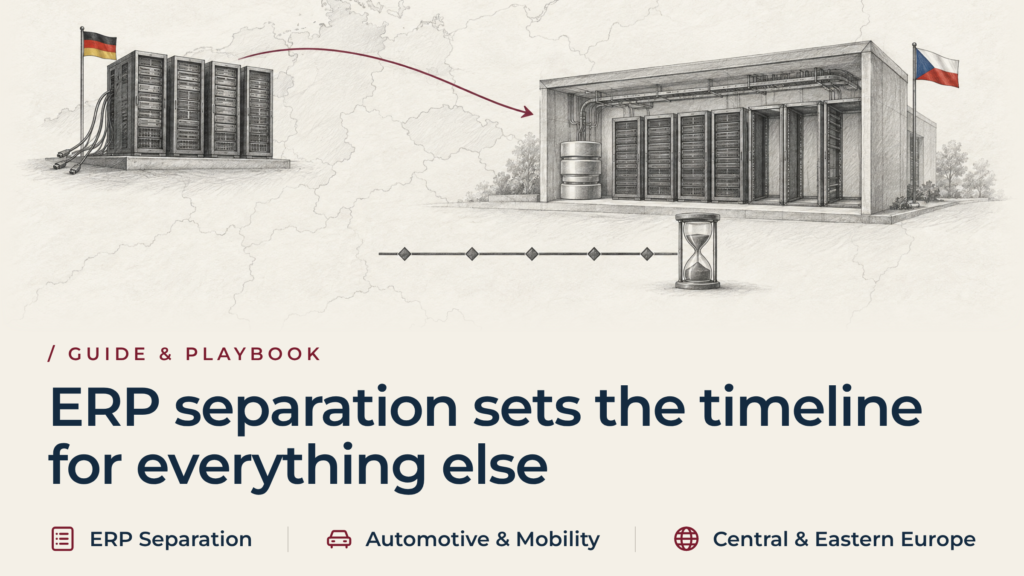
The ERP separation carve-out timeline sets the critical path for finance, supply chain and operations. Why software cutover dictates your TSA exit date.
A Slovak plant leadership gap before a customer audit
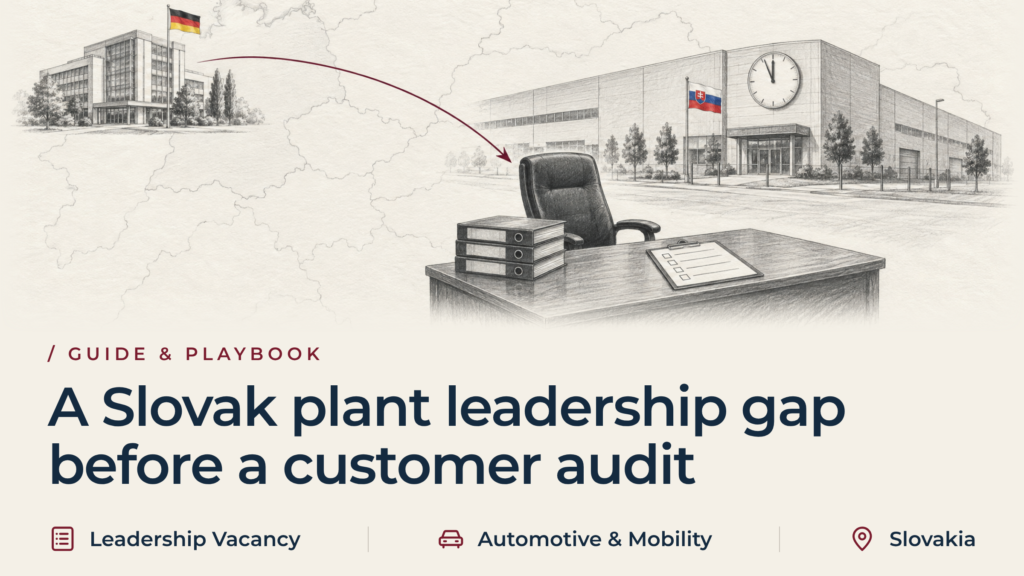
A vacancy is a manageable problem right up to the moment it meets a deadline the customer owns.
Who is allowed to sign anything in the new company?

A newly separated company needs standalone entity signing authority on day one: what is delegated, and what stays with the board.
Stranded costs: the overhead nobody owns after a sale

When a division is sold, stranded costs after divestiture remain in RemainCo. Why the overhead survives, and who must own its removal.
You sold the business. You are still running its payroll.

The seller transition services obligation keeps a divested business’s former parent delivering payroll, IT and finance until the buyer can stand alone.
The carved-out company has no leadership team. Who runs it?

A carve-out leadership gap can leave a new company without finance or technology leadership. What the buyer decides, and how fast, is the question.
Staffing a separation without breaking what remains
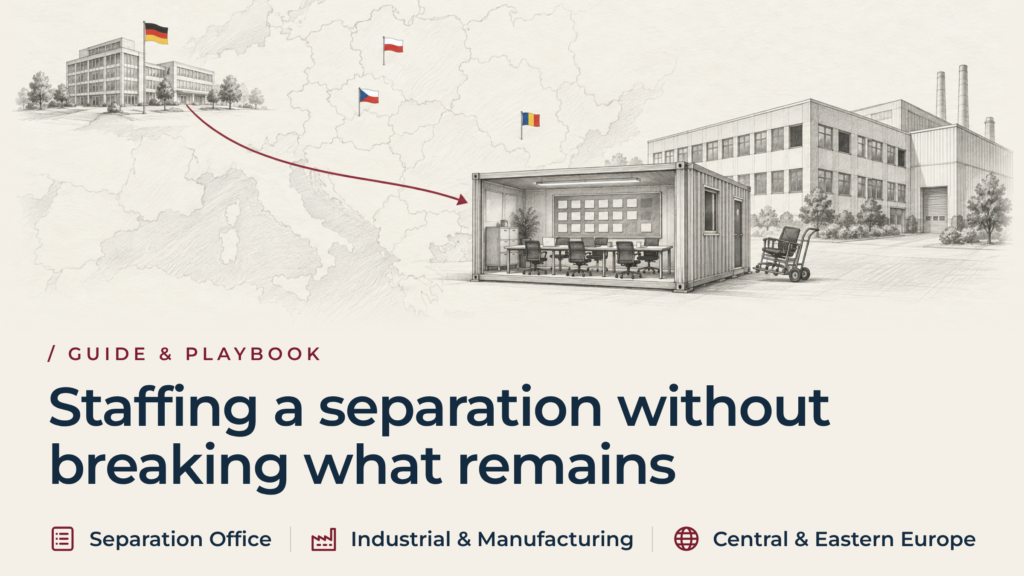
A divestment needs the people the retained business relies on. How a separation management office settles each seat: second, backfill, or resource from outside.
Zetor Brno Production Transfer: Managing Cross-Border Manufacturing Without Losing Engineering Control
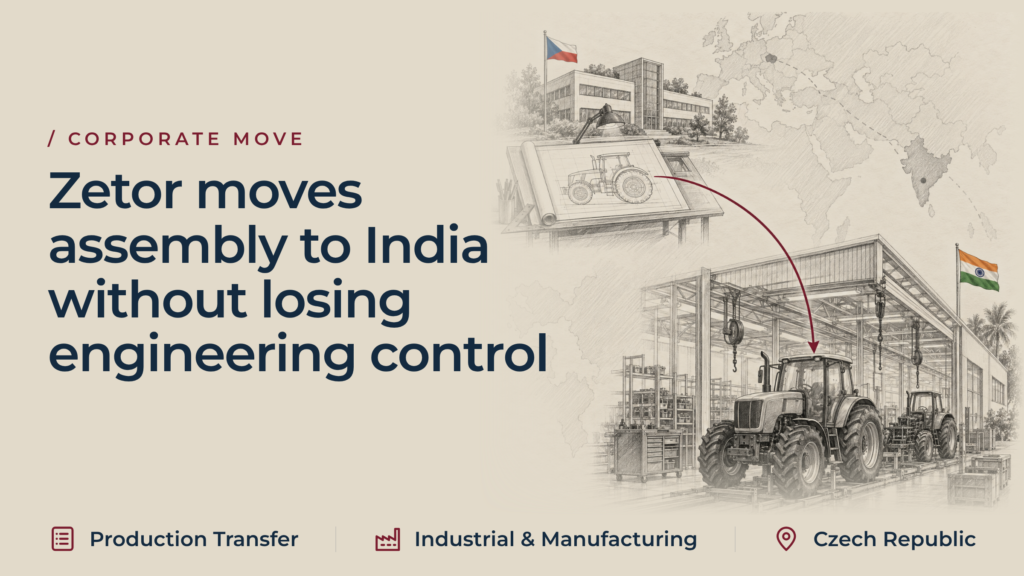
Zetor’s production transfer from Brno to India tests whether a tractor brand can protect quality and control while assembly moves abroad.
Keeping CEE Plants Running Through a Cross-Border Carve-Out

A cross-border carve-out moves a CEE plant’s ownership, not its dependencies. What group reporting misses, what fails first, and who should run the site.
 EN
EN  DE
DE  FR
FR  IT
IT  PL
PL  RO
RO  CS
CS  SK
SK  HU
HU  ES
ES  RU
RU  AR
AR  SL
SL