


Nimate dovolj časa, da bi prebrali celoten članek? Poslušajte povzetek v 2 minutah.
Katar Ras Laffan Industrial City was one of the few facilities globally capable of producing semiconductor-grade helium at commercial scale. When it went offline in early March 2026, semiconductor manufacturers activated conservation protocols within days.
At that point, the Hormuz crisis had already become a chip crisis.
Most coverage focused on oil prices and LNG markets. Those are legitimate concerns. But the helium story running underneath them will affect a broader range of businesses, over a longer period, and through a mechanism most operations and procurement leaders have not yet traced through their own supply chains.
The Number That Will Matter More Than Oil Prices
Boardrooms tracking the Hormuz crisis are almost universally watching crude prices.
Over the next two to four quarters, helium pricing is likely to prove more consequential for non-energy businesses.
Helium spot prices surged sharply in the weeks following the disruption. If the constraint persists, contract prices are expected to rise further, with semiconductor manufacturers passing those costs directly into wafer pricing.
Understanding why this matters requires a clear view of what helium actually does inside a semiconductor fabrication process.
Helium is not expensive. It is indispensable.
Why Helium Cannot Be Replaced
Helium performs a small number of critical functions in semiconductor fabrication, and each one is essential at the precision levels modern chip manufacturing requires.
It enables temperature stability during etching and deposition, where even minor variations reduce yield. It is required to cool EUV lithography systems used for advanced chip production, where thermal control directly affects process integrity.
It is also used for leak detection in vacuum environments and as a carrier gas in plasma processes to prevent unwanted chemical reactions.
At the purity levels required for semiconductor manufacturing, there is no viable substitute for any of these functions.
Helium represents a small share of total cost, but it sits at every critical stage of production. When supply tightens, output falls. There is no workaround.
Why This Disruption Lasts Longer Than Expected
Understanding helium’s role is only part of the picture. The real constraint comes from how slowly the supply system can recover.
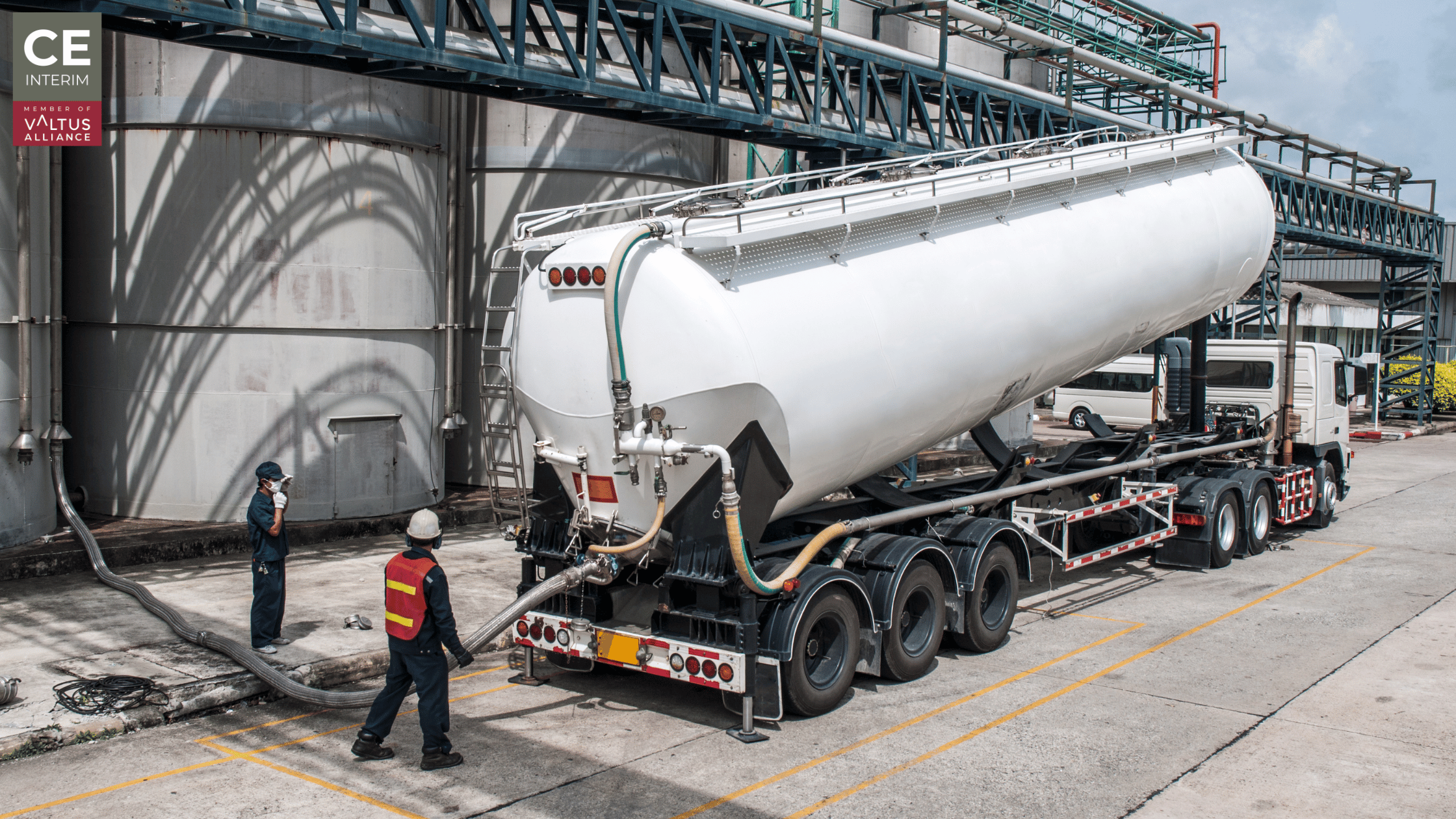
Helium must be transported in specialised cryogenic containers that maintain it in liquid form at extremely low temperatures. These containers can preserve that state for a limited period, typically just over a month, before the helium warms, converts to gas, and escapes.
When shipping routes extend, that time constraint becomes critical.
At the same time, a significant number of containers were already in transit or stranded when the disruption began. Repositioning them is not immediate, and the global pool of available containers is limited.
Alternative supply is also weaker than it appears. Facilities positioned as substitutes have been operating below capacity, and the strategic buffer that once stabilised the market has already been reduced.
Even if production restarts quickly, the system does not normalise at the same speed. Recovery is measured in months, not weeks.
How This Reaches Businesses Far Beyond Semiconductors
The impact does not remain inside semiconductor manufacturing.
Production is concentrated in regions that depend heavily on Gulf-linked helium supply. When output slows, the effect moves downstream across industries.
This reaches:
- industrial automation systems and control hardware
- data centre and AI infrastructure
- storage devices and electronic components
- manufacturing equipment and products with embedded chips
Production that does not happen during a constrained period cannot be recovered later. That lost output translates directly into reduced availability, extended lead times, and higher prices across the system.
This is how a helium disruption becomes a broader industrial constraint.
What Procurement and Operations Leaders Should Do Now
The companies that manage this effectively will not be the ones reacting once lead times extend.
They will be the ones that adjusted their position earlier.
Three actions matter immediately:
- Review buffer stock on chip-dependent components. Plan for months, not weeks.
- Identify components exposed to constrained semiconductor supply chains.
- Extend procurement horizons early to avoid allocation risk.
At this stage, the constraint is no longer understanding the risk.
It is acting on it fast enough.
Where Execution Becomes the Differentiator
The companies that navigate this effectively are not those with the most detailed visibility.
They are the ones that convert that visibility into action earliest.
Running this type of assessment and translating it into sourcing and commercial decisions requires both capacity and experience. Leaders who have managed semiconductor constraints before understand how quickly allocation spreads and how early decisions shape outcomes.
This is typically where organisations bring in interim supply chain executives to take ownership of the response and move from analysis to execution.
In a situation where timing defines outcomes, that shift becomes critical.
Zaključna misel
The question is not whether helium constraints will reach your business.
It is whether you have already adjusted your position before they do.
Because by the time it appears in your numbers, you have already made the decisions that caused it.