În Europa Centrală și de Est, sectorul de nearshoring se confruntă cu o lipsă de lideri
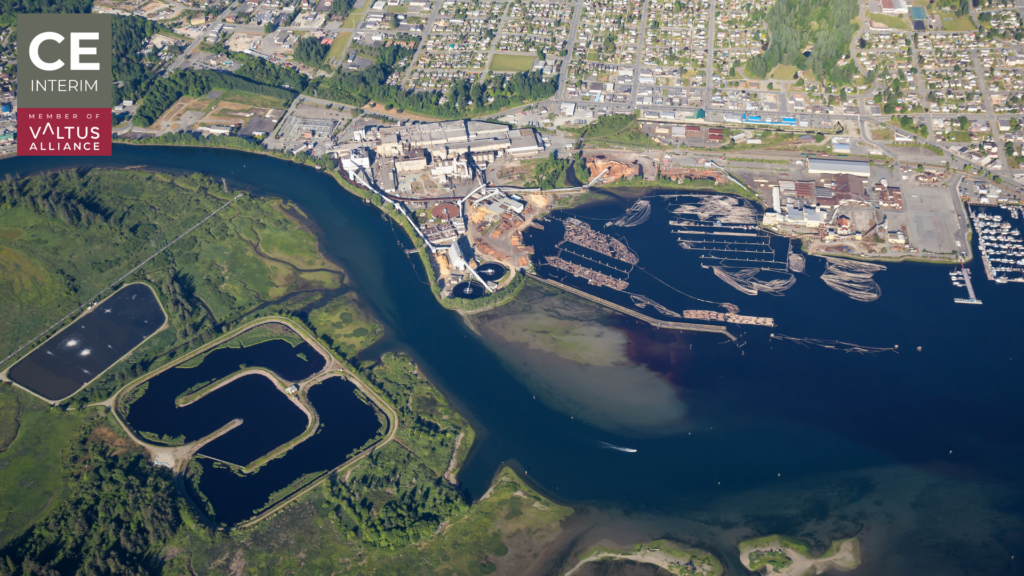
Poland entered 2026 with factories, lines and investment commitments advancing faster than the labour base around them. Polish Investment and Trade Agency (PAIH) reported 64 supported projects in 2025. Declared investment exceeded €4 billion, with more than 6,600 planned jobs. Of those, 42 production projects represented more than €3.6 billion and about 2,900 planned jobs. For boards pursuing nearshoring Central Eastern Europe, that capital-to-employment pattern matters. It shifts the question toward who can make increasingly automated capacity productive on schedule. Statistics Poland / Główny Urząd Statystyczny (GUS) estimated that industrial sold production rose 3.1% in 2025 and labour productivity rose 3.5%. Average employment fell 0.5%, while nominal gross monthly wages increased 8.0%. The European Commission reported that 62.4% of Polish industrial businesses saw labour shortages as a production constraint in Q4 2025. Across the EU, the figure was 17.5%. That is the starting condition for CEE manufacturing 2026: capital intensity is rising while labour and management depth remain tight. Nearshoring Central Eastern Europe becomes an operating problem after site selection The location case ends before the execution risk begins CE Interim has already set out the regional location case in Nearshoring Advantage: CEE as Europe’s Factory Hub. This article starts after the board selects the geography, approves capital and assigns the business case. At that point, nearshoring Central Eastern Europe becomes a dated sequence of commissioning, qualification and ramp-up obligations. The board no longer owns a location thesis alone. It owns an execution calendar. Poland industrial capacity is expanding into a tighter cost base Narodowy Bank Polski (NBP) recorded PLN 56.5 billion of inward direct-investment transactions in Poland in 2024. That was 55.1%, or PLN 69.2 billion, below 2023. NBP also identified rising labour costs and energy prices among factors affecting investment plans. The 2025 PAIH project rebound therefore sits inside a pressured market. Poland industrial capacity must absorb those operating conditions, not just new machines. Construction can hide the nearshoring leadership gap Physical completion does not prove operating readiness Civil works, equipment deliveries and installation milestones are easy to report. Operating readiness is harder to see. A line can reach physical completion while maintenance standards, escalation routines, shift leadership and supplier recovery remain incomplete. The Lower Silesia and Opole industrial corridor illustrates the broader problem. New Poland industrial capacity competes for experienced production, engineering and maintenance leaders who may already carry existing output. Before commissioning, five systems need clear ownership The nearshoring leadership gap becomes expensive when ownership stays fragmented across functions. Before the plant enters commissioning, management needs clear control over a short set of operating systems: Eurostat adds another constraint. Between 1 January 2005 and 1 January 2025, Poland and Romania each lost roughly 2 million residents. Romania’s population fell by about 11%. For a Plant Manager or Plant Director, that changes staffing assumptions. It affects shifts, maintenance depth and supervisor replacement during ramp-up. Automation can reduce direct labour in some processes. It also raises the cost of weak technical decisions around more capital-intensive assets. Commissioning turns separate workstreams into one production system The nearshoring leadership gap becomes measurable during integration Commissioning forces machinery, utilities, ERP and MES interfaces, quality gates, maintenance routines, suppliers and workforce capability to work together. The plant now exposes weak decision rights through missed milestones, unstable cycle times and unresolved defects. The COO, Operations Director or Ramp-up Director must decide which deviations the plant can contain locally. Other deviations threaten qualification or launch timing and need faster escalation. If nobody owns those trade-offs, each function can look busy while the plant remains unstable. CEE manufacturing 2026 places more weight on local decision quality This pressure extends beyond Poland. BMW Group opened its Debrecen, Hungary plant on 29 September 2025. Series production of the Neue Klasse BMW iX3 began in late October 2025. The site integrates high-voltage battery production with highly digitalised manufacturing processes. Across CEE manufacturing 2026, the same operating test applies to highly integrated assets. The relevant industrial footprints include Mercedes-Benz Vans in Jawor, Poland and Nokian Tyres in Oradea, Romania. The management requirement rises with integration. A local engineering issue can affect production, quality and logistics at the same time. More automation does not remove the need for judgement; it concentrates that judgement in fewer roles. That is why the nearshoring leadership gap often becomes visible before a formal vacancy appears. SOP converts unresolved problems into cost, inventory and customer risk Romania manufacturing FDI shows why installed assets are not the same as operating economics The National Bank of Romania (BNR) reported an inward FDI position of €125.035 billion at the end of 2024. Industry accounted for 37.1%, and manufacturing represented 76.1% of the industrial FDI position. Net FDI flows in 2024 were €5.603 billion, down 17.0% from 2023. Romania manufacturing FDI is substantial, but installed capacity still has to perform. The plant must convert technical capability into volume, quality and cash on the dates assumed in the investment case. Working capital sees instability before the board deck does According to the European Commission, Romanian industrial output declined 0.9% in 2025. The same report put real labour-productivity growth per hour at about 4.5% annually in 2015 to 2019. It slowed to around 2% in 2020 to 2025. High energy prices and rapid labour-cost increases weakened manufacturing competitiveness. That is the operating context for Romania manufacturing FDI in places such as Oradea and Bucharest-Ilfov. Once SOP begins, instability moves quickly into the financial statements. Scrap consumes material, premium freight protects customer schedules, overtime fills productivity gaps and inventory rises to buffer uncertainty. Contribution margin arrives later while fixed costs are already running. Nearshoring Central Eastern Europe therefore becomes a cash-control issue when production misses the assumptions in the investment case. The first six months of production test management bandwidth CEE manufacturing 2026 requires a management system, not a project team Early production exposes whether the site has made the transition from project governance to operating discipline. Recurring defects must move from containment to permanent correction. Maintenance has to move from
 EN
EN  DE
DE  FR
FR  IT
IT  PL
PL  RO
RO  CS
CS  SK
SK  HU
HU  ES
ES  RU
RU  AR
AR  SL
SL