
Post-merger pricing: which differences should you keep?
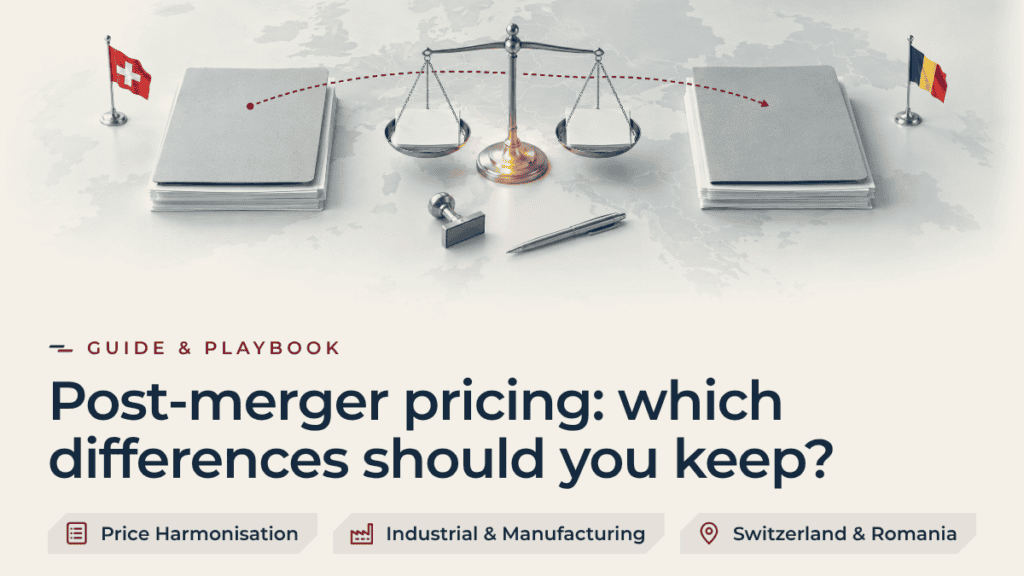
Different legacy prices are not automatically mistakes. Compare products, service and customer terms before approving a post-merger pricing change.
German HQ and the Czech acquisition share a customer. Who leads?

Post-merger sales integration when German HQ and a Czech acquisition share a customer: agree account lead, specialist support and one commercial route.
Post-merger customer disruption: fix the change or pause it?

Post-merger customer disruption calls for a clear decision: correct, limit or pause the change. Keep service commitments and executive ownership clear.
NVIDIA interim CEO: what Jensen Huang’s exit shows every Board about leadership cover

What NVIDIA’s reported CEO transition means for boards preparing interim leadership cover, clear decision rights and US executive mandate contracts.
After the merger, direct sales compete with distributors

An acquisition puts direct sales and distributors in the same markets. Decide how coverage works without losing customer access or partner trust.
A Serbian acquisition: the seller stays. Who decides now?

A majority buyer and a continuing seller must run one business. Who may bind the company in Serbia? Agree decision rights in writing from week one.
Late payments in Europe: which delays can your business prevent?

Late payments in Europe have different causes. Separate customer pressure from avoidable billing and dispute delays, then act where you have authority.
The project is delivered. Why can’t you invoice it yet?

A customer acceptance delay is blocking billing on a delivered project. Establish what remains open, who can resolve it and which condition applies.
The customer disputes the invoice. Who can approve the resolution?
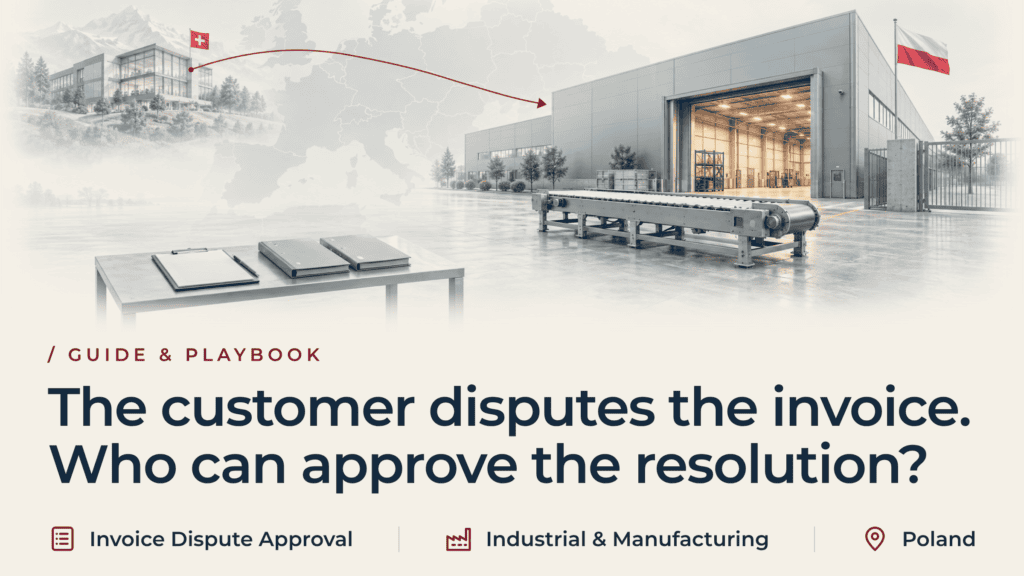
Invoice dispute resolution needs an approved answer. Establish the facts, compare legitimate responses and record who can approve before calling it cash.
Your subsidiary is waiting for payment. Who owns the customer decision?

Cross-border receivables stall when German HQ owns the customer and a Czech subsidiary holds the invoice. Agree who resolves disputes and approves terms.
 EN
 DE
 FR
 IT
 PL
 RO
 CS
 SK
 HU
 ES
 RU
 AR
 SL