În Europa Centrală și de Est, sectorul de nearshoring se confruntă cu o lipsă de lideri
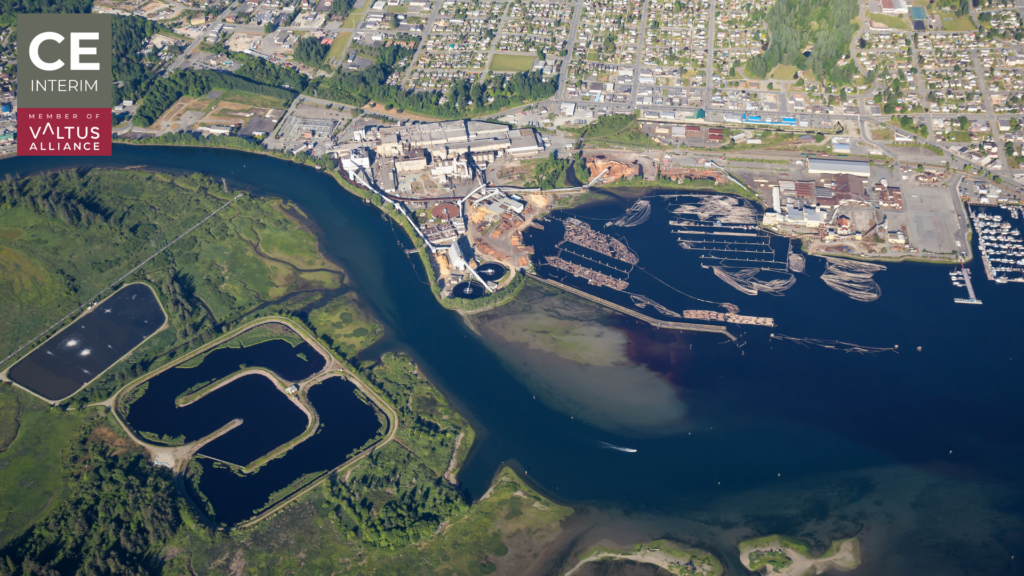
Poland entered 2026 with factories, lines and investment commitments advancing faster than the labour base around them. Polish Investment and Trade Agency (PAIH) reported 64 supported projects in 2025. Declared investment exceeded €4 billion, with more than 6,600 planned jobs. Of those, 42 production projects represented more than €3.6 billion and about 2,900 planned jobs. For boards pursuing nearshoring Central Eastern Europe, that capital-to-employment pattern matters. It shifts the question toward who can make increasingly automated capacity productive on schedule. Statistics Poland / Główny Urząd Statystyczny (GUS) estimated that industrial sold production rose 3.1% in 2025 and labour productivity rose 3.5%. Average employment fell 0.5%, while nominal gross monthly wages increased 8.0%. The European Commission reported that 62.4% of Polish industrial businesses saw labour shortages as a production constraint in Q4 2025. Across the EU, the figure was 17.5%. That is the starting condition for CEE manufacturing 2026: capital intensity is rising while labour and management depth remain tight. Nearshoring Central Eastern Europe becomes an operating problem after site selection The location case ends before the execution risk begins CE Interim has already set out the regional location case in Nearshoring Advantage: CEE as Europe’s Factory Hub. This article starts after the board selects the geography, approves capital and assigns the business case. At that point, nearshoring Central Eastern Europe becomes a dated sequence of commissioning, qualification and ramp-up obligations. The board no longer owns a location thesis alone. It owns an execution calendar. Poland industrial capacity is expanding into a tighter cost base Narodowy Bank Polski (NBP) recorded PLN 56.5 billion of inward direct-investment transactions in Poland in 2024. That was 55.1%, or PLN 69.2 billion, below 2023. NBP also identified rising labour costs and energy prices among factors affecting investment plans. The 2025 PAIH project rebound therefore sits inside a pressured market. Poland industrial capacity must absorb those operating conditions, not just new machines. Construction can hide the nearshoring leadership gap Physical completion does not prove operating readiness Civil works, equipment deliveries and installation milestones are easy to report. Operating readiness is harder to see. A line can reach physical completion while maintenance standards, escalation routines, shift leadership and supplier recovery remain incomplete. The Lower Silesia and Opole industrial corridor illustrates the broader problem. New Poland industrial capacity competes for experienced production, engineering and maintenance leaders who may already carry existing output. Before commissioning, five systems need clear ownership The nearshoring leadership gap becomes expensive when ownership stays fragmented across functions. Before the plant enters commissioning, management needs clear control over a short set of operating systems: Eurostat adds another constraint. Between 1 January 2005 and 1 January 2025, Poland and Romania each lost roughly 2 million residents. Romania’s population fell by about 11%. For a Plant Manager or Plant Director, that changes staffing assumptions. It affects shifts, maintenance depth and supervisor replacement during ramp-up. Automation can reduce direct labour in some processes. It also raises the cost of weak technical decisions around more capital-intensive assets. Commissioning turns separate workstreams into one production system The nearshoring leadership gap becomes measurable during integration Commissioning forces machinery, utilities, ERP and MES interfaces, quality gates, maintenance routines, suppliers and workforce capability to work together. The plant now exposes weak decision rights through missed milestones, unstable cycle times and unresolved defects. The COO, Operations Director or Ramp-up Director must decide which deviations the plant can contain locally. Other deviations threaten qualification or launch timing and need faster escalation. If nobody owns those trade-offs, each function can look busy while the plant remains unstable. CEE manufacturing 2026 places more weight on local decision quality This pressure extends beyond Poland. BMW Group opened its Debrecen, Hungary plant on 29 September 2025. Series production of the Neue Klasse BMW iX3 began in late October 2025. The site integrates high-voltage battery production with highly digitalised manufacturing processes. Across CEE manufacturing 2026, the same operating test applies to highly integrated assets. The relevant industrial footprints include Mercedes-Benz Vans in Jawor, Poland and Nokian Tyres in Oradea, Romania. The management requirement rises with integration. A local engineering issue can affect production, quality and logistics at the same time. More automation does not remove the need for judgement; it concentrates that judgement in fewer roles. That is why the nearshoring leadership gap often becomes visible before a formal vacancy appears. SOP converts unresolved problems into cost, inventory and customer risk Romania manufacturing FDI shows why installed assets are not the same as operating economics The National Bank of Romania (BNR) reported an inward FDI position of €125.035 billion at the end of 2024. Industry accounted for 37.1%, and manufacturing represented 76.1% of the industrial FDI position. Net FDI flows in 2024 were €5.603 billion, down 17.0% from 2023. Romania manufacturing FDI is substantial, but installed capacity still has to perform. The plant must convert technical capability into volume, quality and cash on the dates assumed in the investment case. Working capital sees instability before the board deck does According to the European Commission, Romanian industrial output declined 0.9% in 2025. The same report put real labour-productivity growth per hour at about 4.5% annually in 2015 to 2019. It slowed to around 2% in 2020 to 2025. High energy prices and rapid labour-cost increases weakened manufacturing competitiveness. That is the operating context for Romania manufacturing FDI in places such as Oradea and Bucharest-Ilfov. Once SOP begins, instability moves quickly into the financial statements. Scrap consumes material, premium freight protects customer schedules, overtime fills productivity gaps and inventory rises to buffer uncertainty. Contribution margin arrives later while fixed costs are already running. Nearshoring Central Eastern Europe therefore becomes a cash-control issue when production misses the assumptions in the investment case. The first six months of production test management bandwidth CEE manufacturing 2026 requires a management system, not a project team Early production exposes whether the site has made the transition from project governance to operating discipline. Recurring defects must move from containment to permanent correction. Maintenance has to move from
Încetarea acordului privind serviciile de tranziție: Ceasul care nu aparține nimănui
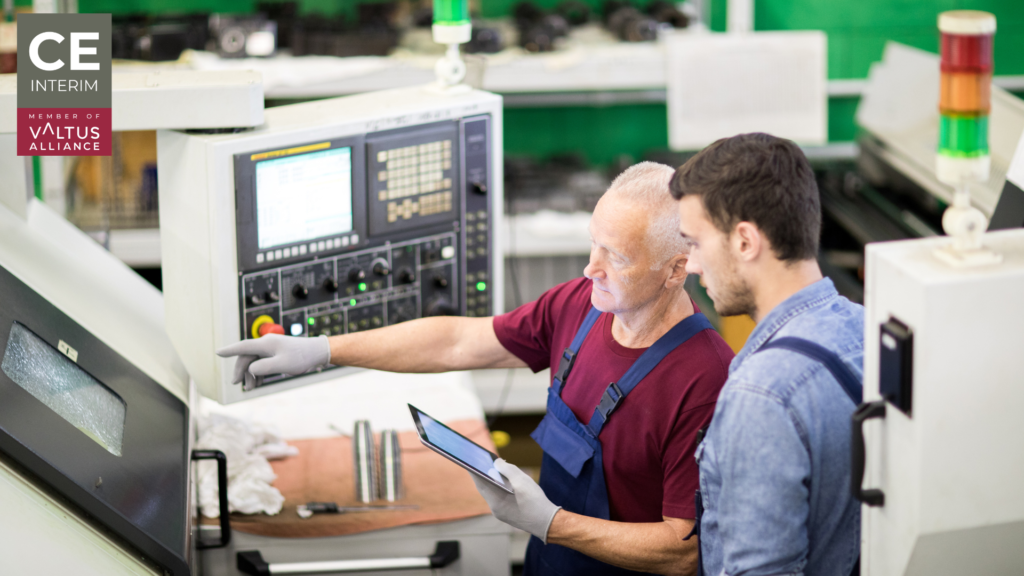
Honeywell Aerospace became an independent public company on 29 June 2026. The company still depends on global real estate, IT, finance administration and HR services under its TSA. Honeywell Aerospace states that those services will generally run for no more than two years following the spin-off. That is the operating reality behind a transitional services agreement exit: the deal closes before the dependency chain disappears. Honeywell completed the Solstice Advanced Materials spin-off on 30 October 2025, with the Solstice Advanced Materials TSA generally limited to 12 months. Aptiv completed the Versigent separation on 1 April 2026 and disclosed transition services, principally IT, for terms of up to 24 months. Different clocks create the same exposure: legal separation happens first, while operating independence arrives dependency by dependency. A transitional services agreement exit starts with the replacement service Contract dates do not create operating capability The buyer can switch off a TSA service only when the replacement process works without seller support. The replacement needs system access, complete data, contracts, controls and a named owner. TSA exit planning must therefore work backward from the operating state, not forward from the contract date. A completion percentage proves very little. Payroll, cash movement and customer invoicing must still work after the seller withdraws. The dependency often reaches far beyond the service label. The Kenvue and Johnson & Johnson TSA dated 3 May 2023 covered a wide operating scope. It included IT, supply chain, HR, medical safety, finance, regulatory activities, sales and marketing, R&D, real estate, legal operations, government affairs, distribution and tax. The same SEC disclosure describes a separate data-transfer agreement for extraction, transfer, traceability, retention and deletion. One shared service can therefore sit underneath several business processes at once. Post-carve-out standalone operations need a full-cycle test The buyer needs evidence that the standalone company can complete whole operating cycles without the seller. This is where post-carve-out standalone operations become measurable. Test the points where functions meet, because incomplete separation usually appears there first. 1. Close the books using standalone data, approvals and reporting access. 2. Run purchase-to-pay from supplier order through receipt, approval and payment. 3. Run order-to-cash from customer order through invoicing, collection and reconciliation. 4. Complete payroll, identity administration and exception handling without parent access. This is also where carve-out execution differs from system implementation. A live application proves only that the application runs. It does not prove that the company can absorb errors, exceptions and month-end pressure after the legacy route disappears. TSA exit planning fails when rights and consents remain with the seller Technical readiness can still hide contractual dependence A configured system can remain unusable if the new company lacks the rights around it. Data may be incomplete, identities may still sit with the seller, and supplier interfaces may still point to legacy infrastructure. Regulation (EU) 2023/2854, the EU Data Act, belongs on the control map where teams reassign data access and use rights. The Aptiv and Versigent TSA makes the contractual dependency explicit. The agreement requires necessary third-party consents and states that the service provider has no obligation to continue a service if the required consent is missing and no alternative arrangement exists. A vendor consent or license can therefore remain on the critical path after the internal build is complete. The buyer should track three forms of control • Operational control: can the business perform the service without seller access? • Contractual control: does the new entity hold every license, consent and vendor right it needs? • Data control: can the company access, retain, transfer and delete the required data under its own authority? These questions keep separation management tied to operating evidence. They also prevent carve-out execution from becoming a collection of technical go-lives with unresolved legal dependencies. Separation management needs one owner for the dependency chain Functional milestones can all be green while the company is still dependent Each function can finish its assigned work and still produce a company that cannot stand alone. Finance, IT, HR, procurement, legal and operations do not become independent at the same moment. Finance may need bank mandates before close. Procurement may need supplier contracts before purchase orders move. HR may need payroll and identity controls before the parent removes access. The risk sits between workstreams, not inside them. Effective separation management needs one integrated exit condition for each service. The Separation Management Office or Separation Director must own the sequence, expose conflicts and reject local completion when a downstream dependency remains open. CE Interim documented a related governance problem in a PE-owned industrial carve-out requiring independent financial visibility and governance after acquisition. The case shows why standalone reporting and decision rights must become real operating capabilities. Spreadsheet milestones are not enough. Local entities can block TSA exit Central platform readiness does not settle local ownership A central ERP cutover does not make every local entity independent. Banking, payroll, tax, customs, cybersecurity controls and statutory reporting still need named ownership. Industrial groups expose this problem sharply because plants may depend on central systems while carrying local legal obligations. EU Member States were required to transpose Directive (EU) 2022/2555, NIS2, by 17 October 2024. The Directive covers, among other sectors, manufacturing of critical products. During separation, the operating question is direct: who owns identities, infrastructure, managed services and security processes after the seller steps out? CBAM now belongs in the 2026 cutover test CE Interim published an earlier CBAM manufacturing overview in September 2025. That article predates the current implementation details, so a 2026 carve-out must supersede its readiness context with the operative regime. The Carbon Border Adjustment Mechanism definitive regime started on 1 January 2026. Under CBAM, importers or indirect customs representatives above the 50-tonne single mass-based threshold must obtain authorised CBAM declarant status. CBAM covers cement, iron and steel, aluminium, fertilisers, electricity and hydrogen. For an affected carve-out, the buyer must prove that the standalone importer and customs process work under the new entity. Data ownership and compliance responsibility must also sit there. Western Digital and
Sprijin CFO interimar în timpul recuperării ERP și a raportării

Aflați cum directorii financiari interimari stabilizează ERP și redresarea raportării prin controlul guvernanței, vizibilitatea raportării și conducerea operațională.
Feedback Director interimar de fabrică SUA - 1336
Crisis Plant Manager USA-Plant Management-Crisis Management and Turnaround-Atlanta Region, USA-CE Interim Management - Cross-cultural Interim Project
Feedback Director interimar de fabrică SUA - 1337
Crisis Plant Manager USA-Plant Management-Crisis Management and Turnaround-Atlanta Region, USA-CE Interim Management - Cross-cultural Interim Project
Relocarea fabricii în SUA: De ce se întrerup accelerările în prima lună

Cele mai multe relocalizări de fabrici în SUA eșuează în prima lună. Nu din cauza mașinilor. Iată ce eșuează de fapt mai întâi și de ce conducerea este adevărata variabilă.
Mutarea amprentei auto în Polonia: Risc de execuție

Riscurile de execuție din spatele mutării amprentei auto în Polonia și modul în care instabilitatea de creștere poate eroda marjele dacă nu este gestionată cu strictețe.
Relocarea fabricii în Arabia Saudită: Riscuri cheie de execuție

Relocarea unei fabrici în Arabia Saudită implică riscuri ascunse de execuție. Guvernanța, forța de muncă și stabilitatea lanțului de aprovizionare determină succesul.
Lista de verificare în caz de urgență atunci când închiderea sau insolvabilitatea este inevitabilă

O listă de verificare în caz de urgență este importantă atunci când închiderea sau insolvența este inevitabilă. Aflați cum executarea disciplinată previne prăbușirea necontrolată.
Costul real al timpilor morți în timpul proiectelor de relocare

Timpii morți din timpul relocării costă mai mult decât producția pierdută. Aflați cum efectele ascunse afectează calitatea, banii și clienții mult timp după repornire.
 EN
EN  DE
DE  FR
FR  IT
IT  PL
PL  RO
RO  CS
CS  SK
SK  HU
HU  ES
ES  RU
RU  AR
AR  SL
SL