

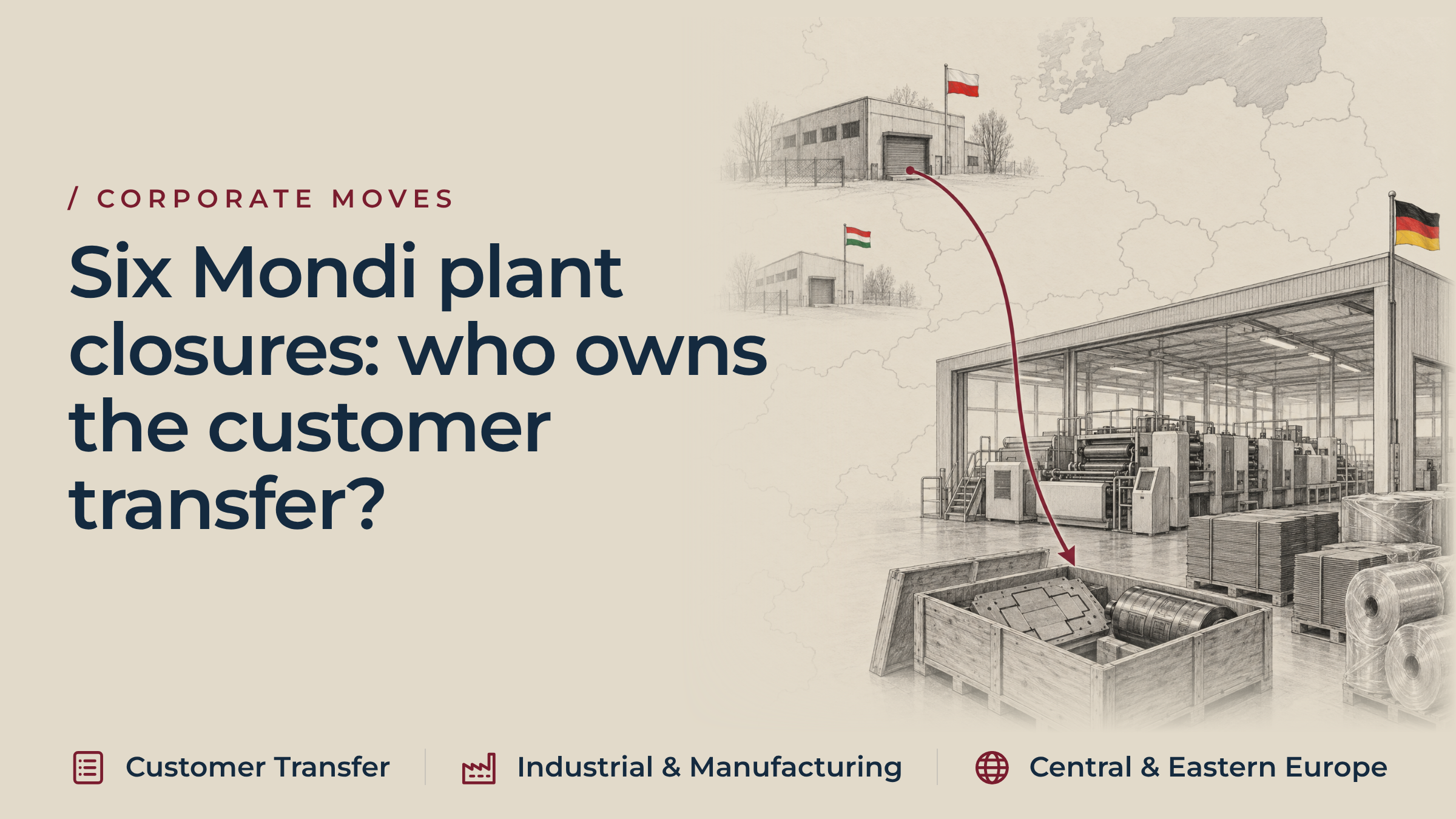
Cierre de Mondi Brzeźno y Szada: gestión de la transferencia de clientes y la reubicación de activos en el marco de la reestructuración de las plantas de embalaje
En resumen
Los propios resultados semestrales de Mondi correspondientes a 2026 ofrecen la cifra más relevante. Con el cierre de seis plantas de transformación, el grupo prevé recortar aproximadamente 580 puestos de trabajo. También tiene previsto reubicar 30 equipos de producción de gran tamaño. Además, espera transferir a otros centros a unos 800 clientes. Esa última cifra es la que realmente importa. La transferencia de clientes durante el cierre de una planta de envasado, y no el coste de los despidos ni la enajenación de activos, es lo que realmente suponen estos seis cierres. Dos centros ocupan un lugar central en ese programa: Brzeźno, en Polonia, y Szada, en Hungría. Uno de ellos ya está reduciendo gradualmente su producción. El otro sigue comprometido a atender a sus clientes sin interrupciones.
Los factores operativos que han motivado el cierre de las plantas de transformación de Mondi
Mondi confirmó el cierre de tres plantas de transformación en sus resultados de 2025. En abril de 2026 anunció tres más. Estas tres son una planta de soluciones de cartón ondulado en Alemania, Mondi Corrugated Poland en Brzeźno y Mondi Consumer Flexibles en Szada. Ya han cerrado dos plantas de la primera tanda: las plantas de bolsas de papel de Hammelburg (Alemania) y Nyíregyháza (Hungría). Quedan cuatro plantas, entre ellas las de Brzeźno, Szada y una planta de cartón ondulado en Turquía. Mondi prevé que las cuatro cierren a finales de 2026.
Las noticias locales sobre Brzeźno indican que la producción ya se ha detenido. Un equipo especializado está desmantelando la maquinaria en las instalaciones. La fecha oficial de cierre sigue siendo el 30 de septiembre de 2026. La oficina regional de empleo registrado Allí se han notificado 162 despidos. De ellos, 92 corresponden a puestos de producción, 43 a puestos administrativos, 18 a puestos de logística y 9 a puestos técnicos. Según los datos públicos, la plantilla de la planta asciende a 166 empleados. Es muy probable que esta pequeña diferencia se deba a la exclusión de trabajadores subcontratados o a traslados internos.
Szada no dispone de cifras confirmadas sobre el número de puestos de trabajo en cada planta. La declaración de Mondi de abril de 2026 sobre el cierre incluía un compromiso directo: el grupo seguiría atendiendo a sus clientes sin interrupciones a través de su red de fabricación europea. Según Mondi, dicha red ya cuenta con la experiencia y la capacidad necesarias. No hay que atribuir únicamente a Szada los recortes en el sector del embalaje flexible a nivel de todo el grupo.
Las cifras a nivel de grupo que explican ambos cierres:
- Los seis cierres de plantas de transformación se reparten entre las oleadas de anuncios de 2025 y 2026.
- Mondi va a recortar aproximadamente 580 puestos de trabajo antes de que termine el año.
- Mondi está trasladando a unos 800 clientes a otras plantas.
- El grupo está trasladando 30 equipos de producción de gran tamaño.
- Los gastos de reestructuración ascendieron a 25 millones de euros en el primer semestre de 2026 y a 100 millones de euros en total desde 2025, incluidas las pérdidas por deterioro.
Principales retos operativos en la reestructuración de una planta de envasado compleja
De la revista Harvard Business Review investigación El artículo sobre el liderazgo transversal plantea una cuestión que se aplica directamente a este caso. Los problemas que traspasan fronteras requieren un líder con autoridad explícita para actuar más allá de los límites organizativos. La buena voluntad informal entre departamentos no es suficiente. Un cierre que implica el traslado de 800 cuentas de clientes y 30 piezas de utillaje a través de las fronteras es precisamente ese tipo de problema.
Calificación técnica de las herramientas y calibración de la línea durante la transferencia de la producción
Cada caja de cartón o bolsa flexible personalizada depende de un utillaje fabricado para una máquina concreta, en una planta concreta y con una tolerancia determinada. Trasladar los troqueles de corte, los estereotipos de impresión y los ajustes de los cilindros entre plantas requiere, en primer lugar, una cualificación técnica. Dicha cualificación debe realizarse antes de que se produzca ningún pedido comercial. Una línea sin calibrar produce defectos. Esos defectos solo salen a la luz cuando el cliente procesa el producto en su propio equipo.
Estrategia de transferencia de clientes y garantía de la continuidad del servicio en todos los centros receptores
El compromiso público de Mondi de atender a los clientes de Szada sin interrupciones establece un listón muy alto. Cumplirlo descarta fijar una única fecha de transición. Los pedidos estandarizados y de gran volumen deben migrarse en primer lugar. Esto permite establecer un rendimiento de referencia mientras los operadores que reciben los pedidos se familiarizan con la cuenta. Los trabajos complejos o de tiradas cortas deben permanecer más tiempo en la planta que va a cerrar. Se espera hasta que ese rendimiento se demuestre estable.
Reconciliación de la plantilla y gestión de los despidos durante el cierre de una planta
El desglose de los despidos en Brzeźno requiere la misma rigurosidad que el desmantelamiento de sus instalaciones. Esto implica separar los 92 puestos de producción de los 43 administrativos, los 18 de logística y los 9 técnicos, y mantener un registro preciso para la mano de obra local. autoridad. Aproximadamente 50 trabajadores afectados residen en la propia ciudad de Chełm. La mayoría del resto procede del distrito de Chełm en general, donde escasean los puestos de trabajo alternativos en el sector manufacturero.
Protocolos para la gestión de activos, el traslado de equipos y la eliminación de maquinaria
Las noticias locales sobre Brzeźno hablan de que parte de la maquinaria se va a trasladar a Alemania. También se menciona el interés independiente de unos compradores ucranianos, que buscan equipamiento para una fábrica dañada por la guerra cerca de Kiev. Sea cual sea el comprador final, la enajenación de activos y la transferencia de la producción orientada al cliente son dos procesos distintos. Un cierre que los trate como si fueran uno solo pierde de vista ambos aspectos.
Indicadores de alerta temprana de un programa de transferencia de clientes que no funciona
Es poco habitual que la junta directiva detecte un fracaso en las cuentas de gestión mensuales. Por lo general, un cliente importante avisa primero de manera formal. Hay cinco señales que se manifiestan antes de eso:
- Aumento de los rechazos previos al envío en la planta receptora, por problemas de coincidencia de colores, arrugas o integridad del precintado.
- Los cambios frecuentes y sin calibrar de las herramientas, que provocan paradas imprevistas.
- Matrices dañadas, planchas de impresión perdidas o planos no verificados durante el transporte entre centros.
- Se ha producido un repunte en el número de rechazos de muestras por parte de los clientes, lo que indica que los compradores ya están probando proveedores alternativos.
- Un director de planta en el cargo que, discretamente, deja de ocuparse de la documentación del traspaso.
Ninguno de estos indicios es descabellado por sí solo. El director de la planta que va a cerrar tiene pocos incentivos para ayudar. Se van a marchar de las instalaciones, y documentar el parque de máquinas y los datos de los clientes lleva semanas agotadoras. El director de la planta receptora es responsable de su propio índice de desechos y de su margen de beneficio. Un trabajo nuevo, de bajo margen y alta complejidad altera un ritmo ya establecido, por lo que se resisten a aceptarlo.
Conflicto estructural: por qué a los responsables permanentes de los centros les cuesta cumplir con las órdenes de traslado
Los incentivos de ambos directores son de carácter estructural, no personal. Precisamente por eso, un nombramiento permanente en cualquiera de las dos plantas no puede resolverlos. Si se asciende al director de la planta que cierra para que dirija la transferencia, en la práctica seguirá respondiendo ante personas que lo valoraban por gestionar bien esa planta. Si se le pide al director de la planta receptora que también se haga cargo de la transferencia, sus propios objetivos entrarán en conflicto con los del grupo.
El mismo problema se repite a gran escala en las seis plantas de transformación de Mondi al mismo tiempo. Cada una cuenta con su propia planta receptora, su propio equipamiento y sus propios clientes. Nunca se ha creado una estructura de gestión única que coordine las seis plantas de forma conjunta.
Medidas esenciales para llevar a cabo con éxito una transferencia de producción
- Nombrar a un director de traslados que no tenga conflictos de intereses. Este dependerá del director de operaciones del grupo. Se mantendrá independiente de los indicadores de rendimiento de cada director de planta y tendrá autoridad sobre ambas sedes en cada cierre.
- Establecer un control de inspección del primer artículo. No se tramitará ninguna cuenta en su totalidad hasta que la planta receptora haya realizado tres tiradas consecutivas verificadas que hayan superado controles independientes de impresión, resistencia y códigos de barras.
- Organiza la cartera de pedidos por fases. Los trabajos estándar y de gran volumen se procesan en primer lugar. Los trabajos complejos o críticos para el cliente se procesan en último lugar, una vez que se haya comprobado la estabilidad de las fases anteriores.
- Asegúrate de contar con los técnicos que poseen los conocimientos sobre herramientas. Las condiciones de retención garantizan que los impresores con más experiencia y los especialistas en troquelado de una planta que va a cerrar sigan estando disponibles para desplazarse y calibrar la maquinaria en persona.
- Crear un servicio de atención al cliente específico. Las cuentas clave necesitan una hoja de ruta técnica, fechas de validación de muestras y garantías de existencias de reserva, no silencio antes de la fecha de transición.
Gobernanza transfronteriza en operaciones de reestructuración europeas con múltiples plantas
La dirección corporativa de Mondi no interviene en ninguna de las dos operaciones. Esa es la situación habitual para un grupo que está llevando a cabo seis cierres simultáneos, por lo que no se trata de una complicación inusual.
El liderazgo de un grupo requiere, ante todo, dos cosas:
- Una base de datos de hechos contrastados que abarca la disponibilidad de las herramientas, el estado de los pedidos y el riesgo de los clientes en las seis plantas, y que se actualiza con una periodicidad constante.
- La confianza en que los 100 millones de euros ya comprometidos para este programa protejan realmente las 800 cuentas de los clientes, en lugar de limitarse a financiar las indemnizaciones por despido.
Los responsables de la planta local necesitan dos cosas a cambio:
- Autoridad clara para tomar decisiones diarias sobre la programación, sin tener que esperar a que la sede central apruebe cada cambio.
- Plazos realistas que tengan en cuenta que una planta receptora no puede absorber toda la cartera de pedidos en una sola fecha.
Ni los equipos locales de Brzeźno ni los de Szada son el obstáculo en este caso. El obstáculo es una falta de coordinación en la gestión. Seis cierres se comunican a través de diferentes estructuras locales, hasta que un único responsable ejecutivo asume la autoridad sobre el conjunto del proceso.
Contexto del sector: La amplia ola de reestructuraciones en los sectores europeos del embalaje y la fabricación
Los seis cierres de Mondi forman parte de una tendencia más amplia que se observa en el sector manufacturero de Europa Central en 2026.
Cierres de fábricas de bolsas de papel: lecciones de Hammelburg y Nyíregyháza
Las dos primeras plantas de este mismo programa ya han cerrado: las fábricas de bolsas de papel de Hammelburg (Alemania) y Nyíregyháza (Hungría). Mondi no ha publicado cifras concretas sobre el número de empleados de ninguna de ellas. Su cierre pone de manifiesto la otra cara de una transferencia. El grupo demuestra ahora ese mismo compromiso con la continuidad, en lugar de limitarse a prometerlo.
Deslocalización de la producción nacional: estudio de caso de Black Red White en Zamość
El fabricante polaco de muebles anunció el cierre de su planta de Zamość en marzo de 2026. Estaba previsto que la producción en dicha planta finalizara en el segundo trimestre de 2026, trasladándose principalmente a sus plantas de Biłgoraj y Mielec. Las informaciones publicadas en aquel momento no especificaban el número definitivo de despidos. Esa laguna pone de manifiesto un problema recurrente en esta oleada. Las empresas suelen anunciar la decisión de traslado mucho antes de que se confirme el impacto sobre la plantilla.
Reducción de la producción frente al cierre de plantas: análisis de la reorganización de Nestlé en Diósgyőr
Nestlé confirmó en julio de 2026 que la producción estacional de figuras de chocolate en Diósgyőr, en Miskolc (Hungría), finalizaría a finales de año. La empresa está buscando un inversor para continuar con la fabricación de productos de confitería en esa planta. A diferencia de lo ocurrido en Brzeźno o Szada, en este caso se trata de un cese de la producción, y Nestlé sigue buscando a ese comprador. Nestlé no ha confirmado el cierre de la planta, por lo que ambas situaciones deben clasificarse de forma diferente.
Preguntas frecuentes sobre el cierre de plantas de envasado y los traslados de clientes
¿Cuántas cuentas de clientes va a transferir Mondi durante estos cierres de plantas de envasado?
Según los propios resultados semestrales de Mondi correspondientes a 2026, la cifra ronda los 800 clientes. El grupo los está trasladando en el marco del cierre de seis plantas de transformación, junto con 30 equipos de producción reubicados.
¿Cuál es la situación actual respecto al cierre de la planta de Mondi en Brzeźno?
Según la prensa local, la producción ya se ha detenido y se está desmantelando la maquinaria. La fecha oficial de cierre es el 30 de septiembre de 2026. Se debe considerar que las instalaciones siguen en fase de cierre progresivo hasta que pase esa fecha y hasta que una fuente independiente confirme que el proceso ha concluido.
¿Qué compromisos ha asumido Mondi en relación con la transferencia de clientes de la planta de Szada?
En su comunicado de abril de 2026, Mondi se comprometió a seguir prestando servicio a los clientes de Szada sin interrupciones. Aún no se dispone de cifras concretas sobre el empleo en esa planta. No hay que atribuir a esa única planta las reducciones en el sector del embalaje flexible a nivel de todo el grupo.
¿Cómo mantienen las empresas de embalaje la continuidad en las entregas a los clientes tras anunciar un cierre?
Publica una hoja de ruta técnica para cada cuenta afectada antes de que tenga que solicitarla. Incluye hitos de calificación, fechas de validación de muestras y garantías de existencias de reserva. El silencio entre el anuncio y la transición empuja a los compradores hacia proveedores alternativos.
¿Por qué les cuesta tanto a los responsables permanentes de las instalaciones gestionar los cierres de plantas y los traslados de producción?
Sus incentivos son estructurales, no personales. El responsable de una planta que va a cerrar no tiene ningún motivo para dedicar las últimas semanas a documentar las herramientas y los datos de los clientes. El grupo evalúa al responsable de una planta receptora en función de la misma tasa de desechos y el mismo margen que se verán afectados por el trabajo nuevo, aún sin calibrar.
Conocimientos relacionados y siguiente paso
Los cierres de las plantas de Brzeźno y Szada de Mondi se enmarcan en el proceso más amplio de optimización de la red de seis plantas del grupo. Las mismas preguntas se plantean para cada centro: ¿quién es el responsable de la transferencia? y ¿qué debe demostrar la planta receptora antes de que se traspase una cuenta?.
CE Interim forma parte de la Alianza Valtus. Esto permite que la prestación de servicios, dirigida por socios, tenga alcance en todo el corredor en el que se encuentran estos cierres. Es posible que un consejo de administración o un director de operaciones (COO) de un grupo necesite contar rápidamente con un director de traspasos que no presente ningún conflicto de intereses. CE Interino A continuación, podemos proponer a un ejecutivo de probada solvencia, que se ajuste al perfil del encargo y que esté listo para incorporarse en un plazo de 72 horas tras la finalización del informe del encargo.
Lecturas relacionadas:
- Cuando la sede central de DACH debe gestionar procesos de reestructuración en Polonia, la República Checa y Rumanía de forma simultánea
- Dejar de gestionar la planta desde Francia: cómo la «gestión en la sombra» destruye la responsabilidad local en las plantas polacas
- Turnaround operativo
- Gestión de crisis y reestructuración
Aviso legal editorial
Este artículo es un análisis operativo independiente sobre el cierre de las plantas de Mondi en Brzeźno y Szada. Se basa en comunicados corporativos de dominio público, información financiera y estudios del sector. No afirma ni da a entender que exista ninguna relación comercial, de asesoramiento o con clientes entre CE Interim y el Grupo Mondi ni con ninguna otra empresa mencionada en el mismo.
 EN
EN  DE
DE  FR
FR  IT
IT  PL
PL  RO
RO  CS
CS  SK
SK  HU
HU  ES
ES  RU
RU  AR
AR  SL
SL