
Röviden
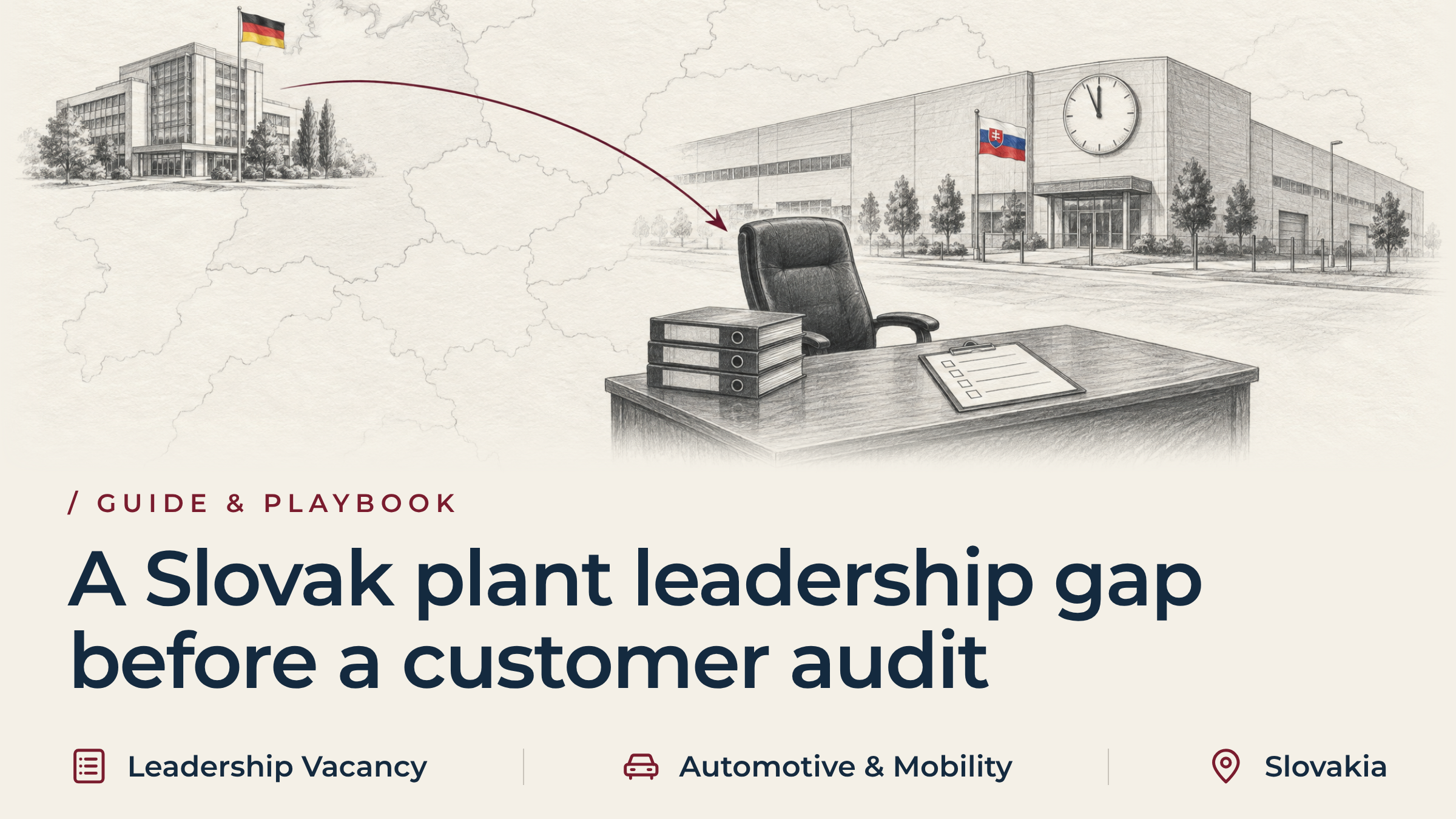
A szlovákiai üzem vezetői hiányát addig lehet kezelni, amíg el nem érkezik egy olyan határidő, amelyért más felel. Egy ügyfél-audit, egy felügyeleti audit vagy egy teljes kapacitású termelés nem tolódik el azért, mert az üzemigazgató lemondott. A vállalatcsoport elviselheti, ha egy gyárban néhány héten át lassabban zajlik a döntéshozatal. Azonban nem tudja elviselni, ha egy előre meghatározott külső határidőre senki sincs a helyszínen, aki felelősséget vállalna a minőségbiztosítási rendszerért. A telephely vezetésének a határidő előtt, nem pedig utána kell kialakulnia.
A kiváltó ok: az autóipari beszállítói szektorban egy telephelyvezető lemondása egy előre meghatározott időpontra esik
Egy szlovák gyár telephelyvezetője hirtelen lemond. A gyártás folytatódik, és a központi irodába érkező havi jelentés nagyjából ugyanúgy néz ki, mint korábban. Az üresedés csak akkor válik problémává, amikor valaki kinyitja a naptárat, és rájön, hogy hónapokkal korábban már beütemezték egy ügyfél-auditot. A tanúsítási munka az IATF „Az IATF-elismerés megszerzésére és fenntartására vonatkozó szabályok” című kiadvány 6. kiadásának előírásai szerint zajlik. Minden egyéb tekintetben az ügyfélspecifikus követelményeket kell betartani.
Az autóipari beszállítói szektorban egy telephelyvezető lemondása nem csupán egy vezető távozását jelenti. Ezzel eltűnik az a személy, aki az audit-aktát vezette, tudta, mely korrekciós intézkedések vannak még függőben, és élvezte a vevő bizalmát. Egy gyárigazgató-helyettes képes fenntartani a gyártósor működését, és általában ezt jól is végzi. Azonban az üzem vezetése egy auditáló előtt már más feladat, amely inkább megadott, mint feltételezett pozíción alapul.
A szabványok nem enyhülnek. Az IATF 16949:2016 és az ISO 9001:2015 egyaránt a felső vezetésre hárítja a minőségirányítási rendszerért való felelősséget, az ISO 9001:2026 pedig ezt egy 2029-ig tartó átmeneti időszakon keresztül továbbviszi. A VDA 6.3:2023 szerinti folyamatauditok, amelyeket a német ügyfelek a VDA QMC keretrendszer alapján kérnek, elvárják, hogy a telephely feleljen a saját folyamataiért.
Miért nehezebb a szlovákiai gyár vezetői posztjainak betöltése a központi irodából?
Csoportszinten ez a megközelítés ésszerű: küldjenek valakit. Egy stuttgarti, bécsi vagy lyoni csoportszintű minőségügyi igazgató ismeri az ügyfélkapcsolatot a csoportszintű helyzetben. Amit viszont ritkán ismer, az az adott telephely folyamatainak előzményei, a fennálló problémák, valamint azok a kötelezettségvállalások, amelyeket a távozó igazgató a legutóbbi audit során tett. Az anyavállalat küldhet valakit, aki ismeri az ügyfelet, vagy valakit, aki ismeri a telephelyet, de ritkán mindkettőt rövid határidőn belül.
Felmerül az a kérdés is, hogy ki jogosult hivatalosan a szervezet nevében eljárni. Amennyiben az üzemvezetői és a konateľ – a szlovák társaság bejegyzett ügyvezető igazgatója – szerepét egy személy töltötte be, a távozásával egyszerre két pozíció is megüresedik. Hogy ez a gyakorlatban mit jelent, azt a helyi jogi tanácsadónak kell eldöntenie. A szlovák leányvállalatok vezetési rendszerei csoportonként eltérőek, ezért érdemes először megvizsgálni azt a feltételezést, hogy egy csoportszintű vezető átveheti-e a helyét.
A keresési útvonal lassabban halad, mint a naptár, és ezt a számítást a következő jegyzetünkben ismertetjük: mennyi időbe telik valójában egy vezetői pozíció betöltése. A Korn Ferry tanulmánya Az EMEA-régió tíz országában közel 1 000 vállalatot felölelő felmérésből kiderült, hogy a tíz ország közül nyolcban a 2024-ben kinevezett új vezérigazgatók fele vagy több mint fele belső előléptetéssel került a pozícióba. A belső kinevezés a szokásos megoldás, és gyakran helyes döntés is. Ez azonban már nem elegendő, ha a belső jelölt még soha nem találkozott ezzel a könyvvizsgálóval.
Hogyan lehet felismerni egy ügyfél-audit vezetői álláshelyet?
Nem minden távozás eredményez ügyfél-ellenőrzési vezetői álláshely megüresedését. Azok a jelek, amelyek megkülönböztetik a kellemetlenséget a valódi kockázattól, egyértelműek, és a legtöbbjük egy héten belül észrevehető, ha valaki utánanéz.
- Az ellenőrzési dokumentáció, a javító intézkedések előzményei és a vezetői felülvizsgálati jegyzőkönyvek nem a minőségügyi osztálynál, hanem a távozott telephelyvezetőnél voltak.
- A gyár igazgatóhelyettese felelős a gyártásért, de még soha nem mutatta be az üzemet ennek az ügyfélnek.
- A minőségügyi vezető rendelkezik a nyilvántartásokkal, de nincs felhatalmazása arra, hogy a megbeszélésen javító intézkedéseket vagy határidőket állapítson meg.
- A lemondás beérkezése óta nem vizsgálták felül a nyitott ügyfélpanaszokat és az eskaláció jelenlegi állapotát.
- A központi iroda ugyanazt a havi jelentéscsomagot kapja, mint korábban, amelyből kitűnik, hogy a működés zavartalan, és nem tartalmaz semmilyen utalást az ellenőrzésre.
Ha ezek közül három vagy több egyszerre jelentkezik, az azt jelzi, hogy az üzem jelenleg nem tud önállóan felelni az ügyfél előtt. Ez más megállapítás, mint egy alulteljesítő üzem esetében. Másfajta reagálást igényel, és ezt még a határidő előtt, nem pedig utána kell megtenni.
Mire van szükség egy hiteles beavatkozáshoz a határidő előtt
A sorrend fontosabb, mint a sebesség. A szlovákiai üzem vezetői hiányossága akkor szűnik meg, ha a helyszínen van egy személy, aki felelősséget vállal a minőségbiztosítási rendszerért és az üzem nevében kötelezettséget vállal. Ennek a személynek a kinevezésének a megadott határidő előtt meg kell történnie. A pozíció betöltése nem egyenlő a hatalom helyreállításával.
- Határozza meg, hogy az adott időpont milyen követelményeket támaszt. A tanúsítási felügyeleti audit, a VDA 6.3:2023 szerinti folyamataudit, a PPAP-beadvány és a sorozatgyártás különböző követelményeket támasztanak a telephellyel szemben.
- Nevezzen meg egy olyan személyt, aki képes felelősséget vállalni! Az ellenőrnek egyetlen, elszámoltatható helyszíni vezetőre van szüksége, nem pedig egy központi irodából érkező küldöttségre, amely egy távollévő vezető helyett jegyzetel.
- Át kell tekinteni a bizonyítékokat. Meg kell találni és ellenőrizni kell a folyamatban lévő korrekciós intézkedéseket, a panaszok előzményeit, a többszintű folyamatellenőrzési jegyzőkönyveket, az AIAG- és VDA-dokumentációt, valamint a legutóbbi vezetői felülvizsgálat eredményeit.
- Az eskalációs státuszt inkább az audit előtt, mint annak során ellenőrizzék. A CS1 vagy CS2 szintű ellenőrzött szállítás, egy olyan keretrendszer – például a Volkswagen „Formel Q” – szerinti eskalációs szint, vagy az új üzletek felfüggesztése megváltoztatja az audit tárgyát. A felfüggesztés inkább a jövőbeli megrendelésekre, mint a jelenlegi szállításokra hat ki, ezért általában csak későn derül ki.
- A feladatátadásról előre kell dönteni. Az ellenőrzés eredményét és a még elvégzendő feladatokat írásban át kell adni az állandó kinevezettnek.
A határokon átnyúló dimenzió: az ügyfél a weboldallal lép kapcsolatba, nem a vállalatcsoporttal
Az autóipari ügyfelek helyszíni ellenőrzéseket végeznek. A tanúsítvány, az ellenőrzési pontszám és az eskalációs jegyzőkönyv az adott gyárhoz kapcsolódik, nem pedig a németországi, osztrák vagy franciaországi anyavállalathoz. Előfordulhat, hogy egy vállalatcsoport igazgatósági szinten ápolja az üzleti kapcsolatot, de az ellenőrzés napján mégsem képviselteti magát a helyszínen.
Egy szlovák telephely esetében az ügyfél általában a közelben található. A pozsonyi Volkswagen, a trnavai Stellantis, a žilinai Kia és a nitrai Jaguar Land Rover a legtöbb beszállítói gyártól alig néhány órányira található. Az ellenőr gyorsan a helyszínre érhet, és a hírnévvel kapcsolatos információk gyorsan terjednek a gyárak között. Az ügyfél elvárja, hogy a telephely vezetője elérhető legyen, és ez az a gyakorlati próba, amelyet a szlovák leányvállalat vezetésének ki kell állnia.
Bizonyíték: a helyszínhez kapcsolódó szlovákiai háttér
A nemzeti kontextus inkább háttérként, mintsem fő témaként bír jelentőséggel. Szlovákia 2024-ben 993 583 járművet gyártott, 2025-ben pedig körülbelül 1,07 milliót, ami a ZAP SR adatai szerint 7,7 százalékos növekedést jelent a The Slovak Spectator beszámolója szerint és a STVR 2026 januárjában. Ugyanezek az adatok szerint 2025-ben az egy főre jutó termelés 1 000 lakosra vetítve 196 jármű lesz, szemben a 182 2024-ben, aminek köszönhetően Szlovákia továbbra is világelső marad ezen a mutató szerint. SARIO, a Szlovák Befektetési és Kereskedelemfejlesztési Ügynökség nyilvántartásában több mint 360 Tier 1-es és Tier 2-es beszállító szerepel.
Az ágazat jelentősége magyarázza, miért terjed el egy telephely ellenőrzési eredménye. A 2023-as adatok alapján a The Slovak Spectator beszámolója szerint, az iparág az ipari bevételek 49,5 százalékát és a GDP 9,2 százalékát adta, és közvetlenül több mint 165 000 embert foglalkoztatott. 2026 januárjában Alexander Matušek, a ZAP elnöke ezt a következőképpen fogalmazta meg: az ipari termelés teljes mennyiségének körülbelül 52 százaléka és 2026-ra 1,02 millió járművet jósolt, megjegyezve, hogy a visszaesés folyamata már megkezdődött. Ez inkább a szövetség véleménye, mint a tényleges eredmény. A Volvo Cars Košice-ban 2026. szeptember 21-én megkezdődött a próbaüzem.
A forgalmi adatokhoz meg kell adni a hatályukat. Russell Reynolds Associates 2025-ben a globális indexekben összesen 234 vezérigazgatói távozást regisztráltak, ami 16 százalékos növekedést jelent 2024-hez képest. Spencer Stuart, amely 590 vezető európai vállalatot vizsgált, 2025-ben 61 vezetőváltást regisztrált, ami 11,5 százalékos arányt jelent, és csökkenést jelent a korábbi 72-höz képest. A két adat eltérő irányt mutat, mivel különböző populációkat vesznek figyelembe. Egyik sem méri a telephelyi vezetői pozíciókat, mivel ezekre vonatkozóan nincs dátummal ellátott nyilvános adatkészlet.
Gyakran feltett kérdések
Elhalasztható-e az ellenőrzés időpontja?
Néha előfordul, és ritkán marad következmények nélkül. A tanúsítási audit időzítése a rendszer szabályait követi, nem pedig a telephely kényelmét. Az ügyfél által megadott időpontok általában egy olyan programbeli mérföldkőhöz kapcsolódnak, amelyhez az ügyfél már belsőleg elkötelezte magát. A halasztás kérése egyben az ügyfél számára is jelzést ad a telephely állapotáról.
A központi iroda helyette részt vehet-e?
A központi vezetés részt vehet a folyamatokban, és gyakran érdemes is, hogy részt vegyen. Amit viszont nem tehet, az az, hogy helyettesítse a telephely vezetését. Ha egy ellenőr a folyamatokért való felelősségről vagy a korrekciós intézkedések hatékonyságáról kérdez, akkor azoktól vár választ, akik a folyamatot nap mint nap irányítják. Ha egy delegáció válaszol a távollévő telephelyvezető helyett, azt általában az ellenőrzés gyengeségeként értelmezik.
Mit kell valójában látnia az ügyfélnek?
Az irányítás folytonossága. Ez azt jelenti, hogy van egy kijelölt, felelősségre vonható telephelyvezető, naprakész tényalap, a nyílt intézkedések őszinte nyomon követése, valamint egy világos beszámoló arról, hogy mi változott a telephelyvezető távozása után. Az ügyfelek rendszeresen szembesülnek távozásokkal, és ez nem okoz nekik meglepetést. Amire viszont rosszul reagálnak, az az, ha az ellenőrzés során maguk fedezik fel a keletkezett hiányosságot.
Mennyi idő telik el, mire a vezetői hiány hatással lesz az üzem teljesítményére?
A vállalatok vagy telephelyek vezetőinek fluktuációjáról és annak működési hatásairól nincs megbízható nyilvános adathalmaz, ezért minden felhozott adatot alaposan meg kell vizsgálni. Ami megfigyelhető, az inkább a folyamat menete, mint az időzítés. A gyártósoron meghozott döntések várakozásra kényszerülnek, a folyamatban lévő feladatok elhúzódnak, és az első külső jel általában egy ügyfél felé tett, be nem tartott kötelezettségvállalás.
Mi van, ha az helyettes még nem áll készen?
A felkészültség nem egyetlen tulajdonság. Előfordulhat, hogy egy üzemvezető-helyettes képes irányítani a termelést, mégis alkalmatlan arra, hogy szembenézzen egy olyan ellenőrrel, akivel még soha nem találkozott. A kritérium szűk: végigvezette-e már ez a személy a telephelyet egy hasonló auditon, és ismeri-e őt az ügyfél? Ha mindkét válasz igen, az auditot házon belül is le lehet bonyolítani. Ha nem, akkor a hiányosság inkább a pozícióval, mint a kompetenciával kapcsolatos.
Az előtted álló döntés
A választás nem egy jó és egy rossz lehetőség között zajlik. A helyszíni csapattal való megbeszélés akkor indokolt, ha van ott valaki, aki élvezi az ügyfél bizalmát, és már korábban is végzett ilyen feladatot. Ez emellett gyorsabb és olcsóbb is, mint bármelyik alternatíva. Ha nincs ilyen személy, a lehetőségek a következőkre szűkülnek: a találkozó időpontjának elhalasztása, az ebből adódó következmények elfogadása, vagy a helyszíni vezetés felállítása a találkozó előtt.
Csak a harmadik esetben a döntés a csoportnál marad, nem pedig az ügyfélnél. Ez is az oka annak, hogy egy ilyen jellegű szlovákiai üzemvezetői pozíciót gyakran ideiglenes üzemvezető vagy ideiglenes ügyvezető tölti be, aki végigkíséri az üzemet az auditon és az átadáson. A Valtus Alliance részét képező CE Interim Közép- és Kelet-Európában, valamint a DACH-piacokon foglalkozik ilyen helyzetekkel. Áttekintésünk a ideiglenes vezetés Szlovákiában leírja, hogyan épülnek fel ezek a megbízások. Ha egy időpont már be van jegyezve a naptárba, érdemes egy partnerrel beszélni, hogy kiderüljön, megvalósítható-e a találkozó a jelenlegi csapatoddal.

 EN
EN  DE
DE  FR
FR  IT
IT  PL
PL  RO
RO  CS
CS  SK
SK  HU
HU  ES
ES  RU
RU  AR
AR  SL
SL