

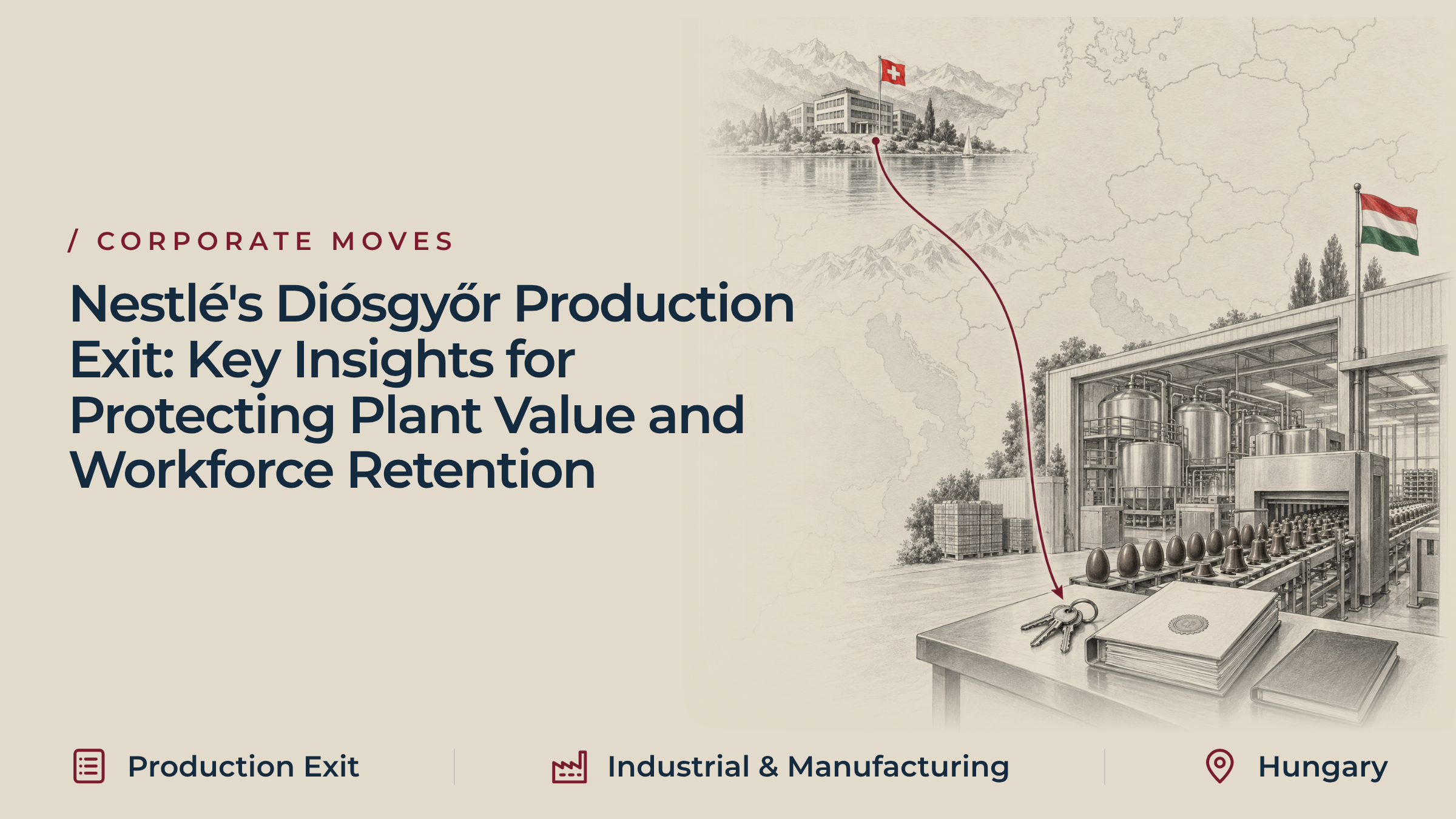
Chiusura dello stabilimento Nestlé di Diósgyőr: spunti chiave per tutelare il valore dello stabilimento e garantire la fidelizzazione del personale
In breve
Si parla di “uscita dalla produzione” quando un proprietario smette di realizzare i propri prodotti in un sito, ma desidera comunque che il sito continui a funzionare sotto la gestione di qualcun altro. L’uscita di Nestlé dallo stabilimento di Diósgyőr, a Miskolc, in Ungheria, ne è un esempio concreto. Nestlé voleva vendere lo stabilimento a un acquirente che continuasse a produrre cioccolato in quella sede. Tra l’annuncio del luglio 2026 e il passaggio di consegne del gennaio 2027, lo stabilimento ha dovuto mantenere attiva la produzione. Ha dovuto mantenere aggiornate le certificazioni e il personale tecnico in servizio. Ogni settimana di ritardo durante il processo di cessione della produzione metteva a rischio la vendita e circa 220 posti di lavoro.
Il fattore scatenante: il cambiamento strategico di Nestlé Hungária e l'acquisizione di Vimpex
Il 17 luglio 2026, Nestlé Hungária ha confermato una decisione: entro la fine dell’anno avrebbe cessato la produzione di figurine stagionali di cioccolato cave a Diósgyőr. Le figurine recano i marchi Smarties, KitKat e Milky Bar. Lo stabilimento ha 64 anni. Produce circa 4.000 tonnellate di dolciumi all’anno, in circa 300 forme diverse. Circa l’88 per cento di questa produzione viene esportato in oltre 25 paesi. Si tratta di una categoria di piccole dimensioni per Nestlé: rappresenta meno del 3 per cento del fatturato di Nestlé Hungária e solo lo 0,4 per cento del volume di produzione nazionale. Lo stabilimento impiega ancora circa 220 dipendenti.
Nestlé non ha definito questa operazione una chiusura, ma piuttosto un’uscita dalla produzione. La produzione sarebbe proseguita fino alla scadenza. Parallelamente si sarebbe svolto un processo di vendita. L’obiettivo era quello di consegnare un sito operativo, non uno vuoto. La ricerca è durata quasi otto settimane. L'11 settembre 2026, Nestlé ha reso noto il nome dell’acquirente: il gruppo ungherese Vimpex. La data di consegna è fissata al 1° gennaio 2027. Vimpex si è impegnata a mantenere almeno un terzo dei 220 dipendenti. Chi invece decide di lasciare l’azienda riceverà un’indennità di licenziamento pari a un importo compreso tra cinque e undici mesi e mezzo di stipendio. L’importo esatto dipende dall’anzianità di servizio. Il sindaco di Miskolc, József Tóth-Szántai, ha affermato che la città non ha alcuna autorità sulle decisioni di un’azienda privata. Ha aggiunto che avrebbe comunque cercato di ottenere un aggiornamento diretto dalla dirigenza di Nestlé Hungária.
Sfide operative: perché l’interruzione della produzione è più complessa della chiusura di uno stabilimento
Una chiusura semplice deve occuparsi solo della propria conclusione. La chiusura di un progetto richiede invece due cose contemporaneamente. Il sito deve portare a termine il lavoro che aveva già promesso. Deve inoltre dimostrare, a un estraneo, che quel lavoro è ancora importante. McKinsey's ricerca La questione delle cessioni parziali mette in luce un punto chiaro. È la disciplina operativa, e non i termini dell’accordo, a determinare nella maggior parte dei casi se una sede ceduta mantenga il proprio valore fino al completamento dell’operazione.
Mantenimento della certificazione di sicurezza alimentare durante il trasferimento di uno stabilimento dolciario
Le linee di produzione dolciaria non si arrestano in modo netto. Gli operatori devono sciacquare via il cioccolato dalle vasche di temperaggio. Le tubazioni devono rimanere a temperature controllate, altrimenti il rischio microbico aumenta nel giro di pochi giorni. Le certificazioni IFS, BRCGS e HACCP dello stabilimento dipendono da un controllo di qualità continuo e documentato. Una verifica effettuata appena prima della visita di un acquirente non è sufficiente. Se la documentazione relativa agli audit rimane in arretrato durante un’interruzione della produzione, la ricertificazione può richiedere dai dodici ai diciotto mesi. Pochi acquirenti sono disposti ad aspettare così a lungo.
Gestione della fidelizzazione del personale e delle competenze tecniche in occasione della vendita di uno stabilimento
Un acquirente non ha bisogno del personale della sede centrale. Ha bisogno degli specialisti nella formulazione del cioccolato, dei meccanici e dei responsabili della qualità che mantengono in funzione le linee di produzione. A Diósgyőr, queste sono esattamente le competenze che i datori di lavoro regionali del settore automobilistico e industriale stavano già cercando. La promessa di Vimpex di mantenere un terzo dei 220 dipendenti funziona solo se rimane il terzo giusto. Deve essere un terzo con le competenze giuste, non semplicemente un terzo qualsiasi.
Garantire la continuità delle consegne ai clienti durante la cessazione della produzione
I rivenditori effettuano gli ordini per le figurine di cioccolato stagionali con mesi di anticipo rispetto a Pasqua e Natale. Nestlé doveva comunque evadere tali ordini attingendo dalle stesse linee di produzione che si apprestava a vendere. Mancare una finestra di consegna avrebbe comportato una perdita superiore al fatturato di un’intera stagione. Ciò avrebbe fatto capire a Vimpex che la disciplina produttiva stava già venendo meno, prima ancora che l’acquirente avesse assunto il controllo.
Esecuzione della due diligence dell’acquirente e preparazione del carve-out presso il sito di Diósgyőr
Un acquirente che sta valutando uno stabilimento che non conosce ha bisogno della documentazione tecnica, della cronologia degli interventi di manutenzione e dei dati relativi ai consumi delle utenze. Ha inoltre bisogno di un elenco chiaro di ciò che dipende dai sistemi del gruppo Nestlé e di ciò che invece non ne dipende. Qualcuno deve definire i confini di tale scorporo mentre lo stabilimento è ancora di proprietà di Nestlé. Nel contempo, la produzione giornaliera deve proseguire senza interruzioni. Questa è la parte burocratica di ogni cessione di attività produttiva, e quella che più spesso viene trascurata fino all’ultimo momento.
Segnali di allarme: come i consigli di amministrazione possono individuare una deriva nella produzione
I membri del consiglio di amministrazione e i dirigenti del gruppo raramente si rendono conto che un progetto sta per essere interrotto senza preavviso. Se ne accorgono grazie a cinque segnali concreti.
I responsabili della qualità, dell’igiene o della manutenzione se ne vanno prima che qualcuno abbia formato i loro sostituti. Il lavoro che richiede una certificazione viene quindi affidato a personale temporaneo non certificato.
La manutenzione programmata sui macchinari specializzati viene rinviata "per ora" più di una volta.
I registri di igiene, i registri di taratura e i registri di produzione presentano delle lacune. Nessuno le colma nell'ambito di un normale ciclo di rendicontazione.
La direzione dello stabilimento inizia a non raggiungere gli obiettivi di produzione di routine mentre si prepara alle visite degli acquirenti, invece di gestire entrambe le cose contemporaneamente.
Il sito in sé sembra poco curato. I perimetri del reparto produzione ingombri e le riparazioni rimandate sono le prime cose che un team di due diligence nota.
Perché i vertici permanenti dello stabilimento hanno difficoltà a rispettare l’obbligo di cessazione della produzione
Un direttore di stabilimento che gestisce un sito da anni si trova di fronte a due esigenze contrastanti. Da un lato deve rendere conto a un proprietario che sta per andarsene; dall’altro, deve convincere un acquirente che non si è ancora fatto vivo. È una situazione comprensibile, ma difficile da gestire al meglio dall’interno.
Questo è proprio il dilemma che crea l’uscita da un’azienda. Non è una questione di competenza. Il manager non sa nemmeno se avrà ancora un lavoro una volta conclusa la vendita. Né il proprietario uscente né l’acquirente entrante possono rispondere a questa domanda finché le trattative rimangono riservate. Fornire risultati impeccabili. Mantenere la fiducia di una forza lavoro nervosa. Organizzare visite in sede per gli investitori. Fare tutte e tre le cose contemporaneamente significa che un unico ruolo deve conciliare tre diverse fedeltà. Secondo l’Harvard Business Review ricerca Un articolo sul mantenimento del personale fondamentale per la missione in un contesto di cambiamento organizzativo sottolinea un aspetto correlato. Le persone più adatte a garantire la stabilità di un team sono raramente quelle più esposte alla stessa incertezza.
Cosa occorre affinché un intervento di uscita dalla produzione e un mandato provvisorio siano credibili
Per tutelare il valore aziendale attraverso un'uscita dalla produzione occorre attenersi a cinque principi fondamentali. È necessario che una sola persona abbia l'autorità sia sul programma di produzione che sul processo di interazione con gli acquirenti.
Nominare un dirigente ad interim, che di norma ricopra le funzioni di direttore di stabilimento o direttore operativo (COO), con un unico mandato: gestire contemporaneamente l'uscita dal mercato e la vendita, riferendo a un unico sponsor.
Mantenere la certificazione in materia di sicurezza alimentare e qualità nell’ambito di un regime di audit attivo e documentato fintantoché lo stabilimento continui a produrre.
Finanziare una retribuzione di fidelizzazione basata sul raggiungimento di obiettivi specifici per i meccanici, i formulatori e i supervisori di cui un acquirente avrà effettivamente bisogno, anziché ricorrere a uno schema generico.
Creare la data room dedicata alla scissione, la documentazione tecnica e i piani di separazione delle utenze parallelamente alla produzione, non dopo che questa si è interrotta.
Informare i dipendenti e i funzionari locali secondo un calendario prestabilito. Aggiornamenti chiari e basati sui fatti colmano le lacune lasciate dalla riservatezza.
Gestire la dimensione transfrontaliera tra la sede centrale svizzera e le attività locali
Diósgyőr aggiunge una svolta insolita al consueto schema transnazionale che sta dietro a un'uscita dalla produzione. La maggior parte dei mandati transnazionali prevede che un proprietario internazionale supervisioni un team locale. In questo caso, invece, è il proprietario internazionale ad andarsene. La sede centrale di Nestlé si trova a Vevey, in Svizzera. Il nuovo proprietario è invece un capitale ungherese nazionale. Ciò non elimina la dimensione transfrontaliera, ma la accentua. L’uscita deve comunque soddisfare gli standard di governance che Vevey e la direzione di Nestlé Hungária a Budapest si aspettano. In caso contrario, Vimpex si ritroverebbe a dover affrontare problemi che non aveva previsto nell’operazione.
La sede centrale del gruppo, con sedi a Vevey e Budapest, ha due esigenze. Da un lato, necessita di report affidabili sullo stato delle certificazioni, sulla fidelizzazione del personale e sulle prestazioni di consegna fino al passaggio di consegne. Dall’altro, deve avere la certezza che ciò che consegna a Vimpex corrisponda a quanto concordato tra le due parti, e non a una versione ridimensionata di quanto concordato.
La sede di Miskolc ha bisogno di due cose in cambio. Ha bisogno di una chiara autorità operativa quotidiana per garantire il regolare svolgimento della produzione, senza dover attendere indicazioni da una sede centrale che ha spostato la propria attenzione altrove. Ha bisogno di un unico punto di contatto fisso per le domande che il team dell’acquirente continua a porre.
Nessuna delle due parti ha torto a volere ciò che vuole. È la stessa persona che deve soddisfare entrambe le esigenze. È questo che fa sì che l’uscita della produzione rispetti un unico standard, non due.
Vendite delle fabbriche contro chiusure: l'andamento del settore manifatturiero nell'Europa centrale
Diósgyőr rientra in un quadro più ampio che riguarda l’Ungheria e la regione negli anni 2025 e 2026. Alcuni siti chiudono definitivamente. Altri trasferiscono la produzione altrove. Solo pochi completano un vero e proprio abbandono della produzione.
Stabilimento di elettrodomestici Electrolux di Jászberény: chiusura definitiva in assenza di un acquirente
Il 22 aprile 2026 Electrolux ha annunciato la chiusura definitiva del proprio stabilimento di produzione di frigoriferi a Jászberény, in Ungheria. La decisione ha comportato la perdita di circa 600 posti di lavoro in un sito industriale di 47 ettari. Sia il governo che i sindacati hanno cercato di intervenire. Non si è presentato alcun acquirente. La chiusura è avvenuta come una semplice liquidazione, non come un'uscita dal settore produttivo.
Stabilimento caseario Répcelak di Savencia: trasferimento interno della produzione
Savencia Fromage & Dairy ha annunciato a metà del 2025 che avrebbe chiuso il proprio stabilimento lattiero-caseario di Répcelak. Lo stabilimento era operativo dal 1925 e impiegava circa 160 persone. Savencia non ha cercato un acquirente. Ha invece trasferito la produzione di formaggio sfuso al proprio stabilimento di Kempten, in Germania, offrendo al personale la possibilità di trasferirsi a Veszprém o a Kempten, oltre a un'indennità di fine rapporto maggiorata. Savencia non ha mai tentato di abbandonare la produzione. La capacità produttiva è stata semplicemente trasferita all'interno del gruppo.
Beko Europe in Polonia: trovare un equilibrio tra la chiusura dello stabilimento e la cessione di una parte delle attività
Beko Europe, la joint venture tra Arçelik e Whirlpool, ha chiuso i propri stabilimenti di elettrodomestici di Łódź e Wrocław nell’aprile 2025. La decisione ha comportato la perdita di 1.100 posti di lavoro a Łódź e di 700 a Wrocław, a causa del calo sia della domanda che del tasso di utilizzo degli impianti. Anche un impianto più piccolo di componenti in plastica, situato nello stesso sito di Łódź, rischiava la chiusura. Tuttavia, il produttore turco Mefa lo ha acquistato, preservando circa 250 posti di lavoro. Quello stabilimento è il caso più simile a quello di Diósgyőr: si tratta di un vero e proprio abbandono della produzione, avvenuto nell’ambito di una chiusura di portata molto più ampia.
Domande frequenti sulla chiusura dello stabilimento Nestlé di Diósgyőr
Cosa ha annunciato Nestlé riguardo alla vendita dello stabilimento di Diósgyőr?
Il 17 luglio 2026, Nestlé Hungária ha confermato che avrebbe cessato la propria produzione di figurine stagionali di cioccolato cave a Diósgyőr entro la fine del 2026. Allo stesso tempo, ha dichiarato che avrebbe cercato un acquirente per mantenere lo stabilimento in attività nel settore dolciario. Si tratta di un’uscita dalla produzione, non di una chiusura.
Perché la transizione di Diósgyőr viene definita come un’interruzione della produzione anziché come una chiusura?
Nestlé ha smesso di produrre prodotti a proprio marchio in quello stabilimento. Lo stabilimento, i macchinari e i circa 220 posti di lavoro non sono stati smantellati. L’obiettivo, fin dall’inizio, era quello di consegnare uno stabilimento operativo. Questo è ciò che significa, in pratica, l’uscita dalla produzione.
Chi ha acquistato lo stabilimento di Diósgyőr e quali sono i termini di cessione concordati con Vimpex?
Il gruppo ungherese Vimpex ha accettato di rilevare lo stabilimento, completando così il processo di cessazione della produzione avviato a luglio. La produzione proseguirà sotto la nuova proprietà a partire dal 1° gennaio 2027. Vimpex si è impegnata a mantenere almeno un terzo dei 220 dipendenti attuali. Nestlé ha stabilito in anticipo le condizioni di indennizzo per il resto del personale.
Quali rischi operativi potrebbero compromettere l'uscita dalla produzione durante l'acquisizione di un acquirente?
I tre rischi più rilevanti sono: l'abbandono dei tecnici a favore di altri datori di lavoro della regione, la mancanza di manutenzione sui macchinari specializzati e la scadenza delle certificazioni di sicurezza alimentare a causa di lacune nei registri di audit. Ognuno di questi tre fattori può far fallire un'operazione di cessione della produzione prima ancora che un acquirente visiti il sito.
La chiusura dello stabilimento di Diósgyőr ha ripercussioni sugli altri siti produttivi di Nestlé in Ungheria?
No. Nestlé continua a gestire i propri stabilimenti di Szentes e Bük senza alcuna modifica. La decisione del luglio 2026 e la conseguente cessazione della produzione hanno riguardato esclusivamente la produzione stagionale di figurine di cioccolato cave a Diósgyőr.
Conoscenze correlate e passo successivo
A volte uno stabilimento deve rimanere in vendita mentre porta a termine la propria produzione. Quando ciò accade, la prima domanda che ci si pone è solitamente semplice: chi ha l’autorità di gestire contemporaneamente la chiusura della produzione e il processo di vendita? A Partner ad interim di CE può contribuire a definire tale incarico prima che la pressione aumenti, non dopo: un dirigente di comprovata esperienza, in linea con l’incarico e pronto a entrare in carica entro 72 ore dal completamento del brief relativo all’incarico.
Approfondimenti:
Servizi di integrazione post-fusione e di scorporo transfrontaliero
Dichiarazione di non responsabilità editoriale
Il presente articolo costituisce un’analisi operativa indipendente relativa alla chiusura dello stabilimento di produzione Nestlé a Diósgyőr. Si basa su comunicati aziendali, dati finanziari e ricerche di settore disponibili al pubblico. Non afferma né sottintende l’esistenza di alcun rapporto commerciale, di consulenza o con la clientela tra CE Interim e Nestlé o qualsiasi altra società citata nel testo.
 EN
EN  DE
DE  FR
FR  IT
IT  PL
PL  RO
RO  CS
CS  SK
SK  HU
HU  ES
ES  RU
RU  AR
AR  SL
SL