

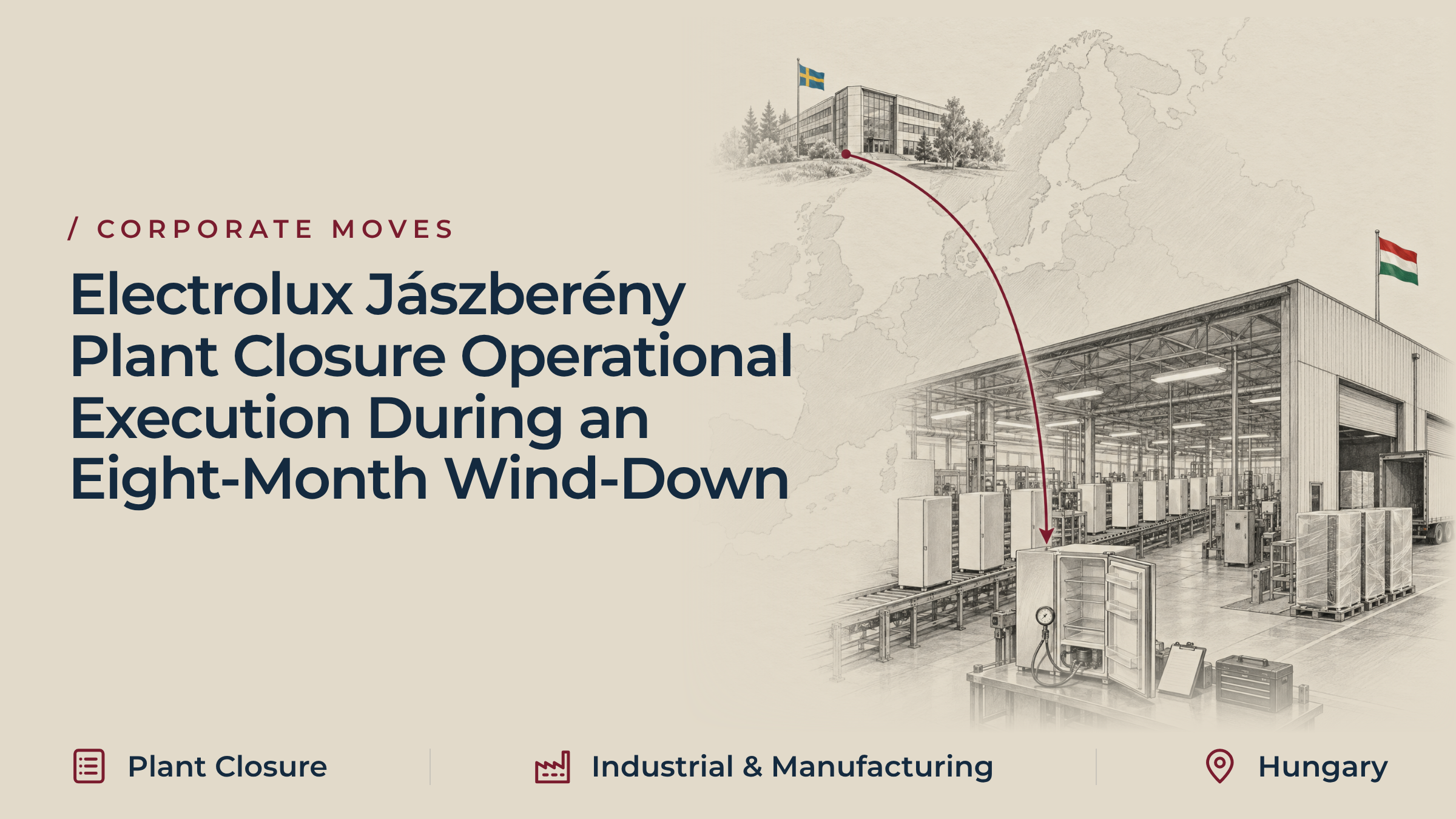
Cierre de la planta de Electrolux en Jászberény: ejecución operativa durante un proceso de cierre gradual de ocho meses
En resumen
El 22 de abril de 2026, el Grupo Electrolux anunció que pondrá fin a la producción de productos de refrigeración en su planta de Jászberény, en Hungría. El cierre entrará en vigor a finales de 2026 y afectará a unos 600 empleados. El cierre de la planta de Electrolux en Jászberény no es lo más difícil. Lo difícil es otra cosa. Son los ocho meses de producción, control de calidad y entregas a los clientes que deben continuar antes de que termine el último turno. Los técnicos cualificados buscan nuevos puestos de trabajo con antelación, y el riesgo de incumplimiento en las entregas se acumula silenciosamente en la línea de producción. Normalmente, un director de planta interino dedicado lidera un cierre de esta duración. Esta figura se encarga de mantener los estándares de calidad y garantizar las entregas a los clientes hasta la última unidad.
Cómo gestionar el calendario entre el anuncio y el cierre de la planta
Electrolux ha confirmado que a finales de 2026 cesará la producción de frigoríficos empotrados y independientes en Jászberény. La empresa no ha revelado públicamente el nombre de la fábrica que se hará cargo de la producción. El suministro pasará a recaer en las plantas existentes del grupo y en fabricantes externos de equipos originales, mientras que las funciones comerciales y de marketing permanecerán en Budapest. Se trata del cese de la producción de frigoríficos en una única planta, no de una retirada del mercado húngaro.
Las cifras clave del comunicado:
- Fecha del anuncio: 22 de abril de 2026.
- Empleados afectados: unos 600.
- Gasto por reestructuración: aproximadamente 600 millones de coronas suecas, de los cuales 300 millones en efectivo.
- Cargo registrado: segundo trimestre de 2026.
- Fecha de finalización de la producción: a finales de 2026.
A nivel del grupo, el anuncio resolvió una complicada ecuación de costes: la débil demanda europea, la presión sobre los precios al por menor y el aumento de los costes regionales. A nivel de la planta, planteó un problema diferente. Entre el anuncio y el cierre transcurren aproximadamente ocho meses. Durante ese periodo, la planta debe seguir produciendo al mismo volumen, sin reducir la actividad de forma inmediata. Los frigoríficos aún tienen que llegar a los minoristas según lo previsto, y la planta tiene que crear unas existencias de reserva antes de la transición.
Es probable que Estocolmo ya haya zanjado los argumentos estratégicos a favor de poner fin a la producción. Ahora es la ejecución a nivel local, y no la decisión de la junta directiva, lo que determina si las entregas se mantendrán puntuales hasta el último día.
Retos operativos en el cierre gradual de fábricas y la reestructuración de la producción
Las transferencias industriales suelen fracasar por una razón principal: la planta de origen pierde la capacidad de proceso antes de que las instalaciones de destino alcancen una producción estable. En Jászberény, ese riesgo se manifiesta en cuatro aspectos concretos.
Retención de la plantilla y medidas de protección del talento clave durante el cierre de la fábrica
La región de Jászság es un mercado laboral industrial competitivo. Es posible que los operarios sin experiencia se queden hasta que les corresponda la indemnización legal por despido, pero no ocurre lo mismo con los fabricantes de herramientas, los técnicos en espumado automatizado y los probadores de circuitos de refrigeración. Las fábricas regionales de automoción, baterías y electrónica los quieren para sus próximos puestos. Si un puñado de ingenieros de mantenimiento se marcha en los dos primeros meses, la fábrica corre el riesgo de perder capacidades clave. Sin ellos, la reparación de prensas de estampación de metal, moldes de termoformado y maquinaria de inyección se complica rápidamente. La planificación de la retención del personal debe comenzar en la primera semana, no en el sexto mes.
Cómo evitar la pérdida de calidad en las líneas de refrigeración durante la parada de la planta
La pérdida de calidad durante el cierre de la planta es un riesgo técnico específico de la fabricación de equipos de refrigeración, no un problema general de moral. Un frigorífico doméstico combina varios elementos complejos. Entre ellos se incluyen chapas metálicas embutidas, aislamiento de espuma de poliuretano a alta presión, un circuito termodinámico sellado que transporta refrigerante inflamable y placas de control electrónico. Cuando la atención en la línea de producción decae, la densidad del aislamiento disminuye y puede producirse una fuga en la carga de refrigerante. Nada de esto se detecta en la línea de inspección final. Sale a la luz semanas más tarde, en los hogares de los clientes, en forma de fallos de refrigeración cuya causa lleva tiempo y dinero localizar.
Garantizar la continuidad de las entregas a los clientes durante la transferencia de la producción a los fabricantes de equipos originales (OEM)
Electrolux ha afirmado que el suministro se trasladará a las plantas existentes del grupo y a socios fabricantes de equipos originales (OEM) externos. La homologación de un fabricante de equipos originales, o la reh homologación de una fábrica ya existente, para la fabricación de frigoríficos empotrados complejos requiere tiempo. Es necesario completar adecuadamente las pruebas de utillaje, los ensayos de eficiencia energética y la certificación de seguridad europea. Si una planta receptora se retrasa en su plan de puesta en marcha, las operaciones del grupo suelen pedir a Jászberény que cubra el déficit. Eso suele suponer horas extras en una línea de producción que los trabajadores ya saben que va a cerrar.
Cierre de fábricas, liquidación de existencias y gestión de la cadena de suministro
La planta cuenta con un importante stock de bobinas de acero prepintadas, granulado de plástico, compresores y microcontroladores. Si el calendario de producción se retrasa, parte de ese material corre el riesgo de quedarse sin salida, destinado a modelos que ya no figuran en el plan. Al mismo tiempo, algunos proveedores de segundo nivel, ante la expectativa de que la planta cierre, solicitan pagos por adelantado o, discretamente, restan prioridad a las entregas. Ajustar las entradas a un calendario preciso de agotamiento de existencias, modelo por modelo, permite mantener ambos riesgos bajo control.
Indicadores de alerta temprana del riesgo de ejecución operativa en los cierres de fábricas
La sede central rara vez se entera de las desviaciones operativas a través de los informes rutinarios; los paneles de control suelen mantener el color verde hasta que la planta incumple un envío. Hay cinco indicios prácticos que sugieren que una fase de reducción de este tipo está entrando en una situación complicada:
- Aumento de las dimisiones voluntarias entre los especialistas en mantenimiento, utillaje y calidad.
- Disminución del rendimiento en la primera pasada y aumento del tiempo dedicado a las repeticiones en las líneas de espumado y de ensayos termodinámicos.
- Un mayor número de reclamaciones de los clientes por cuestiones de calidad, reclamaciones de garantía o retenciones por inspecciones fuera de línea.
- Existencias desiguales, como unidades terminadas que están a la espera de un componente o un tirador que falta.
- Los responsables locales evitan las conversaciones sobre el rendimiento o relajan la disciplina en los turnos.
Estos indicios suelen tener una causa común. Nadie en la planta cuenta con un mandato pensado para la cierre progresivo, sino solo con uno destinado a la gestión de la planta.
Dirección provisional de la planta frente a dirección permanente en la reestructuración industrial
Es comprensible que se espere que el director de la planta en funciones gestione por sí solo un cierre de ocho meses, pero también supone un desajuste estructural. Los responsables locales suelen tener profundos vínculos con la comunidad y relaciones de años con la plantilla. Muchos de ellos también están negociando su próximo puesto mientras se lleva a cabo el cierre. Ese responsable de la planta suele tener que hacer malabarismos con tres tareas a la vez. Entre ellas se incluyen acordar las condiciones de indemnización con la Federación Sindical Vasas, supervisar las salidas de los compañeros y desmantelar los equipos. Cada una de estas tareas tira en una dirección diferente a las propias necesidades de la planta, lo que crea un auténtico conflicto con el propio cargo de la persona. Normalmente, la aplicación de las normas se relaja o el responsable abandona el cargo antes de tiempo, sean cuales sean sus intenciones.
Un director de planta interino cambia esa dinámica mediante la distancia emocional, no gracias a una mayor competencia técnica. Un líder interino no tiene vínculos locales de larga duración ni ningún interés personal en el resultado. Esa distancia le permite mantener los estándares de calidad, negociar de forma justa y gestionar el traspaso de funciones como una tarea profesional.
Cinco controles operativos esenciales para el cierre de la planta de Electrolux en Jászberény
El artículo de Kenneth Freeman en la Harvard Business Review análisis El proceso de cierre pone de manifiesto una cosa: los responsables no pueden tomar la decisión de cierre y luego delegar su ejecución. Es necesario que un responsable de proyecto de alto nivel y dedicado se mantenga activamente involucrado en todas las fases. En una planta de la envergadura de la de Jászberény, esta labor la llevan a cabo cinco controles:
- Hay que separar las operaciones de las negociaciones. La producción, la calidad y la seguridad son competencia de la planta de producción. Las negociaciones sobre indemnizaciones por despido, las reuniones con el comité de empresa y la comunicación externa son competencia de un equipo específico de Recursos Humanos y del departamento jurídico.
- Identifica y fideliza desde el principio al personal clave. Las condiciones de retención para los fabricantes de herramientas, los ingenieros de refrigeración y los supervisores de mantenimiento deben establecerse en las primeras semanas. Vincúlalas a la disponibilidad, a los indicadores de calidad y a un traspaso de activos en buen estado.
- Implantar un control de calidad en dos fases. Al final de la línea de producción, las comprobaciones deben abarcar la integridad de la presión, la densidad del aislamiento y las tolerancias estéticas. No debe salir nada de la línea de producción basándose únicamente en la confianza.
- Compara la entrada de material con el calendario real de salida. Adapta esta entrada al calendario real, modelo por modelo, en lugar de basarte en medias históricas, para evitar tanto la escasez como el exceso de existencias.
- Mantén la comunicación con una periodicidad semanal fija. Aborda los hitos, el apoyo en la reinserción laboral y la indemnización por despido; el silencio deja espacio para que los rumores ocupen ese vacío.
Gobernanza transfronteriza: armonizar la sede central del grupo con la ejecución en las fábricas locales
La sede central del grupo en Estocolmo necesita información fiable y actualizada de la planta. Esto implica datos reales sobre la producción y la calidad, una previsión de entregas realista y la seguridad de que la planta cumple con los plazos previstos. Esa necesidad es totalmente razonable durante un cierre, cuando lo que está en juego en términos financieros y de reputación es mayor de lo habitual.
La planta de Jászberény necesita algo diferente. Necesita una autoridad clara para gestionar los últimos meses de producción. Ninguna decisión debería pasar por un proceso de reestructuración concebido para un fin distinto. Ninguna de las partes tiene la culpa: el modelo operativo que funcionaba antes del anuncio no se ajusta a lo que vendrá después.
Un director interino de la planta, que depende directamente del departamento de operaciones del grupo, cubre esa laguna en la práctica. El resultado es una base de datos precisa y un responsable ejecutivo in situ. De este modo, un único canal de escalación se encarga de las decisiones que no pueden esperar al ciclo habitual de presentación de informes.
Tendencias en la reestructuración de la presencia industrial húngara y la dinámica de los costes
Jászberény se inscribe en un contexto más amplio de reestructuración industrial en toda Hungría. Los datos de Eurostat muestran que Hungría registra el mayor aumento de la UE en el coste laboral por hora costes a principios de 2026. Los costes en ese país se dispararon a tasas anuales de dos dígitos, lo que mermó en gran medida la ventaja que el país tenía en su día en el ámbito del montaje de bajo margen. Casos comparables de la misma oleada, cada uno con sus propias cifras confirmadas:
- Mondi, Szada. Cierre previsto de su división de envases flexibles para el consumo a finales de 2026. La empresa no ha facilitado una cifra concreta de puestos de trabajo afectados por centro.
- Nestlé, Diósgyőr. Nestlé vendió la planta, que cuenta con unos 220 empleados, a Vimpex, el mayor mayorista de alimentos de Hungría, el 11 de septiembre de 2026. La producción de figuras de chocolate huecas por parte de Nestlé finalizará en diciembre de 2026. Vimpex se hará cargo de la fabricación de productos de confitería a partir del 1 de enero de 2027, conservando al menos un tercio de la plantilla. La venta, que no supone un cierre, garantiza el futuro de la planta.
- Samsung SDI, Göd. La plantilla de la planta de baterías se redujo en 744 empleados entre septiembre de 2024 y septiembre de 2025. Samsung SDI no ha anunciado ningún nuevo cierre en esa localidad.
- Jabil Circuit, Tiszaújváros. La plantilla de esta planta de electrónica se redujo en 526 empleados durante el mismo periodo. Jabil Circuit no ha anunciado ningún nuevo cierre en esa planta.
En conjunto, se trata de una tendencia regional de reestructuración de la presencia industrial, y no de una decisión aislada de Electrolux. Para los consejos de administración que estén sopesando decisiones similares en otros lugares, la cuestión no es si se debe llevar a cabo la reestructuración, sino cómo gestionará la dirección el proceso de cierre una vez que el consejo haya tomado esa decisión.
Preguntas frecuentes: Cierre de la planta de Electrolux en Jászberény y estrategia
¿Qué ha anunciado Electrolux sobre su planta de Jászberény?
El 22 de abril de 2026, el Grupo Electrolux anunció el cese de la producción de frigoríficos en Jászberény. Las líneas de producción de frigoríficos empotrados y independientes de la planta cerrarán a finales de 2026. El cierre afecta a unos 600 empleados y conlleva un gasto de reestructuración de 0,6 mil millones de coronas suecas. El suministro pasará a cargo de las plantas existentes del grupo y de socios fabricantes de equipos originales (OEM) externos.
¿Cómo se mantiene la continuidad de la cadena de suministro durante un cierre prolongado de la fábrica?
La planta necesita un responsable cuyo cometido sea precisamente el proceso de cierre. Ese responsable debe tener la autoridad necesaria para garantizar el cumplimiento de los controles de calidad, retener al personal técnico esencial y evitar que las conversaciones sobre la reestructuración perturben la producción diaria.
¿Cómo se evita la pérdida de calidad durante el cierre de una planta?
La verificación en dos fases al final de la línea detecta los defectos que se pasan por alto debido a una falta de atención. Abarca la integridad de la presión, la densidad del aislamiento y las tolerancias estéticas. Si a esto se le suman unas condiciones de permanencia para los especialistas que se encargan del mantenimiento de los equipos, se aborda la causa, y no solo el síntoma.
¿Cómo contribuye la gestión interina de la planta a la ejecución del cierre de la fábrica?
Un director provisional de la planta asume la autoridad in situ durante el periodo comprendido entre el anuncio y el cierre. Al rendir cuentas a través de una línea jerárquica clara ante el departamento de operaciones del grupo, dicho director proporciona a la planta un único responsable ejecutivo. Además, ofrece a la planta una base objetiva única para el cierre.
¿Supone el cierre de la planta de Jászberény la salida de Electrolux de Hungría?
No. Electrolux ha confirmado que sus actividades comerciales, de ventas y de marketing en Budapest seguirán adelante. La decisión se refiere específicamente a la fabricación de productos de refrigeración en la planta de Jászberény.
Conocimientos relacionados y siguiente paso
Para más información sobre este tema, consulta lo siguiente:
- Una versión de la verdad: restablecer la visibilidad entre una planta rumana y la sede central suiza
- Cuando la sede central de DACH debe gestionar procesos de reestructuración en Polonia, la República Checa y Rumanía de forma simultánea
- Turnaround operativo
- Gestión de crisis y reestructuración
CE Interim forma parte de la Alianza Valtus, lo que le permite acceder a una red de distribución en todos estos mercados. Un miembro del consejo de administración o un socio de capital riesgo que se enfrente a una liquidación puede recurrir a un Socio interino de CE para definir el perfil del puesto. Esto significa un directivo con experiencia demostrada, que se ajuste al perfil del puesto y que esté listo para incorporarse en un plazo de 72 horas tras la finalización del informe del perfil del puesto.
Aviso legal editorial
Este artículo es un análisis operativo independiente sobre la decisión de Electrolux de cerrar su planta de refrigeración de Jászberény. Se basa en comunicados corporativos, información financiera y estudios del sector disponibles públicamente. No implica ninguna relación comercial, de asesoramiento ni de cliente entre CE Interim y el Grupo Electrolux. Lo mismo se aplica a cualquier otra empresa mencionada en el mismo.
 EN
EN  DE
DE  FR
FR  IT
IT  PL
PL  RO
RO  CS
CS  SK
SK  HU
HU  ES
ES  RU
RU  AR
AR  SL
SL