

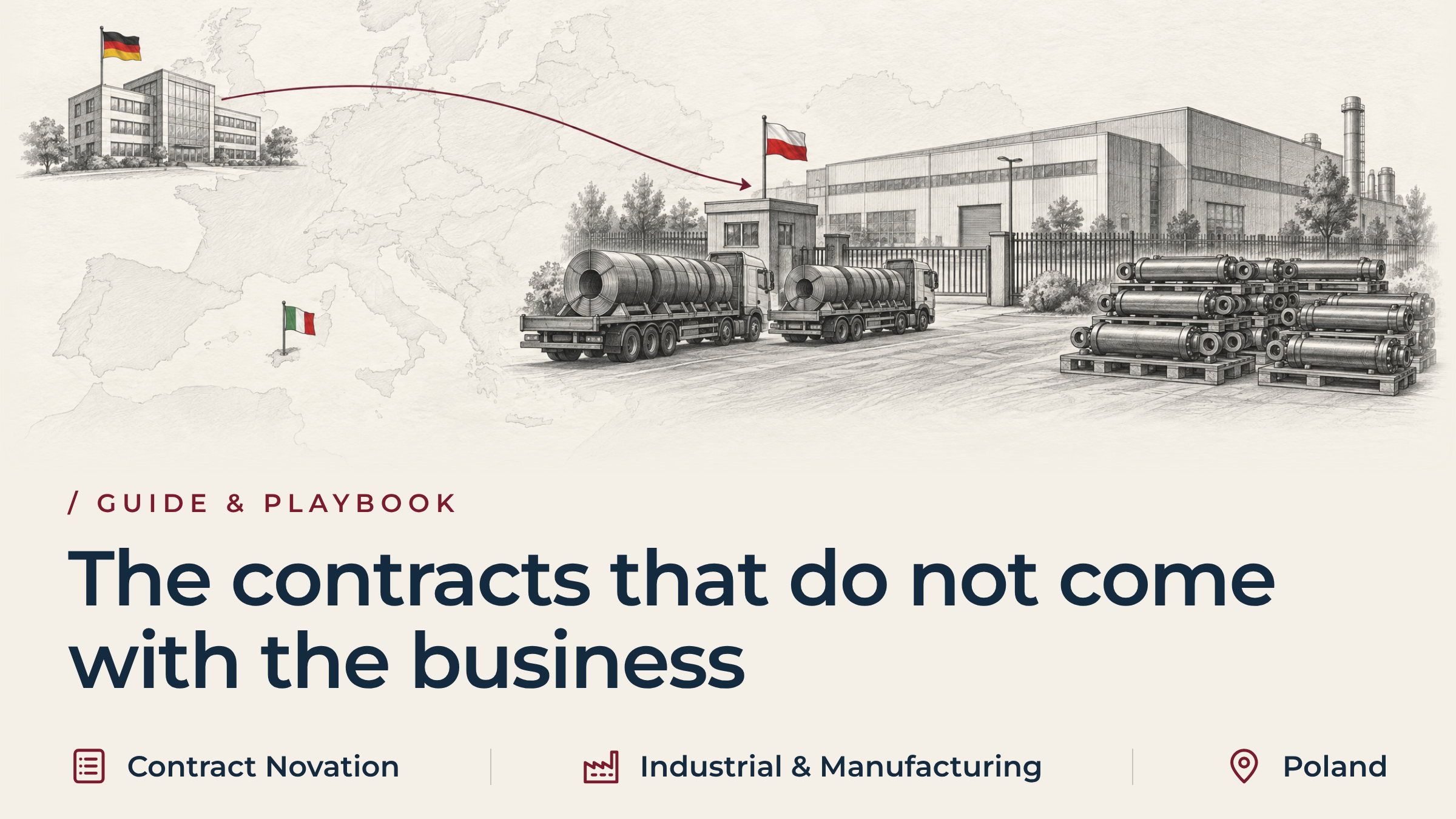
Zmluvy, ktoré nie sú súčasťou podnikania
V skratke
Pri predaji sa málokedy odovzdávajú všetky zmluvy spolu s ním. Ide o problém s výnimkou týkajúcu sa novácie zmluvy. Obmedzenie postúpenia alebo doložka o zmene kontroly môžu donútiť zmluvnú stranu, aby najprv vyjadrila súhlas. O tom, či je tento súhlas potrebný, rozhoduje štruktúra transakcie, nie to, kto je v danej chvíli vlastníkom akcií. Ak zmluva vyžaduje súhlas alebo nováciu, zodpovednosť za tento program musí mať na starosti jeden vedúci pracovník. Ak sa táto záležitosť ponechá výlučne na právnu korešpondenciu, stane sa to problémom predávajúceho už niekoľko mesiacov po dokončení transakcie.
Predaj akcií verzus prevod majetku: Vplyv na nováciu zmluvy a vyčlenenie častí podniku
Predaj akcií a prevod majetku predstavujú dva odlišné zmluvné problémy. Rozhodnutie o výnimke v rámci novácie zmluvy musí najprv určiť, ktorý z týchto problémov sa uplatňuje.
Pri predaji akcií zostáva zmluvná strana tá istá. Jej zmluvy zvyčajne naďalej platia. Ustanovenie o zmene kontroly však môže druhej strane aj naďalej poskytovať právo konať.
Pri prevode majetku pokračuje v podnikaní iný subjekt. Práva sa niekedy môžu previesť postúpením. Prebiehajúce záväzky, ako napríklad úhrada faktúr, sa zvyčajne nemôžu previesť bez súhlasu protistrany. Ak je potrebné previesť aj práva, aj záväzky, je namiesto toho potrebná novácia. Novácia je trojstranná dohoda medzi predávajúcim, kupujúcim a protistranou.
Predstavenstvá, ktoré tieto dve štruktúry považujú za jeden problém, strácajú týždne tým, že zisťujú, ktoré zmluvy si vôbec vyžadujú pozornosť. Ak sa najskôr definuje táto štruktúra, z právnej otázky sa stane zvládnuteľný program vyčlenenia zmluvných novácií. Práve táto disciplína stojí za každým vyčlenením zmluvnej novácie, bez ohľadu na odvetvie či krajinu.
Spúšťacie faktory a riziká: Identifikácia problémov súvisiacich s nováciou zmluvy po jej uzavretí
K dokončeniu transakcie dôjde a nový subjekt začne podnikať. Už po niekoľkých týždňoch príde oznámenie od dodávateľa alebo predajcu softvéru. V ňom sa jasne uvádza, že so spoločnosťou v jej súčasnej podobe neexistuje žiadna zmluva.
Právni poradcovia to zvyčajne predvídali už počas due diligence. Predstavenstvo to však často nepredpokladalo, pretože vychádzalo z toho, že prevádzková kontinuita znamená aj zmluvnú kontinuitu. To je moment, keď výnimka týkajúca sa novácie zmluvy prestáva byť čisto teoretickou záležitosťou a začína stáť peniaze.
Protistrana, ktorá si túto medzeru všimne, si zároveň uvedomí aj svoju vyjednávaciu pozíciu. Nechce sa jej nič podpisovať, kým sa nerozhodne, čo za to chce na oplátku.
Výnimky pri novácii cezhraničných zmlúv a zložitosť vyplývajúca z pôsobnosti viacerých právnych poriadkov
Vytvorenie výnimky pre nováciu zmluvy, ktorá zostáva v rámci jednej krajiny, je už samo o sebe náročné. Ak k tomu pridáme operácie v niekoľkých krajinách, úloha sa ešte viac skomplikuje. Zmluvy podliehajú rôznym rozhodným právnym poriadkom a rôznym miestnym pravidlám týkajúcim sa platného súhlasu. Nič z toho nie je špecifické pre jednu hranicu; rovnaké pravidlá pre výnimky v prípade novácie zmluvy platia všade tam, kde hranica prekračuje čiaru na mape.
Materská spoločnosť v Nemecku, Francúzsku, Švajčiarsku alebo Rakúsku často dojednala jednu rámcovú zmluvu na centrálnej úrovni. Závod v Poľsku, Česku, Maďarsku alebo Rumunsku potom pôsobil v rámci tejto zmluvy ako dodávateľské stredisko. Keď sa závod odčlení, často zistí, že zmluvu nikdy nemal uzatvorenú vo vlastnom mene. Vzťah s zmluvnou stranou a cenotvorba patrili materskej spoločnosti, nie závodu.
Miestna úverová bonita túto situáciu ešte viac sťažuje. Závod, ktorý sa spoliehal na záruku materskej spoločnosti, nemá po ukončení platnosti tejto záruky žiadnu nezávislú úverovú históriu, ktorú by mohol ponúknuť. Požiadať protistranu o nováciu zmluvy často znamená požiadať ju, aby v rámci toho istého rozhovoru akceptovala odlišné úverové riziko. Ide o obchodné rozhodnutie, na ktoré je potrebná osoba s oprávnením prijímať obchodné záväzky. Práve preto je novácia zmluvy predmetom rokovaní, a nie formálnou záležitosťou.
Včasné varovné signály týkajúce sa nevyriešených obmedzení pri postúpení zmluvy
Keď sa naraz objaví niekoľko vzorov, táto situácia sa zvyčajne už nachádza v rámci daného problému a nie je potrebné sa k nej ešte približovať.
- Dodávatelia zadržia dodávky, kým spoločnosť nesplní nové platobné podmienky.
- Obchodný partner prestane komunikovať s bežným tímom zodpovedným za účet a požiada o niekoho, kto môže zmeniť obchodné podmienky.
- Právna korešpondencia sa hromadí rýchlejšie, než ju tím stíha vybavovať, pretože naraz dorazila vlna takmer identických žiadostí o nováciu a zatiaľ nikto nie je zodpovedný za ich vybavenie.
- Softvérové licencie začínajú zobrazovať upozornenia na blížiace sa vypršanie platnosti, pretože zmluva bola uzatvorená na úrovni skupiny, nikdy v mene miestnej pobočky.
Nič z toho nesvedčí o zlej viere na žiadnej strane. Druhý účastník zmluvy jednoducho chráni obchodnú pozíciu, ktorú mu zmluva už zaručuje. Vlastný tím predajcu má zvyčajne zdroje na riadenie podnikania, nie na vyjednávanie stoviek novácií pod časovým tlakom. Včasné odhalenie výnimky týkajúcej sa novácie zmluvy zaručuje, že to zostane len súčasťou programu, a nie krízou. Každý z týchto signálov poukazuje na to isté: výnimku týkajúcu sa novácie zmluvy, za ktorú zatiaľ nikto nenesie zodpovednosť.
Kľúčové prvky úspešného programu vyňatia v rámci novácie zmluvy
Dôveryhodný program na vyňatie z novácie zmlúv začína triedením, nie právnymi listami. Každý obchodný vzťah si vyžaduje rozdelenie do úrovní: na prvom mieste sú zmluvy s jediným dodávateľom a zmluvy kritické z hľadiska bezpečnosti, na druhom mieste strategické, ale nahraditeľné zmluvy a na poslednom mieste komoditné a nepriame zmluvy. Práve toto rozdelenie do úrovní určuje, čomu sa vedenie venuje v prvých týždňoch.
Samostatný subjekt musí čo najskôr preukázať svoju vlastnú úverovú spoľahlivosť. Ak sa závod doteraz spoliehal na záruku materskej spoločnosti, musí si najskôr zaobstarať vlastný úver, bankovú záruku alebo akreditív. Keď sa na takéto rokovanie dostaví s hotovou odpoveďou, úplne to zmení jeho tón.
Samotné rokovanie má obchodný charakter, nie administratívny. Právne posúdenie potvrdzuje, čo zmluva umožňuje. Zriedka presvedčí protistranu, aby z vlastnej iniciatívy zachovala ceny alebo predĺžila podmienky. Na to je potrebný konkrétny vedúci pracovník s reálnou právomocou, a to osobne, ak to vzťah vyžaduje.
Na načasovaní záleží rovnako ako na postupnosti krokov. Uzavretie dohôd o novácii ešte pred uplynutím platnosti prechodnej dohody zaručuje, že ide o systematický program novácie zmlúv, a nie o zúfalé opatrenia na poslednú chvíľu. Práve takáto postupnosť krokov odlišuje skutočný program od hromady nezodpovedaných právnych listov.
Dočasné vedenie pri vykonávaní vyčlenenia v rámci novácie zmluvy
Tieto rokovania môžu viesť právne a nákupné tímy, čo sa často aj deje. Postoj spoločnosti CE Interim je jasný. Dočasný výkonný riaditeľ spolupracuje s právnym, nákupným a skupinovým obchodným oddelením na programe vyňatia z novácie zmluvy, a nie mimo nich.
Objem zvyšuje potrebu dodatočných kapacít. Stovky zmlúv, ktoré prichádzajú v rámci jedného pevne stanoveného obdobia, sa líšia od niekoľkých zmlúv, ktoré obchodný tím spracováva v bežnom roku. Na toto obdobie je potrebná jedna pozícia: riadiť program a udržiavať vzťahy, ktoré sú najdôležitejšie. Ak sa zmluvná strana presunie od právnych formulácií k obchodným podmienkam, táto osoba musí mať právomoc vyjednávať priamo na mieste, spoločne s tímom skupinového predaja.
Dočasný partner spoločnosti CE tento mandát stanoví hneď na začiatku. Určí, ktoré zmluvy sú najdôležitejšie, aké právomoci má manažér pri jednotlivých rokovaniach a kedy sa táto úloha končí. Manažér vedie rokovania. Partner zodpovedá za riadenie celého procesu a za odovzdanie úloh v momente, keď bude samostatný subjekt schopný riadiť svoje vzťahy s dodávateľmi sám.
Tieto rokovania často znamenajú, že sedíme za stolom naproti obchodnému riaditeľovi dodávateľa v inej krajine. Kapacita a geografická poloha zvyčajne idú ruka v ruke. Partneri spoločnosti CE Interim využívajú medzinárodnú sieť Valtus Alliance, aby túto kapacitu nasadili tam, kde sa skutočne nachádzajú zmluvné strany, a nie len tam, kde bola zmluva podpísaná. Takto vyzerá dobre riadený mandát na vyčlenenie v rámci novácie zmluvy.
Ak platí tento sľub, platí presne tak, ako je uvedené. Overený manažér, ktorý spĺňa požiadavky zadania, je pripravený nastúpiť do 72 hodín od dokončenia zadávacieho listu.
Dôkazy a precedensy: Poučenia zo zložitých vyčleňovaní aktív
Rozdiel medzi predajom akcií a prevodom majetku nie je čisto teoretický. Spoločnosť PwC poskytovala poradenstvo spoločnosti Tata Autocomp pri akvizícii prevádzok spoločnosti IAC Sweden, ktorá bola štruktúrovaná ako prevod majetku. Podľa vlastných slov tejto spoločnosti išlo o "prevod majetku, pri ktorom bolo potrebné znovu prerokovať všetky zmluvy"."
Poradenská činnosť zahŕňala finančnú due diligence, technické posúdenie a rokovania o nájomných zmluvách v troch závodoch. Cieľom bolo po celý čas zabezpečiť plynulú výrobu a dodávky pre kľúčových zákazníkov, ako sú Volvo a Scania. Ide o vyčlenenie zmluvy formou novácie v reálnom meradle, nie o teoretickú obavu. Podstatné nie je veľkosť úlohy. Dokonca aj pri dobre poradenej transakcii, kde obe strany disponovali skúsenými právnymi poradcami, bolo potrebné každú zmluvu prepracovať, nie len ju prerozdeliť. O tomto výsledku rozhodla štruktúra transakcie, nie dobrá vôľa medzi stranami. Prípad spoločnosti IAC Sweden ukazuje, ako vyzerá vyčlenenie v rámci novácie zmluvy, keď sa tomu nikto nemôže vyhnúť.
Právne rámce a výskum v oblasti verejného obstarávania týkajúci sa novácie zmluvy
Prípad spoločnosti IAC Sweden nie je ojedinelý. Potvrdzujú to nezávisle od seba právne predpisy, výskum v oblasti správy vecí verejných aj údaje o nákladoch.
V rámci Nemecký občiansky zákonník, v § 414 a 415 sa záväzok prenáša na novú stranu iba so súhlasom veriteľa. Ak tento súhlas chýba, je namiesto toho potrebný výslovný súhlas druhej strany.
Fórum Harvardovej právnickej fakulty o riadení spoločností dospelo k rovnakému záveru záver z iného uhla pohľadu. Výskumníci tejto organizácie uvádzajú práva na súhlas protistrany ako hlavnú príčinu nezhôd po uzavretí transakcie.
Spoločnosť McKinsey & Company výskum v tomto smere poukazuje na rovnakú hodnotu. Odčlenenie obstarávania zaradí medzi najdôležitejšie faktory vytvárania hodnoty pri odčlenení.
Boston Consulting Group vkladá číslo týkajúce sa nákladov spojených s nečinnosťou. Strata objemu nákupov od materskej spoločnosti zvyčajne vedie k nárastu priamych materiálových nákladov o tri až osem percent. Na obmedzenie práve tohto rizika nákladov existuje program novácie zmlúv s výnimkami.
Prípadová štúdia: Zabezpečenie 140 zmlúv s dodávateľmi v rámci vyčlenenia poľského výrobného podniku
Povinnosť vyčlenenia a súvislosti
Nemecký výrobca priemyselných zariadení predal svoju divíziu hydraulických valcov súkromnému investorovi zo stredného segmentu trhu za 52 miliónov EUR. Od samého začiatku išlo o vyčlenenie v rámci novácie zmluvy, nie o vedľajšiu súčasť transakcie. Hlavný závod sa nachádza v Sliezsku v Poľsku. S osemdesiatimi percentami svojich hlavných dodávateľov nemal uzatvorenú žiadnu priamu zmluvu. Tieto vzťahy boli upravené v rámcových zmluvách nemeckej materskej spoločnosti, nie v mene samotnej poľskej spoločnosti.
Problémy súvisiace s prevádzkovými prekážkami a súhlasom dodávateľov
Do dvadsiatich dní od dokončenia projektu nemeckí a talianski dodávatelia ocele a komponentov zastavili dodávky. Požadovali 14-percentné zvýšenie ceny a 100-percentnú zálohu v hotovosti, kým by mohli obnoviť dodávky. Regionálne poľské energetické spoločnosti zašli ešte ďalej. Vyhrážali sa odpojením, pokiaľ spoločnosť nezaplatí hotovostnú záruku vo výške 450 000 EUR. Táto záruka mala nahradiť záruku materskej spoločnosti, ktorej platnosť práve skončila.
Dočasný zásah CPO a postupná realizácia
Dočasný riaditeľ oddelenia verejného obstarávania prevzal funkciu do 72 hodín. Práca prebiehala v štyroch fázach.
Najprv sa zameriame na posudzovanie zmlúv: poľská banka do siedmich dní odsúhlasila úverovú linku vo výške 2,5 milióna EUR na záruky dodávateľov. Vďaka tomu získala spoločnosť dôveryhodnú odpoveď ešte skôr, ako jej obchodní partneri stihli položiť otázku.
Po druhé, priame rokovania: člen vedenia navštívil centrály dodávateľov v Mníchove, Miláne a Katowiciach, aby osobne dohodol samostatné podmienky.
Po tretie, logistika: tím získal regionálne zmluvy o preprave v súlade s poľským občianskym zákonníkom za konkurencieschopné ceny.
Po štvrté, riadenie: výkonný orgán vytvoril samostatnú funkciu verejného obstarávania a proces správy kmeňových údajov dodávateľov. To umožnilo, aby organizácia po ukončení programu fungovala nezávisle.
Merateľné výsledky a úspora nákladov
V priebehu deväťdesiatich dní spoločnosť novovala všetkých 140 kľúčových zmlúv s dodávateľmi. Závod nezaznamenal počas tohto prechodu žiadne neplánované odstávky. Týmto zásahom sa podarilo zabrániť odhadovanému nárastu nákladov na obstarávanie o 1,8 milióna EUR, ktorý nebol zahrnutý v rozpočte. Udržala sa tak prevádzková marža EBITDA na úrovni 8,4 percenta v období, keď boli obe skutočne ohrozené. Program bol uzavretý ako úspešná novácia zmlúv, a nie iba ako záchrana obstarávania.
Často kladené otázky týkajúce sa výnimiek pri novácii zmlúv
Prenášajú sa zmluvy automaticky pri predaji podniku?
Záleží to výlučne na štruktúre transakcie. Pri predaji akcií zostáva zmluvná strana nezmenená. Zmluvy zvyčajne naďalej platia, pokiaľ klauzula o zmene kontroly neposkytuje druhej strane právo konať. Pri prevode majetku pokračuje v podnikaní iný subjekt. Na prevod práv a povinností je potom zvyčajne potrebný súhlas druhej strany, a to prostredníctvom postúpenia alebo novácie. Predpoklad, že pri transakcii týkajúcej sa majetku dochádza k automatickému prevodu, patrí medzi najdrahšie chyby, aké môže predstavenstvo urobiť. To je podstata každého rozhodnutia o vyňatí z novácie zmluvy.
Aký je rozdiel medzi postúpením zmluvy a nováciou?
Postúpením sa prenáša výhoda vyplývajúca zo zmluvy, napríklad právo na prevzatie tovaru. Samotné postúpenie však nemôže preniesť pretrvávajúce povinnosti, ako je napríklad úhrada faktúr. S tým musí druhá strana súhlasiť osobitne. Novácia je odlišný proces a tvorí jadro väčšiny prác týkajúcich sa výnimiek pri novácii zmlúv. Ide o trojstrannú dohodu medzi predajcom, kupujúcim a protistranou. Prevodom sa prenášajú práva aj povinnosti súčasne a predajca sa tým oslobodzuje od ďalšej zodpovednosti. Ak protistrana stále potrebuje spoľahlivého partnera, ktorý bude platiť a zároveň zadávať objednávky, riešením je zvyčajne novácia, nie postúpenie.
Čo sa stane, ak protistrana odmietne udeliť súhlas s nováciou?
Dohodovacia strana nemusí prevziať staré podmienky. Niektorí túto príležitosť využijú na opätovné prerokovanie ceny, platobných podmienok alebo objemu. Realistický prístup začína ešte pred týmto rozhovorom. Vopred si zistite, ktoré dohody sú najdôležitejšie. Majte pripravený záložný plán, napríklad krátkodobé zabezpečenie dodávok alebo prechodnú zmluvu o poskytovaní služieb, ktorá preklenie toto obdobie. Následne pošlite k protistrane konkrétneho vedúceho pracovníka, ktorý dokáže skutočne rokovať, a nie len tlmočiť stanoviská sem a tam.
Kto by mal viesť program vyčlenenia v rámci novácie zmluvy?
Právne a nákupné tímy to vedia dobre zvládnuť a často to aj robia. Dôvodom pre potrebu dodatočných kapacít je objem a rozsah pôsobnosti. Stovky zmlúv v rámci jedného pevne stanoveného časového rámca si vyžadujú určeného vedúceho pracovníka. Táto osoba vyjednáva obchodné podmienky spoločne s oddelením skupinového predaja, nie právny tím, ktorý sa zaoberá výlučne získavaním súhlasov. Práve zverenie mandátu na vyňatie novácie zmluvy je to, čo skutočne mení výsledok.
Môže k novácii zmluvy dôjsť až po jej uzavretí, alebo sa musí uskutočniť hneď prvý deň?
Je to možné a v praxi to zvyčajne pokračuje ešte dlho po dokončení projektu. Dohoda o prechodných službách často slúži ako preklenutie, kým tím postupne rieši zmluvné strany podľa priority. Dôležité je dokončiť to skôr, než toto preklenutie vyprší. Považujte nováciu za pracovný tok po dokončení transakcie s vlastným termínom. Vďaka tomu zostane tento proces riadeným programom a nedôjde k zhonu v posledných týždňoch platnosti dohody o prechode.
Súvisiace poznatky a ďalší krok
Skutočné rozhodnutie predstavenstva nespočíva v tom, či majú zmluvy po vyčlenení ešte nejaký význam. Ide o to, či program vyčlenenia prostredníctvom novácie zmlúv riadi jeden zodpovedný manažér. Ak sa tomu nevenuje pozornosť, nahromadia sa nezodpovedané listy, až kým dodávateľ túto otázku nevynúti.
Akonáhle sú zmluvy uzatvorené, nasleduje otázka, kto môže konať v mene nového subjektu. Dôkladná analýza rámca odhalí tieto závislosti ešte predtým, ako niekto začne vypracúvať dohodu o prechode. Otázky týkajúce sa nákladov sa často vynárajú súbežne s renegociáciou zmlúv.
Ďalšie články:
Rozhovor s Dočasný partner spoločnosti CE môže pomôcť určiť, ktorým dohodám je potrebné venovať pozornosť ako prvým. Môže tiež pomôcť pri rozhodovaní o tom, aký mandát je pre danú reakciu skutočne potrebný.
 EN
EN  DE
DE  FR
FR  IT
IT  PL
PL  RO
RO  CS
CS  SK
SK  HU
HU  ES
ES  RU
RU  AR
AR  SL
SL