

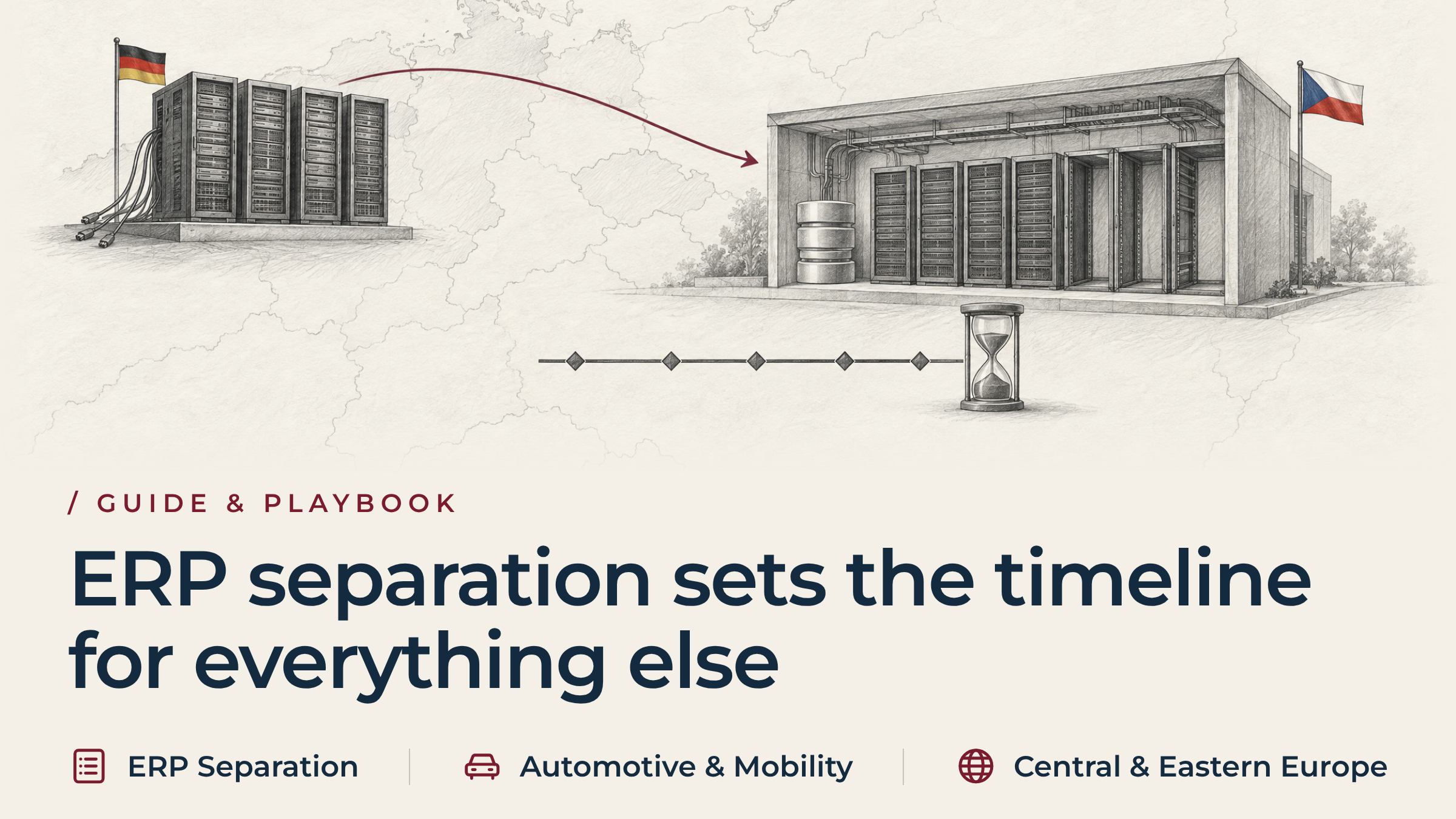
Oddelenie ERP určuje časový harmonogram pre všetko ostatné
V skratke
Harmonogram oddelenia ERP je tým, čo skutočne určuje tempo oddelenia podniku. Finančné oddelenie nemôže uzavrieť samostatnú účtovnú knihu. Oddelenie nákupu nemôže vystavovať vlastné objednávky. Logistika nemôže expedovať tovar zákazníkom, kým nie je harmonogram oddelenia ERP dokončený. Tímy zodpovedné za transakciu často stanovujú rozsah zmluvy o prechodných službách na základe predpokladov oddelení financií a ľudských zdrojov. Časový harmonogram oddelenia ERP potom považujú za technický detail, ktorý integrátor môže na požiadanie dokončiť. Ak sa trasa systémov zvolí neskoro, skutočný termín ukončenia zvyčajne určuje práve časový harmonogram oddelenia ERP, a nie zmluva.
Prečo je časový harmonogram oddelenia ERP v rozpore so zmluvami o prechodných službách (TSA)
Akvizícia bola dokončená. Spoločnosť podpísala zmluvu o prechodných službách, ktorá stanovuje dvanásťmesačný termín na ukončenie využívania zdieľaných služieb. Na papieri vyzerá harmonogram oddelenia prehľadne. Pracovné oblasti ľudských zdrojov, obchodnej činnosti, právnych subjektov a dodávateľského reťazca majú každá svoje vlastné míľniky.
Počas prvých šesťdesiatich dní sa situácia mení. Finančné oddelenie nedokáže dokončiť samostatnú účtovnú osnovu. Nikto nenastavil hlavnú knihu. Prevádzkové oddelenie nemôže vystavovať samostatné objednávky, kým sa databáza správy materiálov neoddelí od databázy materskej spoločnosti. Logistika nemôže expedovať hotové komponenty. Tím ešte neobnovil prepojenie na elektronickú výmenu údajov so závodom zákazníka.
Časový harmonogram oddelenia ERP nie je len jedným z mnohých pracovných tokov. Určuje tempo všetkých ostatných pracovných tokov v rámci tohto oddelenia. Len málo tímov zaoberajúcich sa touto transakciou to zohľadňuje pri podpise zmluvy.
Cezhraničné výzvy pri realizácii oddelenia v rámci projektu „carve-out“ spoločnosti SAP
Časový harmonogram oddelenia ERP sa stáva skutočne zložitým, ak sa výrobné závody nachádzajú v inej krajine ako materská spoločnosť. Bežný scenár: predajca prevádzkuje jednu inštanciu systému SAP alebo Oracle z nemeckého, francúzskeho alebo švajčiarskeho ústredia. Závody, ktoré vykonávajú prácu, sa nachádzajú v Poľsku, Česku, Maďarsku alebo Rumunsku.
Správa zdieľaných kmeňových údajov a riziká spojené s oddelením v rámci procesu „carve-out“ v systéme SAP
V integrovanom systéme sú údaje o materiáloch, dodávateľoch a zákazníkoch uložené v spoločných tabuľkách naprieč viacerými divíziami. Vytvorenie samostatnej obchodnej jednotky nie je jednoduchý export. Predajca a odčlenená jednotka často zdieľajú čísla odliatkov, špecifikácie zliatin alebo zákaznícke účty. Niekto musí oddelit' dôverné obchodné údaje bez toho, aby došlo k poškodeniu historických kusovníkov. Na to sú potrební ľudia, ktorí rozumejú nielen databáze, ale aj samotnému výrobnému závodu. Práve preto sa harmonogram oddelenia v rámci ERP spomalí najskôr tu, ešte skôr, než sa toto oneskorenie prejaví v akomkoľvek inom pracovnom toku.
Dodržiavanie miestnych zákonných a daňových predpisov už od prvého dňa ukončenia pracovného pomeru
Samostatný subjekt v strednej Európe nemôže jednoducho prevziať jedinú globálnu šablónu a predpokladať, že tým bude zabezpečená zhoda s predpismi. Poľské prevádzky potrebujú modul na vykazovanie vo formáte SAF-T, ktorý spĺňa požiadavky predpisov. České subjekty majú vlastné zákonné pravidlá odpisovania a kontrolné výkazy k DPH. Rumunské dcérske spoločnosti potrebujú certifikovanú elektronickú fakturáciu. Ak nový ERP systém nebude schopný tieto dokumenty vygenerovať v deň prechodu na nový systém, dcérska spoločnosť nebude môcť legálne vystavovať faktúry ani expedovať tovar.
Predchádzanie poruchám elektronickej výmeny údajov (EDI) a rozhrania so zákazníkmi
Zákazníci z automobilového a leteckého priemyslu uplatňujú prísne dodacie protokoly, ako sú nemecké normy VDA a európske normy Odette. Nový systém môže zlyhať pri odosielaní správneho predbežného oznámenia o expedícii. Môže vygenerovať nesprávne sériovo označenú prepravnú etiketu. Obidve chyby môžu viesť k tomu, že zákazník Tier 1 odmietne dodávku priamo pri bráne. Zákazník môže následne náklady na zastavenie výrobnej linky účtovať dodávateľovi.
Rozpoznávanie varovných signálov, ktoré naznačujú odchýlku od harmonogramu vyčlenenia ERP
Predstavenstvá si zriedka všimnú problémy s harmonogramom vyčlenenia ERP až v momente, keď nedôjde k splneniu plánovaného míľnika. Táto odchýlka sa prejavuje už skôr, a to prostredníctvom konkrétnych príznakov počas prvých štyroch mesiacov.
Oneskorenia zo strany partnera zodpovedného za implementáciu systému a posun termínu spustenia do prevádzky
Externý partner zodpovedný za implementáciu žiada o opakované predĺženie termínu na oddelenie ERP. Termín spustenia sa posúva z deviatich mesiacov na pätnásť alebo osemnásť.
IT obmedzenia materskej spoločnosti a oneskorenia pri prístupe k databáze
Bývalá materská spoločnosť brzdí priamy prístup k databáze. Ako dôvod uvádza ochranu údajov a dôvernosť zdieľaných zákazníckych účtov, ktoré si chce zachovať.
Neúspešné testovanie EDI a eskalácia v dodávateľskom reťazci zákazníka
Testovanie elektronickej výmeny údajov pred spustením vedie k poškodeným štítkom alebo zamietnutým prenosom. Logistický tím zákazníka eskaluje situáciu.
Ručné riešenia a rastúce príplatky v rámci dohody o prechodných službách (TSA)
Vedúci prevádzok a manažéri prepravy vytvárajú ručné tabuľky. Nikto ich nezaškolil na nový systém a nikto nedôveruje týmto údajom. Medzitým čas uvedený v dohode o prechodných službách neúprosne plynie. Prirážky za jej predĺženie rastú podľa pevného harmonogramu, bez ohľadu na to, ako skutočne prebieha časový plán oddelenia ERP.
Akonáhle sa niekoľko týchto príznakov prejaví súčasne, tento vzorec je nezameniteľný. Technické zdržanie pri migrácii jednej databázy sa v priebehu niekoľkých týždňov premení na fyzický problém na nakladacej rampe.
Strategický rámec na urýchlenie oddelenia IT a prechodu na nový systém
Na dodržanie neskorého harmonogramu vyčlenenia v rámci ERP je potrebný konkrétny vedúci pracovník s prevádzkovou zodpovednosťou. Riadiaci výbor, ktorý sa schádza raz mesačne, nestačí.
Výber správnej stratégie oddelenia ERP: migrácia verzus budovanie od nuly
Pri zvažovaní, ako zapracovať vyčlenenie do obmedzeného časového rámca, vedenie zvyčajne zvažuje tri odlišné architektonické prístupy:
- Klonovanie a rozdelenie
- Selektívny presun údajov
- Výstavba na zelenej lúke
V rámci časového rámca deviatich až dvanástich mesiacov sa kompletná výstavba z nuly málokedy zmestí do harmonogramu. Cielená selektívna migrácia alebo vopred nakonfigurovaná cloudová šablóna obmedzujú potrebu prispôsobovania a odzrkadľujú existujúce procesy závodu, čím zachovávajú pracovné postupy, s ktorými sú pracovníci vo výrobe už oboznámení.
Oddelenie realizácie prevádzky od riadenia prechodu na nové IT riešenie
Vedúci závodu nemôže zároveň riadiť prevádzku v troch zmenách a zároveň testovať tisíce transakcií v systéme ERP. Ak sa od neho vyžaduje oboje, je odsúdený na neúspech v oboch oblastiach. Namiesto toho by mal prechod na nový systém riadiť nezávislý vlastník programu, ktorý by priamo koordinoval činnosť firemného IT oddelenia, integrátora a prevádzky závodu.
Vytvorenie bezpečnostných rezerv pred prechodom na nový systém
Aby sa predišlo poruchám v dodávateľskom reťazci, predstavenstvo by malo vopred schváliť konkrétne núdzové opatrenia. Pre časový harmonogram oddelenia ERP sú najdôležitejšie tri veci:
- Vyrovnávacia zásoba hotových výrobkov: Vytvorenie zásob v skladoch kľúčových zákazníkov.
- Postup založený na papierovej dokumentácii: Ako záložný plán udržiavajte auditovaný manuálny postup expedície.
- Zmrazenie zmien: Pred začiatkom prechodného obdobia je potrebné zaviesť zmrazenie všetkých nepodstatných zmien v systéme.
Správy môžu byť ešte niekoľko dní nedokonalé. Zmeškaná dodávka zákazníkovi však nemôže.
Riadenie správy a prevádzky v rámci oddelenia IT v rôznych jurisdikciách
Implementačné oddelenie kupujúceho sa zvyčajne nachádza v jednej krajine. Oddelenie predajcu zodpovedné za oddelenie sa nachádza v inej krajine. Obe oddelenia často podliehajú rôznym nadriadeným s odlišnými motiváciami. Vytvorenie jednej spoločnej faktickej základne medzi nimi zaručuje reálny časový harmonogram oddelenia ERP. Dva konkurenčné projektové plány to však nezaručujú. Niektoré odčlenené závody sa nachádzajú v lokalitách, kde ani technologický tím kupujúceho, ani IT oddelenie predávajúceho nevykonáva každodennú činnosť. V tejto medzere je často jediným človekom, ktorý skutočne drží harmonogram oddelenia ERP pohromade, jeden zodpovedný manažér.
Dôkazy z odvetvia týkajúce sa oddelenia ERP a rizík súvisiacich s dohodou o prechodných službách
Podľa spoločnosti Gartner výskum ukazuje, že 55 až 75 percent projektov ERP nedosahuje plánované prevádzkové ciele. V diskrétnej výrobe a dodávateľských reťazcoch s viacerými prevádzkami sú hlavnými príčinami problémov poruchy v oblasti expedície zo skladu a plánovania výroby, ku ktorým dochádza po spustení systému do prevádzky. Práve tieto poruchy ohrozuje časový harmonogram oddelenia ERP.
Cezhraničná transakcia spoločnosti Roland Berger štúdie dospeli k podobnému záveru. Ako dve hlavné úskalia, kvôli ktorým viac ako tretina vyčlenení nesplní svoje ciele v oblasti nákladov, harmonogramu alebo kvality, uvádzajú oddelenie IT a ľudských zdrojov. Rovnaké dve oblasti uvádza aj samostatný prieskum spoločnosti Roland Berger, do ktorého sa zapojilo takmer štyristo odborníkov. Práve v oddelení IT a ľudských zdrojov sa najviac koncentrujú prekročenia nákladov a oneskorenia. Dve opakujúce sa hlavné príčiny: chýbajúce predchádzajúce skúsenosti s oddelením v programovom tíme a nerealistické plánovanie v čase podpísania zmluvy.
BCG výskum naznačuje, že oddelenie ERP a IT architektúry predstavuje najdlhší pracovný proces v rámci predaja podnikových aktív. Kupujúci z radov súkromných kapitálových fondov a predávajúce spoločnosti niekedy nezabezpečia vopred prípravu a izoláciu IT závislostí pred uzavretím transakcie. Keď k tomu dôjde, predĺženie zmlúv o prechodných službách a prevádzkové nesynergie rýchlo znižujú hodnotu transakcie.
McKinseyho analýza zdôrazňuje, že oddelenie IT je často zložitejšie ako integrácia na strane kupujúceho. Technické rozhranie medzi implementačným oddelením kupujúceho a oddelením predajcu zodpovedným za oddelenie si vyžaduje prísne prevádzkové riadenie – to isté riadenie, ktoré má zabezpečiť zmluva o prechodných službách pri oddelení IT. Bez neho začnú prechody na nové systémy vyvolávať obchodné spory a zlyhania v dodávkach zákazníkom.
Usmernenia spoločnosti EY pre programy oddelenia kladú časový harmonogram oddelenia ERP na rovnakú pozíciu. Ich pravidlo znie: 80 percent úsilia venovaného oddeleniu je potrebné zamerať na ERP, mzdový systém a riadenie výkonnosti spoločnosti. Tieto systémy zvyčajne patria medzi posledné služby, ktorých prevádzka sa v rámci prechodnej dohody ukončí.
Týchto päť zdrojov spoločne poukazuje na to isté. Časový harmonogram oddelenia ERP si zaslúži pozornosť vedenia, ktorú tím zodpovedný za transakciu zvyčajne venuje finančnému due diligence. Zriedka sa mu dostáva väčšej pozornosti, ako je tá, ktorá sa venuje technickej závislosti.
Prípadová štúdia: Riadenie 10-mesačného oddelenia v rámci projektu „carve-out“ systému SAP v automobilovom priemysle
Nasledujúci prípad ilustruje disciplinovaný zásah výkonného manažmentu, ktorého výsledkom bolo oddelenie divízie SAP v rámci pevne stanoveného časového rámca prechodnej dohody.
Zadanie: Stratégia vyčlenenia cezhraničnej výroby automobilov
Tento mandát v hodnote 85 miliónov EUR predstavuje v praxi časový harmonogram oddelenia v rámci ERP. Európsky sponzor z oblasti súkromného kapitálu získal divíziu presných komponentov pre hnacie ústrojenstvo od nemeckého priemyselného konglomerátu Tier 1. Odčlenená spoločnosť prevádzkovala dva závody. Závod na presné obrábanie v Sasku v Nemecku zamestnával 320 ľudí. Montážny závod v Plzni v Českej republike zamestnával 200 technických operátorov.
Na základe kúpnej zmluvy bývalá materská spoločnosť prevádzkovala IT infraštruktúru, e-mailovú službu a kľúčový systém SAP ECC 6.0. Robila tak v rámci prísnej dvanásťmesačnej zmluvy o prechodných službách. Zmluva obsahovala vysoké poplatky za predĺženie: 25 percent za mesiace 13 až 15 a 50 percent za ďalšie mesiace. Nedodržanie termínu vystavilo kupujúceho dodatočným nákladom vo výške až 600 000 EUR.
Kde došlo k zlyhaniu harmonogramu vyčlenenia ERP
V štvrtom mesiaci mal program značné meškanie. Integrátor vybraný sponzorom navrhol priamy prechod na cloudovú verziu SAP S/4HANA prispôsobenú na mieru. Išlo o ambiciózny projekt oddelenia systémov SAP, ktorý na prezentácii vyzeral sľubne. Jeho osemnásťmesačný harmonogram by však znamenal prekročenie lehoty stanovenej v dohode o prechode o šesť mesiacov.
Zároveň sa zastavilo získavanie kmeňových údajov. IT tím nemeckej materskej spoločnosti odmietol poskytnúť úplné výpisy z databázy. V jej historických kmeňových tabuľkách zákazníkov sa nachádzali dôverné cenové údaje týkajúce sa produktových radov, ktoré si materská spoločnosť ponechala.
V Plzni tím zistil, že navrhovaný cieľový systém nebol v súlade s českými zákonnými požiadavkami na daňové a colné hlásenia. V rámci projektu sa následne uskutočnili prvé testy elektronickej výmeny údajov s montážnymi závodmi vo Wolfsburgu a Lipsku. Odosielanie správ zlyhalo kvôli nezhodám v serializácii čiarových kódov. Kľúčoví zákazníci vydali formálne varovné oznámenia v súvislosti s ohrozením svojich dodacích harmonogramov.
Dočasné vedenie ERP programu a zásah zameraný na rýchlu nápravu
Prevádzkový partner poveril spoločnosť CE Interim, aby riadila harmonogram oddelenia ERP. Do 72 hodín od dokončenia zadávacieho listu sa úlohy ujal osvedčený dočasný riaditeľ programu ERP, ktorého profil zodpovedal požiadavkám zadania. Tento manažér mal za sebou viac ako dvadsať rokov skúseností v oblasti priemyselnej výroby a ozdravenia podnikov.
S cieľom napraviť meškanie v harmonograme vedenie v rýchlom slede prijalo štyri rozhodnutia:
- Zastavili sme osemnásťmesačný projekt vývoja na mieru a prešli sme na selektívne vyčlenenie dát na základe štandardizovanej cloudovej šablóny, čím sme zachovali existujúce pracovné postupy a skrátili plán o päť mesiacov.
- Priamo vo výrobnej hale bol zriadený špecializovaný dvojjazyčný tím (čeština – nemčina) zameraný na nápravu údajov, ktorého úlohou bolo skontrolovať a vyčistiť 1 800 aktívnych kusovníkov, výrobných postupov a profilov balenia pre zákazníkov, pričom v spolupráci s právnym tímom materskej spoločnosti vyriešil otázky týkajúce sa ochrany osobných údajov.
- Spolupracoval som s riaditeľmi logistiky u zákazníkov na prispôsobení transakcií elektronickej výmeny údajov smerujúcich von zo spoločnosti štandardom VDA 4905 a 4913, pričom sa podarilo zabezpečiť formálne schválenie do 30 dní.
- Navrhli sme štruktúrovaný 72-hodinový prechod počas predĺženého sviatočného víkendu, ktorý bol podporený päťdňovou zásobou hotových výrobkov a záložným postupom založeným na papierovej dokumentácii.
Výsledok: Rýchly odchod z TSA a nulové prevádzkové výpadky
Závod počas sviatočného víkendu úspešne dokončil úplný prechod na novú databázu. Následne nedošlo ani k jednej hodine neplánovaného výpadku. V utorok ráno bol samostatný systém už v prevádzke. Automatizované zoznamy na vychystávanie, plány trasovania strojov a colné manifesty sa spracúvali bez problémov.
Do desiateho mesiaca sa spoločnosť úplne odpojila od IT infraštruktúry bývalej materskej spoločnosti. K tomuto dokončeniu došlo o dva mesiace skôr. Tým sa úplne predišlo plánovaným poplatkom za predĺženie vo výške 600 000 EUR. Do tridsiatich dní od spustenia dosiahla presnosť zásob 99,2 percenta. Podiel dodávok včas a v plnom rozsahu dosiahol 98,7 %. Tím zrušil všetky manuálne náhradné riešenia. Vedenie následne dokončilo štruktúrované odovzdanie auditovanej, nezávislej prevádzkovej platformy stálemu IT vedeniu. Takto vyzerá disciplinovaný harmonogram oddelenia ERP: celý proces od začiatku do konca riadi jeden zodpovedný manažér.
Často kladené otázky: Časové harmonogramy oddelenia podnikových ERP systémov a stratégie ukončenia spolupráce s TSA
Prečo časový harmonogram vyčlenenia v rámci ERP určuje priebeh zvyšnej časti vyčlenenia?
Systém ERP tvorí základ pre vedenie hlavnej knihy, fakturáciu, riadenie zásob, obstarávanie a expedíciu zákazníkom. Všetky ostatné funkcie sú na ňom závislé. Žiaden iný pracovný tok nemôže byť samostatne dokončený, kým sa v rámci časového plánu oddelenia ERP neoddelí databáza od bývalého materského subjektu.
Ktorý spôsob migrácie ERP je najrýchlejší v prípade vyčlenenia časti podniku?
Selektívna migrácia dát alebo štandardizovaná, vopred nakonfigurovaná cloudová šablóna je zvyčajne najrýchlejším riešením. Zachováva osvedčené výrobné postupy. Vybudovanie systému od nuly alebo úplné oddelenie systému SAP od začiatku si vyžaduje ďalšie mesiace konfigurácie a preškolenia.
Čo sa stane, ak pri prechode na ERP systém nebude dodržaná lehota stanovená v dohode o prechode?
Nedodržanie časového harmonogramu oddelenia ERP systému vedie k uplatneniu zmluvných prirážok za predĺženie. To narúša obchodný vzťah s predajcom. Okrem toho hrozí narušenie prevádzky, ak predajca modernizuje alebo vyradí infraštruktúru, na ktorej je kupujúci stále závislý.
Ako sa závod vyhne zastaveniu prevádzky v zákazníckych linkách počas prechodu na nový systém?
Závody, ktoré sa snažia zabrániť zastaveniu výrobných liniek, vytvárajú v regionálnych skladoch dočasnú zásobu hotových výrobkov. Pred obdobím prechodu pozastavujú všetky nepodstatné zmeny v systéme. Ako záložný plán pripravujú auditovaný papierový postup ručného expedovania.
Kedy by mala správna rada vymenovať dočasného riaditeľa programu ERP?
Vymenovanie má opodstatnenie v troch situáciách. Odčlenená časť podniku je súčasťou jedinej, hlboko prepojenej materskej spoločnosti. Interným tímom chýbajú skúsenosti s cezhraničným oddelením. Alebo navrhovaný harmonogram integrátora je už v rozpore s dohodou o prechode.
Môže sa časový harmonogram vyčlenenia ERP realizovať až po dokončení projektu, a nie pred ním?
Je to možné a často sa to aj stáva. Je lacnejšie vyriešiť otázku trasy a mapu závislostí ešte pred dokončením projektu. Ak sa po podpise zistia prepojenia medzi zdieľanými inštanciami, plán, ktorého náklady už boli zahrnuté v dohode o prechode, sa zvyčajne predĺži o niekoľko mesiacov.
Súvisiace poznatky a ďalší krok
Niektoré odčlenené jednotky už fungujú na izolovanej inštancii s vlastnými licenciami. V takom prípade môže interný IT tím zvyčajne samostatne realizovať harmonogram oddelenia ERP. Situácia sa však mení, ak spoločnosť zdieľa databázové tabuľky, kusovníky a licencie s materskou spoločnosťou v niekoľkých krajinách. Zmení sa to aj vtedy, ak vlastný plán integrátora už presahuje časový rámec dohody o prechode.
Dočasný CIO alebo riaditeľ pre oddelenie IT je skutočne vzácny profil. Dôvody na jeho angažovanie sú obmedzené. Platí to pre prípad hlboko prepleteného časového plánu oddelenia ERP v rámci jedinej inštancie, s ktorým sa interný tím doteraz nestretol. V takomto prípade je riešením spoločnosti CE Interim osvedčený manažér, ktorý spĺňa požiadavky zadania a je pripravený nastúpiť do 72 hodín od dokončenia zadávacieho listu.
Ďalšie články na túto tému
Predtým, než sa niekto pustí do stanovenia časového harmonogramu oddelenia ERP, je potrebné vyriešiť otázku rozsahu. Ak chcete dôverne prediskutovať aktuálny časový harmonogram oddelenia ERP, obráťte sa na Dočasný partner spoločnosti CE.

 EN
EN  DE
DE  FR
FR  IT
IT  PL
PL  RO
RO  CS
CS  SK
SK  HU
HU  ES
ES  RU
RU  AR
AR  SL
SL