
Verlagerung der Produktion von Zetor Brno: Grenzüberschreitende Fertigung steuern, ohne die technische Kontrolle zu verlieren
Auf einen Blick
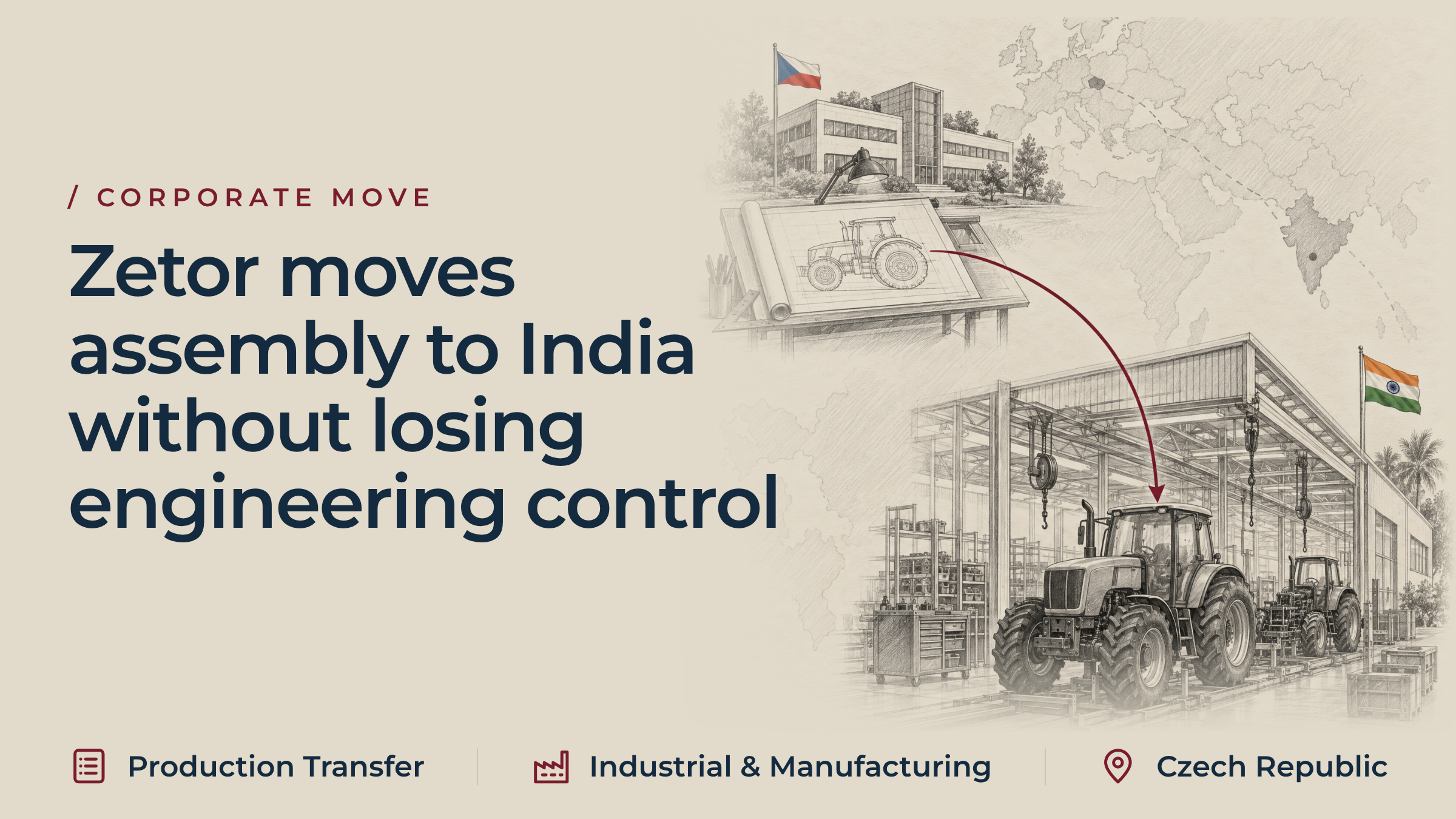
Am 13. Juli 2026 gab Zetor Tractors das Ende der Traktorenmontage in seinem Werk in Brünn bekannt. Damit endet dort eine achtzigjährige ununterbrochene Produktionsgeschichte. Von der Schließung sind 33 Arbeitsplätze in der Fertigung betroffen. Das Unternehmen wird bestehende Kundenaufträge bis Ende 2026 abwickeln. Es handelt sich hierbei nicht um eine Unternehmensschließung. Zetor behält seinen globalen Hauptsitz, die Forschungs- und Entwicklungsabteilung, den Vertrieb sowie den weltweiten Ersatzteilvertrieb in Brünn bei. Die eigentliche Montage wird in ein etabliertes Joint Venture in Indien verlagert, wobei weitere Partnerschaften in Asien aufgebaut werden. Eine solche Produktionsverlagerung spaltet die Marke in zwei Teile. Die Ingenieure, die den Ruf des Unternehmens aufgebaut haben, und die Mitarbeiter, die das Produkt heute herstellen, arbeiten fortan getrennt voneinander. Ohne eine engagierte Führung, die diese Kluft überbrückt, leidet die Qualität. Lücken in der technischen Dokumentation vergrößern sich. Das Vertrauen der Händler schwindet, noch bevor sich die neue Struktur bewähren kann.
Der Auslöser: 80 Jahre Traktorenmontage bei Zetor Brno gehen zu Ende
Die Ankündigung von Zetor beendet eine seit 1946 bestehende Industrietradition. Das Unternehmen hat seit seiner Gründung mehr als 1,3 Millionen Traktoren verkauft. Zu verschiedenen Zeitpunkten hat es in neun Ländern produziert. Die Montage im heimischen Werk in Brünn wird eingestellt, sobald das Unternehmen die bestehenden Kundenaufträge abgearbeitet hat. Die Kündigungsfristen für die Beschäftigten laufen bis Ende 2026 und sind damit länger als die Mindestkonsultationsfristen. EU-Recht zu Massenentlassungen erfordert.
Der Übergang war bereits vor der öffentlichen Bekanntgabe im Gange. Seit 2024 montiert Brünn Traktoren größtenteils aus gelagerten Bauteilen. Die Getriebe- und Motorenproduktion am Standort war bereits eingestellt worden. Die offizielle Bekanntgabe betrifft 33 der rund 150 Mitarbeiter, die im Vorjahr in Brünn beschäftigt waren.
Die physische Montage wird zu VST Zetor Tractors verlagert, einem etablierten Joint Venture mit dem indischen Hersteller VST Tillers Tractors. Weitere Produktionspartnerschaften in Asien befinden sich in der Entwicklung. Die wirtschaftliche Logik hinter dieser Produktionsverlagerung liegt auf der Hand. Die Materialkosten in Indien und China liegen 30 bis 35 Prozent unter dem europäischen Niveau. Dadurch kann Zetor die Preise für fertige Traktoren um 25 bis 30 Prozent senken. Das Unternehmen strebt an, innerhalb von fünf Jahren aus jedem Land rund 5.000 Traktoren zu exportieren. Zwei speziell für den indischen Markt entwickelte Modelle befinden sich in der Entwicklung, von denen eines im nächsten Jahr auf den europäischen Markt kommen soll.
Warum die Verlagerung der Offshore-Produktion schwieriger ist als eine gewöhnliche Werksschließung
Harvard Business Review Forschung Im Bereich der industriellen Gemeingüter lässt sich ein typisches Muster beobachten: Wenn die Fertigung von der Produktentwicklung getrennt wird, bricht die Rückkopplungsschleife zwischen Konstruktion und Produktion zusammen. Die Prototypenentwicklungszyklen verlängern sich, und die Anzahl der Fertigungsfehler steigt. Eine Produktionsverlagerung, bei der die Konstruktion in einem Land verbleibt, während die Montage in ein anderes verlagert wird, führt zu vier deutlichen Reibungspunkten.
Bei grenzüberschreitenden Umzügen verschwinden die Rückkopplungsschleifen im technischen Bereich als Erstes
In Brünn arbeiteten Konstrukteure und Montagemechaniker nur wenige Gehminuten voneinander entfernt. Mechaniker konnten auf eine enge Toleranz oder eine ungünstige Hydraulikführung hinweisen, und die Konstrukteure konnten dies noch am selben Nachmittag korrigieren. Sobald die Montage Tausende von Kilometern entfernt stattfindet, verschwindet dieser informelle Kommunikationskanal. Änderungsanträge müssen nun Zeitzonen und Unternehmensgrenzen überwinden. Kleine Unklarheiten, die früher direkt in der Fertigung behoben wurden, können später als Chargenfehler zutage treten. Dies ist oft das erste Anzeichen dafür, dass eine Produktionsverlagerung außer Kontrolle gerät.
Die technische Dokumentation wird zum wichtigsten Sicherheitsnetz für die Qualitätskontrolle
Die Verlagerung der Traktorenproduktion bedeutet die Übergabe kompletter Konstruktionspakete. Dazu gehören CAD-Modelle, Gussspezifikationen, Normen für die Wärmebehandlung, Schaltpläne und hydraulische Parameter. Sind die Unterlagen unvollständig oder liegt das Fachwissen ausschließlich bei den abwandernden Spezialisten aus Brünn, wird ein Offshore-Partner improvisieren. Nicht genehmigte Ersatzmaßnahmen oder nicht kalibrierte Verfahren können die Haltbarkeit beeinträchtigen. Sie können zudem Europäische Traktor-Typgenehmigung gefährdet. Genau diese Lücke soll ein spezielles Team für die Produktionsumstellung schließen.
Die Auslaufproduktion im Zetor-Werk in Brünn birgt eigene Risiken hinsichtlich Arbeitsmoral und Qualität
Zetor hat sich verpflichtet, die bestehenden europäischen Aufträge vor der Einstellung der Montage in Brünn abzuwickeln. Seit 2024 werden diese Arbeiten mit vorrätigen Bauteilen durchgeführt, wobei die Getriebe- und Motorenfertigung stillgelegt wurde. Der Betrieb einer schrumpfenden Fertigung während einer festgelegten Kündigungsfrist stellt eine echte Herausforderung für das Management dar. Sollten die verbleibenden 33 Fachkräfte vor Ablauf der Frist ausscheiden, könnten die Fehlerquoten bei den letzten in Europa gebauten Traktoren steigen. Dieses Risiko erreicht genau dann seinen Höhepunkt, wenn das Ansehen beim Handel für das neue Importmodell am wichtigsten ist.
Ersatzteile und Lieferkettenlogistik müssen mit dem Rückgang der lokalen Montage Schritt halten
Brnos globales Ersatzteil- und Vertriebszentrum muss weiterhin Hunderttausende von Traktoren unterstützen, die weltweit bereits im Einsatz sind. Die Montage im Inland läuft zwar aus, doch diese Supportverpflichtung bleibt bestehen. Der Abbau der Rohstoffbestände für eine stillgelegte Produktionslinie ist eine Aufgabe. Der Ausbau der Ersatzteillager für einen wachsenden Bestand an im Einsatz befindlichen Maschinen ist eine andere. Beides erfordert echte Disziplin bei der Unternehmensressourcenplanung und darf nicht nur als nachträglicher Einfall im Zuge der Schließung betrachtet werden.
Erkennungsmerkmale: Wie ein Vorstand eine Produktionsverlagerung wahrnimmt
Vorstandsmitglieder erkennen anhand der üblichen Managementberichte nur selten, dass eine Verlagerung der Produktion ins Ausland scheitert. Die Warnsignale zeigen sich in der Regel zuerst in der Produktion und im Händlernetz.
- Es dauert Monate, bis technische Änderungsaufträge zwischen dem bisherigen Konstruktionsteam und dem neuen Produktionsstandort geklärt sind.
- Bei den ersten importierten Geräten kommt es zu einem sprunghaften Anstieg der Gewährleistungsansprüche, die häufig zuerst von Händlern festgestellt werden, die ihre eigenen Auslieferungsprüfungen durchführen.
- Die Händler zögern zunehmend, die neuen Geräte auf Lager zu nehmen, und fordern höhere Garantierückstellungen.
- Die Ingenieure in der verbleibenden Zentrale beschreiben sich selbst als vom physischen Produkt isoliert.
- Festangestellte lokale Führungskräfte tun sich schwer mit dem Übergang von der Leitung einer Fabrik zur Führung eines Auftragsfertigers.
Warum Führungskräfte im operativen Geschäft Schwierigkeiten mit grenzüberschreitenden Versetzungen haben
Um eine inländische Fertigungsstraße gut zu leiten, braucht man bestimmte Fähigkeiten. Eine Produktionsverlagerung erfordert ganz andere Kompetenzen. Die Leitung eines ausländischen Fertigungspartners erfordert die Durchsetzung von Verträgen, Qualitätssicherung bei Lieferanten, grenzüberschreitende Logistik und strenge Audit-Disziplin. Eine Karriere in der Fertigung vermittelt diese Fähigkeiten selten. Ein Manager, dessen Erfahrung auf der lokalen Fertigung basiert, muss nun stattdessen ein internationales Lieferantennetzwerk leiten. Das ist eine berechtigte Forderung, die jedoch vorhersehbar ins Stocken gerät. Der Manager ist nicht unqualifiziert. Die Aufgabe selbst hat sich unter ihm verändert. Das ist kein Grund, an den bereits vorhandenen Mitarbeitern zu zweifeln. Es ist ein Grund, jemanden hinzuzuziehen, dessen Erfahrung bereits beide Seiten einer Produktionsverlagerung umfasst.
Fünf Kontrollmaßnahmen in der Lieferkette, die für eine glaubwürdige Produktionsverlagerung erforderlich sind
- Ernennung eines Interims-COO für die Übergangsphase. Übertragen Sie ihnen die Verantwortung für die Produktionsumstellung, wobei sie direkt über Qualität, Zeitplan und Auswirkungen auf die Händler Bericht erstatten.
- Einrichtung eines Qualitätssicherungs-Gateways für Lieferanten. Entsendung von fest angestellten Wirtschaftsprüfern zum indischen Joint Venture und zu allen weiteren asiatischen Partnern.
- Sichern Sie den Auslauf in Brünn durch meilensteinbasierte Kundenbindung. Binden Sie Anreize für die Fertigstellung an eine fehlerfreie Produktion und eine ordnungsgemäße Außerbetriebnahme der Anlagen.
- Dokumentation vor dem Stillstand der Montage kodifizieren. Drehmomentangaben, Schaltpläne und Montageabläufe müssen zu validierten digitalen Arbeitsanweisungen werden.
- Die Kapazitäten im Bereich Technik und Kundendienst in Brünn absichern. Die zentrale Forschungs- und Entwicklungsabteilung soll ihre Tätigkeit auf Rapid Prototyping, behördliche Zulassungen und die Unterstützung der Offshore-Standorte vor Ort ausweiten.
Ein Interimsmanager bietet einen Vorteil, den ein festangestellter Nachfolger hier nicht ohne Weiteres nachahmen kann. Er hat keine Vorgeschichte mit einer der beiden Seiten des Verlagerungsprozesses. Er verteidigt nicht die alte Fertigungslinie in Brünn. Es ist ihm gleichgültig, wie seine Kollegen die neue Offshore-Beziehung beurteilen. Diese Distanz ermöglicht es ihm, eine funktionierende Brücke zwischen den beiden Seiten der Produktionsverlagerung zu schlagen, anstatt stillschweigend eine Seite zu bevorzugen.
Die grenzüberschreitende Dimension: Was jede Seite des Transfers benötigt
Die Zentrale und das abziehende Montageteam stehen in dieser Angelegenheit nicht auf gegensätzlichen Seiten. Eine Produktionsverlagerung stellt beide vor große Herausforderungen, und beide haben berechtigte Anliegen.
Die Zentrale in Brünn benötigt drei Dinge.
- Geprüfte Qualitätsdaten vom Offshore-Standort, bevor diese die europäischen Kunden erreichen.
- Eine einheitliche, zuverlässige Übersicht über den Fortschritt der Produktion, statt widersprüchlicher Berichte aus den Bereichen Finanzen und Betrieb.
- Die Gewissheit, dass ins Ausland übertragene technische geistiges Eigentum weiterhin unter der Zuständigkeit der Konstruktionsabteilung in Brünn bleibt.
Das abwandernde Team aus Brünn verlangt im Gegenzug drei Dinge.
- Klare, an Meilensteinen orientierte Fristen für die letzten Monate, keine unbefristete Kündigungsfrist.
- Schutz, wenn Mängel erst nach der Auslieferung des Design-Pakets auftreten.
- Soweit möglich, eine klar definierte Rolle bei der Validierung des Offshore-Standorts, anstatt sich einfach zurückzuziehen.
Dies als eine Entscheidung der Zentrale zu betrachten, die einem widerständigen lokalen Team aufgezwungen wird, ist eine Fehlinterpretation der Situation. Die Geschäftsführung in Brünn selbst schlug vor, die Bereiche Forschung und Entwicklung sowie Vertrieb beizubehalten. Sie sah in der Technik und den Kundenbeziehungen den dauerhaften Wert. Die Reibungen hier sind operativer Natur, nicht feindseliger Art. Zwei Gruppen, die ein echtes Interesse am Ergebnis haben und durch die Entfernung voneinander getrennt sind, benötigen nun eine gemeinsame Faktengrundlage.
Beibehaltene Funktionen vs. ausgelagerte Fertigungsprozesse
Durch die Verlagerung der Produktion werden die Geschäftsbereiche von Zetor klar nach Funktionsbereichen aufgeteilt.
- Der weltweite Hauptsitz bleibt in Brünn, wo die Unternehmensführung, die Markenverantwortung und die strategische Ausrichtung angesiedelt sind.
- Forschung und Entwicklung finden weiterhin in Brünn statt und umfassen die Bereiche Ingenieurwesen, Elektrotechnik, Prototypentests und Schutz geistigen Eigentums.
- Ersatzteile und Vertrieb bleiben in Brünn, wodurch Logistik, Wiederaufarbeitung und die Kontinuität des Kundendienstes für den weltweiten Bestand an installierten Anlagen gewährleistet sind.
- Die Montage der Traktoren wird im Zuge der Expansion in Asien nach Indien verlagert. Dies umfasst die Serienfertigung und Endmontage durch VST Zetor Tractors und neue Partnerunternehmen.
- Die Qualitätssicherung erfolgt nach einem gemeinsamen Modell mit Audits vor Ort. Die Standards werden in Brünn festgelegt und bei jedem Produktionspartner vor Ort überprüft.
Diese Aufteilung legt fest, wo die Entscheidungsbefugnisse für den weiteren Verlauf des Produktionstransfers liegen.
Die breitere Welle der Produktionsverlagerungen in Mittel- und Osteuropa und grenzüberschreitende Trends
Die Entscheidung von Zetor ist ein Beispiel für einen allgemeineren Trend. In ganz Mittel- und Osteuropa zwingen steigende Energie- und Arbeitskosten die Hersteller dazu, dieselbe Entscheidung zu treffen. Sie müssen entscheiden, was sie vor Ort behalten und was sie ins Ausland verlagern. Bei jedem der folgenden Fälle handelt es sich um eine eigenständige Produktionsverlagerung, nicht um eine Kopie der Entscheidung von Zetor.
Askolls Motorenwerk in der Slowakei: Verlagerung der Produktion ins Ausland
Der italienische Hersteller Askoll Group wird sein Werk in Potvorice in der Nähe von Nové Mesto nad Váhom bis zum 31. Dezember 2026 schließen. Durch die Schließung gehen 77 Arbeitsplätze an einem Standort verloren, der Elektromotoren an Bosch, Whirlpool und Gorenje lieferte. Die Belegschaft war bereits von 350 bis 400 Mitarbeitern im Jahr 2019 auf wenige Dutzend geschrumpft. Das Unternehmen bestätigte die Schließung erst nach diesem langjährigen Rückgang. Die Produktion wird in die Askoll-Werke in Rumänien und China verlagert. Wie bereits Zetor führte das Unternehmen eher Arbeits- und Steuerkosten als Produktmängel als Grund an. Auch diese Produktionsverlagerung hatte sich bereits über Jahre hinweg abgezeichnet, bevor sie öffentlich bekannt wurde.
Bosch-Werk für Lichtmaschinen in Bratislava: Konsolidierung der Lieferkette
Bosch gab am 16. September 2026 bekannt, dass es die Wiederaufbereitung von Lichtmaschinen in Bernolákovo bei Bratislava einstellen wird. Von dieser Umstellung sind bis März 2027 148 Mitarbeiter betroffen. Die Produktion wird in einem bestehenden Bosch-Werk in Pećinci, Serbien, zusammengefasst. Die Begründung von Bosch deckt sich weitgehend mit der von Zetor: Die arbeitsintensiven Tätigkeiten müssen an einem größeren, kostengünstigeren Standort konzentriert werden. Eine frühere Analyse dieser Schließung durch CE Interim befasst sich eingehender mit den Fragen der Unternehmensführung, die eine solche Produktionsverlagerung aufwirft.
Ursus in Polen: So sieht eine Produktionsverlagerung ohne politische Steuerung aus
Das polnische Unternehmen Ursus bietet einen warnenden Kontrast. Die Jahresproduktion sank von rund 60.000 Traktoren im Jahr 1980 auf nur noch 1.578 Einheiten im Jahr 2006. Eine Reihe von Umstrukturierungen führte zu diesem Rückgang. Ein ungelöster Schuldenerlass aus dem Jahr 1996 betraf fast 700 Gläubiger. In den folgenden Jahrzehnten wechselte der Eigentümer mehrfach. Ursus hat nie eine kontrollierte Produktionsverlagerung durchgeführt, wie sie Zetor derzeit versucht. Dies zeigt, was mit einer traditionsreichen Industriemarke geschieht, wenn der Produktionsrückgang voranschreitet, ohne dass ein verantwortlicher Geschäftsführer den Prozess steuert.
Häufig gestellte Fragen zu Produktionsverlagerungen und Zetor Brno
Was hat Zetor bezüglich der Montagelinie in seinem Werk in Brünn bekannt gegeben?
Am 13. Juli 2026 gab Zetor bekannt, dass das Unternehmen die Traktorenmontage in Brünn einstellen werde, sobald die bestehenden Aufträge abgearbeitet seien. Davon sind bis Ende 2026 33 Arbeitsplätze in der Fertigung betroffen. Die Montage wird in das indische Joint Venture „VST Zetor Tractors“ verlagert, wobei weitere Partnerschaften in Asien in Vorbereitung sind.
Bedeutet diese Verlagerung der Produktion, dass Zetor den Betrieb vollständig einstellt?
Nein. Zetor behält seinen weltweiten Hauptsitz, die Forschungs- und Entwicklungsabteilung, den Vertrieb sowie den weltweiten Ersatzteilvertrieb in Brünn bei. Bei dieser Änderung handelt es sich um eine Verlagerung der physischen Montage. Es ist keine Unternehmensschließung.
Wohin verlagert Zetor seine grenzüberschreitende Traktorenproduktion?
Nach Indien erfolgt der Export über das bestehende Joint Venture mit VST Tillers Tractors. Weitere Produktionspartnerschaften in Asien sind im Aufbau. Das Unternehmen strebt an, innerhalb von fünf Jahren aus jedem Land rund 5.000 Traktoren zu exportieren.
Welche Risiken für die Lieferkette und den Betrieb gehen mit einer grenzüberschreitenden Produktionsverlagerung einher?
Die Hauptrisiken lassen sich in vier Bereiche einteilen. Der informelle Austausch zwischen Konstruktion und Montage entfällt. Die technische Dokumentation, die den Offshore-Partner erreicht, ist unvollständig. Die Qualität der ersten importierten Einheiten schwankt, und die Händler im gesamten europäischen Zetor-Netzwerk zeigen sich zögerlich.
Wie richtet eine Interim-Führungskraft während einer Übergangsphase Kontrollmechanismen für die Lieferkette ein?
Ein Interim-COO mit grenzüberschreitender Erfahrung in der Fertigung kann den Auslauf der Produktion im Inland leiten. Außerdem kann er am Offshore-Standort ein Qualitätssicherungssystem für Lieferanten aufbauen. Er kann eine einheitliche Berichtsstruktur schaffen, die sicherstellt, dass die Konstruktionsabteilung in Brünn und der neue Produktionspartner auf derselben Informationsgrundlage arbeiten – ohne die historischen Hintergründe, die dies für jemanden erschweren, der bereits in einer der beiden Organisationen tätig ist.
Weiterführendes Wissen und nächster Schritt
Vorstände, die mit einer ähnlichen Trennung von Entwicklung und Fertigung konfrontiert sind, sollten auch die Analyse von CE Interim zu folgenden Themen lesen:
- PetCenter: Wie ein Interim-Krisenmanager einen in Schwierigkeiten geratenen Einzelhändler in der Tschechischen Republik übernahm
- Schließung des Bosch-Werks 2026: Auswirkungen über Arbeitsplätze hinaus
- Einblicke in die Welle der Fabrikschließungen in Europa: Was ist der Grund dafür?
Die Mitgliedschaft von CE Interim in der Valtus Alliance ist für eine Produktionsverlagerung wie diese von unmittelbarer Bedeutung. Sie erstreckt sich über die Tschechische Republik, Indien und weitere Standorte in Asien und erfordert Lieferkapazitäten in allen drei Märkten – nicht nur die Nähe zum Hauptsitz. A CE-Interimspartner kann jetzt dabei helfen, dieses Mandat zu definieren, indem es auf eine bewährte, für das Mandat geeignete Führungskraft zurückgreift, die innerhalb von 72 Stunden nach Fertigstellung der Mandatsbeschreibung einsatzbereit ist.
Redaktioneller Haftungsausschluss
Dieser Artikel ist eine unabhängige betriebswirtschaftliche Analyse der Produktionsverlagerung von Zetor. Er stützt sich auf öffentlich zugängliche Unternehmensmitteilungen, Finanzberichte und Branchenstudien. Er impliziert keine geschäftliche, beratende oder Kundenbeziehung zu Zetor Tractors a.s. Gleiches gilt für alle anderen darin genannten Unternehmen.
 EN
EN  DE
DE  FR
FR  IT
IT  PL
PL  RO
RO  CS
CS  SK
SK  HU
HU  ES
ES  RU
RU  AR
AR  SL
SL