

In breve
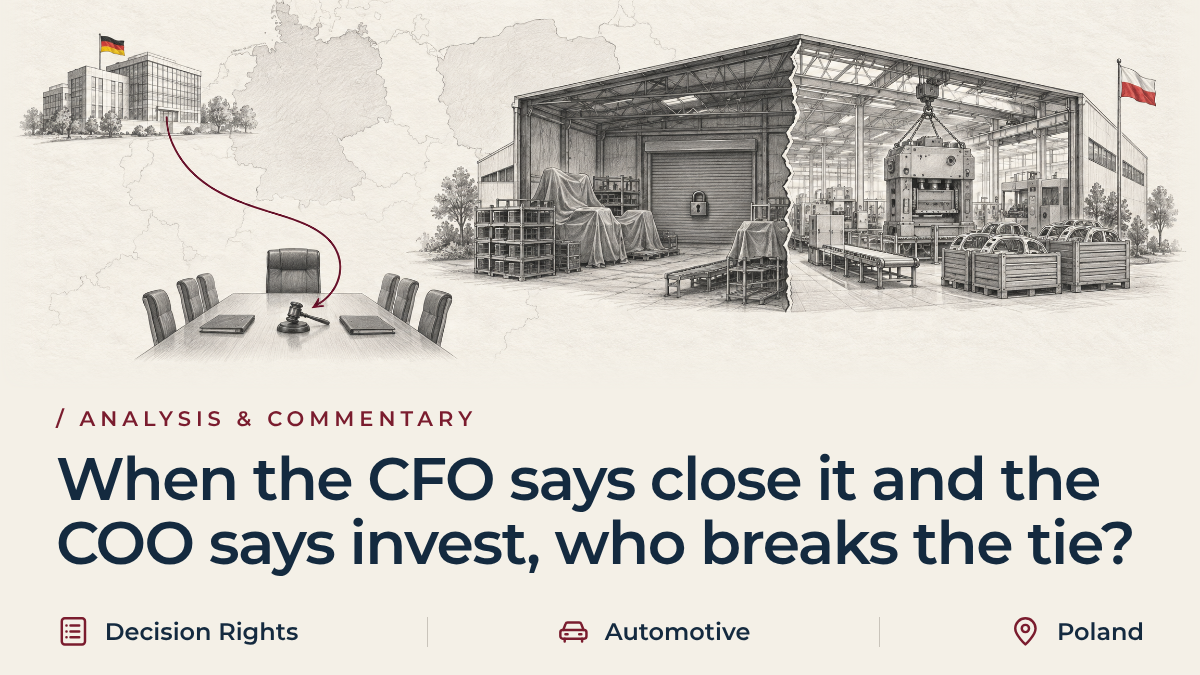
Uno stabilimento estero con risultati insoddisfacenti crea una spaccatura tra il CFO e il COO del Gruppo. Il CFO vuole chiuderlo, mentre il COO vuole investire. Si tratta di una situazione di stallo tra CFO e COO, e il consiglio di amministrazione è l’unico organo in grado di risolverla. I fatti da soli non bastano a decidere una questione strategica, quindi spetta al consiglio di amministrazione prendere una decisione. La risoluzione di una situazione di stallo tra CFO e COO richiede quindi quattro passaggi, sempre nello stesso ordine. In primo luogo, una base fattuale indipendente. In secondo luogo, uno stress test di entrambe le ipotesi in termini di liquidità, clienti e recuperabilità. In terzo luogo, una votazione unanime del consiglio di amministrazione. Infine, un dirigente inviato in loco per eseguire il mandato approvato dal consiglio di amministrazione. Una società di consulenza si occupa dell’analisi, mentre un dirigente ne porta a termine l’esito.
Come i disaccordi tra CFO e COO nel corso di quattro trimestri causano una paralisi strategica
La questione è stata sottoposta al consiglio per la prima volta lo scorso anno, nel terzo trimestre. È poi tornata in discussione a dicembre ed è riemersa nuovamente in primavera. Oggi è ancora all’ordine del giorno, sostanzialmente immutata. In altre parole, si tratta di una situazione di stallo tra il direttore finanziario e il direttore operativo che si ripete ogni trimestre senza che si registrino progressi.
- Il direttore finanziario rileva tredici mesi di assorbimento di liquidità negativo, margini in calo e capitale circolante in aumento. In questa prospettiva, l’apporto di nuovo capitale in uno stabilimento in perdita viola i principi fondamentali della disciplina finanziaria. Il direttore finanziario auspica quindi una chiusura ordinata che tuteli il valore dell’impresa.
- Il direttore operativo interpreta questi stessi dati in modo diverso. Secondo la sua interpretazione, lo stabilimento dispone di un portafoglio ordini attivo e i programmi dei clienti proseguiranno per altri quattro anni. Inoltre, il tasso di scarti riflette anni di manutenzione rinviata, non la forza lavoro. La chiusura dello stabilimento pone fine ai rapporti con i clienti. Inoltre, comporta la distruzione di attrezzature che un investimento mirato potrebbe ancora salvare.
Entrambe le posizioni reggono, e questo è il vero stallo tra CFO e COO nella sua forma più pura. Rinviare la decisione è l’unica scelta di cui nessuno dei due dirigenti deve assumersi la responsabilità personale. Di conseguenza, di fronte a due argomentazioni credibili, il consiglio di amministrazione commissiona un’altra analisi di sensibilità invece di prendere una decisione. Il rinvio diventa così la linea di condotta, e comporta un costo per ogni trimestre in cui persiste.
Governance transfrontaliera: perché la distanza aggrava lo stallo tra CFO e COO
In una sede nazionale, un dirigente può fare un giro in officina nel giro di un pomeriggio e risolvere direttamente la questione. Il contesto transfrontaliero, tuttavia, cambia le cose. Una società madre tedesca, austriaca, svizzera o francese può possedere uno stabilimento in Repubblica Ceca, Polonia, Ungheria o Romania. La distanza limita ciò che la sede centrale può effettivamente verificare, ed è proprio qui che si crea lo stallo tra CFO e COO.
- La sede centrale si affida a estratti dall'ERP, fogli di calcolo e videochiamate. Nel frattempo, la direzione locale lavora sotto pressione per raggiungere gli obiettivi mensili di liquidità. La sede registra i tempi di inattività come manutenzione e ritarda l’emissione delle fatture di alcune settimane. Nulla di tutto ciò è intenzionale. Si tratta piuttosto di ciò che una sede sotto pressione comunica ai livelli superiori, attraverso un sistema concepito per condizioni più tranquille. È proprio in questo divario che si crea una situazione di stallo tra il CFO e il COO.
- Si tratta di un punto cieco strutturale, non di un fallimento personale da parte di nessuna delle due parti. Ricerca condotta dal Forum sulla governance aziendale della Harvard Law School punti allo stesso schema nella governance delle controllate transfrontaliere. I rischi legali e operativi aumentano quando il consiglio di amministrazione della capogruppo perde la visibilità diretta sulla realtà statutaria e operativa di un’entità estera. Di conseguenza, la supervisione a distanza tende a generare interpretazioni contrastanti degli stessi fatti, anziché chiarezza.
Perché la pressione salariale nell'Europa centrale e orientale aggrava lo stallo tra CFO e COO
La pressione salariale in tutta l’Europa centrale e orientale aggrava lo stallo tra CFO e COO. KPMG e il Comitato per le relazioni economiche con l’Europa orientale trovato Una cosa è chiara. I bassi costi del lavoro da soli non bastano più a giustificare uno stabilimento nell’Europa centro-orientale. La manodopera qualificata scarseggia e i salari sono in aumento, quindi un’attività mediocre non può più nascondersi dietro l’arbitraggio dei costi. Quando i margini si riducono, il direttore finanziario (CFO) vede un fallimento nella scelta della sede, mentre il direttore operativo (COO) vede una carenza risolvibile. Entrambe le interpretazioni possono contenere un fondo di verità. È proprio per questo che spetta al consiglio di amministrazione, piuttosto che a una delle due funzioni, decidere quale delle due prevalga.
5 segnali di allarme chiave che indicano una situazione di stallo nel consiglio di amministrazione di una controllata estera
I consigli di amministrazione raramente definiscono apertamente una situazione di stallo. Piuttosto, una situazione di stallo in una controllata estera emerge attraverso cinque segnali ricorrenti. Ciascuno di essi indica una situazione di stallo tra il CFO e il COO che ha ormai esaurito la sua utilità.
- Le richieste di capitale continuano a circolare. Il reparto operativo propone l’automazione. Il reparto finanziario, poi, trimestre dopo trimestre, riduce la richiesta al di sotto del livello necessario per garantire il funzionamento.
- I dati alla base della questione sono oggetto di contestazione. Il reparto finanziario rileva un esborso di liquidità irrecuperabile, mentre quello operativo rileva una domanda stabile. Nessuna delle due parti è d’accordo sul tasso di scarto o sul margine reale del prodotto.
- I clienti si rivolgono a livelli superiori rispetto allo stabilimento. Il reparto acquisti OEM contatta direttamente la dirigenza del gruppo non appena smette di ritenere che il sito sia in grado di risolvere autonomamente i propri problemi.
- I talenti locali se ne vanno per primi. I direttori di stabilimento e gli ingegneri senior più capaci si rendono conto della situazione di stallo prima ancora che lo faccia il consiglio di amministrazione. I più validi tra loro finiscono quindi per passare alla concorrenza. Questa perdita è un ulteriore segnale di una situazione di stallo irrisolta tra il CFO e il COO.
- Il denaro si prosciuga silenziosamente all’interno del gruppo. La controllata fa affidamento sulle garanzie della capogruppo o allunga i termini di pagamento per sopravvivere. Questo esborso rappresenta la manifestazione finanziaria di una situazione di stallo tra il direttore finanziario e il direttore operativo: in altre parole, un problema locale che si trasforma in una passività a livello di gruppo.
Quando diversi di questi segnali si manifestano contemporaneamente, nemmeno un altro comitato interno riuscirà a sbloccare la situazione di stallo tra il CFO e il COO. Non farà altro che esaurire la liquidità di cui il consiglio di amministrazione dispone ancora.
Il modello in quattro fasi per risolvere una situazione di stallo tra CFO e COO
Per stabilire chi decide in merito alla chiusura di uno stabilimento occorre seguire una sequenza logica, non semplicemente organizzare una riunione più efficace. Qualcuno deve assumersi la responsabilità dei dati, e qualcun altro deve occuparsi dell’attuazione una volta che il consiglio di amministrazione avrà preso una decisione. Una società di consulenza si occupa dell’analisi, mentre un dirigente porta avanti il risultato. Saltare un passaggio, quindi, lascia il CFO e il COO in una situazione di stallo esattamente dove erano partiti.
● Fase 1: Definire una base di dati operativi indipendente e verificata
I conti interni riflettono i pregiudizi di ciascuna funzione, pertanto non possono risolvere la controversia da soli. Un dirigente indipendente presente in loco, invece, è in grado di stabilire i dati reali nel giro di poche settimane. Tra questi figurano l’effettiva efficacia complessiva delle attrezzature, i tassi effettivi di scarti, il vero collo di bottiglia, i margini dei clienti disaggregati, una previsione di liquidità su tredici settimane e le passività verificate relative alle indennità di fine rapporto e ai fornitori.
● Fase 2: Confronto tra scenari di chiusura in caso di stress test e scenari di investimento sulla base dei criteri fondamentali
Il consiglio di amministrazione verifica quindi quattro aspetti: l’autonomia finanziaria e la profondità della liquidità, l’esposizione contrattuale nei confronti dei clienti, la recuperabilità operativa e il confronto tra la liquidità netta disponibile e i costi di chiusura. I consigli di amministrazione tendono sistematicamente a sottovalutare i costi di chiusura. Allo stesso tempo, sopravvalutano la velocità di risanamento. Ecco perché questa fase precede l’accettazione di uno dei due casi da parte del consiglio di amministrazione.
● Fase 3: Indire una votazione decisiva del consiglio di amministrazione sulla chiusura o sul risanamento dello stabilimento
I dirigenti ad interim indipendenti non prendono mai la decisione strategica di chiudere un’operazione o di investire. Tale decisione spetta esclusivamente al consiglio di amministrazione o al comitato per gli investimenti. Non sono i fatti a risolvere una situazione di stallo tra il CFO e il COO, ma il consiglio di amministrazione.
● Fase 4: Nominare un dirigente ad interim incaricato di attuare il mandato del consiglio di amministrazione
Il management interno raramente è il team più adatto a portare avanti una decisione contro cui si è opposto, quindi il consiglio di amministrazione nomina una figura esterna. Un CFO ad interim è la scelta giusta quando il problema è la rendicontazione. Se la soluzione è un risanamento operativo, è indicato un COO ad interim. Se la liquidità rappresenta il vincolo limitante, è opportuno un Chief Restructuring Officer ad interim. Per una chiusura controllata, è indicato un amministratore delegato o un direttore di stabilimento ad interim. Nel frattempo, un partner ad interim di CE rimane coinvolto per tutto il processo, assumendo la governance e la gestione delle escalation insieme al dirigente ad interim, e gestisce il passaggio di consegne alla leadership permanente una volta completato il mandato.
Tendenze del settore manifatturiero europeo: crescenti pressioni finanziarie e operative sugli stabilimenti all’estero
Una situazione di stallo tra il direttore finanziario e il direttore operativo come questa va ben oltre i confini di un singolo stabilimento. Anzi, si sta diffondendo.
Il CLEPA Data Digest n. 24, pubblicato Nel gennaio 2026 è stato registrato un dato allarmante. I fornitori automobilistici europei hanno annunciato oltre 104.000 tagli di posti di lavoro complessivi per il biennio 2024-2025. Le tariffe energetiche, il riassetto della catena di approvvigionamento e la concorrenza sui prezzi hanno determinato questi tagli. Di conseguenza, le controllate che un tempo garantivano una produzione affidabile a basso costo si trovano ora a loro volta in difficoltà. Ognuna di esse nasconde al proprio interno una situazione di stallo tra CFO e COO che non tarderà a venire a galla.
Il settore del private equity deve affrontare una pressione analoga. I volumi delle operazioni di uscita nel settore del private equity europeo cadde a 872 operazioni nel primo semestre del 2026. Si tratta di un calo rispetto alle 1.210 operazioni registrate l’anno precedente. Lo studio EY Global Private Equity Exit Readiness Study 2026 trovato un andamento che si cela dietro quei numeri. Gli sponsor detengono sempre più spesso attività che rimangono redditizie dal punto di vista operativo. Ciononostante, quelle stesse attività si trovano ad affrontare una liquidità bloccata e uscite in stallo a causa di discrepanze di valutazione. Un partner operativo non può quindi permettersi una situazione di stallo indefinito tra CFO e COO all’interno di un periodo di detenzione come quello. Per proteggere il valore aziendale è necessario un intervento deciso, piuttosto che un altro trimestre di analisi.
Caso di studio: Come un fornitore automobilistico di primo livello ha risolto una situazione di stallo durata 9 mesi tra il CFO e il COO
Un fornitore automobilistico tedesco di primo livello nel settore delle strutture aveva sede nel Baden-Württemberg. Gestiva uno stabilimento di stampaggio metalli e produzione di telai saldati con 520 dipendenti nella Bassa Slesia, in Polonia, e lo stabilimento generava un fatturato annuo di 68 milioni di euro.
L'attività era stata sottoposta a quattro revisioni trimestrali del portafoglio. In quel periodo, aveva assorbito liquidità per 4,8 milioni di euro nell'arco di quattordici mesi. L'EBITDA operativo era crollato, passando da un valore positivo del 7,8% a uno negativo del 3,2%. Di conseguenza, i covenant sul debito del gruppo erano ora sottoposti a una pressione diretta.
La posizione del direttore finanziario era definitiva: cancellare 14 milioni di euro dal valore contabile delle attività, quindi procedere alla liquidazione con una chiusura graduale della durata di sei mesi e trasferire i volumi a produttori esterni a contratto. Il direttore finanziario ha stimato in 5,5 milioni di euro la liquidità netta necessaria per chiudere l’operazione.
Il direttore operativo ha sostenuto la tesi opposta con altrettanta convinzione. In questo caso, lo stabilimento aveva contratti di fornitura quadriennali confermati per due importanti piattaforme automobilistiche tedesche, e tali contratti rappresentavano il trenta per cento del fatturato del gruppo. I problemi erano di natura tecnica piuttosto che strutturale. Un programma di investimenti immediato di 3,5 milioni di euro per celle di saldatura robotizzate avrebbe quindi risolto la situazione. La chiusura dello stabilimento, avvertì il COO, avrebbe invece innescato una crisi di approvvigionamento dei clienti che il gruppo non sarebbe stato in grado di contenere.
L'aumento dei costi finanziari derivanti dal rinvio della decisione di chiudere uno stabilimento
Il consiglio di amministrazione ha rinviato la decisione per tre trimestri consecutivi. Nel frattempo, lo stallo tra il direttore finanziario e il direttore operativo ha superato la capacità del personale di produzione di sopportarlo. Gli scarti sulla linea principale della pressa di trasferimento da 1.200 tonnellate hanno raggiunto l'8,4 per cento, mentre il budget prevedeva l'1,5 per cento. I cambi di stampo richiedevano 4,5 ore invece dei quaranta minuti standard. A quel punto, lo stallo tra il direttore finanziario e il direttore operativo non era più solo teorico.
Lo stabilimento doveva garantire il funzionamento delle linee di assemblaggio negli stabilimenti dei clienti a Lipsia e Wolfsburg. Per far fronte a questa esigenza, spendeva 190.000 euro al mese per il noleggio di autocarri dedicati. Il responsabile locale degli utensili e due ingegneri senior della manutenzione si sono dimessi. Un importante OEM ha quindi emesso un giudizio formale di allerta in seguito a un audit, e il fornitore è stato sottoposto a una sorveglianza speciale in materia di qualità.
Accertamento dei fatti oggettivi di natura operativa e giuridica sul posto
Il consiglio di amministrazione ha riconosciuto che il rinvio di per sé stava compromettendo il valore dell’azienda, pertanto ha incaricato CE Interim. Entro 72 ore dal completamento del brief relativo al mandato, un Direttore operativo ad interim È arrivato sul posto con pieni poteri operativi. È arrivato anche un responsabile indipendente incaricato della ristrutturazione. La revisione forense che ne è seguita ha fornito per la prima volta dati oggettivi sulla situazione di stallo tra il direttore finanziario e il direttore operativo.
Nel corso delle prime quattro settimane, l’audit ha individuato un aspetto specifico. Il 72% degli scarti totali dello stabilimento era riconducibile a due stampi progressivi usurati e a un cuscinetto della pressa idraulica non calibrato, e non alle prestazioni della forza lavoro. Una revisione legale condotta in parallelo ha rilevato qualcos’altro. Nello specifico, una chiusura unilaterale avrebbe comportato richieste di risarcimento da parte dei clienti per interruzione della linea di produzione pari a 12,8 milioni di euro entro sessanta giorni. Tale cifra era di gran lunga superiore alla stima di 5,5 milioni di euro fornita dal direttore finanziario. In realtà, il fabbisogno di liquidità netto effettivo per la chiusura era pari a 18,3 milioni di euro, più di tre volte rispetto a quanto previsto inizialmente per la chiusura.
Le settimane cinque e sei hanno poi messo alla prova l’argomentazione del COO sulla base degli stessi fatti. Le celle robotizzate da 3,5 milioni di euro richiedevano sette mesi per l’installazione, quindi la consegna ai clienti sarebbe stata del tutto impossibile durante quel periodo. Una revisione accurata delle attrezzature esistenti e dell’impianto idraulico delle presse, tuttavia, ha offerto una soluzione alternativa. Sono state necessarie quattro settimane e 280.000 euro. Ciò ha permesso di ripristinare la capacità produttiva senza interruzioni nelle consegne.
La decisione del consiglio di amministrazione di invertire la rotta e i 6 mesi di attuazione
Di fronte a una serie di fatti che nessuna delle due parti poteva contestare, il consiglio di amministrazione ha posto fine a nove mesi di stallo. Ha respinto la proposta di liquidazione e ha invece votato all’unanimità a favore di un piano di risanamento operativo della durata di 180 giorni, risolvendo finalmente la situazione di stallo tra il direttore finanziario e il direttore operativo sulla base dei fatti piuttosto che delle convinzioni personali.
Il COO ad interim ha quindi gestito direttamente le operazioni dello stabilimento dal secondo al sesto mese. Il team ad interim ha semplificato le gerarchie di reporting locali e la manutenzione degli utensili è stata posta sotto supervisione tecnica continua. Le procedure SMED hanno ridotto i tempi di cambio stampo da 4,5 ore a 38 minuti. Sulla base dei dati verificati relativi agli scarti e alla manodopera, il dirigente ad interim ha inoltre negoziato un sovrapprezzo temporaneo. I responsabili degli acquisti degli OEM in Germania hanno acconsentito a un aumento del 7,5%, pari a 1,1 milioni di euro di recupero di liquidità su base annua.
Nel giro di sei mesi, gli scarti di stampa sono scesi dall’8,4% all’1,8%. La disponibilità delle macchine da stampa è salita dal 54% all’81%, mentre la percentuale di consegne puntuali e complete è risalita al 99,1%. Le spedizioni urgenti sono state completamente eliminate. Di conseguenza, la società polacca ha registrato un utile operativo di 140.000 euro al mese. L’OEM ha revocato il proprio rating di allerta e il gruppo ha mantenuto i contratti pluriennali.
Perché il consenso interno viene meno in caso di disaccordi tra i dirigenti
Laddove l’organizzazione abbia fiducia nei propri sistemi di rendicontazione e la dirigenza sia d’accordo, una revisione interna può risolvere una discrepanza nelle prestazioni. In tal caso, i consigli di amministrazione dovrebbero fare affidamento su di essa piuttosto che ricorrere automaticamente a soggetti esterni.
Una vera situazione di stallo tra CFO e COO è diversa. Rompe l’allineamento interno perché i due dirigenti che riesaminano il caso sono gli stessi due che l’hanno elaborato. Nessuno dei due può riconsiderare la propria posizione senza dare l’impressione di cedere. Chiedere al CFO e al COO di trovare un accordo in un altro comitato è quindi un modo per eludere il problema, con l’aggiunta di un invito a una riunione. Passano quattro trimestri senza che venga presa alcuna decisione, perché nessuno si assume la responsabilità del risultato, ma solo della discussione.
Il consiglio di amministrazione mantiene il controllo strategico, come è giusto che sia. Ciò che solitamente manca, tuttavia, è un dirigente il cui mandato sia quello di accertare prima i fatti e poi attuare la decisione presa dal consiglio. Una situazione di stallo non gestita tra il CFO e il COO comporta l’intero costo di tale lacuna. Inoltre, ogni trimestre in più dedicato a questa situazione impegna ulteriore capitale sulla base di ipotesi che nessuno ha verificato sul campo.
Domande frequenti sui casi di stallo tra CFO e COO e sulle decisioni relative alla chiusura degli stabilimenti
Perché i consigli di amministrazione non riescono a risolvere internamente un disaccordo tra il direttore finanziario e il direttore operativo?
Ogni dirigente interpreta l’azienda attraverso un mandato funzionale ben definito. Il CFO tutela la liquidità e il bilancio dai rischi, mentre il COO tutela gli impegni nei confronti dei clienti e la capacità produttiva. Nessuno dei due può verificare le ipotesi dell’altro senza dare l’impressione di indebolire la propria posizione. Se lasciata a se stessa, è proprio così che una situazione di stallo tra CFO e COO persiste per mesi.
Come può un consiglio di amministrazione risolvere una situazione di stallo tra il direttore finanziario (CFO) e il direttore operativo (COO) senza ricorrere a un dirigente esterno?
Raramente, oltre un certo punto. La riconciliazione interna funziona fintanto che entrambe le parti concordano sui fatti. Tuttavia, quando la controversia verte effettivamente su quali fatti considerare attendibili, la via più rapida è quella di disporre di una base fattuale indipendente, verificata in loco, che entrambe le parti accettino. A quel punto si procede a una votazione del consiglio di amministrazione.
È un dirigente ad interim a decidere se chiudere uno stabilimento o investire in esso?
No. Tale decisione spetta esclusivamente al consiglio di amministrazione o al comitato per gli investimenti. Il dirigente ad interim, invece, definisce una base di dati verificati, sottopone entrambe le opzioni a test di stress e attua il mandato approvato dal consiglio di amministrazione.
Quanto tempo occorre solitamente per risolvere una situazione di stallo tra il CFO e il COO a livello operativo?
Un dirigente indipendente in loco definisce solitamente una base di fatti accertati entro tre o quattro settimane. L’esecuzione del risanamento o della liquidazione può quindi avere inizio immediatamente, non appena il consiglio di amministrazione avrà preso una decisione.
Come si rapporta il costo effettivo della chiusura di un impianto al costo della ristrutturazione?
I consigli di amministrazione tendono sistematicamente a sottovalutare i costi di chiusura. Una chiusura totale comporta licenziamenti previsti dalla legge, trattative sindacali, interventi di bonifica ambientale e penali per la risoluzione anticipata dei contratti di locazione. Come dimostra il caso sopra riportato, può comportare anche penali per i disagi causati ai clienti che superano di gran lunga la svalutazione contabile. Una diagnosi verificata consente quindi di confrontare il reale flusso di cassa netto necessario per la chiusura con i costi di risanamento, prima che il consiglio di amministrazione utilizzi uno dei due dati per prendere qualsiasi decisione.
Qual è il primo segnale che indica al consiglio di amministrazione che un disaccordo tra il direttore finanziario (CFO) e il direttore operativo (COO) costituisce una situazione di stallo?
Tre trimestri senza una decisione rappresentano il punto di riferimento pratico. Lo stesso asset potrebbe tornare in discussione per la terza volta con una nuova analisi, ma senza alcun cambiamento di posizione. A quel punto, lo stesso stallo tra CFO e COO diventa di per sé un rischio, indipendentemente da quale delle due posizioni alla fine prevalga.
Conoscenze correlate e passo successivo
Questo tipo di stallo tra CFO e COO raramente si risolve da solo. Pertanto, per un consiglio di amministrazione che si trova ad affrontare lo stesso divario tra il settore finanziario e quello operativo, vale la pena leggere i tre articoli correlati riportati di seguito.
Una situazione di stallo tra il CFO e il COO che rimane irrisolta comporta costi sempre maggiori con il passare dei trimestri. Pertanto, è opportuno rivolgersi a un Partner ad interim di CE riguardo al potere esecutivo necessario per sbloccare una decisione relativa a un impianto che si trova in una fase di stallo.
 EN
EN  DE
DE  FR
FR  IT
IT  PL
PL  RO
RO  CS
CS  SK
SK  HU
HU  ES
ES  RU
RU  AR
AR  SL
SL