

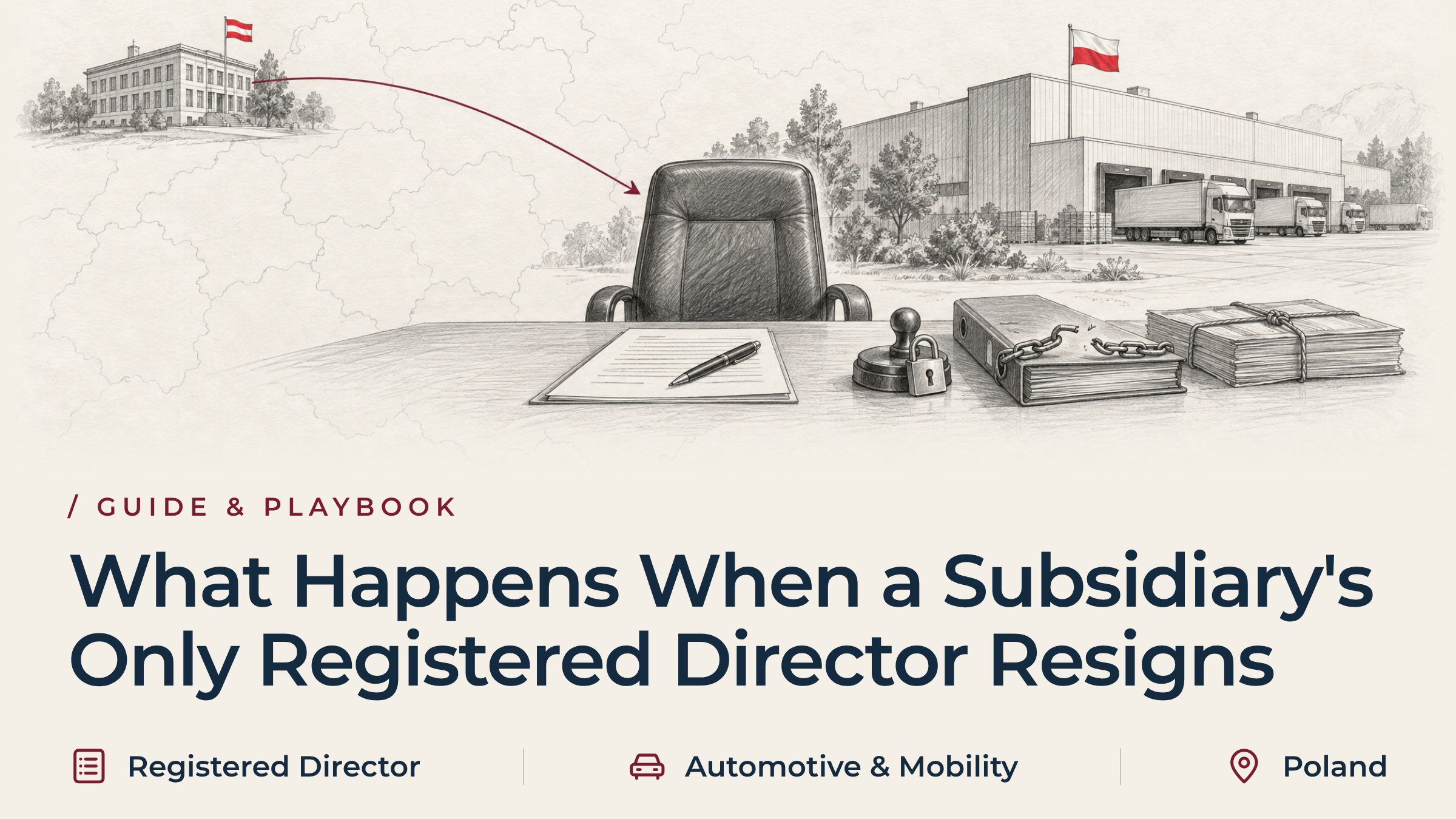
Co se stane, když odstoupí jediný zapsaný člen představenstva dceřiné společnosti
Ve zkratce
Když jediný jednatel dceřiné společnosti odstoupí, společnost přichází o svého zapsaného jednatele. Tím ztrácí právní způsobilost k jednání. Závod může sice nadále fungovat na základě zavedených postupů a stávajících zakázek, ale samotný subjekt nemůže podepsat novou smlouvu. Nemůže provádět převody peněz mezi účty. Nemůže podat daňové přiznání. V současné době nemá žádný registrovaný jednatel oprávnění společnost zastupovat. V Německu přetrvává pouze pasivní zastoupení prostřednictvím akcionářů. Obnovení způsobilosti společnosti k právním úkonům znamená dvě věci. Nejprve je třeba určit, co společnost ještě může dělat. Poté je třeba jmenovat a zaregistrovat nového jednatele, který se postará o zbytek.
Spouštěcí událost: Náhlý odchod registrovaného zástupce
Výpověď dorazí v úterý. Registrovaný ředitel daného závodu podá okamžitou výpověď a odejde. Tento ředitel může působit ve Varšavě, Praze nebo Budapešti. V ústředí skupiny v Mnichově, Curychu, Vídni nebo Paříži je reakce často klidná. Závod je v provozu. Nákladní vozy stále odjíždějí z nakládací rampy.
Tento klid je pochopitelný. Společnost, která stále realizuje dodávky, z dálky vypadá, jako by nevyžadovala okamžitou pozornost. Právě tento předpoklad je nejnákladnější. Ztráta registrovaného ředitele není jen personální mezerou. Jedná se o právní událost.
O zastupování rozhoduje místní právo společností. Stává se tak prostřednictvím jmenovaného a zapsaného ředitele. Dokud představenstvo tuto osobu nejmenuje a nezapíše do rejstříku, nemůže společnost jednat. Nemůže podepsat novou smlouvu s dodavatelem. Nemůže upravit bankovní plnou moc. Nemůže podat daňové přiznání. To platí bez ohledu na to, jak je nastaven pracovní rozvrh.
Přeshraniční správa: Proč je místní zastoupení společností vázáno na území
Generální ředitel skupiny nemůže zahraniční dceřiné společnosti jednoduše nařídit, aby si opět jmenovala registrovaného ředitele. Zastupování společnosti je vázáno na území. Je zapsáno ve veřejném rejstříku. Tento rejstřík se nachází v zemi, kde byla společnost založena, nikoli v sídle skupiny. Banky, dodavatelé, daňové úřady a soudy v Polsku, České republice, Maďarsku a Německu se řídí tím, co je v tomto rejstříku uvedeno. Neřídí se e-mailem od ústředí.
Z dálky se zdá, že vyslat manažera z centrály, aby tuto pozici obsadil, je jednoduché. Na místě však naráží na skutečné překážky. Cizinec nemůže tuto funkci vždy nastoupit okamžitě. Ředitelé ve střední a východní Evropě mohou po svém jmenování nést také osobní odpovědnost. To je závažné rozhodnutí pro manažera, který nepočítal s tím, že se ho bude muset tento týden ujmout.
Analýza dopadů: Provozní rizika v případě, že společnost zůstane bez ředitele
Představenstva na tuto mezeru zřídka přijdou v den, kdy dorazí výpověď. Zjistí ji až ve chvíli, kdy se nepodaří vyřídit běžný obchodní úkon. Obvykle se to projeví v pěti situacích. Každá z nich souvisí s tím samým chybějícím registrovaným ředitelem.
-
Dodavatel nevydá zásilku bez podepsaného prodloužení smlouvy. Osoba, která by ji za normálních okolností podepsala, již není k dispozici.
-
Banka zamítne platební příkaz nebo změnu plné moci. V obchodním rejstříku je stále uveden bývalý člen představenstva, nikoli současný.
-
Zákazník podá reklamaci v rámci záruky nebo stížnost na kvalitu, na kterou je třeba poskytnout závaznou odpověď. Nikdo na místě však není schopen takovou odpověď poskytnout.
-
Nastává lhůta pro podání zákonem stanoveného dokumentu. Portál vyžaduje podpis registrovaného ředitele k jeho odeslání.
-
Vyjednávání mezi podnikovou radou a odborovou organizací dospěje do fáze uzavření závazné dohody. V místnosti však není přítomen žádný z registrovaných signatářů, který by ji mohl uzavřít.
Každá z těchto událostí je sama o sobě běžnou záležitostí. Společně však v rámci jednoho týdne naznačují něco závažnějšího. Společnost přišla o víc než jen o manažera. Přišla o registrovaného ředitele, s nímž může vnější svět legálně jednat.
Finanční dopad: Měřitelné náklady způsobené zpožděním ve vedení
Odklad v tomto případě neznamená neutrální postoj typu „počkáme a uvidíme“. Bennedsen, Perez-Gonzalez a Wolfenzon zkoumali téměř 13 000 dánských malých a středních podniků. Výsledky jejich práce byly zveřejněny v časopise Časopis o financích. Studie se týkala období od roku 1996 do roku 2012. Zjistila, že náhlé úmrtí generálního ředitele s sebou neslo reálné náklady. Provozní rentabilita aktiv klesla o 1,7 procentního bodu. Provozní ziskovost klesla o 11 procent.
Jedná se o dánská data, která vycházejí z údajů jednotlivých společností. Nejde o evropský ani globální údaj. Týká se také spíše obecné provozní výkonnosti než konkrétně právní způsobilosti. I tak však zůstává užitečným signálem. Neplánovaný odchod člena vrcholového vedení má měřitelné náklady. Představenstvo může ztrátu svého registrovaného ředitele považovat spíše za administrativní záležitost než za naléhavý problém. Takový přístup vede k tomu, že náklady trvají déle, než je nutné.
Právní postavení: Co se mění a co zůstává beze změny v oprávnění k podpisu za dceřinou společnost
Ztráta registrovaného ředitele neznamená, že subjekt přestane existovat. Neznamená to ani, že by se stal ve všech ohledech bezmocným. Jedná se v zásadě o otázku podpůrného podpisového oprávnění – kdo jej v současné době má a kdo ne.
Ve většině situací, jimiž se tento článek zabývá, má podnik stále tři možnosti.
-
Přijímat zboží, faktury a právní oznámení, která jsou jí adresována.
-
Pokračovat v činnosti na základě smluv a pověření, která již platně nabývala účinnosti.
-
Plnit závazky podle pokynů vydaných před odchodem registrovaného ředitele, pokud banka dosud nezablokovala plnou moc.
Dokud se registrovaný člen představenstva nevrátí, nemůže společnost ve svém jménu přijímat nové právní závazky.
-
Podepište novou smlouvu, proveďte změnu stávající smlouvy nebo se dohodněte na nových obchodních podmínkách.
-
Pověřte banku, aby otevřela, zrušila nebo podstatně změnila platební příkaz.
-
Podávat zákonem stanovená hlášení, podepisovat roční účetní závěrky nebo zastupovat sama sebe před soudem či rejstříkem.
Zejména v Německu platí, že společnost, která se ocitne bez vedení, nebo bez vedení, si zachovává stejnou právní formu. Nepřestává existovat. Pasivní zastupování prostřednictvím akcionářů pokračuje. Společnost může i nadále přijímat právní oznámení. Ztrácí však schopnost jednat vlastním jménem. Tento stav trvá, dokud se do funkce neujmou noví zapsaní členové představenstva.
Protokol zásahu: Obnovení právní způsobilosti ve čtyřech krocích
Obnovení schopnosti dceřiné společnosti jednat probíhá podle přesně stanoveného postupu, nejde o jediné rozhodnutí. O výsledku obvykle rozhodují čtyři kroky v tomto pořadí. Právě ony určují, zda se problém vyřeší během několika dnů, nebo se bude táhnout celé týdny.
-
Zjistěte, co je subjekt ještě schopen dělat. Ověřte, které stávající smlouvy, pověření a pokyny zůstávají v platnosti. Od toho se odvíjí, kolik času má podnik ve skutečnosti k dispozici.
-
Ověřte, kdo již má právo na místní registraci. Osoba, která má právo vykonávat tuto činnost a disponuje potřebným místním identifikačním číslem, se může stát registrovaným ředitelem během několika dnů. Bez těchto údajů mohou uplynout týdny, než někdo vůbec získá jakoukoli pravomoc.
-
Přijměte formální usnesení a neprodleně jej podejte. Mateřská společnost přijme usnesení akcionářů nebo představenstva, jímž jmenuje nového zapsaného člena představenstva. Místní právní zástupce poté toto usnesení zapíše do obchodního rejstříku.
-
Písemně vymezte pravomoci nového registrovaného ředitele. Postava, která odešla a zůstala v neurčené úloze, se nemůže pohybovat rychleji než osoba, která odešla.
Tento postup nezruší původní rozhodnutí. Rada stále musí rozhodnout, kdo by měl tento post zastávat a na jak dlouho. Pouze zabraňuje tomu, aby se toto rozhodnutí zaseklo v procesu, který dosud nikdo neprováděl.
Právní rámce jednotlivých zemí: Požadavky na registrované ředitele ve střední a východní Evropě a v Německu
Přesné znění se liší podle jednotlivých zemí. Všechny však odpovídají na stejnou otázku: Co se stane, když registrovaný ředitel odstoupí, a kdo může vykonávat jeho funkci, dokud se na tento post nedostane někdo nový? Následující text uvádí pouze obecný princip, nic víc.
Německo: Řízení subjektů bez vedoucího a povinnosti jednatelů
Německá společnost typu GmbH musí mít alespoň jednoho zapsaného jednatele, a výkonný ředitel, a to za všech okolností. Jakmile odejde i ten poslední, společnost zůstane bez vedení, anebo bez vedení. Společnost nemůže uzavírat nové smlouvy. Nemůže ani podat žalobu u soudu. Nejprve musí zasáhnout soudně jmenovaný doručovatel nebo krizový správce. Pokračuje pouze pasivní zastupování prostřednictvím akcionářů. Obchodní zmocněnec, Prokura, zůstává v platnosti pouze v případě, že ji představenstvo schválilo a zaregistrovalo ještě před odchodem člena představenstva. Ani v takovém případě se však nevztahuje na rozhodnutí, která zákon vyhrazuje pro registrovaného člena představenstva.
Polsko: Registrace v KRS, požadavky na PESEL a povinnosti členů představenstva
Polská společnost s ručením omezeným je společnost s ručením omezeným. Tato správní rada musí mít alespoň jednoho registrovaného člena, zapsaného v KRS, tj. v Národním soudním rejstříku. Pokud stanovy společnosti neobsahují žádné ustanovení o počtu členů správní rady, platí ze zákona, že správní rada se skládá ze dvou členů. Tuto podmínku splňuje i jeden člen spolu s obchodním zmocněncem. Článek 42 občanského zákoníku umožňuje soudu jmenovat kurátora. To platí v případě, že právnická osoba postrádá orgány potřebné k jednání. Cizí státní příslušník se nemůže stát registrovaným členem představenstva bez polského identifikačního čísla, tzv. PESEL. Státní příslušníci zemí mimo EU mohou rovněž potřebovat pracovní povolení, než jmenování nabude účinnosti.
Česko: Zápisy do obchodního rejstříku a zákonné lhůty pro jednatele
Česká společnost s ručením omezeným je společnost s ručením omezeným. Společnost je řízena jedním nebo více zapsanými jednateli, kteří jsou v místním kontextu označováni jako „jednatelé“. Tito jednatelé jsou zapsáni v obchodním rejstříku. Pokud jediný jednatel odstoupí, musí valná hromada do tří měsíců zvolit jeho nástupce. Pokud zůstane tato funkce i po uplynutí této lhůty neobsazena, může soud přistoupit k zrušení společnosti.
Maďarsko: Zastupování společností a funkce jednatele (Ügyvezető)
Maďarská společnost s ručením omezeným je společnost s ručením omezeným. Než může společnost začít působit, musí mít registrovaného jednatele, který se v místním jazyce nazývá „ügyvezető“. Tento jednatel musí být jmenován ještě předtím, než společnost podepíše významné smlouvy, podá daňová přiznání nebo schválí bankovní platby.
Mechanismus se liší podle země. Otázka výkonné moci se však neliší. Jde o to, jak rychle může představenstvo na tuto pozici dosadit někoho, kdo je skutečně způsobilý ji zastávat.
Nasazení dočasného vedoucího pracovníka: Řízení přeshraničních pravomocí a způsobilosti
Mateřská společnost obvykle disponuje kapitálem, vykonává dohled a má svého preferovaného kandidáta. Málokdy však sama o sobě disponuje osobou, která by splňovala podmínky pro to, aby se stala místně registrovaným členem představenstva. Právě v tom spočívá skutečný problém při přeshraničním podnikání: pravomoc a splnění podmínek se nacházejí na různých místech.
Společnost CE Interim je členem aliance Valtus. Díky tomu má přístup k vedoucím pracovníkům, kteří již na těchto trzích působí. Jakmile se uvolní místo, nemusí hledat a prověřovat kandidáty úplně od začátku. Právě tento rozdíl je v tomto případě klíčový. O tom, jak rychle může nový registrovaný ředitel skutečně nastoupit do funkce, rozhoduje splnění podmínek, nikoli obecná délka praxe.
Jakmile představenstvo určí vhodného kandidáta, tyto role zůstávají oddělené. Dočasný výkonný ředitel nastupuje do zákonem stanovené funkce registrovaného ředitele a má pravomoc řídit každodenní chod společnosti přímo na místě. Představenstvo mateřské společnosti si ponechává pravomoc rozhodovat o záležitostech, které do jeho kompetence spadají. Patří sem rozhodnutí o tom, kdo bude tuto funkci zastávat, na jak dlouho a kdy nastoupí stálý nástupce.
Společnost CE Interim nadále plní svou roli i po tomto jmenování. Mandát dohlíží jeden z partnerů, který v předem stanovených intervalech podává zprávy představenstvu mateřské společnosti. Jakmile bude jmenován stálý registrovaný ředitel, dojde ke strukturovanému předání funkce.
Reakce na kritiku: Prozatímní vedení stanovené zákonem vs. jmenování dočasných zástupců
Výzkum týkající se dočasných generálních ředitelů přináší určitou výzvu. Marcel, Cowen a Ballinger tuto práci publikovali v časopise Časopis pro strategické řízení. Yale School of Management později v souhrnu to.
Jejich zjištění: Dočasní generální ředitelé mohou způsobit strategickou paralýzu, neshody mezi zainteresovanými stranami a pokles investic.
Tento závěr by měl platit. Jedná se o skutečný trend a podniky zahrnuté do tohoto výzkumu nejsou smyšlené. V dané studii však byli prozatímní generální ředitelé obvykle vybíráni z řad stávajícího představenstva. Představenstvo je jmenovalo v době selhání správy a řízení, kdy nebyl určen žádný nástupce a nebyly jasně vymezeny pravomoci. Paralýza, kterou popisují, vyplývá z jmenování bez mandátu. Nevyplývá ze samotného prozatímního vedení.
Situace se zde liší v jednom konkrétním ohledu. Jmenování této osoby není pouze dočasným řešením na dobu, než představenstvo rozhodne, jak postupovat. Jedná se o jmenování stanovené zákonem, s vymezenými pravomocemi, zapsané podle místních právních předpisů. Jeho účelem je zajistit, aby subjekt měl opět zapsaného ředitele, zatímco se řádně pokračuje v procesu přijímání trvalého rozhodnutí. Tam, kde jsou rozhodovací pravomoci, registrace a oprávnění jasně stanoveny od samého počátku, má tato paralýza konkrétní příčinu, kterou je třeba řešit. Nejedná se o neodmyslitelnou vlastnost prozatímního vedení.
Případová studie: Řešení odchodu registrovaného ředitele v polském závodě
Závod na montáž komponentů v rakouském vlastnictví nedaleko Katovic zaměstnával 240 lidí. Dodával lisované a svařované podsestavy třem německým automobilovým odběratelům první úrovně. Celková hodnota objednávek činila přibližně 34 milionů eur ročně. Jeho ředitel registrovaný v Polsku podal s okamžitou platností výpověď po nevyřešeném sporu s rakouskou správní radou.
Výroba pokračovala během prvních několika dnů, a to z existujících zásob a na základě otevřených objednávek. Čtvrtého dne banka závodu zmrazila platební pověření k danému účtu. Výpis z rejstříku KRS, který banka měla k dispozici, stále uváděl bývalého ředitele jako jedinou osobu oprávněnou schvalovat pokyny. Šestého dne dodavatel oceli pozastavil další dodávku. Tento dodavatel zajišťoval přibližně 60 procent surovin pro závod. Hodnota pozastavené dodávky činila téměř 280 000 eur a její realizace byla podmíněna podepsáním prodloužení smlouvy, které však na místě nemohl podepsat nikdo. Nevyřešeny zůstaly také dvě otevřené reklamace zákazníků týkající se kvality, přičemž u každé z nich platila smluvní lhůta pro odpověď. Nikdo neměl oprávnění na žádnou z nich jménem společnosti odpovědět.
Čtyřfázový protokol pro reakci na krizové situace
Rakouská správní rada nejprve zvažovala vyslat svého ředitele pro skupinové operace z Vídně. Právní poradce však během jednoho dne potvrdil, že tento manažer nemá polské identifikační číslo. Nemohl se stát registrovaným členem představenstva po dobu několika týdnů. Toto zpoždění by znamenalo, že účet by zůstal zmrazený a dodavateli by po většinu této doby nebyla vyplacena platba.
Společnost CE Interim jmenovala prozatímního generálního ředitele, který již v Polsku pobýval a splňoval podmínky pro registraci v této zemi. Tento manažer měl za sebou tři předchozí mandáty ve vedení výrobních závodů v Polsku. Akcionáři přijali mimořádné usnesení sedmého dne. Místní právní zástupce téhož dne podal žádost o zápis jmenování do rejstříku v Katovicích. Nový zapsaný ředitel se devátý den přímo setkal s vedením pobočky banky. Předložil podané usnesení a aktuální výpis z KRS a do 48 hodin mu byl obnoven platební mandát. Dodavatel oceli obdržel jedenáctý den podepsané prodloužení lhůty. Zpožděná dodávka dorazila o čtyři dny později.
Provozní výsledky a klíčové výstupy v rámci mandátu
Během čtyřměsíčního mandátu dosáhla společnost u svých tří klíčových zákazníků (Tier 1) 99,2 % včasných dodávek. Nedošlo k žádnému zmeškání výplaty mezd ani k dalšímu zmrazení účtů. Finanční výkaznictví pro Vídeň bylo obnoveno v týdenním cyklu do tří týdnů od jmenování. Dočasný výkonný ředitel vyřešil obě otevřené reklamace týkající se kvality v rámci smluvních lhůt. Na konci mandátu předal funkci stálému registrovanému řediteli, který byl vybrán v rámci samostatného výběrového řízení na vedoucí pozici.
Často kladené otázky: Vedení společnosti bez jednatele
Co se stane, když odstoupí jediný zapsaný člen představenstva dceřiné společnosti?
Subjekt ztrácí schopnost uzavírat nové právní závazky svým jménem. Obecně může i nadále přijímat zboží, oznámení a platby vyplývající ze smluv, které jsou již v platnosti. Nemůže však podepsat novou smlouvu, změnit bankovní plnou moc ani podávat zákonem stanovená hlášení. Tato situace trvá, dokud se do funkce opět nevrátí zapsaný jednatel. Banky, dodavatelé a registry se řídí údaji uvedenými v obchodním rejstříku. Neřídí se neformálním ujištěním ze strany ústředí. Jedná se o právní, nikoli administrativní mezeru.
Může vedoucí pracovník centrály automaticky získat podpisové oprávnění pro dceřinou společnost?
Teprve poté, co splní podmínky pro registraci podle místních právních předpisů. V Polsku to znamená, že musí mít národní identifikační číslo, tzv. PESEL. Občané zemí mimo EU mohou navíc nejprve potřebovat pracovní povolení. Vedoucí pracovník, který tyto doklady nemá, může přesto nastoupit do funkce na základě usnesení. Jeho jmenování však nebude mít plnou registrovanou platnost, dokud subjekt nesplní místní požadavky.
Jak rychle lze obnovit právní způsobilost dceřiné společnosti?
Jakmile je usnesením jmenována osoba, která již splňuje podmínky pro místní registraci, trvá podání žádosti obvykle několik dní, nikoli týdnů. Omezením je téměř vždy splnění podmínek, nikoli administrativní náležitosti. Jmenovaná osoba, která již disponuje správným identifikačním číslem a pracovním povolením, se může rychle stát registrovaným ředitelem. Proto je nalezení této osoby obvykle prvním a nejdůležitějším krokem.
Jaké provozní úkoly může společnost bez jednatele stále vykonávat?
Společnost může obecně pokračovat v činnosti na základě smluv, plných mocí a pokynů, které byly platně uzavřeny či vydány ještě před odchodem registrovaného jednatele. Stále může přijímat zboží, faktury a právní oznámení, která jsou jí adresována. Ztrácí však schopnost jednat z vlastní iniciativy. Podpisování nových dokumentů, změna platebního příkazu nebo podání daňového přiznání – to vše vyžaduje, aby společnost zastupoval aktuálně registrovaný jednatel.
Vyřeší místní plná moc problém s absencí zapsaného člena představenstva?
Ne samo o sobě. Obchodní plná moc, jako je například německá „Prokura“, zůstává v platnosti pouze za jedné podmínky. Představenstvo ji muselo udělit a řádně zaregistrovat ještě předtím, než člen představenstva odešel. Ani v takovém případě se však nevztahuje na rozhodnutí, která zákon výslovně vyhrazuje pro registrovaného člena představenstva. Plná moc může pokrývat některé provozní záležitosti. Nenahrazuje však samotné místo v představenstvu.
Související informace a další postup
Pokud jediný jednatel dceřiné společnosti odstoupí, neznamená to, že společnost zaniká. Na určitou dobu pouze ztrácí schopnost jednat svým jménem. Tento stav trvá do té doby, než se funkce ujme nový zapsaný jednatel.
Další články:
-
Jedna verze pravdy: obnovení propojení mezi rumunským závodem a švýcarskou centrálou
-
Přestaňte řídit závod z Francie: Jak stínové řízení ničí místní odpovědnost v polských závodech
Dceřiná společnost, která přišla o svého jediného zapsaného jednatele, potřebuje jednu věc co nejrychleji. Potřebuje jasné rozhodnutí o tom, kdo tuto funkci převezme a jak rychle se to podaří zapsat do rejstříku. A Prozatímní partner CE můžeme toto rozhodnutí společně prodiskutovat. V případě, že to bude vhodné, může tento partner také poskytnout již prověřeného manažera, který splňuje požadavky zakázky, je vázán smlouvou o mlčenlivosti a je připraven nastoupit ihned po dokončení zadání zakázky.

 EN
EN  DE
DE  FR
FR  IT
IT  PL
PL  RO
RO  CS
CS  SK
SK  HU
HU  ES
ES  RU
RU  AR
AR  SL
SL