
Das tschechische Werk benötigt einen neuen Lieferanten. Die Entscheidung liegt bei der deutschen Zentrale.

A Czech plant has a replacement supplier ready. German HQ controls the emergency sourcing manufacturing decision: who should approve it, and within what limits?
Lieferengpässe in Europa: Was ist zu prüfen, solange noch Lieferungen eintreffen?
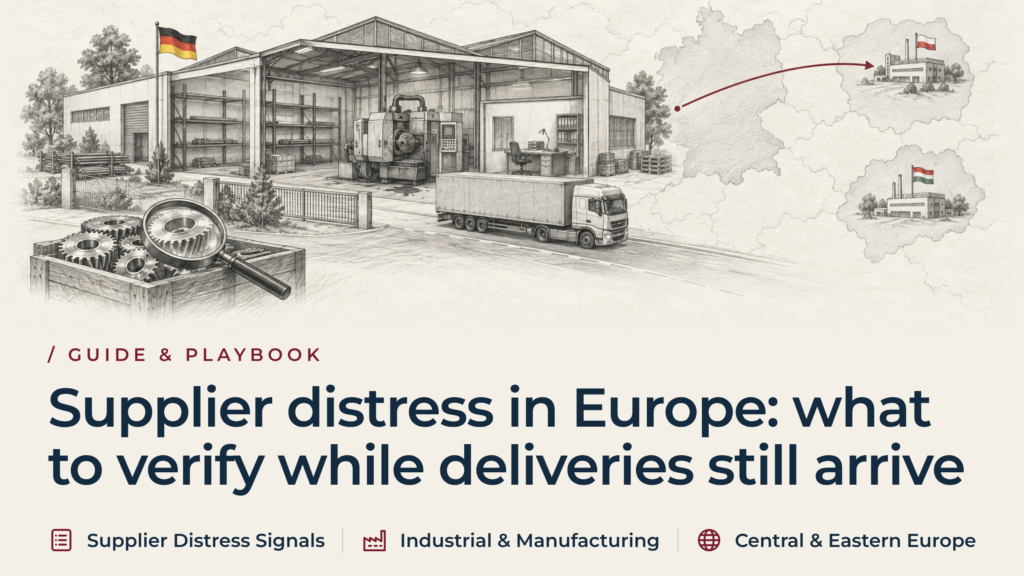
Supplier financial distress can exist while deliveries still arrive on schedule. Learn which warning signs justify a closer continuity review before supply is disrupted.
Den in Schwierigkeiten geratenen Lieferanten unterstützen oder wechseln? Treffen Sie die Entscheidung, bevor die Produktion zum Stillstand kommt
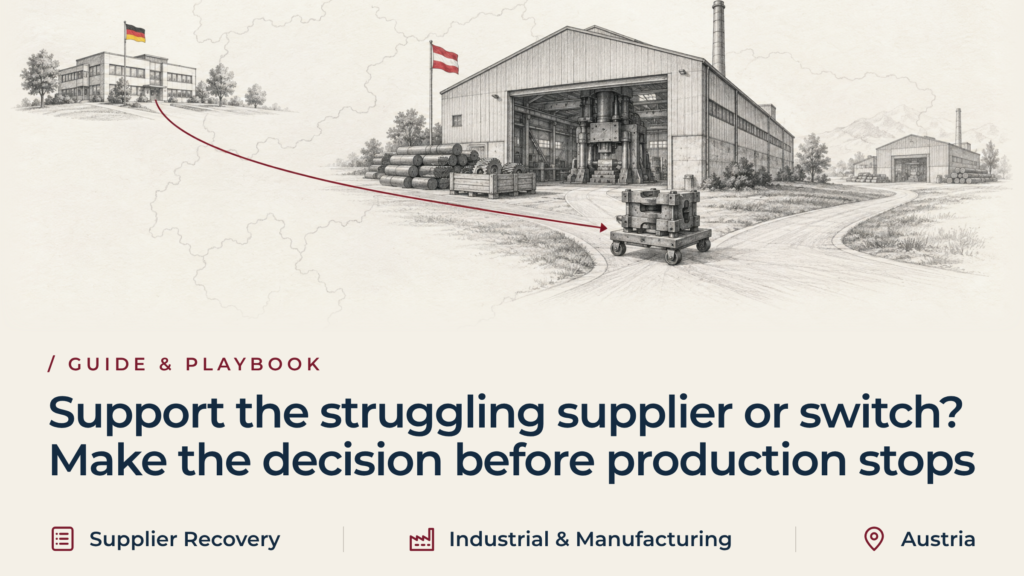
Management von in Schwierigkeiten geratenen Lieferanten: Vergleichen Sie die Kontinuität, die Ersatzbereitschaft und das finanzielle Risiko, bevor Sie sich für einen der beiden Wege entscheiden.
Wechsel des Automobilzulieferers, wenn die Produktion keinen Aufschub duldet
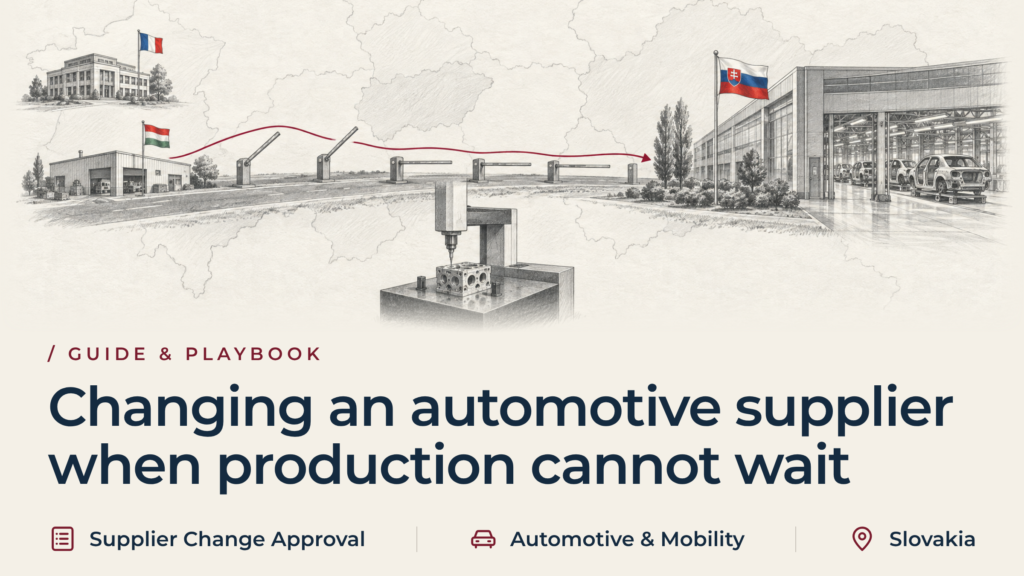
Ein Ersatzlieferant kann ein Angebot unterbreiten, bevor die Genehmigung für den Lieferantenwechsel vorliegt. Unterscheiden Sie zwischen kommerzieller Verfügbarkeit, technischer Abnahme und nutzbarer Kapazität.
Führungskräfteseminare, die Ergebnisse liefern
Business transformations rarely fail because nobody understands the strategy. More often, problems begin when different departments interpret the same strategy in different ways. Headquarters wants faster execution. Operations worries about capacity. Finance demands tighter cost controls. Local managers question whether the proposed changes will work in practice. Everyone attends the same meetings and agrees on the objectives. Yet progress remains slow. This is where leadership offsites can make a difference. Bringing decision-makers together outside their usual working environment creates an opportunity to confront disagreements, clarify responsibilities, and establish common priorities. However, an offsite is only valuable if it produces more than another presentation and a list of good intentions. For companies navigating restructuring, post-merger integration, or cross-border transformation, the real measure of success is what changes when leadership returns to daily operations. Why Leadership Alignment Breaks Down During Transformation Consider a manufacturing group integrating a newly acquired facility into its existing operations. The parent company wants standardised processes, centralised reporting, and greater purchasing efficiency. Meanwhile, the acquired business has established supplier relationships, different operating procedures, and managers who are accustomed to making decisions independently. On paper, both sides support the integration. In practice, tensions begin to emerge. Procurement wants to consolidate suppliers, but production managers worry about material availability. Finance pushes for working capital improvements, while sales argues that customers need more flexible payment terms. These disagreements are not necessarily signs of poor leadership. Different departments have different responsibilities, incentives, and operational pressures. The challenge is bringing those perspectives together before they turn into delays. Regular meetings do not always solve the problem. Participants may avoid difficult conversations, protect departmental interests, or assume that someone else will make the final decision. A structured leadership offsite creates an opportunity to address these issues directly. Instead of reviewing performance reports in isolation, decision-makers can examine how their responsibilities overlap and where conflicting priorities are preventing progress. But simply getting everyone into the same room is not enough. What Makes a Leadership Offsite Effective? A successful leadership offsite should begin with a specific business problem, not a collection of generic team-building activities. The objective might be to accelerate post-merger integration, resolve operational bottlenecks, improve cross-functional cooperation, or establish priorities for a turnaround programme. Whatever the purpose, the agenda must lead toward decisions that can be implemented. 1. Address the Problems That Daily Meetings Avoid Imagine a company where the sales department repeatedly commits to delivery schedules that production cannot reliably achieve. Sales blames operational inefficiency. Operations argues that commercial teams make promises without understanding manufacturing constraints. Both departments have legitimate concerns, but neither can resolve the situation independently. In-person meetings have many benefits, particularly when colleagues need to build trust, exchange perspectives, and discuss sensitive issues. During a focused leadership session, sales and operations can examine actual capacity constraints, customer commitments, and planning assumptions together. The objective is not to determine which department is right. It is to agree on a workable process that supports both commercial performance and operational reliability. 2. Clarify Who Has Authority to Make Decisions Many transformation programmes suffer from unclear responsibilities. A regional manager may assume that headquarters must approve a decision. Headquarters may believe that the local team already has the authority to act. Meanwhile, nobody moves forward. This problem becomes particularly serious in international organisations, where reporting structures, local regulations, and management cultures add further complexity. An offsite should therefore establish clear decision rights. Who approves changes to production schedules? Who owns integration milestones? Who resolves conflicts between regional and central management? These questions should have explicit answers before the meeting ends. Without clear authority, improved communication may simply produce more discussion rather than faster execution. 3. Turn Agreement Into Operational Commitments A productive offsite should conclude with a limited number of specific actions. For example, two departments might agree to introduce a shared forecasting process, define a new escalation procedure, or establish common performance indicators. It might begin with something simple: maybe 2 teams agree on a better way to share information. However, lasting improvement requires more than agreement. Each action needs a responsible owner, an implementation deadline, and a measurable outcome. Otherwise, the same issues are likely to return once managers resume their regular responsibilities. The Business Cost of Bringing Leadership Teams Together Leadership offsites require an investment, particularly when participants work across different locations. Travel, accommodation, meeting facilities, and professional facilitation all contribute to the total expense. Transportation also becomes a practical consideration when companies bring managers together from multiple sites. For example, a US business organising a leadership workshop in Baltimore might arrange group transportation through US Coachways, which provides charter bus rental services for corporate groups and other travellers. Coordinating travel can simplify logistics, but the greater business consideration is the time spent away from operations. A two-day meeting involving senior managers represents a significant commitment of leadership capacity. For an industrial company managing production targets, customer deliveries, and ongoing transformation activities, those responsibilities do not disappear during an offsite. That is why leadership teams should evaluate the expected business value before committing resources. If the objective is simply to exchange information, a virtual meeting may be sufficient. If the company needs to resolve competing priorities, make difficult decisions, or establish a shared operating model, bringing decision-makers together may justify the expense. The distinction lies in the outcome, not the location. How Interim Management Supports Leadership Alignment Leadership offsites can expose operational and organisational problems, but addressing those problems often requires sustained management attention. This becomes especially challenging when a company is already experiencing disruption. During restructuring, senior managers may be occupied with financial pressures, workforce concerns, and urgent operational decisions. Following an acquisition, leadership teams may struggle to reconcile different management structures and corporate cultures. In these situations, experienced interim executives can provide the capacity and execution focus needed to move transformation initiatives forward. An Interim CEO or Transformation Director may establish common priorities across business units, clarify accountability, and oversee a programme of organisational change. An Interim COO
Ein wichtiger Lieferant hat seine Lieferungen eingestellt. Wie lange kann Ihr Werk in Polen noch Lieferungen versenden?

Ein Lieferant stellt die Lieferungen ein. Ein Notfallplan für den Fall eines Lieferantenausfalls legt fest, welche Aufträge Ihr Werk weiterhin erfüllen kann und wer für diese Entscheidung zuständig ist.
Schließung eines US-Werks von Deutschland aus: Der Interims-Standortleiter, der das in sechs Monaten geschafft hat
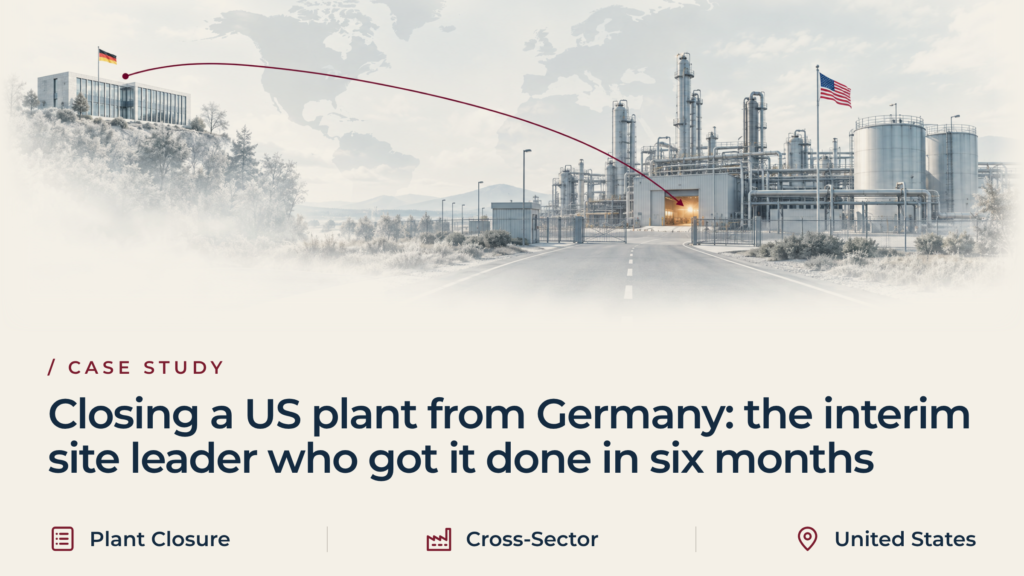
Ein deutsches Unternehmen hatte beschlossen, sein Werk in den USA zu schließen. Das Team vor Ort war zwar in der Lage, den Betrieb aufrechtzuerhalten, aber nicht, ihn einzustellen. Wie ein Interims-Standortleiter mit umfassender Entscheidungsbefugnis den Standort innerhalb von sechs Monaten schloss, ohne dass irgendetwas offen blieb.
Ein Lieferant beliefert mehrere Werke in Mittel- und Osteuropa. Wie sollten die begrenzten Materialvorräte aufgeteilt werden?

Mehrere Werke benötigen denselben begrenzten Rohstoff. Erstellen Sie eine Gruppenzuteilungsentscheidung auf der Grundlage von Kundenverpflichtungen, Alternativen und den Folgen einer Verzögerung.
Warum ein Ziel für die Herstellungskosten keine Neugestaltung des Betriebsmodells darstellt
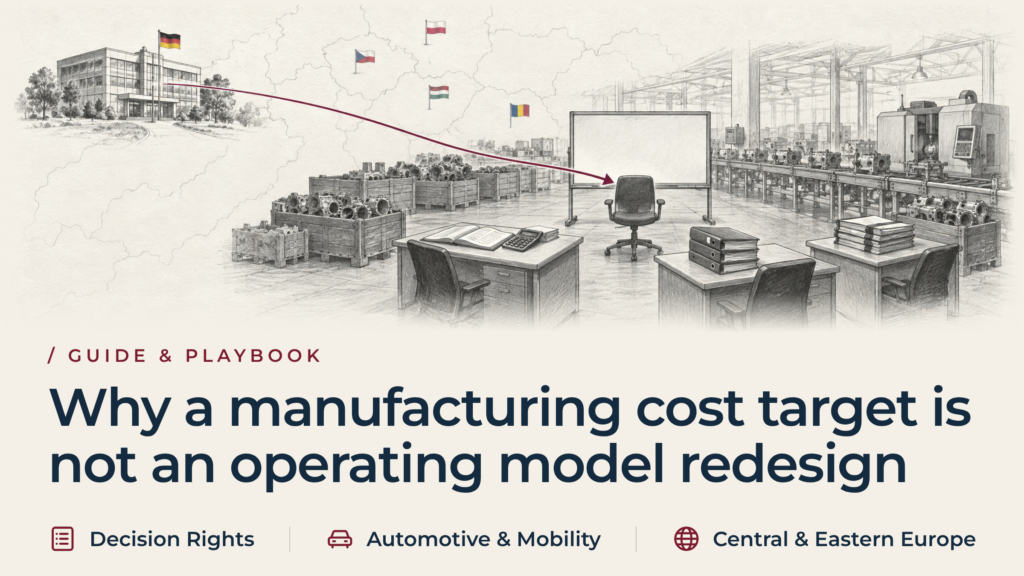
Kostensenkung in der Fertigung vs. betriebliche Umstrukturierung: Die Finanzabteilung legt die Einsparungen fest, die Personalabteilung setzt sie um, aber keine der beiden Abteilungen gestaltet die spätere Betriebsführung des Werks neu.
Notbeschaffung für ein Werk in Serbien: Der verfügbare Lagerbestand ist kein Lieferplan
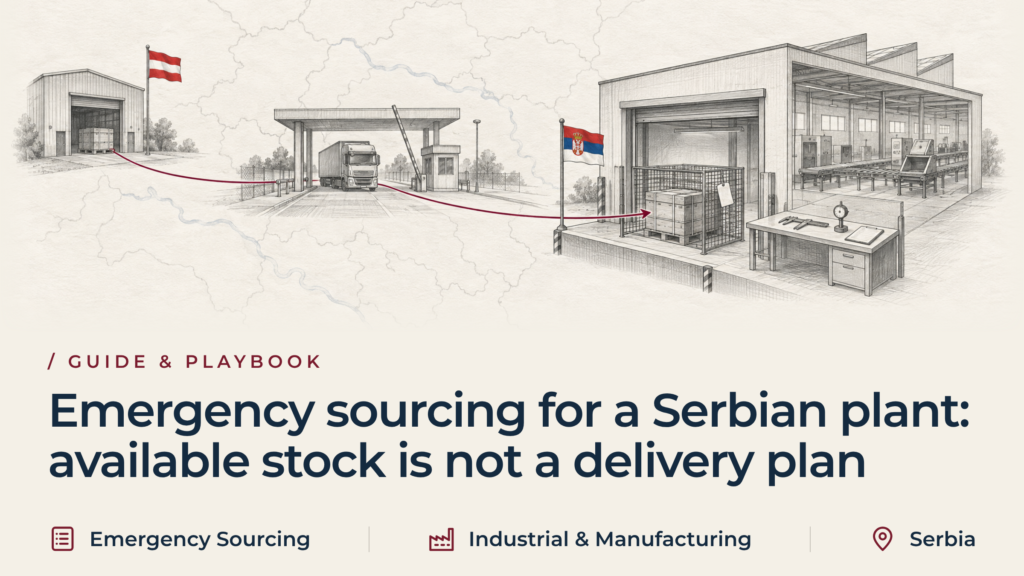
Ersatzbestände im Ausland stellen in Serbien noch keine verfügbaren Bestände dar. Stimmen Sie Versand, Transport, Dokumente und Empfangsbereitschaft ab, bevor Sie einen Liefertermin zusagen.
 EN
 DE
 FR
 IT
 PL
 RO
 CS
 SK
 HU
 ES
 RU
 AR
 SL