

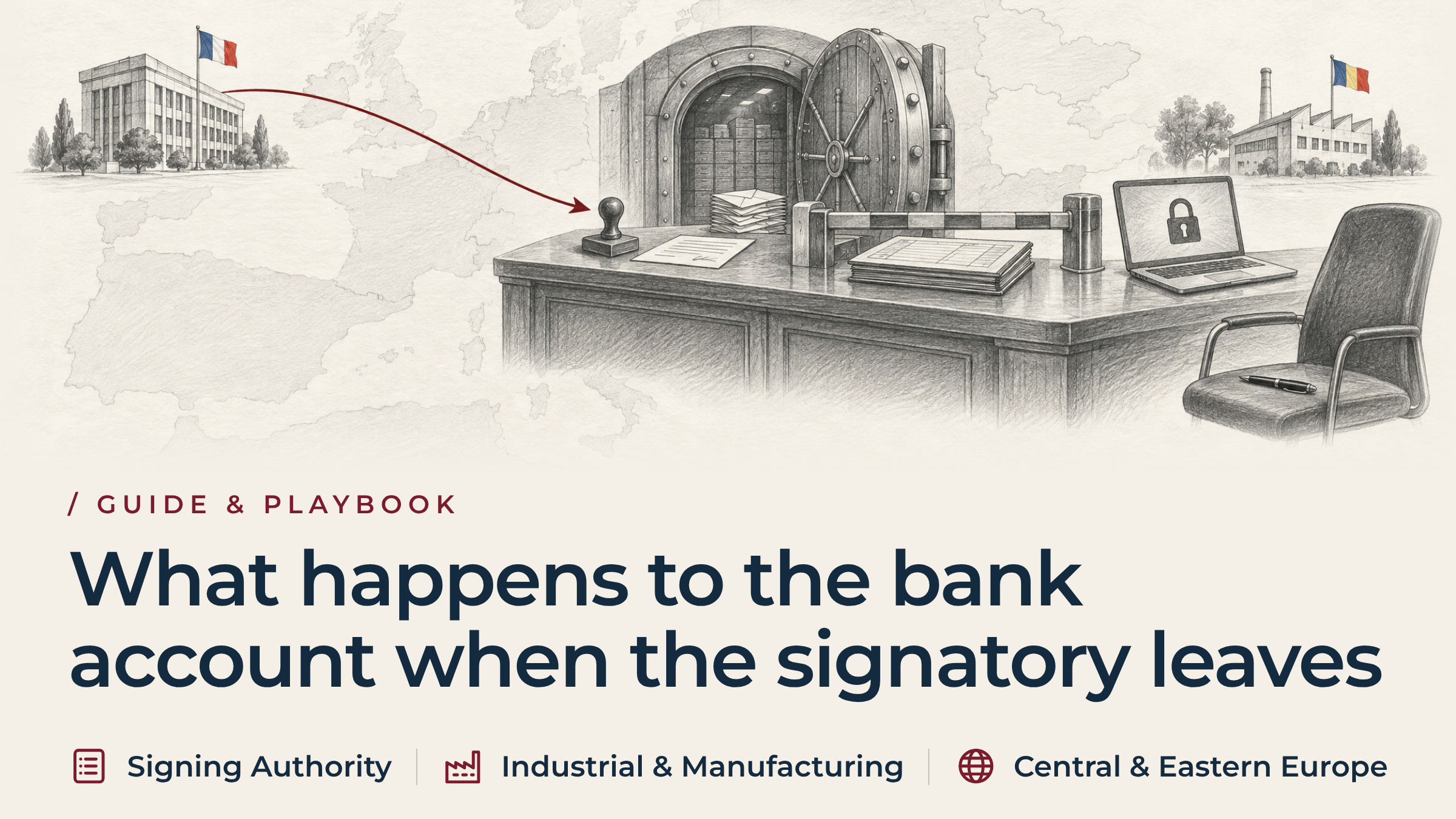
Čo sa stane s bankovým účtom, keď podpisujúca osoba odíde?
V skratke
Odchod riaditeľa s bankovým splnomocnením patrí medzi najčastejšie prehliadané medzery v riadení cezhraničnej skupiny. Banka sa riadi údajmi z obchodného registra, nie organizačnou schémou v centrále. Keď odíde registrovaný podpisujúci zástupca dcérskej spoločnosti, banka neupraví podpisové práva na základe interného e-mailu. Platí to bez ohľadu na to, akú vysokú pozíciu má odosielateľ. Kým banka nedostane formálne uznesenie a nový výpis z registra, existujú dve riziká súčasne. Banka môže zmraziť účet, akonáhle zistí, že pozícia je neobsadená. Alebo odídený vedúci pracovník môže naďalej vykonávať transakcie. Zabezpečenie účtu znamená správne načasovanie uznesenia, podania a oznámenia banke. Znamená to tiež, že ich musí podporiť vedúci pracovník, ktorého banka skutočne akceptuje.
Operačné riziká spojené so oneskorenými zmenami oprávnení na podpis počas spracovania výplat
Obchodný riaditeľ výrobnej dcérskej spoločnosti v Poľsku, Česku alebo Rumunsku podá v pondelok výpoveď.
V ústredí vo Frankfurte, Paríži alebo Zürichu oddelenie finančného riadenia skupiny zaznamená odchod zamestnanca a predpokladá, že činnosť pokračuje bežným spôsobom. Právny poradca preskúma podmienky vyrovnania. Oddelenie ľudských zdrojov začne hľadať náhradu. Likvidita skupiny vyzerá dobre, takže nikto nekontroluje splnomocnenie miestnej banky.
V stredu miestny finančný tím upozorní na problém. V piatok je termín výplaty a kľúčový dodávateľ čaká na naplánovaný prevod, kým uvoľní tovar. Niekto sa konečne prihlási do miestnej bankovej platformy. Osobou oprávnenou schvaľovať platby presahujúce bežný limit je vedúci pracovník, ktorý odišiel pred dvoma dňami.
Finančné oddelenie skupiny nemôže namiesto toho jednoducho schváliť platbu z ústredia. Zatiaľ to nikto nenazval problémom správy a riadenia, ale presne o to ide. V kontinentálnej Európe banka viaže oprávnenia na konkrétne osoby registrované na miestnej úrovni, nie na podpisovú politiku skupiny. Termín výplaty sa nezmení, aby vyhovoval harmonogramu náboru. Dodávateľ neuvoľní dodávku na základe sľubu budúceho uznesenia predstavenstva.
Cezhraničné výzvy pri aktualizácii bankových splnomocnení pre účty zahraničných dcérskych spoločností
Odchod riaditeľa povereného bankovými záležitosťami predstavuje pre finančné oddelenie skupiny skutočné dilema. Správna reakcia závisí od postupnosti krokov, nie od inštinktu. Poverenie v oblasti bankových záležitostí nie je otázkou vnútropodnikovej voľby. Ide o zákonnú záležitosť, ktorá súvisí s predpismi proti praniu špinavých peňazí a verejnými obchodnými registrami.
Kľúčové zákonné a právne dokumenty požadované bankami
Pridanie nového signatára zvyčajne vyžaduje tri dokumenty. Miestna banka potrebuje uznesenie akcionárov, notársky overenú kópiu a aktuálny výpis z registra. Ak to vyžaduje cezhraničné uznanie, kópiu je potrebné opatriť apostilou. Takýmto výpisom môže byť napríklad Handelsregister v Nemecku, KRS v Poľsku alebo Obchodný register v Českej republike. E-mail z ústredia skupiny, bez ohľadu na to, akú vysokú funkciu má odosielateľ, túto požiadavku nespĺňa.
Miestne daňové a identifikačné prekážky pre zahraničných signatárov
V niektorých jurisdikciách tímy bánk zodpovedné za dodržiavanie predpisov vyžadujú, aby osoba oprávnená podpisovať mala miestne daňové alebo identifikačné číslo. Bez neho banka nemôže túto osobu zahrnúť do splnomocnenia pre zahraničnú dcérsku spoločnosť. Finančný riaditeľ vyslaný z centrály bez miestnych dokladov sa nemôže k účtu pripojiť zo dňa na deň. Ani jeho postavenie na úrovni skupiny na tom nič nemení.
Riešenie zmrazenia účtu verzus riziko neoprávneného prístupu
To predstavuje skutočné dilema, nie jednoznačnú odpoveď. Ak centrála banku okamžite informuje, banka môže účet zmraziť. Tým sa zabráni neoprávneným prevodom, kým sa nevybavia potrebné formality. Ak však centrála s oznámením otáľa, bývalý manažér si môže zachovať pracovný prístup k platobným tokenom a internetovému bankovníctvu. Tento prístup trvá dovtedy, kým niekto banke neoznámi opak. Žiadna z týchto možností nie je ideálna a poradie krokov je dôležitejšie ako inštinkt konať rýchlo alebo čakať.
Výskum uverejnený v časopise Časopis o financiách Bennedsen, Pérez-González a Wolfenzon zistili, že neočakávané neprítomnosti generálnych riaditeľov vedú k merateľnému poklesu prevádzkovej rentability aktív aj prevádzkovej ziskovosti, pričom tento efekt je najvýraznejší v prípade mladších generálnych riaditeľov a v odvetviach s vysokou náročnosťou na ľudský kapitál. Zablokovaná platobná platforma tieto základné náklady ešte zvyšuje. Táto kombinácia faktorov znásobuje tlak v priebehu dní, nie mesiacov.
Kľúčové ukazovatele zmrazenia bankového poverenia a platobného oprávnenia
Zmena oprávnenia na podpis je často prvým viditeľným znakom odchodu riaditeľa zodpovedného za bankové mandáty. Pri bežnom audite sa to zriedka odhalí. Na povrch to naopak vypláva pod tlakom prevádzkových okolností, a to spôsobmi, na ktoré sa finančný tím môže naučiť dávať pozor.
-
Zablokovanie tokenu: Platobná dávka je pripravená. Na konečné autorizovanie je potrebné zariadenie na dvojfaktorovú autentizáciu, ktoré má pri sebe osoba, ktorá odišla.
-
Pozastavenie dodržiavania predpisov: banka zistí, že bola zverejnená výpoveď, a pozastaví odchádzajúce prevody, kým nebude k dispozícii aktualizovaný výpis z registra.
-
Zastavenie úveru od dodávateľa: Neuhradená platba spustí automatické pozastavenie úverov v priebehu jedného alebo dvoch dní. Dodávky sa spomalia ešte skôr, ako ústredie dokončí prehodnotenie organizačnej štruktúry.
-
Neodvolateľný prístup: bývalý vedúci pracovník má naďalej aktívne oprávnenia na využívanie mobilného bankovníctva. Banka nenesie žiadnu zodpovednosť za pokyny, ktoré vykonala pred doručením formálneho odvolania.
-
Zablokované zariadenia: Dcérska spoločnosť nemôže čerpať kontokorentný úver, zabezpečiť sa proti kurzovým rizikám ani vystaviť akreditív. Dokumentácia k úverovému rámcu vyžaduje podpis registrovaného zástupcu.
Právomoc rozhodovať o platbách v dcérskej spoločnosti by nikdy nemala závisieť od jednej osoby. Akýkoľvek z týchto príznakov je dôvodom na okamžité prehodnotenie tohto poverenia. Nečakajte na ďalšie zasadnutie predstavenstva.
Zákonné obmedzenia obchodných splnomocnení (prokura) pre bankové účty
Keď banka zmrazí účet, právny poradca skupiny často kladie tú istú otázku. Môže namiesto toho účty spravovať súčasný obchodný splnomocnenec? V nemecky hovoriacich jurisdikciách sa tento splnomocnenec nazýva „Prokurist“.
Nemecký obchodný zákonník (Handelsgesetzbuch) stanovuje Široké oprávnenie na základe prokury podľa § 48 až 53. Zahŕňa podpisovanie zmlúv a vykonávanie bežných bankových transakcií; podobné rámcové podmienky existujú aj v iných krajinách strednej Európy. V praxi sa zvyčajne uplatňujú tri obmedzenia.
-
Spoločnosť musela udeliť a zaregistrovať prokurátorské oprávnenie ešte predtým, ako sa uvoľnilo miesto výkonného riaditeľa. Podriadený manažér ho už dodatočne nemôže zriadiť.
-
Bankové splnomocnenia zvyčajne vyžadujú spoločný podpis prokuristu a zákonného konateľa. Ak je jedno z týchto miest neobsadené, prokurista nemôže konať samostatne.
-
Prokurista nemôže podpisovať zakladacie dokumenty spoločnosti, meniť zmluvy o úveroch ani zaťažovať majetok spoločnosti.
Obchodný splnomocnenec slúži na uľahčenie prevádzky, nie je však náhradou za menovaného výkonného riaditeľa. Finančné oddelenie skupiny sa môže opierať o uvedený princíp. Presné hranice konkrétnej prokúry sú otázkou pre kvalifikovaného miestneho právneho poradcu. Nejedná sa o všeobecné pravidlo, ktoré platí rovnako vo všetkých jurisdikciách. Akonáhle sú tieto hranice jasné, ďalšou úlohou je obnovenie plnej právomoci, pričom táto úloha má stanovený postup.
Postup krok za krokom na obnovenie podpisového oprávnenia u zahraničných bánk
Zabezpečenie účtu si vyžaduje systematický postup, nie len jeden telefonát. Poradie krokov je rovnako dôležité ako jednotlivé kroky samotné.
-
Schváliť uznesenie akcionárov: materská spoločnosť formálne odníme oprávnenie predchádzajúcemu signatárovi a vymenuje oprávneného náhradníka. Materská spoločnosť by mala toto uznesenie notársky overiť a opatriť ho apostilou, ak to vyžaduje cezhraničné uznávanie.
-
Písomne informujte banku: Zrušte bývalému členovi vedenia práva na elektronický prístup a podpis. Požiadajte banku o potvrdenie prijatia. Vypísanie podpisového práva zo spoločnosti je dokončené až po doručení tohto písomného potvrdenia, nie po odoslaní listu zo strany spoločnosti. Požiadajte banku, aby počas celého procesu ponechala aktívne nevyhnutné inkasá, ako sú dane a platby za služby.
-
Zápis do obchodného registra: Potvrdenie o certifikovanom podaní poskytuje banke potrebný základ pre splnenie regulačných požiadaviek. Banka tak môže začať s registráciou nového zástupcu ešte predtým, ako sa dokončí aktualizácia celého registra.
-
Vyplňte nové bankové splnomocnenie: Predstavte nového zástupcu pobočke a vykonajte overenie totožnosti zákazníka. Následne vydajte nové hardvérové tokeny oprávneným zamestnancom finančného oddelenia.
Tieto štyri kroky považujte za pevne stanovené poradie, nie za zoznam úloh, ktoré je možné vybaviť v akomkoľvek vhodnom poradí. Práve toto poradie zabezpečuje platobnú schopnosť dcérskej spoločnosti, kým sa vybavia potrebné formality. Tím miestnej banky zodpovedný za dodržiavanie predpisov najrýchlejšie akceptuje tento postup, ak ho osobne predloží vedúci pracovník s jasným postavením a podporou predstavenstva, čo je presne úloha, na ktorú je určené dočasné vymenovanie finančného riaditeľa pod vedením partnera.
Riešenia v oblasti dočasného vedenia a zákonného oprávnenia na podpis
Na jednu často opakovanú námietku je potrebné tu priamo reagovať. Vychádza z výskum od Ballingera a Marcela v časopise Strategic Management Journal. Dočasní vedúci môžu so sebou priniesť vlastné riziká: obmedzenú právomoc, opatrných zainteresovaných a organizačnú neistotu. Hľadanie trvalého nástupcu môže trvať mesiace.
Toto zistenie je pravdivé a spoločnosť CE Interim ho neberie na ľahkú váhu. Štúdie, na ktorých sa zakladá, sa však zvyčajne zaoberajú dočasnými vedúcimi pracovníkmi, ktorí boli vymenovaní bez jasného mandátu alebo bez oprávnenia konať. Ide o problém s vymedzením mandátu, nie o argument proti dočasnému vedeniu ako takému.
Praktickým riešením je od začiatku udeliť dočasnému vedúcemu pracovníkovi plnú zákonnú právomoc. To znamená registrované oprávnenie a v prípade potreby formálnu plnú moc. Znamená to tiež výslovné oprávnenia na konanie vo vzťahu k banke, písomne potvrdené bankou. Keď tím miestnej banky zodpovedný za dodržiavanie predpisov vidí oprávneného vedúceho pracovníka s jednoznačnou podporou predstavenstva, váhanie zvyčajne zmizne. Účet sa opäť začne hýbať.
Prípadová štúdia: Riešenie zmrazenia platobných oprávnení a bankových splnomocnení
Závod na výrobu automobilových komponentov v Českej republike, ktorý patril francúzskej spoločnosti, zamestnával niekoľko stoviek zamestnancov. Obrat sa pohyboval v desiatkach miliónov eur. Začiatkom týždňa prišiel o svojho generálneho riaditeľa, ktorý bol náhle prepustený. Tento riaditeľ bol zároveň jediným oprávneným podpisovať bankové dokumenty. Francúzska materská spoločnosť predpokladala, že miestny finančný tím bude medzitým schopný zabezpečiť plynulosť bežných platieb.
V druhej polovici toho týždňa česká banka zistila odchod riaditeľa prostredníctvom verejného registra. Pozastavila odchádzajúce elektronické platby. Výplaty miezd a plánovaná platba dodávateľovi mali byť uhradené už o niekoľko dní. Priamy prevod z vlastného účtu francúzskej materskej spoločnosti nebol realizovateľnou náhradou. České daňové a sociálne odvody musia pochádzať z vlastného domáceho účtu dcérskej spoločnosti. Iba vtedy sa zosúladia s jej miestnym daňovým identifikačným číslom.
CE Interim nasadila dočasný finančný riaditeľ s uznávaným postavením na českom trhu. Dočasný finančný riaditeľ, vymenovaný na základe mimoriadneho uznesenia akcionárov, predložil notársky overené dokumenty o vymenovaní priamo regionálnej pobočke banky. Vďaka urýchlenému postupu pri platbách v spolupráci s tímom banky zodpovedným za dodržiavanie predpisov sa podarilo obnoviť prístup k účtu. Stalo sa tak včas, aby bolo možné splniť záväzok týkajúci sa výplaty miezd. V nasledujúcich týždňoch dočasný finančný riaditeľ obnovil systém vykazovania hotovosti v dcérskej spoločnosti. Zaviedol tiež systém dvojitého podpisu, ktorý zdieľal s finančným oddelením skupiny. Podporil tiež vymenovanie stálého finančného riaditeľa.
Často kladené otázky: Odvolanie splnomocnenca spoločnosti a bankové splnomocnenia
Môže centrála vyplácať mzdy zahraničnej dcérskej spoločnosti priamo z centrálneho účtu?
Zvyčajne nie, bez toho, aby to spôsobilo väčší problém. Väčšina jurisdikcií v kontinentálnej Európe vyžaduje, aby miestne zákonné dane zo mzdy a príspevky na sociálne zabezpečenie pochádzali z domáceho účtu. Tento účet musí byť viazaný na daňové identifikačné číslo samotnej dcérskej spoločnosti. Platba zo zahraničného účtu materskej spoločnosti pravdepodobne neprejde zúčtovaním a môže vyvolať automatické sankcie.
Má bývalý riaditeľ naďalej podpisové právo k bankovým účtom spoločnosti?
Často áno, a práve preto je odvolanie riaditeľa s bankovým splnomocnením naliehavé. Prístup trvá dovtedy, kým spoločnosť o tom banku formálne písomne neinformuje. Pokiaľ banka nedostane takéto odvolanie, zákon ju chráni v prípade, že splní pokyny registrovaného podpisového oprávneného. Odchádzajúci vedúci pracovník s aktívnym tokenom si až do tej chvíle zachováva praktickú schopnosť vykonávať transakcie.
Ako zachovať platby dcérskym spoločnostiam počas aktualizácie registra?
Materské spoločnosti môžu prijať mimoriadne uznesenie akcionárov. Môžu tiež požiadať miestnu banku o dočasný protokol pre manuálne platby. Na to je potrebná osobná prítomnosť oprávneného vedúceho pracovníka, ktorého akceptuje tím banky zodpovedný za dodržiavanie predpisov.
Rozdiel medzi finančným manažérom a oprávnenou osobou na podpis v banke
Finančný manažér na základe pracovnej zmluvy pripravuje účtovné výkazy a platobné podklady. Osoba oprávnená podpisovať má právomoc, zaregistrovanú v banke, nakladať s finančnými prostriedkami spoločnosti a schvaľovať prevody.
Mala by dcérska spoločnosť udržiavať štruktúry bankových splnomocnení s dvojitým podpisom?
Áno, všade tam, kde to umožňuje miestna štruktúra splnomocnení. V tomto prípade pomáha spoločné splnomocnenie, napríklad dvaja registrovaní zástupcovia alebo zástupca spolu s registrovaným splnomocnencom.
Môže splnomocnenec na základe právoplatnej plnej moci samostatne riešiť otázky týkajúce sa bankového splnomocnenia?
Nie je to spoľahlivé. Plná moc môže slúžiť na uskutočňovanie konkrétnych transakcií, avšak jej rozsah, platnosť a akceptácia zo strany banky sa líšia v závislosti od právneho poriadku. Považujte ju za nástroj, ktorý by ste mali prekonzultovať s miestnym právnikom, a nie za náhradu riadne registrovaného podpisového oprávneného.
Súvisiace poznatky a ďalší krok
Keď registrovaný podpisujúci odíde, bankové splnomocnenie sa okamžite dostane do rizikovej zóny. Ak sa s tým otáľa, zvyšuje sa pravdepodobnosť zmrazenia účtu, zmeškania výplaty alebo narušenia vzťahov s dodávateľmi.
Ďalšie články na túto tému:
-
Zabezpečiť personálne obsadenie oddelenia bez toho, aby došlo k narušeniu fungovania zvyšnej časti
-
Presun výroby spoločnosti Zetor Brno: Riadenie cezhraničnej výroby bez straty kontroly nad vývojom
Spoločnosť CE Interim poskytuje cezhraničné riadiace vedenie pre kľúčové transformácie podnikov. Súčasťou tejto služby je osvedčený manažér, ktorý spĺňa požiadavky mandátu a je pripravený nastúpiť do 72 hodín od dokončenia zadávacieho listu. Ak odchod riaditeľa povereného bankovým mandátom spôsobil bezprostredné riziko pre platby, ďalší krok je jasný. Rozhovor s Dočasný partner spoločnosti CE je to dobrý začiatok.

 EN
EN  DE
DE  FR
FR  IT
IT  PL
PL  RO
RO  CS
CS  SK
SK  HU
HU  ES
ES  RU
RU  AR
AR  SL
SL