Dlaczego wyznaczenie docelowego poziomu kosztów produkcji nie oznacza przeprojektowania modelu operacyjnego
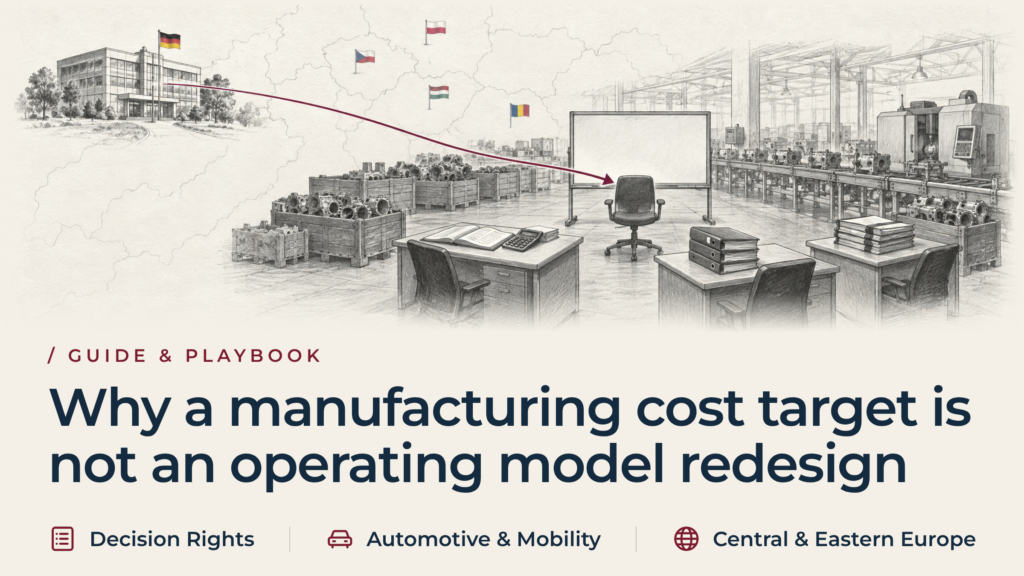
Manufacturing cost reduction vs operational restructuring: finance sets the saving, HR executes it, but neither redesigns how the plant runs afterwards.
Awaryjne zaopatrzenie dla serbskiego zakładu: dostępne zapasy nie stanowią planu dostaw
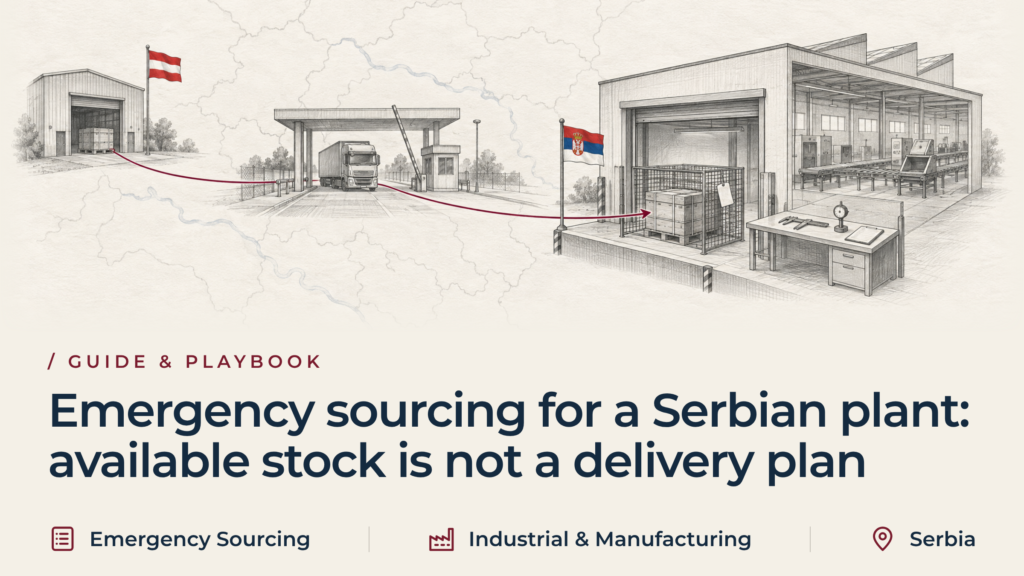
Replacement stock abroad is not yet usable supply in Serbia. Align dispatch, transit, documents and receiving readiness before promising a delivery date.
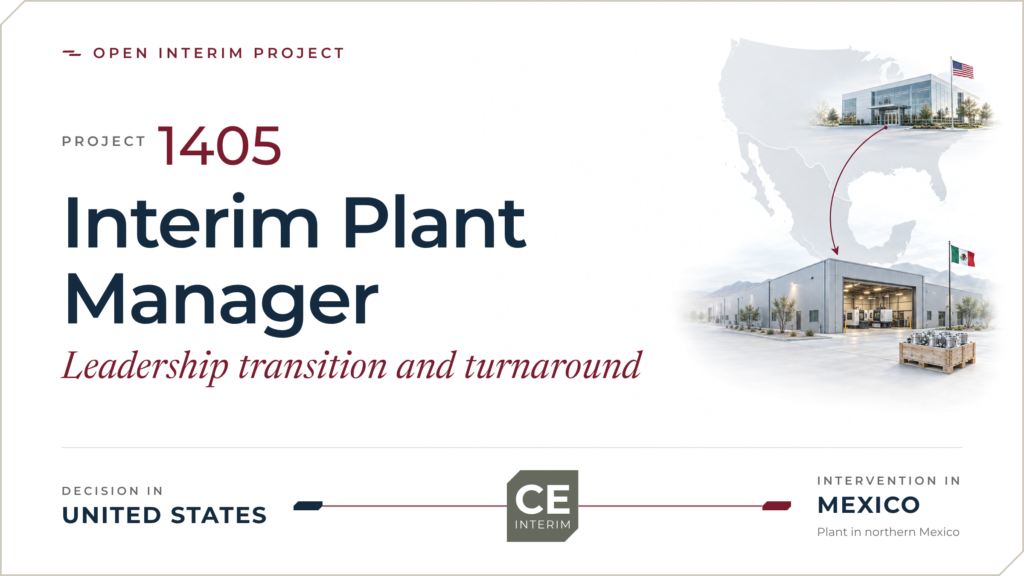
Dlaczego do tego projektu tymczasowego wybrano innego kandydata? | 1405
Thank you for the time and thought you invested in this mandate. Being considered at all meant that your experience was credible against a demanding brief. The search drew a large response, and the interim executives who reached the later stages were all experienced plant leaders with real results behind them. Interim decisions are rarely about general quality. They come down to a narrow combination of factors: how closely an executive’s past situations mirror the present one, the type of equipment and scale involved, the stage of the change programme, and how quickly the owners can picture that person taking control on day one. This note explains the profile that matched this particular mandate most closely, so that you can see how the assessment was made and use it for future opportunities. What the client really needed On paper this was a plant manager role. In reality it was a leadership handover in the middle of an operational recovery. A long-serving site leader was leaving on a known date, the plant was part-way through improving its performance, and the owners wanted to protect the progress already made rather than restart it under a new name. The site was small and highly mechanised. Much of the output depended on older, mechanically complex automatic machines, each operator running several of them at once. The skills needed to set up and maintain that equipment had been built up internally over many years and sat largely in the heads of experienced employees. Ownership and the plant also sat in different countries and worked in different languages. The executive would report directly to the top of the group while leading a small local management team every day on the floor. In practice the mandate asked for five things at the same time: The profile that fit this mandate most closely Across the brief and the interviews, a clear picture emerged of the executive this situation called for. None of the points below is unusual on its own. What mattered was finding them together in one person. 1. Repeated experience of taking over a plant mid-change The strongest fit was an executive who had already stepped into several plants during a leadership transition or a recovery, and who could show the numbers before and after. That mattered because the immediate task was continuity under pressure. The owners wanted someone who had lived through this exact moment before, not someone who would be learning it on site. 2. Hands-on depth with the plant’s actual equipment General high-volume or automated manufacturing experience was common across the shortlist. Direct, personal experience of running and setting up older automatic machining equipment, with operators covering several machines each, was much rarer. Where this was present, the executive could talk credibly with the people who run the machines from the first day. Where it was absent, the owners had to accept a learning curve during a period when they had little room for one. 3. Comfort at the scale of a small site Several strong profiles came from leading large, multi-site organisations with deep support functions. This plant had only a handful of managers. The closest fit was an executive who was at ease being the senior engineer, the maintenance escalation point and the customer contact at the same time, without the layers a large operation provides. 4. Maintenance discipline on ageing assets Equipment effectiveness on older machines depends on maintenance routines, set-up times and spare parts as much as on production planning. Profiles that had personally built preventive maintenance systems and developed local technicians aligned closely with the real constraint in the plant. 5. A respectful way of capturing know-how held by people The owners were clear that the workforce was not resistant to change, but needed to understand why it was happening. The best fit was an executive whose first step is to observe and learn before changing anything, and who then turns undocumented experience into standard work without making long-serving employees feel replaced. 6. A natural bridge between owners and plant The role required fluent communication with the shop floor in its own language and clear, concise reporting to group leadership in theirs. The closest fit had done this before, under foreign ownership, and could hold local accountability while keeping headquarters fully informed. 7. A genuine interim track record and immediate availability Finally, the owners needed someone who could start before the outgoing leader left, commit to full-time presence on site and work under an interim mandate with a clear handover at the end. A history of completed interim assignments, rather than permanent roles alone, gave additional confidence that the executive would deliver within a defined period and then step away cleanly. Why strong candidates may still not have been taken forward Most of the executives considered met the majority of the formal requirements. The difference was in how many of the points above were evidenced together, and how directly. In a short, time-critical mandate, the owners were effectively answering a small set of questions: A profile with excellent results in a larger or more modern environment could still score lower on two or three of these questions. That reflects the narrowness of this mandate, not the strength of the executive. What you can learn from this for future interim projects One honest final note At the final stage, owners also weigh how quickly they can picture an executive taking control in their particular plant, with their people and their equipment. That judgement is partly about evidence and partly about confidence. It is legitimate when it is based on the business situation, and it is often decided by small margins. Your experience remains relevant, and we will continue to consider you for mandates where your background matches the situation closely. Why work with us? CE Interim delivers proven, mandate-matched executive interim leaders, ready to start within 72 hours of a completed mandate brief, across borders, cultures, and industries. We specialise in high-impact interim management for private equity firms,
Europa dokonuje restrukturyzacji swojej sieci dostawców dla przemysłu motoryzacyjnego. Nie wszystkie zakłady podążają tą samą drogą
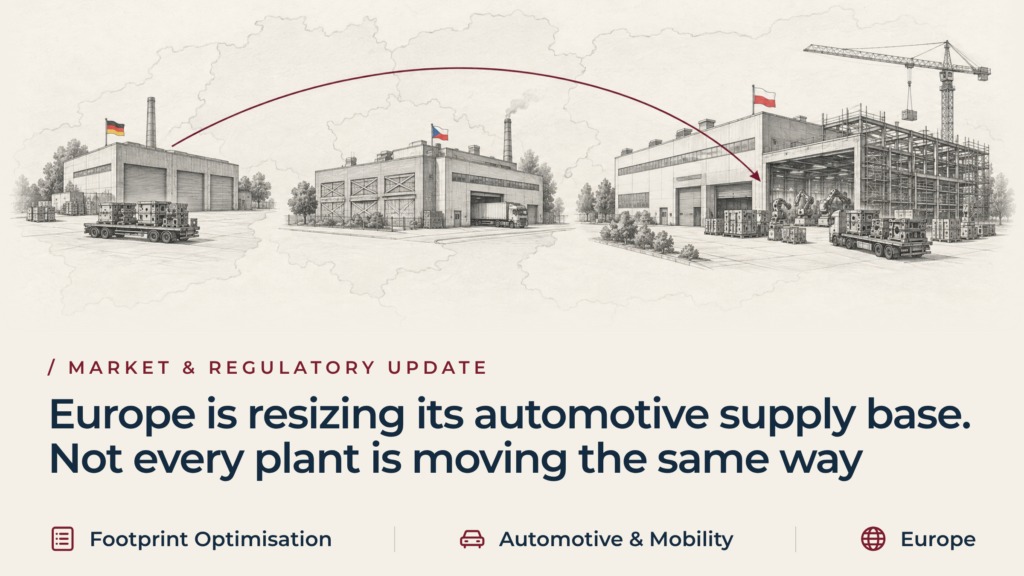
Restrukturyzacja dostawców z branży motoryzacyjnej w 2026 roku nie polega na jednej fali zamknięć. Niektóre zakłady są redukowane o połowę i utrzymywane, inne są zamykane i przenoszone, a jeszcze inne przejmują produkcję.
1410 Tymczasowy dyrektor ds. handlowych grupy – Czechy
Wysoce rentowna, rodzinna grupa farmaceutyczna poszukuje międzynarodowego lidera, który przez sześć miesięcy będzie kierował działem sprzedaży na trzech kontynentach jako menedżer tymczasowy, a następnie obejmie stanowisko stałe i w ciągu czterech do sześciu lat awansuje na stanowisko dyrektora generalnego grupy.
Co się psuje, gdy znika zmiana produkcyjna?
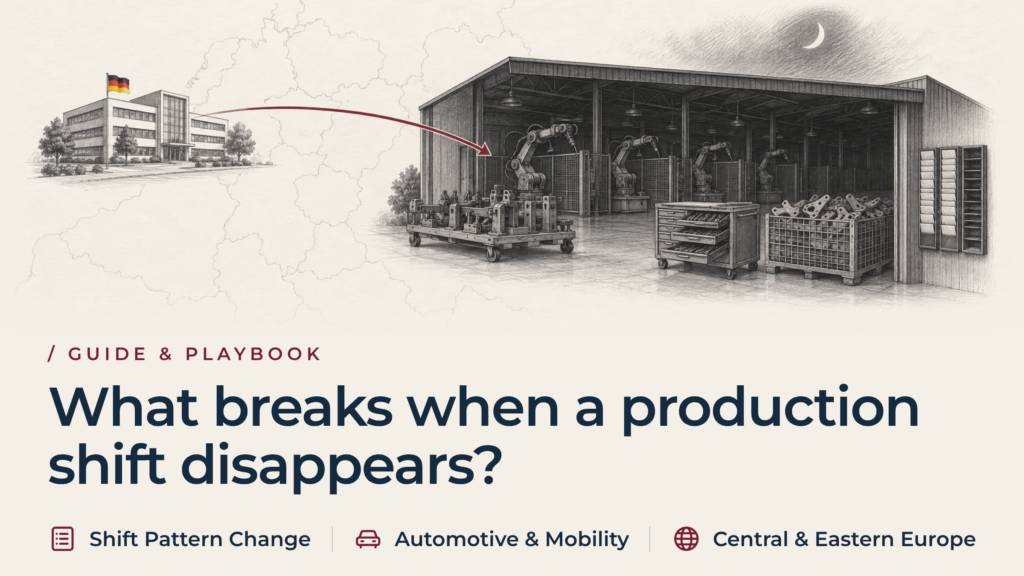
Zlikwidowanie zmiany produkcyjnej pozwala obniżyć koszty na papierze, ale okna serwisowe, przestawki, nadzór oraz obsługa zgłoszeń awaryjnych – to wszystko musi gdzieś najpierw trafić.
Centralna siedziba w Niemczech zatwierdziła restrukturyzację czeskiego zakładu. Jakie będą koszty realizacji tych oszczędności?
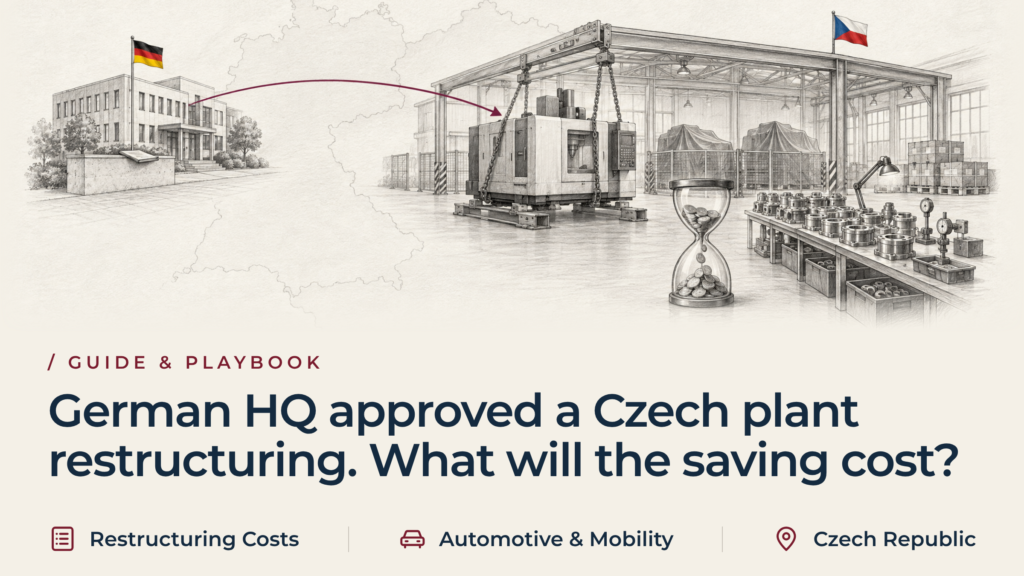
Zarząd zatwierdza roczny poziom oszczędności, ale koszty restrukturyzacji zakładu niezbędne do jego osiągnięcia rzadko są w pełni weryfikowane. Kategorie, które należy ustalić w pierwszej kolejności.
1411 Tymczasowy dyrektor programu ERP – Polska
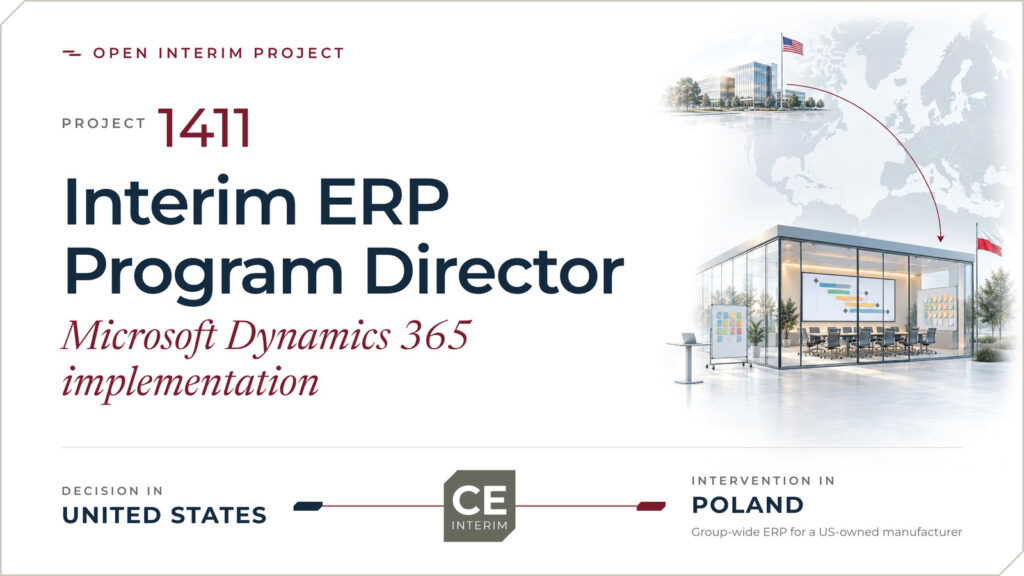
Kierowanie pracami po stronie firmy w ramach 18-miesięcznego programu wdrożenia rozwiązania Microsoft Dynamics 365 Finance and Operations dla renomowanego producenta z północno-wschodniej Polski, należącego do amerykańskiej grupy kapitałowej, od opracowania globalnego planu strategicznego po stopniowe uruchomienie systemu.
Wasza polska fabryka ma wyznaczony cel dotyczący liczby pracowników. Czy organizacja pracy została odpowiednio dostosowana?
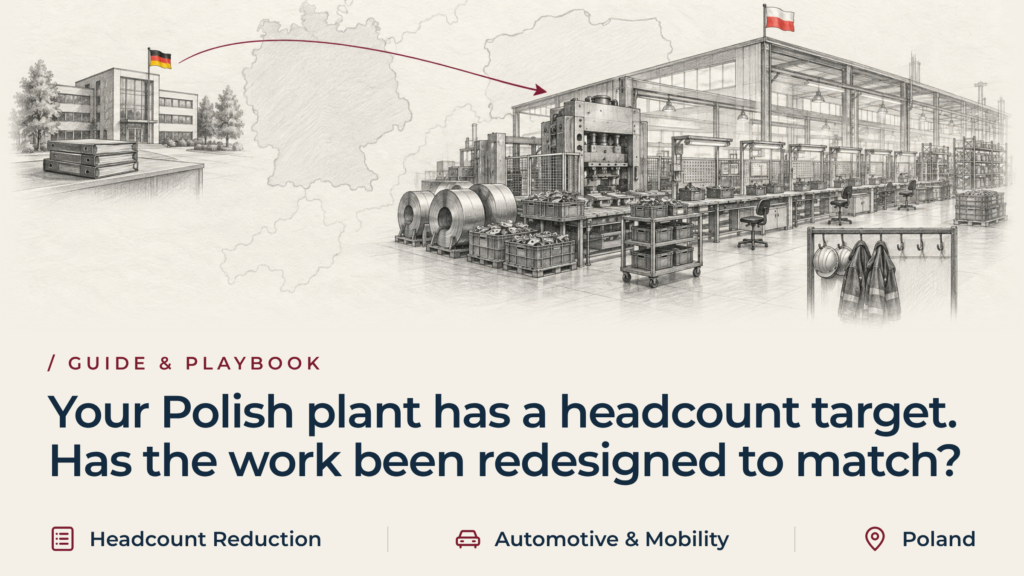
Zmniejszenie liczby pracowników w zakładzie oznacza obniżenie kosztów wynagrodzeń, a nie ograniczenie zakresu prac. Sprawdź, co należy przeprojektować lub wstrzymać, aby mniejszy polski zakład mógł wywiązać się z tych samych zobowiązań.
Gdy kilka zakładów w Europie Środkowo-Wschodniej zmienia wielkość produkcji w tym samym czasie, kto ustala kolejność wprowadzania tych zmian?
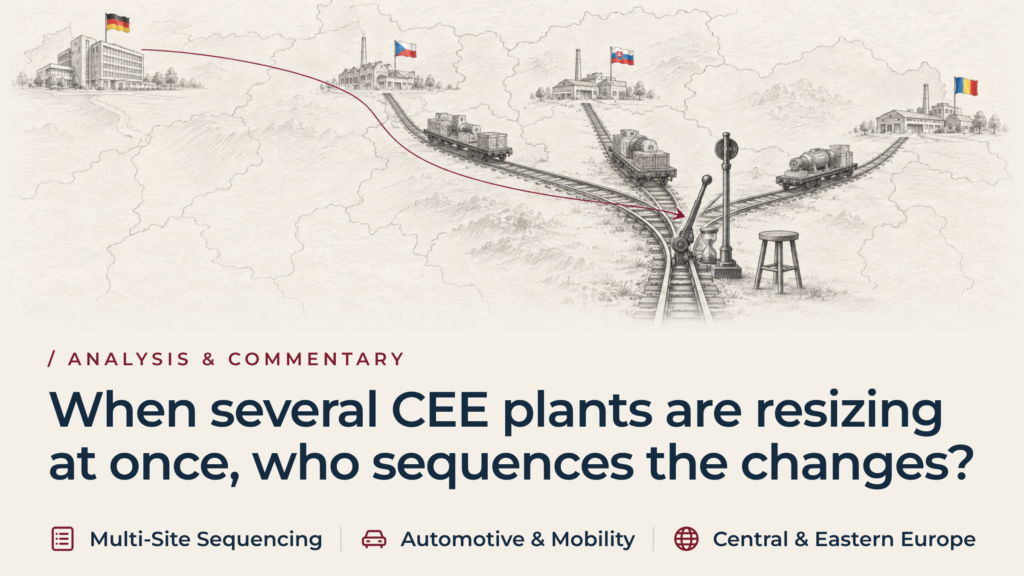
Restrukturyzacja zakładów w wielu lokalizacjach w regionie Europy Środkowo-Wschodniej napotyka trudności, gdy cięcia, przeniesienia i zwiększanie produkcji przebiegają równolegle. Kto ma uprawnienia, by nakazać jednej lokalizacji wstrzymanie się?
 EN
 DE
 FR
 IT
 PL
 RO
 CS
 SK
 HU
 ES
 RU
 AR
 SL